Impressionism · 1879
A Meadow (Claude Monet, 1879)
Claude Monet (1840–1926) stworzył A Meadow. Dzieło pochodzi z 1879. Należy do nurtu Impressionism. Wykonano w technice Obraz olejny na płótnie. Przechowywane jest w Joslyn Art Museum w Omaha, United States.
- 1879
- Obraz olejny na płótnie
- Joslyn Art Museum, Omaha

 Podgląd w skali 1:1

 Ręcznie malowany obraz olejny
 Wyślij jako kartkę
 Udostępnij
 Karta informacyjna


 Pobierz obraz
 Podobne obiekty
 RTG
 Pokaz slajdów
 Pytania i odpowiedzi

 Statystyki
A Meadow w skrócie
- Tytuł
- A Meadow
- Artysta
- Claude Monet (1840–1926)
- Miejsce urodzenia artysty
- Paryż, Francja
- Data powstania
- 1879
- Technika wykonania
- Obraz olejny na płótnie
- Gdzie można je zobaczyć
- Joslyn Art Museum, Omaha, United States
- Ruch
- Impressionism
- Epoka
- – Wiek XIX
Co przedstawia A Meadow?
The Essence of a Moment: Unveiling Monet’s “A Meadow”
Claude Monet's "A Meadow," painted in 1879, isn’t merely a landscape; it’s an exquisitely captured distillation of a fleeting moment. Housed within the walls of the Joslyn Art Museum in Omaha, this oil on canvas transports us to a serene field bathed in the dappled light of a summer afternoon. More than just depicting a scene, Monet sought to convey his *perception* of that scene – the way sunlight danced upon the grasses, the subtle shifts in color as clouds drifted across the sky, and the feeling of warmth and tranquility that permeated the air. It’s a testament to the core philosophy of Impressionism: to capture not just what is seen, but how it is felt.
The painting immediately draws the eye with its vibrant palette. Monet masterfully employed greens of varying hues – from the deep emerald of shadowed foliage to the lighter, almost luminous shades of sunlit grasses – creating a sense of depth and movement within the meadow. Yellows burst forth from wildflowers scattered across the field, punctuated by touches of blue in the expansive sky above. These colors aren’t blended smoothly; instead, they are applied in short, broken brushstrokes, characteristic of Monet's Impressionist technique. This deliberate lack of blending is crucial to capturing the ephemeral quality of light and atmosphere – a key element that defines the style.
Impressionism in Action: Light, Color, and Perception
Monet’s approach to painting “A Meadow” exemplifies his innovative techniques. He moved away from traditional academic methods, which prioritized precise detail and realistic representation, and instead focused on expressing his subjective experience of the scene. This is most evident in his use of color – he didn't attempt to replicate the exact hues he saw, but rather used colors that evoked the *impression* of light and atmosphere. The brushstrokes themselves are loose and visible, adding a sense of spontaneity and immediacy to the work. He was deeply influenced by Eugène Boudin, who encouraged him to paint “en plein air,” directly from nature, allowing him to observe and capture the ever-changing effects of light firsthand.
The inclusion of two figures in the field adds a subtle layer of narrative without disrupting the overall sense of serenity. They are positioned strategically – one closer to the left side, partially obscured by foliage, and another further back on the right – suggesting a quiet moment of contemplation within this idyllic setting. These figures aren’t the focal point; rather, they serve as anchors for our gaze, inviting us to fully immerse ourselves in the beauty of the landscape.
A Series Within a Series: Monet's Exploration of Light
“A Meadow” is part of a larger series of paintings by Monet that explored similar subjects at different times of day and under varying weather conditions. Like his Haystacks, Rouen Cathedrals, and Water Lilies, this painting represents an attempt to capture the *essence* of a single subject through repeated observations. This systematic approach allowed Monet to meticulously document the subtle shifts in light and color that occurred throughout the day, revealing the dynamic nature of the natural world. The series highlights his fascination with capturing the fleeting effects of sunlight and atmosphere – a core tenet of Impressionist philosophy.
Beyond the Canvas: Context and Legacy
To appreciate “A Meadow” fully, it’s helpful to consider its place within Monet's broader artistic trajectory. Following the Franco-Prussian War, Monet, along with other artists, sought to break free from the constraints of academic painting and explore new ways of representing the world around them. His work paved the way for modern art, influencing generations of painters who followed. For those seeking further exploration into Monet’s life and works, a visit to the List of Paintings by Claude Monet on Wikipedia is highly recommended.
W którym muzeum znajduje się A Meadow?
Joslyn Art Museum
Omaha, United States
Świadectwo Sztuki i Historii: Muzeum Sztuki Joslyn w Omaha Osadzone w tętniącym życiem sercu Omaha w stanie Nebraska, Muzeum Sztuki Joslyn to nie tylko świątynia sztuki; to otwarte okno na epoki, kultury i ludzką historię. Założone w 1931 roku dzięki wizji jego założycielki, Sarah H. Joslyn, ku czci jej ukochanego męża George'a A.


Zdjęcia w wysokiej rozdzielczości dzieła A Meadow

Domena publiczna: artysta zmarł w 1926.
Inne rozmiary, kadrowanie i cytowanie →Claude Monet, A Meadow (1879), Joslyn Art Museum. Domena publiczna
Odpowiedzi na pytania dotyczące A Meadow
Gdzie można obecnie zobaczyć dzieło „A Meadow” – Claude Monet?
Oryginał dzieła „A Meadow” – Claude Monet znajduje się w Joslyn Art Museum, Omaha, United States. Reprodukcja pozwala na eksponowanie pracy w domu.
W którym roku powstało „A Meadow” – Claude Monet?
"A Meadow" powstało w 1879 roku. Data ta pozwala umiejscowić dzieło w kontekście twórczości Claude Monet oraz epoki, w której powstało.
W jakiej technice wykonano „A Meadow” – Claude Monet?
„A Meadow” wykonano w technice Obraz olejny na płótnie.
Czy „A Meadow” – Claude Monet znajduje się w domenie publicznej?
„A Meadow” – Claude Monet znajduje się w domenie publicznej (należy do domeny publicznej – autorskie prawa majątkowe wygasły). Status ten określa zasady reprodukcji obrazu tego dzieła.
Kto jest autorem dzieła "A Meadow"?
„A Meadow” zostało stworzone przez Claude Monet. Informacje na tej stronie dotyczą oryginalnego dzieła autorstwa Claude Monet.
Do jakiego nurtu należy "A Meadow"?
„A Meadow” – Claude Monet należy do nurtu Impressionism. Nurt ten stanowi stylistyczny kontekst dzieła.
Do którego etapu twórczości Claude Monet należy dzieło „A Meadow”?
W dorobku artystycznym Claude Monet dzieło „A Meadow” przypada na Mature Period. Ten etap pozwala zestawić je z innymi pracami twórcy.
Ile lat miał Claude Monet, gdy powstało dzieło „A Meadow”?
Claude Monet stworzył/a "A Meadow" w wieku 39 lat. Artysta urodził/a się w 1840, a datowanie dzieła to 1879.
Co wyjaśnia sytuację prawną dotyczącą praw autorskich do „A Meadow” – Claude Monet?
„A Meadow” – Claude Monet jest należy do domeny publicznej – autorskie prawa majątkowe wygasły. Okres ochrony praw autorskich liczony jest od śmierci artysty, która nastąpiła w 1926.
O artyście: Claude Monet
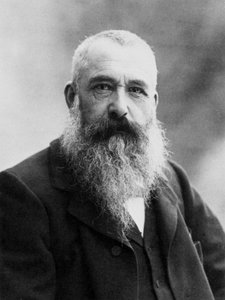
1840–1926, Francja
Claude Monet
Wczesne lata, rodzina i kształcenie Urodzony 14 listopada 1840 roku w Paryżu, Claude Monet wkroczył w świat pełen sprzecznych oczekiwań. Podczas gdy jego ojciec, Claude-Adolphe Monet, wyobrażał sobie dla syna bardziej stabilną ścieżkę zawodową, jego matka, Louise-Justine Aubrée Monet, oferowała ciche wsparcie dla jego rodzących się skłonności twórczych. Rodzina ostatecznie osiadła w Le Havre w Normandii, gdzie nadmorska atmosfera wywarła niezatarte wrażenie na młodym chłopcu. Okres dzieciństwa upłynął pod znakiem wczesnego talentu do rysunku – umiejętności, która ostatecznie miała odciągnąć go od interesów handlowych, tak bardzo preferowanych przez ojca.
Inne prace Claude Monet
 Lilia Wodne (lub Nymfeas)1916
 Wschód1872
 Stogi siana: Efekt śniegu1891
 Spacer z parasolem1875

Eseje o A Meadow
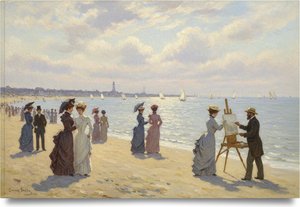 Eugène Boudin: Capturing Fleeting Moments – A Study of Light, Atmosphere & the Birth of ImpressionismExplore the life & art of Eugène Boudin, a pioneer of plein air painting and key influence on Impressionism. Discover his masterful light s…
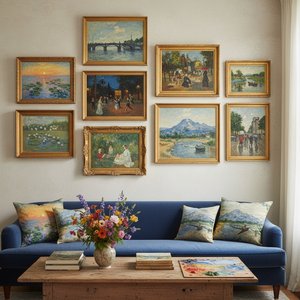 10 Arcydzieł Impresjonizmu Krajobrazowego, Które Zdefiniowały SztukęOdkryj 10 arcydzieł impresjonizmu krajobrazowego! Poznaj historie Moneta, Renoir'a i Van Gogha. Inspiracje wnętrzarskie, techniki malarskie…
 French artworks of the 1880sFrench Impressionist masterpieces by Claude Monet, Pierre-Auguste Renoir, and Georges Seurat. Find museum-quality reproductions on Original…