

 Podgląd w skali
 Wyślij jako kartkę
 Udostępnij
 Szczegóły dzieła

 Pobierz
 Podobne obiekty
 RTG
RTG Pokaz slajdów
La Corniche
 Akryl na płótnie
- Sztuka ścienna
- Cubist Futurism Landscape
 1920
1920 61.0 x 76.0 cm
 The Ingram Collection of Modern British And Contemporary Art
 Rozwiń treść
Giclée / Wydruk artystyczny
Druk giclée lub płótno o jakości muzealnej, szybka realizacja i szeroki wybór opcji wykończenia. ( Zamów ręcznie malowaną reprodukcję Kup obraz wysokiej rozdzielczości)




P118B $10

P118H $10

P118W $10

P438Z $10

P508JH $12

P508YH $12

P805H $10

P805Z $10

P919BZ $10

P919G $10

P919XJ $10

P959ZH $10

P968JZ $12

W106C $8

W218G $10

W218JH $8

W218Y $10

W307PJ $10

W316G $10

W316PJ $8

W316Y $10

W398PJ $8

W4111J $10

W500HY $15

W500JH $15

W692G $12

W849H $8

W940BG $15

W953PJ $8




Wybierz spośród naszych standardowych rozmiarów, które zachowują oryginalne proporcje dzieła sztuki.

Możesz wprowadzić własne wymiary, aby dopasować dzieło do konkretnej ramy lub przestrzeni. Jeśli wybrany rozmiar nie będzie odpowiadał proporcjom oryginalnego obrazu, przytniecie dzieło lub rozszerzymy obraz za pomocą odbicia lustrzanego lub jednolitego wypełnienia krawędzi. Przed rozpoczęciem produkcji prześlemy cyfrową wizualizację do Twojej akceptacji.
Prosimy pamiętać, że podgląd na ekranie nie odzwierciedla faktycznego przycinania ani rozszerzania. Tylko wizualizacja dokładnie pokaże końcową kompozycję.
Mimo dostępności niestandardowych rozmiarów, zalecamy wybór wymiaru z listy zdefiniowanej, aby zachować oryginalne proporcje.
Dostawa na cały świat () w ciągu 2 tygodni zamiast standardowych 4/5 tygodni. (22 Sierpień)

Bezpłatna ekspresowa wysyłka na cały świat

Wysokiej jakości płótno lniane

Pełne ubezpieczenie przesyłki

Gwarancja zwrotu należności celnych i podatków importowych

Gwarancja wiernego odwzorowania kolorów

Polityka 60-dniowego zwrotu (tylko w przypadku wad)

Gwarancja 100% zwrotu kosztów

Zniżka przy zamówieniu wielu produktów
 Opcja ze szkłem jest dostępna wyłącznie w rozmiarach poniżej 110 cm

La Corniche
Giclée / Wydruk artystyczny
Wymiary reprodukcji
-


Cena całkowita
$ 80
Opis kolekcjonerski
La Corniche – A Vision of Coastal Resilience Amidst Turbulent Times
Christopher Richard Wynne Nevinson’s “La Corniche,” painted in 1920, stands as a testament to the enduring fascination with landscape painting during the interwar period. More than just a depiction of a picturesque seaside vista—Palm trees swaying gently against the azure expanse of the Mediterranean Sea—the artwork embodies a profound reflection on Britain's experience during World War I and its subsequent recovery.
- Subject Matter: The painting captures a tranquil beachfront scene, meticulously rendered with an emphasis on natural beauty. Foregrounded by lush palm trees and punctuated by the rhythmic lapping of waves, it presents a deliberate contrast to the horrors endured during the Great War.
- Style & Technique: Nevinson’s approach leans heavily into Cubist influences alongside elements of Futurism. Geometric forms dominate the composition—particularly evident in the stylized depiction of boats and shoreline—creating a dynamic visual language that rejects traditional perspective. Thick impasto brushstrokes contribute to textural richness, conveying both solidity and movement.
The historical context is crucial to understanding “La Corniche’s” significance. Nevinson served as a war correspondent during the First World War, documenting the devastating impact of trench warfare on British soldiers. This experience instilled in him a deep empathy for human suffering and fueled his desire to portray the battlefield with uncompromising honesty. However, "La Corniche" isn't solely defined by its wartime recollections; it’s equally concerned with conveying optimism—a belief in the restorative power of nature and the possibility of rebuilding after devastation.
Symbolism:- Palm Trees: Representing resilience, vitality, and connection to ancient traditions – a deliberate choice reflecting Nevinson’s desire to portray Britain as steadfast amidst upheaval.
- Ocean Waves: Symbolize ceaseless change and renewal—a visual metaphor for overcoming adversity and embracing the future with courage.
“La Corniche” resonates emotionally through its masterful blend of observation and artistic interpretation. The artist’s skillful use of color—primarily blues and greens—creates a serene atmosphere that invites contemplation. Yet, beneath the surface tranquility lies an underlying current of determination—a subtle reminder of Britain's unwavering spirit during a period marked by immense loss and transformation.
Interior Designer Considerations:- This artwork would excel in coastal or Mediterranean-inspired interiors, complementing shades of teal and beige.
- Its bold geometric forms can serve as focal points within larger spaces, injecting energy and visual interest into minimalist compositions.
O artyście
Early Life and Artistic Awakening
Christopher Richard Wynne Nevinson, known as C.R.W. Nevinson or simply Richard Nevinson, emerged onto the British art scene at a moment of profound societal shift. Born in 1889 in Hampstead, London, his upbringing was steeped in intellectual and progressive ideals. His father, Henry Nevinson, was a renowned war correspondent and journalist, while his mother, Margaret Nevinson, dedicated herself to the burgeoning suffrage movement as a writer and activist. This environment instilled in young Richard a keen awareness of social issues and a spirit of independent thought that would permeate his artistic vision. Though initially struggling to find direction, he eventually enrolled at the Slade School of Art in 1909, studying under Henry Tonks alongside Stanley Spencer and Mark Gertler. While Tonks encouraged traditional techniques, Nevinson found himself drawn towards more radical currents, seeking a visual language that could capture the dynamism of the modern world. Early influences included the work of Augustus John, but it was his encounter with the Italian Futurists and Wyndham Lewis that truly ignited his artistic trajectory.Embracing Modernity: Futurism, Vorticism, and the Brink of War
Nevinson’s artistic development took a decisive turn when he befriended Filippo Marinetti, the charismatic leader of the Italian Futurist movement. Captivated by Futurism's celebration of speed, technology, and the energy of urban life, Nevinson began to incorporate its principles into his own work. He briefly aligned himself with Wyndham Lewis’s Rebel Art Centre, a hub for avant-garde experimentation in London. However, this association was short-lived. A fundamental disagreement over artistic direction led to a rift between Nevinson and Lewis, resulting in Nevinson's exclusion from the Vorticist movement—a distinctly British offshoot of Futurism founded by Lewis himself. Despite this falling out, Nevinson continued to explore Futurist ideas, even co-authoring a manifesto for English Futurism alongside Marinetti. His early paintings reflected these influences, depicting scenes of modern London – bustling streets, railway stations, and the nascent Underground system – with fragmented forms and dynamic compositions. These works weren’t merely representations of place; they were attempts to convey the *feeling* of modernity—its exhilarating pace and relentless energy. Alongside his exploration of Futurist aesthetics, Nevinson maintained close ties with artists like Mark Gertler and Dora Carrington, sharing a brief period of artistic kinship rooted in Neo-Primitivism before diverging onto their individual paths.The Horrors of War and the Rise of a War Artist
The outbreak of World War I irrevocably altered Nevinson’s artistic focus. Initially joining the Friends' Ambulance Unit, he witnessed firsthand the brutal realities of war while tending to wounded French and British soldiers. Illness forced his return to Britain, but he soon volunteered with the Royal Army Medical Corps. He used these experiences as the subject matter for a series of powerful paintings which utilized Futurist and Cubist techniques to great effect. Bleak, outspoken and often angry, his paintings of 1915–16 are among the masterpieces of his career, bravely opposing the prevailing jingoistic tendency. His fellow artist Walter Sickert wrote at the time that Nevinson's painting *La Mitrailleuse*, 'will probably remain the most authoritative and concentrated utterance on the war in the history of painting.' In 1917, he was appointed an official war artist, by which time he had moved away from Modernist styles, and towards realism. He captured the grim landscapes of Flanders with a visceral immediacy that shocked many viewers. His depictions of soldiers—often rendered as fragmented figures against desolate backgrounds—were marked by a profound empathy for their suffering.Post-War Years: Travels, Turmoil, and Legacy
Shortly after the end of the war, Nevinson travelled to the United States of America, where he painted a number of powerful images of New York City’s skyscrapers and bustling streets, capturing the energy and dynamism of the postwar era. However, his personality—described as temperamental and prone to exaggeration—led to strained relationships with contemporaries, and his tendency to embellish his wartime experiences drew criticism. He published his memoir, *Paint and Prejudice*, in 1937, a work notable for its lively prose but also marred by inaccuracies and inconsistencies. Despite this, Nevinson continued to paint landscapes and portraits, exploring themes of solitude and contemplation. His later works reflected a shift towards a more lyrical style, departing from the harshness of his wartime paintings. He was created Chevalier of the Legion d’Honneur in 1938, and Associate of the Royal Academy in 1939. Nevinson died in London in October 1946, leaving behind a legacy as one of Britain's most innovative and influential artists—a figure who bravely confronted the complexities of modernity and whose art continues to inspire reflection on the human condition.
Christopher Richard Wynne Nevinson
1889 - 1946 , Wielka Brytania
Krótka nota
- Artistic Movement Or Style: Futurizm, Kubizm
- Artists Or Movements Influenced By This Artist: ['Avant-garde art']
- Artists Who Influenced This Artist:
- Augustus John
- Wyndham Lewis
- Date Of Birth: 1889
- Full Name: Christopher Richard Wynne Nevinson
- Nationality: Brytyjski
- Notable Artworks:
- La Mitrailleuse
- Over the Lines
- Blackfriars Bridge
- Place Of Death: Londyn
Powiązane artykuły

Romantyczny Krajobraz w Malarstwie: 10 Arcydzieł, Które Zdefiniowały Epokę | OriginalUniqueArt.com
Odkryj 10 arcydzieł romantyzmu w malarstwie! Poznaj historie Caspara Davida Friedricha, Turnera i innych mistrzów. Inspiracje wnętrzarskie & reprodukcje obrazów najwyższej jakości na OriginalUniqueArt.com. Eksploruj kolekcję online!

John Constable: 25 Najlepszych Obrazów Mistrza Angielskiego Krajobrazu | OriginalUniqueArt
Odkryj 25 arcydzieł Johna Constable'a – mistrza angielskiego krajobrazu! Poznaj romantyczne pejzaże, technikę malarską i inspiracje z Dedham Vale. Reprodukcje obrazów najwyższej jakości na OriginalUniqueArt.com. Eksploruj pełną kolekcję online!

Evocations of Place: A Historical Journey Through Landscape Art
Explore the rich history of landscape art with OriginalUniqueArt. Discover renowned artists, movements like Impressionism & Romanticism, and expert guidance for collecting timeless pieces. Find your perfect serene escape today!
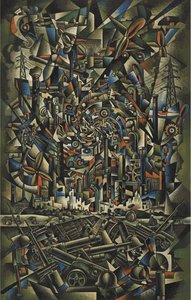
C.R.W. Nevinson: A Vorticist Vision of War & Modernity
Explore the powerful art of C.R.W. Nevinson, a key British Vorticist painter. Discover his impactful depictions of WWI and evolution beyond Futurism. Expert analysis & high-quality reproductions at OriginalUniqueArt.
Redefining Nature: A Collector's Guide to the Geometric Beauty of Cubist Landscapes
Explore the revolutionary world of Cubist landscapes. Discover how masters like Picasso and Braque redefined nature through geometric beauty, and learn expert tips for curating these transformative masterpieces in your modern home collection.



