
![[saddled Horse] — Charles Marion Russell](/media/artworks/images/full/90/71/9071d62841b74de3937df18e801fe8f2.Jpg)
 Wyślij jako kartkę
 Udostępnij
 Szczegóły dzieła

 Pobierz
 Podobne obiekty
 Pokaz slajdów
[Saddled horse]


 Rozwiń treść
Giclée / Wydruk artystyczny
Druk giclée lub płótno o jakości muzealnej, szybka realizacja i szeroki wybór opcji wykończenia. ( Zamów ręcznie malowaną reprodukcję Kup obraz wysokiej rozdzielczości)




































Wybierz spośród naszych standardowych rozmiarów, które zachowują oryginalne proporcje dzieła sztuki.

Możesz wprowadzić własne wymiary, aby dopasować dzieło do konkretnej ramy lub przestrzeni. Jeśli wybrany rozmiar nie będzie odpowiadał proporcjom oryginalnego obrazu, przytniecie dzieło lub rozszerzymy obraz za pomocą odbicia lustrzanego lub jednolitego wypełnienia krawędzi. Przed rozpoczęciem produkcji prześlemy cyfrową wizualizację do Twojej akceptacji.
Prosimy pamiętać, że podgląd na ekranie nie odzwierciedla faktycznego przycinania ani rozszerzania. Tylko wizualizacja dokładnie pokaże końcową kompozycję.
Mimo dostępności niestandardowych rozmiarów, zalecamy wybór wymiaru z listy zdefiniowanej, aby zachować oryginalne proporcje.
Dostawa na cały świat () w ciągu 2 tygodni zamiast standardowych 4/5 tygodni. (18 Sierpień)

Bezpłatna ekspresowa wysyłka na cały świat

Wysokiej jakości płótno lniane

Pełne ubezpieczenie przesyłki

Gwarancja zwrotu należności celnych i podatków importowych

Gwarancja wiernego odwzorowania kolorów

Polityka 60-dniowego zwrotu (tylko w przypadku wad)

Gwarancja 100% zwrotu kosztów

Zniżka przy zamówieniu wielu produktów
 Opcja ze szkłem jest dostępna wyłącznie w rozmiarach poniżej 110 cm

[Saddled horse]
Giclée / Wydruk artystyczny
Wymiary reprodukcji
-


Cena całkowita
$ 80
Opis kolekcjonerski
Charles Marion Russell’s “Saddled Horse”: A Testament to Western Spirit
The photograph captures a meticulously crafted bronze sculpture titled "Saddled Horse" by the celebrated American artist Charles Marion Russell (1864-1926), a figure synonymous with the romantic portrayal of the American West. More than just an image, it’s a window into Russell's artistic vision and his profound connection to the rugged landscapes and traditions of Montana—a place he considered his spiritual home after abandoning formal education at sixteen to pursue a life as a cowboy. This immersive experience profoundly influenced his oeuvre, resulting in works that transcend mere representation and delve into the very essence of frontier existence.Composition & Visual Detail
The sculpture’s composition is deceptively simple: a horse standing on a sturdy base—a deliberate choice reflecting Russell's commitment to capturing the solidity and resilience inherent in the Western environment. Viewed from a three-quarter perspective, the artist skillfully reveals the musculature of the animal, emphasizing its strength and grace. Particular attention has been paid to the saddle and rope detail – elements that underscore not only practical aspects of cowboy life but also symbolize partnership and interdependence between man and beast—themes recurrent throughout Russell’s artistic explorations. The base itself is a foundational element, grounding the horse in its surroundings and providing stability against which its form can be assessed.Color Palette & Artistic Technique
Russell employed a restrained color palette dominated by earthy hues – browns, tans, and muted yellows – mirroring the dominant tones of Montana's prairies and mountains. Subtle variations within these shades contribute to textural depth, conveying the weathered patina characteristic of bronze sculptures created during Russell’s lifetime. The artist utilized meticulous sculpting techniques, employing lost-wax casting—a method favored by artisans for centuries—to achieve remarkable precision and detail. This technique allowed him to capture the subtle nuances of horse anatomy with unparalleled accuracy, resulting in a sculpture that embodies both realism and artistic sensitivity.Historical Context & Russell’s Artistic Philosophy
Charles Marion Russell's work emerged during a period of significant cultural transformation as America wrestled with its expanding frontier identity. Influenced by Native American folklore and mythology, Russell infused his art with symbolism reflecting the spiritual values of the West—a reverence for nature, an appreciation for independence, and a belief in the enduring spirit of the cowboy tradition. Unlike Impressionists or Expressionists who sought to convey subjective emotion, Russell aimed for objective representation, striving to faithfully depict the physical world as he perceived it. His sculptures are not merely depictions; they are embodiments of his profound understanding of the human condition within its natural context.Emotional Resonance & Legacy
“Saddled Horse” transcends mere visual beauty, evoking a palpable sense of nostalgia for a bygone era—a time when cowboys roamed vast plains and forged unbreakable bonds with animals. The sculpture speaks to our enduring fascination with the wilderness and our yearning for connection with simpler ways of life. Russell’s legacy extends far beyond his artistic achievements; he remains an icon of American individualism and a champion of preserving the traditions of the West—a testament to the power of art to capture not just what we see but also what we feel. It continues to inspire artists and collectors alike, ensuring that Russell's vision of the frontier spirit endures for generations to come.O artyście
A Life Etched in the West
Charles Marion Russell, affectionately known as “C.M.” or “Kid” Russell, wasn’t born into the world he would so vividly immortalize on canvas and in bronze. Born in St. Louis, Missouri, in 1864, his early life was steeped not in formal artistic training but in a consuming fascination with the American West—a realm initially experienced through stories and sketches, fueled by an almost romantic yearning for open spaces and untamed freedom. This nascent passion would eventually propel him westward, abandoning traditional schooling at sixteen to become a working cowboy in Montana’s Judith Basin. It was a bold move, a deliberate immersion into the life he so vividly imagined, and it proved pivotal in shaping his artistic vision. Russell didn't merely *depict* the West; he lived it, breathed its dust, and absorbed its rhythms. This firsthand experience would become the bedrock of his enduring legacy. For eleven years, he embraced the rugged existence of a cowboy, ranch hand, and hunter, experiences that provided an intimate understanding of the landscape, the animals, and, most importantly, the people who inhabited it—the cowboys, Native Americans, and trappers whose lives he would so powerfully portray.From Wrangler to Chronicler
Russell’s artistic journey wasn't one of deliberate academic progression but rather an organic unfolding born from necessity and observation. While working as a cowboy, he began sketching scenes from his daily life—branding cattle, rounding up horses, encounters with wildlife—capturing moments that resonated with the raw beauty and inherent drama of the West. These weren’t polished works intended for galleries; they were personal records, visual diaries documenting a way of life rapidly disappearing. His early work was characterized by a remarkable naturalism, a keen eye for detail honed by years spent observing the nuances of his surroundings. He wasn't interested in romanticizing or idealizing the West; he sought to portray it as it *was*, with all its hardships and glories. A breakthrough came after illustrating a postcard depicting cattle struggling through a harsh winter—a scene so evocative that it sparked demand for his work, allowing him to transition from ranch hand to full-time artist in 1893. This marked the beginning of a prolific career spanning painting, sculpture, and writing, all unified by his unwavering commitment to portraying the authentic spirit of the American West. He wasn’t simply an artist; he was a visual historian, meticulously documenting a vanishing world before it faded into memory.Capturing a Vanishing World: Themes and Techniques
Russell’s art is profoundly imbued with narrative—each canvas tells a story, often steeped in the mythology and realities of frontier life. His subjects are diverse yet consistently focused on the interactions between cowboys, Native Americans, and the untamed landscape. He didn't shy away from depicting conflict, but his portrayals were rarely sensationalized; instead, they conveyed a sense of respect for all involved, acknowledging the complexities of a changing world. Big Nose George, painted in 1904, exemplifies this—a dynamic scene capturing the confrontation between a notorious outlaw and a group of cowboys, embodying both the danger and the spirit of the West. Similarly, Battle of Belly River (1905) showcases his ability to depict dramatic historical events with precision and emotional depth. His technique evolved over time, moving from a more illustrative style towards looser brushwork and bolder color palettes. He was a master storyteller, using composition, light, and shadow to create compelling narratives that resonated deeply with audiences eager to connect with the romance and ruggedness of the West. His later works often featured a heightened sense of drama and emotional intensity, reflecting his growing maturity as an artist and his deepening understanding of the human condition. He understood that the true beauty of the West lay not just in its landscapes but also in the resilience and spirit of those who inhabited it.Influences and Development
Russell’s artistic development was shaped by a confluence of factors—his early life, his experiences as a cowboy, and his exposure to European art. Growing up in St. Louis, he developed an appreciation for classical painting techniques, which he later incorporated into his own style. His time spent with Jake Hoover, a hunter and trader, instilled in him a deep respect for the wilderness and its inhabitants. Crucially, his years living among Native American tribes—particularly the Blackfeet—provided invaluable insights into their culture, traditions, and way of life. These experiences profoundly influenced his artistic vision, leading him to depict Native Americans with sensitivity and accuracy, challenging prevailing stereotypes. He also spent time in New York City, studying under artists like William Merritt Chase, which helped refine his technique and broaden his palette. The combination of these influences—his personal experiences, his formal training, and his cultural observations—resulted in a uniquely powerful and evocative style that defined his artistic legacy.Legacy and Enduring Influence
Charles Marion Russell’s impact on American art is undeniable. He wasn't simply a painter of Western scenes; he *defined* them for generations. His work helped to shape the popular image of the cowboy, the Native American, and the vast landscapes of the West, influencing countless artists who followed in his footsteps. He became known as “the cowboy artist” not just for his subject matter but also for his authentic portrayal of Western life—a portrayal rooted in personal experience rather than romanticized fantasy. Today, his paintings and sculptures are highly sought after by collectors and museums worldwide. The C.M. Russell Museum Complex in Great Falls, Montana, stands as a testament to his enduring legacy, housing an extensive collection of his work and preserving the spirit of the West he so passionately captured. His murals, like Lewis and Clark Meeting Indians at Ross’ Hole, continue to inspire awe and admiration, serving as powerful reminders of a pivotal moment in American history. Russell’s art transcends mere representation; it is a celebration of courage, resilience, and the enduring power of the human spirit—a legacy that continues to captivate audiences more than a century after his death.Beyond the Canvas: A Voice for Change
Russell wasn't just an artist; he was also an advocate. He developed a deep respect for Native American cultures during his time in Montana and Canada, and he used his art to challenge prevailing stereotypes and promote understanding. He actively supported the Chippewa tribe’s efforts to secure a reservation in Montana, even lobbying Congress on their behalf. This commitment to social justice is often overlooked but represents an important dimension of his character and artistic vision. He believed that it was crucial to document and preserve Native American traditions before they were lost forever—a belief reflected in many of his paintings and sculptures. His art wasn’t simply about depicting the West; it was about bearing witness to a changing world and advocating for those whose voices were often marginalized. This dedication to authenticity, coupled with his artistic talent, cemented his place as one of America's most important and beloved artists—a chronicler of a vanishing way of life and a champion of cultural understanding.
Charles Marion Russell
1864 - 1926 , Stany Zjednoczone
Krótka nota
- Artistic Movement Or Style: Sztuka Zachodu
- Artists Or Movements Influenced By This Artist: ['Zachodniej sztuki']
- Date Of Birth: 19 marca 1864
- Date Of Death: 24 października 1926
- Full Name: Charles Marion Russell
- Nationality: Amerykański
- Notable Artworks:
- Big Nose George...
- When the Plains...
- Peace Talk
- Place Of Birth: St. Louis, USA
Powiązane artykuły
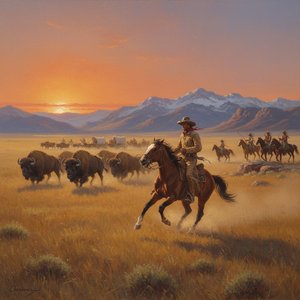
Charles Marion Russell: Capturing the American West Through a Romantic Lens
Explore the captivating world of Charles Marion Russell, 'the cowboy artist.' Discover his life, iconic paintings, advocacy for Native Americans, and investment potential. A guide for discerning art collectors.

10 Legendarnych Brązów, Które Zrewolucjonizowały Sztukę | OriginalUniqueArt
Odkryj 10 legendarnych rzeźb brązowych, które zrewolucjonizowały sztukę! Poznaj historie Rodina, Donatello i innych mistrzów. Inspiracje wnętrzarskie & reprodukcje najwyższej jakości na OriginalUniqueArt.com.

10 Legendarnych Brązów Rzeźbiarskich, Które Zmieniły Sztukę | OriginalUniqueArt
Odkryj 10 legendarnych rzeźb brązowych od Rodina, Degasa i innych mistrzów! Poznaj historię powstania arcydzieł sztuki i inspiruj się do dekoracji wnętrz. Reprodukcje najwyższej jakości na OriginalUniqueArt.com – zobacz kolekcję!

Trwałe Dziedzictwo Bronzu: Historia, Techniki i Artystyczna Ekspresja dla Kolekcjonera
Poznaj historię i techniki odlewania brązu. Poradnik dla kolekcjonerów o konserwacji, wartościowaniu i inwestycjach w sztukę brązową. Ekspercka wiedza i inspiracje.
Trwała Spuścizna Rzeźby z Brązu: Przewodnik Kolekcjonera po Formie i Znaczeniu Kulturowym
Kompleksowy przewodnik po rzeźbie z brązu dla kolekcjonerów i pasjonatów sztuki. Poznaj historię, techniki, wycenę i konserwację unikalnych dzieł. Ekspercka wiedza i porady inwestycyjne.

