
 Podgląd w skali
 Wyślij jako kartkę
 Udostępnij
 Szczegóły dzieła

 Pobierz
 Podobne obiekty
 RTG
RTG Pokaz slajdów
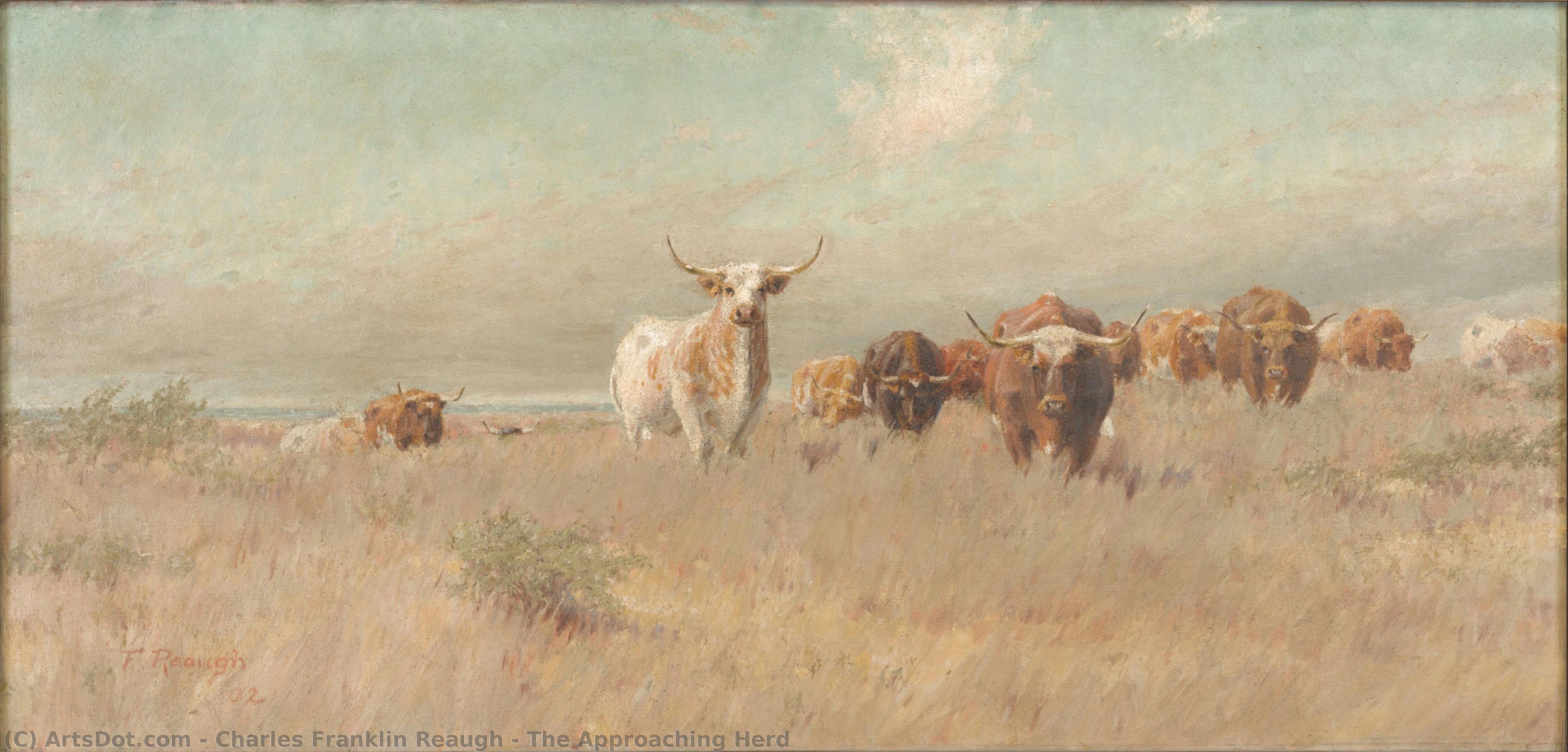
The Approaching Herd


 Rozwiń treść
Ręcznie malowana reprodukcja olejowa
Ręcznie malowany obraz olejny na płótnie, wykonany na zamówienie przez naszych artystów w wybranym przez Ciebie wymiarze i oprawie. ( Zamów wydruk Kup obraz wysokiej rozdzielczości)




































Wybierz spośród naszych standardowych rozmiarów, które zachowują oryginalne proporcje dzieła sztuki.

Możesz wprowadzić własne wymiary, aby dopasować obraz do konkretnej ramy lub przestrzeni. Jeśli wybrany rozmiar nie będzie odpowiadał proporcjom oryginału, przytniecie dzieło sztuki lub rozszerzymy je o dodatkowe elementy, ręcznie domalowane przez artystę. Przed rozpoczęciem produkcji wyślemy projekt cyfrowy do Twojej akceptacji.
Należy pamiętać, że podgląd na ekranie nie odzwierciedla rzeczywistego przycinania ani rozszerzania obrazu. Tylko projekt dokładnie pokaże ostateczną kompozycję.
Choć oferujemy możliwość zamówienia niestandardowych rozmiarów, zalecamy wybór wymiaru z gotowej listy, aby zachować oryginalne proporcje dzieła.
Po złożeniu zamówienia zespół OriginalUniqueArt.com skontaktuje się z klientem drogą mailową w celu uzyskania instrukcji i prześle wizualizację projektu
Dostawa na całym świecie () w ciągu 3–4 tygodni zamiast standardowych 5 tygodni. (19 Sierpień). Bez kompromisów w kwestii jakości.

Bezpłatna ekspresowa wysyłka na cały świat

Wysokiej jakości płótno lniane

Pełne ubezpieczenie przesyłki

Gwarancja zwrotu należności celnych i podatków importowych

Gwarancja wiernego odwzorowania kolorów

Polityka 60-dniowego zwrotu (tylko w przypadku wad)

Gwarancja 100% zwrotu kosztów

Zniżka przy zamówieniu wielu produktów
 Opcja ze szkłem jest dostępna wyłącznie w rozmiarach poniżej 110 cm

The Approaching Herd
Technika reprodukcji
Wymiary reprodukcji
-


Cena całkowita
$ 300
Opis dzieła
O artyście
Walter Richard Sickert: A Shadowy Figure of London’s Modernist Scene
Walter Richard Sickert, born in Germany in 1860 and tragically passing away in 1942, remains a compellingly enigmatic figure within the annals of British art. More than simply an artist, he was a keen observer of his time, a chronicler of London’s urban landscape, and a pivotal influence on the development of modern British painting. His work, often characterized by its muted palettes, intimate scenes, and unsettling psychological depth, continues to fascinate and provoke debate amongst art historians today. Sickert's journey from German origins to becoming a cornerstone of the Camden Town Group reveals a complex individual shaped by migration, artistic experimentation, and a profound engagement with the changing face of London at the turn of the 20th century.Early Life and Artistic Beginnings
Sickert’s early life was marked by a sense of displacement. Born in Germany, he emigrated to England as a young boy, an experience that undoubtedly shaped his perspective on identity and belonging. He initially pursued studies at the Royal Academy, where he honed his technical skills but quickly grew disillusioned with the prevailing academic style. Rejecting the idealized landscapes favored by many of his contemporaries, Sickert sought a more direct and honest representation of reality – a pursuit that would define much of his artistic career. His early works demonstrate an interest in capturing fleeting moments and the atmosphere of urban life, foreshadowing the themes he would later explore with such intensity. Crucially, he was influenced by the work of Gustave Moreau, whose Symbolist paintings explored the darker aspects of human experience and the power of suggestion.The Camden Town Group and a New Vision
In the early 1900s, Sickert became a central figure in the burgeoning Camden Town Group – a collective of artists united by their rejection of academic conventions and their desire to create a distinctly British modern art movement. This group, centered around the bohemian district of Camden Town in London, embraced a gritty realism that contrasted sharply with the polished surfaces of earlier artistic styles. Sickert’s paintings from this period—works like *Brighton Pierrots* (1908) and *The Finishers* (1907)—depict scenes of working-class life, pub interiors, and street corners, often imbued with a sense of melancholy or unease. He was particularly interested in capturing the transient nature of urban experience, using quick brushstrokes and a limited palette to convey atmosphere and mood. His use of photography as a source of inspiration—often directly copying press photographs—was both innovative and controversial at the time.Themes and Techniques: Shadows and Subtlety
Sickert’s artistic style is immediately recognizable for its distinctive qualities. He favored muted, earthy tones – browns, greys, and ochres – creating a sense of atmospheric depth and intimacy. His compositions are often cropped tightly, focusing on small, seemingly insignificant details—a hand reaching out, a pair of legs crossed, a fleeting expression on a face. He was a master of suggestion, rarely offering explicit narratives but instead inviting the viewer to interpret the scene for themselves. A key element of his work is the use of shadow – not merely as a means of creating depth, but also as a metaphor for hidden emotions and unspoken truths. He frequently depicted scenes of nightlife, gambling dens, and brothels, exploring themes of alienation, decadence, and moral ambiguity. His technique involved layering thin washes of paint to build up texture and create a sense of immediacy, capturing the fleeting moments of everyday life with remarkable skill.Legacy and Historical Significance
Despite his significant contributions to British art, Sickert’s legacy has been somewhat overshadowed by controversy. In the mid-1960s, a detective named John Broughton proposed that Sickert may have been Jack the Ripper—the unidentified serial killer who terrorized London's East End in 1888. While this theory remains largely discredited, it has contributed to a persistent fascination with the artist’s dark and unsettling subject matter. Regardless of this speculation, Sickert’s influence on subsequent generations of British artists is undeniable. He paved the way for movements such as Vorticism and Futurism in Britain, demonstrating that modern art could be rooted in observation of everyday life rather than abstract ideals. His exploration of urban space, his interest in psychological realism, and his willingness to challenge conventional artistic norms cemented his place as a pivotal figure in the transition from Impressionism to Modernism—a shadowy but undeniably important voice in the vibrant cultural landscape of early 20th-century London.
charles franklin reaugh
1860 - 1945 , United States of America
Krótka nota
- Artistic Movement Or Style: Folk art
- Artists Or Movements Influenced By This Artist: ['Grandma Moses']
- Artists Who Influenced This Artist: ['Currier and Ives']
- Date Of Birth: September 7, 1860
- Date Of Death: December 13, 1961
- Full Name: Anna Mary Robertson Moses
- Nationality: American
- Notable Artworks:
- Sugaring Off
- Old Checkered Barn
- Winter Trees
- Place Of Birth: Greenwich, New York
Powiązane artykuły
Charles Marion Russell: Capturing the American West Through a Romantic Lens
Explore the captivating world of Charles Marion Russell, 'the cowboy artist.' Discover his life, iconic paintings, advocacy for Native Americans, and investment potential. A guide for discerning art collectors.

Benjamin West: Transatlantic Ambition & Shaping American Art
Explore the life & legacy of Benjamin West, pioneering American artist and Royal Academy president. Discover his Neoclassical masterpieces, transatlantic influence, and lasting impact on art history. Learn more at OriginalUniqueArt.

Alfred Jacob Miller: Chronicling the American West Through Artistic Observation & Narrative
Explore the captivating art of Alfred Jacob Miller, chronicler of the American West. Discover his iconic paintings, techniques & lasting legacy – a valuable addition to any serious collection. Learn more at OriginalUniqueArt.
Henry Farny: Romantic Visions of the American West & Indigenous Life
Explore the evocative paintings of Henry Farny, renowned for his romantic realism & depictions of Native American life in the 19th-century West. Discover his legacy and key artworks at OriginalUniqueArt.

Charles Bird King: Capturing Native American Dignity Through Portraiture & Cultural Exchange
Explore the captivating portraits of Charles Bird King, renowned for his depictions of Native American leaders. Discover the historical context, artistic techniques, and collecting value of these significant 19th-century artworks.

