

 Zobacz w skali 1:1
 Wyślij
 Udostępnij
 Szczegóły
 Przewodnik

 Pobierz plik obrazu
 Podobne obiekty
 RTG
RTG Pokaz slajdów
 Statystyki
Stanowiąca Nuda


 Czytaj więcej
Giclée / Wydruk artystyczny
Wydruki giclée lub płótna o jakości muzealnej, szybka realizacja i szeroki wybór opcji wykończenia. ( Kup ręcznie malowany obraz Przełącz na wersję cyfrową)




P118B zł10

P118H zł10

P118W zł10

P438Z zł10

P508JH zł12

P508YH zł12

P805H zł10

P805Z zł10

P919BZ zł10

P919G zł10

P919XJ zł10

P959ZH zł10

P968JZ zł12

W106C zł8

W218G zł10

W218JH zł8

W218Y zł10

W307PJ zł10

W316G zł10

W316PJ zł8

W316Y zł10

W398PJ zł8

W4111J zł10

W500HY zł15

W500JH zł15

W692G zł12

W849H zł8

W940BG zł15

W953PJ zł8




Wybierz spośród naszych standardowych rozmiarów, które zachowują oryginalne proporcje dzieła sztuki.

Wpisz wymaganą szerokość i wysokość, aby dopasować grafikę do ramy lub ściany. Wydruk można jedynie przyciąć, nigdy nie powiększając go poza oryginalny obraz, dlatego format o innym proporcji spowoduje utratę części kompozycji. Przed rozpoczęciem druku prześlemy Ci cyfrowy podgląd do zatwierdzenia. Obraz wyświetlany na tej stronie nie pokazuje rzeczywistego przycięcia — jedynie podgląd oddaje ten efekt.
Dostawa na cały świat () w ciągu 2 tygodni zamiast standardowych 4/5 tygodni. (21 Październik)

Bezpłatna ekspresowa wysyłka na cały świat

Wysokiej jakości płótno lniane

Pełne ubezpieczenie transportowe

Gwarancja zwrotu należności celnych i podatków importowych

Gwarancja idealnego odwzorowania barw

100-dniowy okres na zwrot dzieła w przypadku wykrycia wad produkcyjnych

Gwarancja 100% zwrotu pieniędzy

Oferta przy zakupie wielu sztuk
 Opcja ze szkłem jest dostępna wyłącznie w rozmiarach poniżej 110 cm

Stanowiąca Nuda
Giclée / Wydruk artystyczny
Rozmiar reprodukcji
-


Suma do zapłaty
zł 304
Standing Nude – A Testament to Precisionist Minimalism
Charles Demuth’s “Standing Nude” (1913) transcends mere representation; it embodies the core tenets of Precisionism, a movement that sought to distill visual experience into its purest form. Executed in graphite on paper, this deceptively simple drawing captures a female figure posed confidently against a muted backdrop—a deliberate rejection of Impressionistic brushstrokes and emotional subjectivity. The artist’s meticulous attention to detail – particularly the rendering of musculature and drapery – speaks volumes about Demuth's commitment to capturing objective reality with unwavering accuracy.- Subject Matter: The nude figure is presented in a frontal pose, emphasizing anatomical precision and conveying an aura of quiet strength. It’s a deliberate departure from Romantic idealism, prioritizing factual observation over sentimental embellishment.
- Style: Precisionism distinguishes itself from its predecessors through geometric abstraction and flattened perspective. Demuth’s approach aligns perfectly with this aesthetic, prioritizing clarity and structural integrity over expressive color or tonal variation. This stylistic choice reflects the broader cultural anxieties of the post-war era – a desire for stability amidst upheaval.
- Technique: Graphite pencil drawing demonstrates remarkable control and subtlety. The artist skillfully utilizes hatching and shading to sculpt the form of the nude, creating a convincing illusion of three-dimensionality despite the absence of color. This technique underscores Precisionism’s belief in reducing visual complexity to its essential elements.
- Emotional Impact: Despite its apparent austerity, “Standing Nude” possesses a profound emotional resonance. The drawing invites contemplation about beauty, strength, and the human condition—themes that resonate across cultures and eras. It’s a piece designed to inspire quiet reflection and appreciation for understated elegance.
- Interior Design Considerations: This artwork’s minimalist aesthetic lends itself beautifully to contemporary interior spaces. Its understated elegance complements neutral color schemes and creates a serene atmosphere – perfect for meditation or quiet reflection. Imagine it framed in a gallery alongside other Precisionist masterpieces, fostering dialogue about artistic innovation and visual perception.
Pytania i odpowiedzi
Jak harmonijna jest kolorystyka dzieła „Stanowiąca Nuda” autorstwa Charles Demuth?
Harmonia kolorystyczna dzieła "Stanowiąca Nuda" została określona jako Zrównoważona harmonia.
Ile lat miał(a) Charles Demuth, tworząc "Stanowiąca Nuda" w 1913 roku?
Gdy w 1913 roku powstało dzieło „Stanowiąca Nuda”, Charles Demuth – urodzony/a w 1883 – miał/a 30 lat.
Do czego zaleca się wykorzystanie reprodukcji „Stanowiąca Nuda” autorstwa Charles Demuth?
Sugerowanym zastosowaniem dla „Stanowiąca Nuda” autorstwa Charles Demuth jest Akcent kolorystyczny. Może on jednak służyć również do innych celów.
Biografia artysty
early life and education
Charles Henry Buckius Demuth, an american watercolorist, was born on november 8, 1883, in lancaster, pennsylvania. he developed a unique style of painting known as precisionism, which would later become a significant contribution to the american art scene. demuth's early education took place at franklin & marshall academy, followed by studies at drexel university and the prestigious pennsylvania academy of fine arts in philadelphia. it was during his time at pafa that he met william carlos williams, with whom he formed a lasting friendship. Demuth’s family established the oldest continuing tobacco shop and snuff factory in America. His father, Ferdinand, was an amateur photographer and both his grandmother and aunt were painters. He was found to have diabetes as an adult, and he became one of the first people to take insulin injections (and as frequently as every two hours). At the age of five, Demuth developed a hip illness, later known as Perthes, a common hip disease boys of that time developed at that age. Due to his chronic hip problem as a young boy, Demuth became very introverted and very close to his mother, Augusta. He tended to always play with the girls in grade school because his mother and aunt believed that the boys at school would play too rough and cause his hip injury to worsen. After receiving average math and science scores and superior grades in english, history, and language, his family finally realized that his true interest was in art. Demuth graduated from Franklin and Marshall Academy in June of 1901, and after that he lived at home for the next two years until October of 1903 when he enrolled in Drexel Institute of Art, Science, and Industry in Philadelphia. During his time at Drexel, he studied with Howard Pyle who inspired him to focus much of his early artistic works on the topics of illustration field and graphic producing. He returned to Paris for five months in 1907–08 where he met Henri Matisse, Georges Braque, André Derain, Raol Dufy, and Maurice de Vlaminck. He returned to the French capital from 1912 to 1914 and studied at three academies––Julian, Modern, and Colarossi––with side trips to London and Berlin. His evolving style became individual, imaginative, and modern as he adopted some of the techniques of Paul Cézanne, Odilon Redon and James Abbott McNeill Whistler. He was also influenced by Japanese prints, which were characterized by flat chromatic surfaces, as well as the works of Impressionists and, later, Vincent van Gogh, Paul Gauguin, Henri de Toulouse-Lautrec, and Auguste Rodin.career and influences
Demuth’s artistic career began to take shape after his studies in the united states. He later attended académie colarossi and académie julian in paris, where he became an integral part of the avant-garde art scene. The city's acceptance of his homosexuality also had a profound impact on his work. Upon returning to america, demuth retained aspects of cubism in many of his works, reflecting the influence of his time in paris. His fondness for lancaster is evident in the subject matter of numerous works, showcasing industrial features like bridges, smoke stacks, and skyscrapers. Demuth was also one of the few artists whom all other artists liked as a real friend, a rare case indeed.— Marcel Duchamp. He befriended Arthur G. Dove, Marsden Hartley, John Marin, Paul Strand, Georgia O’Keeffe, and Alfred Stieglitz during his time in New York. He explored many themes and subjects throughout his life, from portraits of fellow artists to landscapes of industrial America and rural Pennsylvania.notable works and precisionism
Demuth's most famous painting, the figure five in gold, was inspired by william carlos williams's poem "the great figure." This work is a prime example of demuth’s unique style, which he termed “precisionism.” Other notable works include his "poster portraits," dedicated to artists and writers like georgia o’keeffe, arthur dove, and eugene o’neill. Demuth's distinctive approach to painting—characterized by quasi-cubist techniques, sharply defined lines, and a focus on industrial landscapes—established him as a pivotal figure in American Modernism. He captured the essence of his surroundings with remarkable accuracy and subtlety, creating images that resonate with both visual beauty and intellectual contemplation. key characteristics of precisionism:- quasi-cubist, sharply defined manner
- urban and rural landscapes with industrial features
- highly structured scenes lacking figures
- depiction of an industrial setting with sharp linearity
legacy and museum quality replicas at OriginalUniqueArt
Demuth’s contributions to the precisionist art movement have left a lasting impact on american modernism. At OriginalUniqueArt.com, you can find museum-quality replicas of his works, including the figure five in gold and other notable pieces. Explore the world of precisionism with OriginalUniqueArt's extensive collection: /pl/art/show/art-d3cl2x-pl/
Charles Demuth
1883 - 1935 , Stany Zjednoczone
Najważniejsze informacje
- Artistic Movement Or Style: Precyzjonizm
- Artists Or Movements Influenced By This Artist: ['Demuth']
- Artists Who Influenced This Artist:
- Williams
- Kubizm
- Date Of Birth: 8 listopada 1883
- Date Of Death: 23 października 1935
- Full Name: Charles Henry Buckius Demuth
- Nationality: Amerykanin
- Notable Artworks:
- Figura Pięć w złocie
- Portrety-plakaty
- Place Of Birth: Lancaster, Pensylwania
Zobacz także powiązane artykuły

Precision of Vision: Charles Demuth & the Modernist Reframing of American Industry
Explore the groundbreaking art of Charles Demuth & the Precisionism movement. Discover iconic paintings like 'The Figure Five in Gold,' his unique style, and lasting impact on American Modernism. Learn more at OriginalUniqueArt.
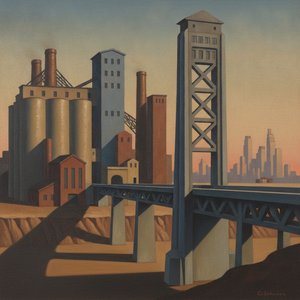
Precisionism: The Sharp Lines and Industrial Soul of American Modernism
Explore the sharp geometry and industrial soul of Precisionism. Discover how American Modernists like Charles Sheeler captured the Machine Age through Cubist-inspired landscapes and architectural precision in this definitive art history guide.
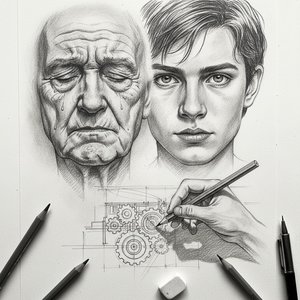
The Nuances of Graphite: Exploring Emotional Depth & Technical Mastery in Pencil Drawing
Explore the captivating world of graphite drawing! Discover its rich history, master essential techniques like chiaroscuro, and learn how artists evoke emotion through this timeless medium. Expert insights for art enthusiasts.
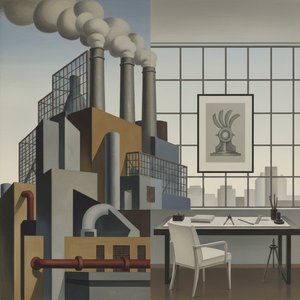
Charles Sheeler Jr.: Precisionism, Industrial Aesthetics & the American Modernist Vision
Explore the groundbreaking work of Charles Sheeler Jr., a pivotal figure in American Precisionism. Discover his iconic industrial landscapes, photographic studies & lasting influence on modernist art. Expert insights for collectors.
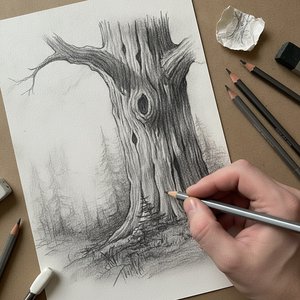
The Power of Graphite: Mastering Depth, Texture, and Detail in the Art of Pencil Drawing
Explore the profound artistry of graphite drawing. Discover professional techniques for mastering depth, texture, and detail through a lens of art history, from classical sketches to modern masterpieces. Elevate your understanding of the pencil medium with our expert guide.

