

 Podgląd w skali 1:1
 Wyślij jako kartkę
 Udostępnij
 Szczegóły dzieła
 Przewodnik

 Pobierz obraz
 Podobne obiekty
 RTG
RTG Pokaz slajdów
 Statystyki
Cantal Cup


 Rozwiń treść
Ręcznie malowana reprodukcja olejowa
Ręcznie malowany obraz olejny na płótnie, wykonany na zamówienie przez naszych artystów w wybranym przez Ciebie wymiarze i oprawie. ( Przełącz na wydania drukowane Przejdź do wersji cyfrowej)




P118B zł10

P118H zł10

P118W zł10

P438Z zł10

P508JH zł12

P508YH zł12

P805H zł10

P805Z zł10

P919BZ zł10

P919G zł10

P919XJ zł10

P959ZH zł10

P968JZ zł12

W106C zł8

W218G zł10

W218JH zł8

W218Y zł10

W307PJ zł10

W316G zł10

W316PJ zł8

W316Y zł10

W398PJ zł8

W4111J zł10

W500HY zł15

W500JH zł15

W692G zł12

W849H zł8

W940BG zł15

W953PJ zł8




Wybierz spośród naszych standardowych rozmiarów, które zachowują oryginalne proporcje dzieła sztuki.

Wpisz wymaganą szerokość i wysokość, aby obraz pasował do Twojej ramy lub ściany. Ponieważ jest to dzieło malowane ręcznie, w przypadku rozmiaru o innych proporcjach artysta może domalować nieco więcej wokół obrazu lub przyciąć jego fragmenty — wybór należy do Ciebie. Przed rozpoczęciem pracy prześlemy Ci cyfrową wizualizację do zatwierdzenia. Obraz widoczny na tej stronie nie przedstawia rzeczywistego efektu — jedynie wizualizacja oddaje realny rezultat.
Po złożeniu zamówienia zespół OriginalUniqueArt.com skontaktuje się z klientem drogą mailową w celu uzyskania instrukcji i prześle wizualizację projektu
Dostawa na całym świecie () w ciągu 3–4 tygodni zamiast standardowych 5 tygodni. (26 Październik). Bez kompromisów w kwestii jakości.

Bezpłatna ekspresowa wysyłka na cały świat

Wysokiej jakości płótno lniane

Pełne ubezpieczenie przesyłki

Gwarancja zwrotu należności celnych i podatków importowych

Gwarancja wiernego odwzorowania kolorów

100-dniowa polityka zwrotów (tylko w przypadku wad)

Gwarancja 100% zwrotu pieniędzy

Zniżka przy zakupie wielu sztuk
 Opcja ze szkłem jest dostępna wyłącznie w rozmiarach poniżej 110 cm

Cantal Cup
Technika reprodukcji
Wymiary reprodukcji
-


Cena całkowita
zł 1152
Cantal Cup - Charles Christofle & Cie.: A Legacy of Elegance and Innovation
The Cantal Cup, crafted in 1883 by Charles Christofle & Cie., stands as a testament to the Parisian jeweler’s unwavering commitment to pushing artistic boundaries within the realm of silverware. More than just an ornate vessel, it embodies the spirit of its era—the Belle Époque—a period characterized by opulent ornamentation and fascination with natural forms.
- Artist: Charles Christofle & Cie., a name synonymous with French luxury and innovation. Founded in 1830, the company revolutionized silver production through pioneering techniques like electrolytic gilding.
- Material: Primarily sterling silver, meticulously embellished with intricate floral motifs and stylized birds—a deliberate nod to Japonisme, the influence of Japanese art on European aesthetics during this time.
- Style & Technique: The piece exemplifies Art Nouveau’s organic aesthetic, prioritizing flowing lines and asymmetrical compositions. Christofle's artisans employed advanced electroplating methods, ensuring a brilliant surface finish that captured the ethereal beauty of the natural world.
A Symbol of Refinement and Artistic Vision
The Cantal Cup’s design isn’t merely decorative; it speaks to broader cultural currents. The depiction of birds—particularly those positioned around the vase—represents freedom, aspiration, and harmony – themes central to Art Nouveau philosophy. Furthermore, the circular base and symmetrical arrangement contribute to a sense of balance and stability, reflecting the Victorian ideal of order amidst beauty.
- Historical Context: Created during the Belle Époque (roughly 1871-1914), the Cantal Cup reflects the confidence and optimism of a society embracing technological advancements alongside artistic experimentation.
- Symbolism: The floral ornamentation symbolizes fertility, renewal, and femininity—values cherished by artists and intellectuals of the period.
Beyond Reproduction: Capturing the Essence
A OriginalUniqueArt.com reproduction aims to faithfully convey not only the visual splendor of the original but also its underlying artistic intention. Our skilled artisans meticulously recreate the intricate detailing and luminous surface finish, ensuring that your artwork embodies the spirit of Charles Christofle & Cie.’s legacy—a tradition of blending craftsmanship with artistic inspiration.
- Quality Assurance: We utilize premium materials and printing processes to guarantee exceptional color accuracy and textural fidelity.
- Interior Design Inspiration: The Cantal Cup’s timeless elegance lends itself beautifully to creating sophisticated dining spaces—a subtle reminder of France's artistic heritage.
Pytania i odpowiedzi
Ilu użytkowników ogląda "Cantal Cup"?
Strona Statystyki wyświetleń dzieła „Cantal Cup” – Charles Christofle & Cie. przedstawia statystyki odwiedzin: miesięczną liczbę wyświetleń tego dzieła, porównanie z najczęściej oglądanymi pracami artysty oraz informacje o pochodzeniu odwiedzających.
Jaki kolor dominuje w kompozycji „Cantal Cup” – Charles Christofle & Cie.?
Dominującym kolorem dzieła „Cantal Cup” – Charles Christofle & Cie. jest Putty (#e1e3dc).
W którym muzeum znajduje się oryginał "Cantal Cup"?
Oryginał dzieła „Cantal Cup” można zobaczyć w Musée Pasteur, Paryż, Francja.
Biografia artysty
The Gilded Legacy of Charles Christofle & Cie.
From humble beginnings in a Parisian workshop to becoming synonymous with French luxury, the story of Charles Christofle & Cie. is one of innovation, artistry, and unwavering dedication to craftsmanship. Founded in 1830 by Charles Christofle, the company didn’t simply create silverware; it revolutionized an industry and elevated everyday objects into works of art. Born into a family steeped in Parisian metalworking traditions, young Charles apprenticed with his brother-in-law, Hugues Calmette, honing his skills in jewelry making before boldly venturing out on his own. By 1832, he had registered his master’s mark, signaling the official launch of a business that would soon capture the attention – and admiration – of royalty and discerning collectors alike. This early period wasn't merely about establishing a firm; it was about laying the groundwork for a future defined by technical mastery and artistic ambition.A Revolution in Silver: Electrolysis and Artistic Flourishing
The pivotal moment that cemented Charles Christofle & Cie.’s place in history arrived in 1842 with the acquisition of patents for gilding and silver plating through electrolysis, from Henri de Ruolz and Englishman Elkington. This wasn’t just a technical advancement; it was a paradigm shift. Prior to this innovation, achieving a lustrous silver finish often involved harmful processes. Christofle's adoption of electrolysis allowed for the creation of high-quality silverware on an unprecedented scale, making luxury accessible while maintaining exceptional standards. This breakthrough propelled the company into prominence, and soon, commissions began pouring in from the most esteemed circles. In 1846, King Louis-Philippe commissioned a magnificent dinner service for the Château d'Eu, a testament to Christofle’s burgeoning reputation. However, it was Emperor Napoleon III’s monumental order of a 4,000-piece service in 1851 – complete with elaborate *surtouts* – that truly solidified Christofle as the premier provider of luxury tableware for the French Empire and beyond. The titles “Goldsmith to the King” and “Supplier of the Emperor” weren’t merely accolades; they were symbols of a trust earned through unparalleled quality and artistry.Collaboration and Artistic Vision
Charles Christofle understood that true luxury wasn't solely about technical prowess, but also about artistic expression. He actively fostered collaborations with some of the most influential artists and designers of his era, including Mathurin Moreau, Albert-Ernest Carrier-Belleuse, and Émile-Auguste Reiber. These partnerships resulted in pieces that transcended mere functionality, becoming sculptures in silver, imbued with the spirit of their time. The company’s aesthetic diversity flourished under these collaborations, reflecting the prevailing artistic styles – from Neoclassicism to Romanticism and beyond. A prime example is “La Plage d’Ambleteuse” by Carolus-Duran, a stunning piece that exemplifies the harmonious fusion of artistry and craftsmanship. Christofle didn't simply commission art; they integrated it into the very fabric of their creations, transforming tableware into collectible objects of beauty. This commitment to artistic collaboration became a hallmark of the company’s identity, setting it apart from its competitors.A Lasting Symbol of French Elegance
For over 180 years, Charles Christofle & Cie. has remained an enduring symbol of French luxury and *savoir-faire*. The company's collections expanded beyond tableware to encompass exquisite *objets d’art*, decorative statuary, prestigious prizes for competitions, and monumental décor – each piece bearing the hallmark of exceptional quality. Strategic acquisitions, such as Maison Cardeilhac, further strengthened Christofle’s position within the industry, preserving traditional techniques while embracing innovation. Today, the legacy of Charles Christofle & Cie. is not only celebrated in private collections around the world but also preserved in museum displays, including at the Musée de l'Évêché in Limoges, France. The techniques employed – shaping, hammering, turning, embossing, chasing, and engraving – are a testament to the dedication of generations of skilled artisans. The materials themselves—gold and silver, used both as surface treatments and in solid alloys—speak to a commitment to enduring quality. Christofle’s story is more than just that of a company; it's a narrative woven into the very fabric of French cultural heritage, continuing to inspire awe and admiration with each exquisitely crafted piece.
Charles Christofle & Cie.
1830 - 1956 , France
Krótka nota
- Full Name: Charles Christofle & Cie.
- Nationality: French
- Date Of Birth: 1830
- Date Of Death: 1956
- Place Of Birth: Paris, France
- Notable Artworks:
- La Plage d’Ambleteuse
- Cantal Cup
- Eiförmige Vase
- Artistic Movement Or Style: Silverware, Tableware
Powiązane artykuły

Złota Era Stylu: Estetyczne Zasady i Trwałe Dziedzictwo Art Deco
Poznaj fascynującą historię Art Deco – od narodzin stylu po współczesne inspiracje. Ekspercka analiza cech, wpływ na architekturę i wzornictwo oraz ikoniczne dzieła tego glamour okresu. Odkryj dziedzictwo Art Deco!

The Enduring Appeal of Decorative Art: A Historical Survey of Ornamentation, Functionality & Cultural Significance
Explore the rich history of decorative arts with OriginalUniqueArt.com. Discover key movements, influential artists, and expert guidance for building a discerning collection. Learn about ornamentation, functionality & cultural significance.

Art Deco Unveiled: The Glamour and Geometry of a Timeless Era
Discover the breathtaking allure of Art Deco. Explore the era's iconic geometry, legendary designers like Erté, and timeless glamour. Perfect for discerning collectors seeking to infuse their spaces with sophisticated modernist elegance and historical prestige.

Blask i geometria pragnień: Wpływ Art Deco na współczesną kulturę wizualną
Odkryj fascynujący świat Art Deco! Poznaj historię tego ikonicznego stylu, jego wpływ na architekturę i design oraz dziedzictwo we współczesnej kulturze wizualnej. Ekspercka analiza i inspiracje dla miłośników sztuki.
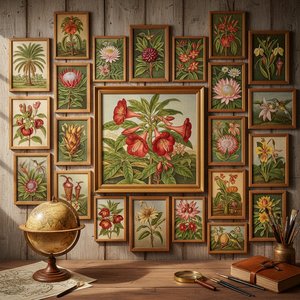
Marianne North: 25 Najpiękniejszych Obrazów Botanicznych i Krajobrazów – Kolekcja OriginalUniqueArt
Odkryj 25 fascynujących obrazów Marianne North – wiktoriańskiej artystki i botaniczki. Egzotyczne krajobrazy, kolorowe kwiaty i inspiracje wnętrzarskie. Reprodukcje najwyższej jakości na OriginalUniqueArt.com! Poznaj pełną kolekcję online.