- Strona główna

- Reprodukcja obrazu olejnego
- Caspar David Friedrich
- Winter Landscape

 Preview
 Udostępnij
 Udostępnij
 Szczegóły dzieła

 Pobierz
 Podobne obiekty
 RTG
RTG Pokaz slajdów
Winter Landscape
 Oil On Canvas
- WallArt
- Romanticism
 1811
1811 33.0 x 45.0 cm
 Rozwiń treść
Ręcznie malowana reprodukcja olejowa
Ręcznie malowany olej na płótnie w Twoim wymiarze i ramie, tworzony na zamówienie przez naszych artystów. ( Switch to Print Switch to Image)




P118B $10

P118H $10

P118W $10

P438Z $10

P508JH $12

P508YH $12

P805H $10

P805Z $10

P919BZ $10

P919G $10

P919XJ $10

P959ZH $10

P968JZ $12

W106C $8

W218G $10

W218JH $8

W218Y $10

W307PJ $10

W316G $10

W316PJ $8

W316Y $10

W398PJ $8

W4111J $10

W500HY $15

W500JH $15

W692G $12

W849H $8

W940BG $15

W953PJ $8




Wybierz spośród naszych predefiniowanych rozmiarów, które zachowują oryginalne proporcje dzieła sztuki.

Możesz wprowadzić własne wymiary, aby dopasować obraz do konkretnej ramy lub przestrzeni. Jeśli wybrany rozmiar nie będzie odpowiadał proporcjom oryginału, przytniecie dzieło sztuki lub rozszerzymy je o dodatkowe elementy, ręcznie domalowane przez artystę. Przed rozpoczęciem produkcji wyślemy projekt cyfrowy do Twojej akceptacji.
Należy pamiętać, że podgląd na ekranie nie odzwierciedla rzeczywistego przycinania ani rozszerzania obrazu. Tylko projekt dokładnie pokaże ostateczną kompozycję.
Choć oferujemy możliwość zamówienia niestandardowych rozmiarów, zalecamy wybór wymiaru z gotowej listy, aby zachować oryginalne proporcje dzieła.
Po złożeniu zamówienia zespół OriginalUniqueArt.com skontaktuje się z klientem drogą mailową w celu uzyskania instrukcji i prześle wizualizację projektu
Dostawa na całym świecie () w ciągu 3/4 tygodni zamiast standardowych 5 tygodni. (30 Lipiec). Bez kompromisów w kwestii jakości.

Bezpłatna ekspresowa wysyłka na cały świat

Wysokiej jakości płótno lniane

Pełne ubezpieczenie przesyłki

Gwarancja zwrotu należności celnych

Gwarancja pełnego zgodności kolorystycznej

Polityka 60-dniowego zwrotu (tylko w przypadku wad)

Gwarancja 100% zwrotu pieniędzy

Zniżka przy większych zamówieniach
 Opcja szkła jest dostępna wyłącznie w rozmiarach poniżej 110 cm

Winter Landscape
Technika reprodukcji
Wymiary reprodukcji
-


Cena całkowita
$ 300
Opis dzieła
A Meditation on Winter’s Majesty: Exploring Caspar David Friedrich's ‘Winter Landscape’
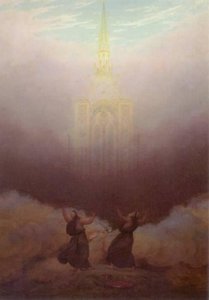
Caspar David Friedrich’s “Winter Landscape” (1811) stands as a quintessential emblem of Romanticism—a movement that prioritized emotion and imagination over rational observation. More than just a depiction of a wintry scene, it’s an invitation to contemplate the sublime, a profound experience of awe inspired by nature's grandeur and imbued with spiritual significance.
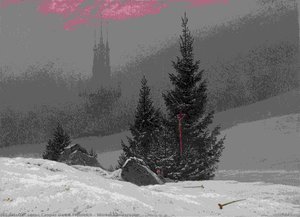
- Subject Matter: The painting portrays a solitary winter vista dominated by snow-covered fir trees and rocky outcrops. A distant gothic cathedral punctuates the horizon line, subtly hinting at themes of faith and remembrance.
- Style & Technique: Friedrich’s masterful brushwork—characterized by impasto—creates a textured surface that captures the physicality of the landscape. The artist eschewed meticulous realism, opting instead for expressive rendering to convey mood and atmosphere.
The cathedral itself serves as a powerful symbol; its imposing silhouette against the hazy sky represents not merely architectural grandeur but also humanity’s aspiration towards transcendence. Simultaneously, the snow—a recurring motif in Friedrich's oeuvre—represents purity, stillness, and isolation – concepts deeply resonant with Romantic sensibilities.
- Historical Context: Painted during a period of intellectual ferment following Napoleon’s defeat, “Winter Landscape” reflects the broader Romantic preoccupation with confronting mortality and embracing the beauty of untamed wilderness. It embodies the movement's belief that nature possessed an inherent moral authority capable of inspiring spiritual contemplation.
- Emotional Impact: Viewing Friedrich’s masterpiece evokes a feeling of melancholy serenity—a recognition of life’s fleetingness tempered by the enduring presence of divine order. The subdued lighting and atmospheric perspective heighten the sense of mystery, prompting viewers to engage in introspection and contemplate their own relationship with the natural world.
A reproduction of “Winter Landscape” offers an exceptional opportunity to bring Friedrich’s vision into any interior space. Its rich textural detail and evocative color palette—primarily cool blues and greys—complement a variety of design aesthetics, creating a tranquil yet intellectually stimulating environment.
Biografia artysty
A Solitary Vision: The Life and Art of Caspar David Friedrich
Born in the Baltic port city of Greifswald in 1774, Caspar David Friedrich’s life was steeped in a melancholic atmosphere that would profoundly shape his artistic vision. His early years were marked by loss – the deaths of his mother and siblings cast a long shadow, fostering a sensitivity to mortality and transience that became central themes in his work. Initially educated by his older brother Christian in drawing, Friedrich’s formal training began at the University of Leipzig, where he pursued both art and theology, though neither degree was completed. This dual interest – a fascination with the visual world alongside a deep spiritual questioning – would prove crucial to his development as an artist. Further studies in Copenhagen honed his technical skills, exposing him to landscape painting traditions that would serve as a foundation for his unique style, yet it was not imitation he sought but rather expression—a means of conveying inner emotional states through the language of nature.The Birth of Romantic Landscape
Friedrich’s artistic journey wasn't merely about depicting scenery; it was about imbuing landscapes with profound symbolic meaning. He moved away from the meticulous detail favored by earlier artists, embracing a more personal and expressive approach. His paintings are characterized by an emphasis on the sublime – evoking feelings of awe, terror, and spiritual connection in the face of nature’s grandeur. The use of *Rückenfiguren*, figures seen from behind, became a signature element, inviting viewers to step into the scene and share in the contemplative experience. Natural elements like ancient trees, towering mountains, swirling fog, and crumbling ruins weren't simply picturesque details; they were potent symbols representing life’s cycles, spiritual longing, and the weight of history. His palette, often muted with blues, grays, and browns, further enhanced the mood of introspection and solemnity that pervades his work. He pioneered a way to depict landscapes not as mere views but as reflections of the human soul—a revolutionary concept for its time.Iconic Works and Enduring Themes
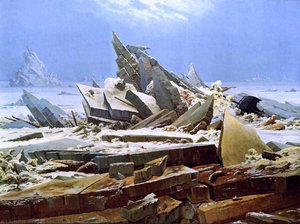
Several paintings stand out as defining examples of Friedrich’s artistic achievement. “The Abbey in the Oakwood” (1809-1810), a haunting image of a ruined churchyard enveloped by bare trees, speaks powerfully to themes of mortality and spiritual decay. It exemplifies his masterful use of light and shadow to convey emotion and invites contemplation on the passage of time. Perhaps his most famous work, “Wanderer Above the Sea of Fog” (c. 1818), encapsulates the Romantic ideal of the individual confronting the vastness and mystery of existence. The figure, silhouetted against a swirling sea of mist, embodies both human aspiration and insignificance—a poignant reminder of our vulnerability in the face of nature’s immensity. “Chalk Cliffs on Rügen” (1818) demonstrates his mastery of atmospheric effects and subtly conveys a sense of national identity—a growing concern in the fragmented political landscape of early 19th-century Germany. The composition draws inspiration from Dutch landscape painters like Jacob van Ruisdael, reflecting Friedrich’s admiration for classical artistic traditions. Even more dramatic is “The Sea of Ice” (1824), a chilling depiction of an Arctic wasteland, representing nature’s immense power and indifference to human fate—a testament to the sublime and Friedrich's ability to capture the psychological impact of confronting overwhelming natural forces. Recurring throughout his oeuvre are themes of nature as a manifestation of the divine, the fragility of humanity in the face of cosmic forces, melancholy, solitude, spiritual yearning, and a burgeoning sense of German nationalism.Influences and Artistic Development
Friedrich’s artistic development was shaped by several key influences. He studied under Johann Christian Dahl, whose landscapes instilled in him a fascination with atmospheric perspective and tonal modulation—techniques he would skillfully employ throughout his career. Furthermore, Friedrich engaged deeply with the philosophical ideas of Immanuel Kant, particularly Kant's concept of transcendental idealism, which questioned the certainty of human perception and emphasized the role of imagination in shaping our experience. These intellectual currents informed his artistic vision, prompting him to explore the relationship between mind and nature—a central preoccupation that distinguishes his work from earlier landscape painters. He rejected academic conventions, prioritizing emotional expression over precise representation, establishing himself as a pioneer of Romantic art.Legacy and Rediscovery
Caspar David Friedrich’s art resonated deeply with audiences during his lifetime, though it wasn't universally appreciated. Despite facing criticism for perceived obscurity and lack of technical virtuosity, he achieved considerable renown among fellow artists and intellectuals. However, Friedrich experienced a significant rediscovery in the late 20th century, becoming widely recognized as one of the most important figures in German Romanticism—a movement that profoundly impacted European art and culture. His emphasis on subjective experience and emotional expression paved the way for later movements like Symbolism and Surrealism, influencing generations of artists who sought to explore the inner world through visual means. He remains a pivotal figure whose work continues to inspire awe and contemplation, reminding us of the profound connection between humanity and the natural world—a connection that Friedrich eloquently captured in his unforgettable landscapes.
Caspar David Friedrich
1774 - 1840 , Niemcy
Kluczowe informacje
- Artistic Movement Or Style: Romantyzm
- Artists Or Movements Influenced By This Artist:
- Symbolizm
- Surrealizm
- Artists Who Influenced This Artist:
- Holenderscy Mistrzowie
- J.C. Dahl
- Date Of Birth: 5 września 1774
- Full Name: Caspar David Friedrich
- Nationality: Niemiec
- Notable Artworks:
- Abbey w Oleśnicy
- Wędrowiec nad Morzem Mgły
- Żwiry Rugii
- Place Of Birth: Greifswald, Niemcy
Powiązane artykuły

Romantyczny Krajobraz w Malarstwie: 10 Arcydzieł, Które Zdefiniowały Epokę | OriginalUniqueArt.com
Odkryj 10 arcydzieł romantyzmu w malarstwie! Poznaj historie Caspara Davida Friedricha, Turnera i innych mistrzów. Inspiracje wnętrzarskie & reprodukcje obrazów najwyższej jakości na OriginalUniqueArt.com. Eksploruj kolekcję online!

Caspar David Friedrich: Romanticism's Master of Landscape & the Sublimity of Inner Experience
Explore the profound landscapes of Caspar David Friedrich, a master of German Romanticism. Discover the symbolism, themes & enduring influence of this iconic artist. A deep dive into his life and work.
Claude Monet: 25 Najlepszych Arcydzieł Impresjonizmu | Reprodukcje Obrazów Online
Odkryj 25 najpiękniejszych arcydzieł Claude Moneta – impresjonistycznych pejzaży, nymfeii i słonecznych krajobrazów. Poznaj historię sztuki i zainspiruj się do dekoracji wnętrz z OriginalUniqueArt.com! Eksploruj pełną kolekcję online.

Paul Cézanne: 25 Arcydzieł, które Zrewolucjonizowały Świat Sztuki | OriginalUniqueArt
Odkryj 25 arcydzieł Paula Cézanne'a – od impresjonizmu po postimpresjonizm. Poznaj historie, techniki i inspiracje malarza, który zrewolucjonizował sztukę. Reprodukcje obrazów najwyższej jakości na OriginalUniqueArt.com!
Krajobraz w sztuce: 10 arcydzieł, które inspirują (malarstwo, dekoracje wnętrz)
Odkryj 10 arcydzieł krajobrazu w sztuce! Poznaj historie Moneta, van Gogha i Turnera. Inspiracje pejzażami, techniki malarskie i reprodukcje najwyższej jakości na OriginalUniqueArt.com. Znajdź idealny obraz do Twojego wnętrza!