

 Podgląd w skali 1:1
 Wyślij jako kartkę
 Udostępnij
 Szczegóły dzieła
 Przewodnik

 Pobierz obraz
 Podobne obiekty
 RTG
RTG Pokaz slajdów
 Statystyki
Rock studies
 Oil
Oil- WallArt
- Romantic Landscape
 19th Century
 18.0 x 24.0 cm
 Kupferstichkabinett
 Rozwiń treść
Giclée / Wydruk artystyczny
Wydruki giclée lub płótna o jakości muzealnej, szybka realizacja i szeroki wybór opcji wykończenia. ( Zamów ręcznie malowaną reprodukcję Przejdź do wersji cyfrowej)




P118B zł10

P118H zł10

P118W zł10

P438Z zł10

P508JH zł12

P508YH zł12

P805H zł10

P805Z zł10

P919BZ zł10

P919G zł10

P919XJ zł10

P959ZH zł10

P968JZ zł12

W106C zł8

W218G zł10

W218JH zł8

W218Y zł10

W307PJ zł10

W316G zł10

W316PJ zł8

W316Y zł10

W398PJ zł8

W4111J zł10

W500HY zł15

W500JH zł15

W692G zł12

W849H zł8

W940BG zł15

W953PJ zł8




Wybierz spośród naszych standardowych rozmiarów, które zachowują oryginalne proporcje dzieła sztuki.

Wpisz wymaganą szerokość i wysokość, aby dopasować grafikę do ramy lub ściany. Wydruk można jedynie przyciąć, nigdy nie powiększając go poza oryginalny obraz, dlatego format o innych proporcjach spowoduje utratę części kompozycji. Przed rozpoczęciem druku prześlemy Ci cyfrowy podgląd do zatwierdzenia. Obraz wyświetlany na tej stronie nie pokazuje rzeczywistego przycięcia — jedynie podgląd oddaje ten efekt.
Dostawa na cały świat () w ciągu 2 tygodni zamiast standardowych 4/5 tygodni. (28 Październik)

Bezpłatna ekspresowa wysyłka na cały świat

Wysokiej jakości płótno lniane

Pełne ubezpieczenie przesyłki

Gwarancja zwrotu należności celnych i podatków importowych

Gwarancja wiernego odwzorowania kolorów

100-dniowa polityka zwrotów (tylko w przypadku wad)

Gwarancja 100% zwrotu pieniędzy

Zniżka przy zakupie wielu sztuk
 Opcja ze szkłem jest dostępna wyłącznie w rozmiarach poniżej 110 cm

Rock studies
Giclée / Wydruk artystyczny
Wymiary reprodukcji
-


Cena całkowita
zł 307
A Symphony of Solitude: The Ethereal Essence of Rock Studies
In the quietude of Caspar David Friedrich's "Rock Studies," we encounter more than a mere landscape; we enter a sanctuary of profound spiritual contemplation. Painted around 1830, this masterpiece serves as a quintessential emblem of the German Romantic movement, capturing a moment where the physical world dissolves into the metaphysical. The composition is anchored by a solitary pine tree, its rugged form standing as a silent sentinel amidst a sea of misty hills and heavy, overcast skies. There is an undeniable gravity to the scene, a weightiness that pulls the viewer inward, inviting a deep, meditative stillness. For the discerning collector or interior designer, this piece offers a focal point of immense character, bringing a sense of grounded tranquility and intellectual depth to any curated space.
The technical mastery behind Friedrich’s vision lies in his delicate use of Atmosphäre—a technique where thin, translucent glazes of oil paint are layered with painstaking precision. This method allows light to appear as if it is breathing through the canvas, creating luminous tonal gradations that mimic the way morning mist clings to a forest floor. His palette is intentionally restrained, relying on a sophisticated harmony of muted browns, deep mossy greens, and somber blues. These colors do not merely represent nature; they evoke the very feeling of damp earth and cool air. The interplay of light and shadow creates a sense of immense depth, where the distant, hazy mountains seem to recede into infinity, much like the boundless reaches of the human soul.
Symbolism and the Sublime Connection
To gaze upon "Rock Studies" is to engage with the theological and philosophical currents of the early 19th century. Friedrich, deeply influenced by the spiritual tenets of his era, viewed the natural world as a divine manuscript. The upward-reaching branches of the central pine tree act as a powerful metaphor for human aspiration and resilience, reaching toward the heavens while remaining firmly rooted in the earthly realm. This duality—the tension between our physical existence and our spiritual yearning—is the heartbeat of the painting. The presence of a subtle cross or religious undertone within the landscape serves to remind the viewer that, in the eyes of the Romantic artist, God is found not in grand cathedrals, but in the silent majesty of the wild.
For those seeking to incorporate art into a modern living environment, this reproduction offers a unique emotional resonance. It provides a window into a world of sublime beauty, where the vastness of nature humbles the observer and encourages introspection. Whether placed in a quiet study, a minimalist gallery, or a sophisticated lounge, "Rock Studies" acts as an anchor of peace. It is a piece that does not demand attention through loud colors or chaotic movement, but rather commands respect through its quiet, enduring strength and its ability to transform a room into a space of profound reflection and timeless elegance.
Pytania i odpowiedzi
Jaka jest technika i wymiary oryginału „Rock studies” – Caspar David Friedrich?
"Rock studies" powstało przy użyciu Oil i w swojej oryginalnej formie ma wymiary 18 x 24 cm.
Jakie emocje wywołują kolory w „Rock studies” – Caspar David Friedrich?
W "Rock studies" kolorystyka Dark współgra z Reflective nastrojem.
Jakie emocje budzi "Rock studies"?
„Rock studies” – Caspar David Friedrich emanuje Reflective emocjonalnym nastrojem.
Biografia artysty
A Solitary Vision: The Life and Art of Caspar David Friedrich
Born in the Baltic port city of Greifswald in 1774, Caspar David Friedrich’s life was steeped in a melancholic atmosphere that would profoundly shape his artistic vision. His early years were marked by loss – the deaths of his mother and siblings cast a long shadow, fostering a sensitivity to mortality and transience that became central themes in his work. Initially educated by his older brother Christian in drawing, Friedrich’s formal training began at the University of Leipzig, where he pursued both art and theology, though neither degree was completed. This dual interest – a fascination with the visual world alongside a deep spiritual questioning – would prove crucial to his development as an artist. Further studies in Copenhagen honed his technical skills, exposing him to landscape painting traditions that would serve as a foundation for his unique style, yet it was not imitation he sought but rather expression—a means of conveying inner emotional states through the language of nature.The Birth of Romantic Landscape
Friedrich’s artistic journey wasn't merely about depicting scenery; it was about imbuing landscapes with profound symbolic meaning. He moved away from the meticulous detail favored by earlier artists, embracing a more personal and expressive approach. His paintings are characterized by an emphasis on the sublime – evoking feelings of awe, terror, and spiritual connection in the face of nature’s grandeur. The use of *Rückenfiguren*, figures seen from behind, became a signature element, inviting viewers to step into the scene and share in the contemplative experience. Natural elements like ancient trees, towering mountains, swirling fog, and crumbling ruins weren't simply picturesque details; they were potent symbols representing life’s cycles, spiritual longing, and the weight of history. His palette, often muted with blues, grays, and browns, further enhanced the mood of introspection and solemnity that pervades his work. He pioneered a way to depict landscapes not as mere views but as reflections of the human soul—a revolutionary concept for its time.Iconic Works and Enduring Themes
Several paintings stand out as defining examples of Friedrich’s artistic achievement. “The Abbey in the Oakwood” (1809-1810), a haunting image of a ruined churchyard enveloped by bare trees, speaks powerfully to themes of mortality and spiritual decay. It exemplifies his masterful use of light and shadow to convey emotion and invites contemplation on the passage of time. Perhaps his most famous work, “Wanderer Above the Sea of Fog” (c. 1818), encapsulates the Romantic ideal of the individual confronting the vastness and mystery of existence. The figure, silhouetted against a swirling sea of mist, embodies both human aspiration and insignificance—a poignant reminder of our vulnerability in the face of nature’s immensity. “Chalk Cliffs on Rügen” (1818) demonstrates his mastery of atmospheric effects and subtly conveys a sense of national identity—a growing concern in the fragmented political landscape of early 19th-century Germany. The composition draws inspiration from Dutch landscape painters like Jacob van Ruisdael, reflecting Friedrich’s admiration for classical artistic traditions. Even more dramatic is “The Sea of Ice” (1824), a chilling depiction of an Arctic wasteland, representing nature’s immense power and indifference to human fate—a testament to the sublime and Friedrich's ability to capture the psychological impact of confronting overwhelming natural forces. Recurring throughout his oeuvre are themes of nature as a manifestation of the divine, the fragility of humanity in the face of cosmic forces, melancholy, solitude, spiritual yearning, and a burgeoning sense of German nationalism.Influences and Artistic Development
Friedrich’s artistic development was shaped by several key influences. He studied under Johann Christian Dahl, whose landscapes instilled in him a fascination with atmospheric perspective and tonal modulation—techniques he would skillfully employ throughout his career. Furthermore, Friedrich engaged deeply with the philosophical ideas of Immanuel Kant, particularly Kant's concept of transcendental idealism, which questioned the certainty of human perception and emphasized the role of imagination in shaping our experience. These intellectual currents informed his artistic vision, prompting him to explore the relationship between mind and nature—a central preoccupation that distinguishes his work from earlier landscape painters. He rejected academic conventions, prioritizing emotional expression over precise representation, establishing himself as a pioneer of Romantic art.Legacy and Rediscovery
Caspar David Friedrich’s art resonated deeply with audiences during his lifetime, though it wasn't universally appreciated. Despite facing criticism for perceived obscurity and lack of technical virtuosity, he achieved considerable renown among fellow artists and intellectuals. However, Friedrich experienced a significant rediscovery in the late 20th century, becoming widely recognized as one of the most important figures in German Romanticism—a movement that profoundly impacted European art and culture. His emphasis on subjective experience and emotional expression paved the way for later movements like Symbolism and Surrealism, influencing generations of artists who sought to explore the inner world through visual means. He remains a pivotal figure whose work continues to inspire awe and contemplation, reminding us of the profound connection between humanity and the natural world—a connection that Friedrich eloquently captured in his unforgettable landscapes.
Caspar David Friedrich
1774 - 1840 , Niemcy
Krótka nota
- Artistic Movement Or Style: Romantyzm
- Artists Or Movements Influenced By This Artist:
- Symbolizm
- Surrealizm
- Artists Who Influenced This Artist:
- Holenderscy Mistrzowie
- J.C. Dahl
- Date Of Birth: 5 września 1774
- Full Name: Caspar David Friedrich
- Nationality: Niemiec
- Notable Artworks:
- Abbey w Oleśnicy
- Wędrowiec nad Morzem Mgły
- Żwiry Rugii
- Place Of Birth: Greifswald, Niemcy
Powiązane artykuły
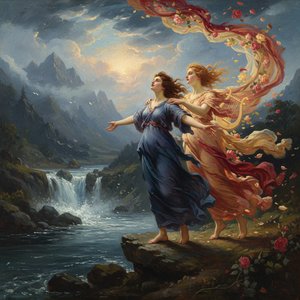
Romantyzm: Emocje, Indywidualizm i Narodowa Tożsamość w Sztuce Polskiej
Odkryj fascynujący świat polskiego romantyzmu! Analiza kluczowych dzieł Kossaka, Chełmońskiego i Malczewskiego. Poznaj emocje, historię i piękno natury w sztuce epoki. Ekspercka wiedza o wpływie romantyzmu na kulturę.
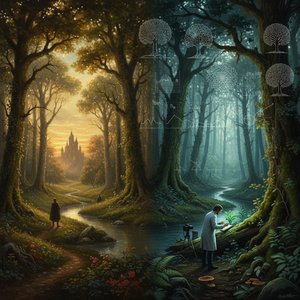
Urokliwe korony drzew: Las w sztuce od romantyzmu do ekologicznej świadomości
Odkryj fascynującą historię lasu w sztuce – od romantycznych pejzaży Fryderyka po współczesne interpretacje ekologiczne. Inspiracje, analiza dzieł i porady dekoracyjne na OriginalUniqueArt.com.
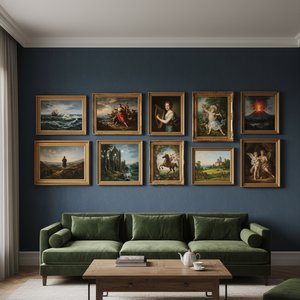
10 Arcydzieł Romantyzmu, które Zdefiniowały Epokę | OriginalUniqueArt.pl
Odkryj 10 arcydzieł romantyzmu! Poznaj historie Delacroixa, Friedricha i Goyi. Malarstwo pełne emocji, pejzaże i portrety definiujące epokę. Reprodukcje obrazów najwyższej jakości na OriginalUniqueArt.com – inspiracje do wnętrz i sztuka dla Ciebie.

Caspar David Friedrich: Romanticism's Master of Landscape & the Sublimity of Inner Experience
Explore the profound landscapes of Caspar David Friedrich, a master of German Romanticism. Discover the symbolism, themes & enduring influence of this iconic artist. A deep dive into his life and work.

Romantyczny Krajobraz w Malarstwie: 10 Arcydzieł, Które Zdefiniowały Epokę | OriginalUniqueArt.com
Odkryj 10 arcydzieł romantyzmu w malarstwie! Poznaj historie Caspara Davida Friedricha, Turnera i innych mistrzów. Inspiracje wnętrzarskie & reprodukcje obrazów najwyższej jakości na OriginalUniqueArt.com. Eksploruj kolekcję online!


