

 Podgląd w skali 1:1
 Wyślij jako kartkę
 Udostępnij
 Szczegóły dzieła
 Przewodnik

 Pobierz obraz
 Podobne obiekty
 RTG
RTG Pokaz slajdów
 Statystyki
James Watt

 Rozwiń treść
Otrzymaj plik gotowy do druku, którego jakość znacznie przewyższa podgląd internetowy. Każdy sprzedawany przez nas obraz cyfrowy pochodzi z wysokorozdzielczego pliku wzorcowego w naszej bazie — zazwyczaj o szerokości od 5 000 do 15 000 pikseli — dzięki czemu możesz drukować w dużym formacie, mocno kadrować lub z pełnym przekonaniem odwzorowywać najdrobniejsze detale.
Żaden plik nie opuszcza naszego studia bez odpowiedniej obróbki. Ekspert ds. cyfrowych sprawdza kolory pod kątem zgodności z oryginałem i w razie potrzeby je koryguje, a następnie za pomocą profesjonalnych narzędzi do retuszu poprawia ostrość i szczegółowość — zawsze zachowując wierność pociągnięciom pędzla i stylowi artysty. Rezultatem jest obraz, który wygląda jak prawdziwy obraz, a nie jak przefiltrowany skan.
Zatwierdzasz przed finalizacją: nasz ekspert prześle obraz drogą mailową w ciągu 72 godzin do Twojego wglądu. Nie jesteś zadowolony? Poproś o poprawki lub korektę, bądź o zwrot kosztów, jeśli jakość nie spełnia oczekiwań.
To jakość, na której polegają wydawcy, studia projektowe, galerie oraz drukarnie.
Obraz cyfrowy
Pobierz plik o wysokiej rozdzielczości do osobistego użytku, druku oraz projektów kreatywnych. ( Przełącz na wydania drukowane Zamów ręcznie malowaną reprodukcję)
W każdym zamówieniu na obraz cyfrowy znajduje się
Profesjonalna dostawa cyfrowa z gwarancją
Wybierając OriginalUniqueArt.com, nie otrzymujesz jedynie obrazu – otrzymujesz profesjonalnie udoskonalone cyfrowe dzieło sztuki, stworzone z najwyższą precyzją i objęte gwarancją satysfakcji. Oto wszystko, co automatycznie dołączane jest do Twojego zamówienia:

Błyskawiczna wysyłka e-mailowa
Plik z obrazem cyfrowym w wysokiej rozdzielczości zostanie przesłany na Twój adres e-mail w ciągu 72 godzin od złożenia zamówienia – gotowy do natychmiastowego użycia.

Plik cyfrowy wzbogacony przez AI
Twoja grafika została profesjonalnie zoptymalizowana przy użyciu zaawansowanych narzędzi AI oraz ręcznej edycji, co zapewnia maksymalną szczegółowość, klarowność i wierność kolorów.

Darmowe ponowne przesyłki dożywotnio
Przypadkowo usunąłeś lub zgubiłeś swój plik? Bez obaw – prześlemy go Tobie ponownie w dowolnym momencie, bez żadnych opłat.

Bez opłat importowych – zawsze
Ciesz się swoją sztuką natychmiast, bez żadnych opłat celnych, należności ani kosztów dostawy – pliki cyfrowe są zawsze wolne od podatku.

Gwarancja wierności kolorów
Dzięki zastosowaniu profesjonalnych narzędzi i procesów zarządzania barwą zapewniamy, że Twoje cyfrowe zdjęcie odzwierciedla oryginalne kolory tak wiernie, jak to tylko możliwe.

Gwarancja satysfakcji przez 100 dni
Jeśli nie będziesz zadowolony ze swojego cyfrowego obrazu, dokonamy jego poprawki lub zwrócimy 100% kosztów w ciągu 100 dni – bez zbędnych pytań.

100% Gwarancja zwrotu pieniędzy
Nie jesteś zadowolony? Otrzymaj pełny zwrot kosztów w ciągu 100 dni od otrzymania pliku cyfrowego – bez zbędnych pytań.

Rabaty przy zamówieniach hurtowych
Kup 3 obrazy, oszczędź 10% - Kup 5, oszczędź 15% - Kup 10+, oszczędź 20%. Idealne do projektów kreatywnych, galerii i agencji.
The Artist and His Style
Carl Fredrik Von Breda was a Swedish painter who was known for his portraits of prominent figures of the time. His style was characterized by simplicity, elegance, and attention to detail. In the James Watt portrait, Von Breda's use of light and shadow creates a sense of depth and dimensionality, drawing the viewer's eye to the subject's face.The Painting's Significance
The James Watt portrait is not only a masterpiece of Neoclassical art but also an important historical document. It provides a glimpse into the life and work of one of the most influential figures of the Industrial Revolution. The painting shows James Watt seated at a table, surrounded by books and papers, with a look of contemplation on his face. This image conveys the idea of Watt as a thoughtful and introspective person, deeply engaged in his work.- The painting is made with oil on canvas, which was a common medium for artists during the Neoclassical period.
- The use of chiaroscuro creates a sense of volume and depth in the painting, drawing the viewer's eye to the subject's face.
- The National Portrait Gallery has an extensive collection of portraits, including works by Carl Fredrik Von Breda and other notable artists.
The James Watt portrait by Carl Fredrik Von Breda is a significant work of art that provides a glimpse into the life and work of one of the most influential figures of the Industrial Revolution. Its beauty, historical significance, and cultural importance make it a must-see for anyone interested in art, history, or science.
Pytania i odpowiedzi
Czy mogę zobaczyć „James Watt” – Carl Fredrik von Breda w różnym oświetleniu?
Widok rentgenowski dzieła „James Watt” – Carl Fredrik von Breda jest dostępny na stronie Analiza rentgenowska: to interaktywna analiza obrazu obejmująca jedenaście warstw optycznych.
Gdzie mogę kupić ręcznie malowaną reprodukcję dzieła „James Watt” – Carl Fredrik von Breda?
"James Watt" jest dostępny jako ręcznie malowana reprodukcja olejowa na płótnie lnianym. Zamówienie można złożyć na stronie Ręcznie malowana reprodukcja, wybierając preferowany rozmiar.
Czy istnieje karta informacyjna o „James Watt” – Carl Fredrik von Breda przeznaczona dla studentów?
Przewodnik po "James Watt" to strona Karta informacyjna dla uczniów dzieła sztuki – nadrukowalna karta informacyjna zawierająca opis utworu, informacje o autorstwie oraz tabelę danych (artysta, daty, technika, wymiary oryginału, kolekcja).
Biografia artysty
A Swedish Master Across Borders: The Life and Art of Carl Frederik von Breda
Carl Frederik von Breda, a name often whispered alongside the grandeur of Van Dyck, stands as a pivotal figure in the history of European portraiture. Born in Stockholm in 1759, his artistic journey wasn’t confined by national boundaries but rather blossomed through an intricate dance between Swedish tradition and the vibrant innovations of Britain. Descended from Pieter von Breda, a Dutch emigrant who established roots in Sweden around 1670, Carl inherited not only an artistic lineage – his grandfather Lucas was a painter, and his father, Lucas the younger, an art collector and arbitrator – but also a deeply ingrained cosmopolitan sensibility that would profoundly shape his career. This upbringing fostered within him a profound appreciation for aesthetics, laying the groundwork for his subsequent success as one of Sweden’s most celebrated portraitists. From a remarkably young age, Breda demonstrated exceptional talent, enrolling at the Royal Swedish Academy of Arts at nineteen where he diligently studied historical and portrait painting under Lorens Pasch the Younger, absorbing the established stylistic conventions while simultaneously hinting at an ambition that stretched far beyond their borders.London Calling: The Profound Influence of Joshua Reynolds
A transformative moment arrived in 1786 when Breda faced a difficult crossroads after losing a competition at the Academy. Rather than succumbing to the conventional path towards Paris and Rome, he made a bold and remarkably prescient decision: relocating to London with his family. This move proved to be nothing short of revolutionary. In the bustling metropolis of London, Breda sought out and secured tutelage under Sir Joshua Reynolds, arguably the most influential portraitist of his time. While Reynolds’s instruction wasn't characterized by intensive, formalized lessons, his influence on Breda was undeniably profound, triggering a dramatic shift in the young artist’s approach to painting. Reynolds championed a style rooted in classical ideals, emphasizing careful observation, balanced compositions, and an ability to capture not just likeness but also the sitter’s character and intellect. Crucially, Reynolds encouraged a looser brushstroke and a brighter palette – a departure from the more formal, dark-toned portraits prevalent at the time. Breda quickly immersed himself in London's vibrant artistic scene, absorbing the atmosphere of innovation and intellectual ferment that defined the era. He established a successful studio on St James’s Street, attracting a clientele drawn from London’s elite: literary figures, scientists, engineers, and members of influential social circles – the “learned men and literati,” as they were often described. This exposure to such diverse personalities profoundly influenced his work, shaping his ability to capture not just physical appearance but also the essence of individual intellect and character.The Lunar Society and a Portrait of Innovation
A particularly significant chapter in Breda’s career unfolded during his time in Birmingham, where he became acquainted with the famed “Lunar Society.” This group of pioneering thinkers – including James Watt, Matthew Boulton, Erasmus Darwin, and William Withering – represented the cutting edge of scientific and technological advancement. Breda's portraiture of these figures is not merely a record of their appearances; it’s a testament to his understanding of their intellectual pursuits and their impact on society. He painted James Watt, the inventor of the steam engine, in a dramatic, almost brooding style that reflected the intensity of his work. Matthew Boulton, the industrial titan who partnered with Watt, was captured with a forceful presence – embodying both his ambition and his shrewdness. The portrait of William Withering, the botanist and chemist renowned for discovering digitalis, is rendered with a quiet dignity, capturing the meticulous nature of his scientific investigations. These portraits weren’t simply commissions; they were engagements with some of the most forward-thinking minds of the era, reflecting Breda's own intellectual curiosity and his desire to document the spirit of innovation that permeated Birmingham.Return to Sweden and Artistic Maturity
In 1796, a pivotal moment arrived when Carl Frederik von Breda returned to Stockholm, accepting a prestigious professorship at the Royal Swedish Academy of Arts. This marked a new phase in his career – one characterized by artistic maturity, a refined style, and an increased focus on royal commissions. Immediately upon his return, he was inundated with requests for portraits, quickly establishing himself as a leading figure within the Swedish art scene. His brushwork became bolder and more spirited, reflecting the energy and dynamism he had absorbed during his years in London. The late 1790s are widely considered to be among his most productive and arguably his finest period, producing works that exhibit an early embrace of Romantic sensibilities – a shift away from the rigid formality of earlier portraits towards a greater emphasis on emotion, drama, and individual expression. Notable amongst these are portraits of his father, Lucas von Breda; two of his nephews, showcasing his skill in capturing familial bonds; Nils von Rosenstein, a prominent scholar; and, perhaps most famously, Teresa Vandoni, the celebrated Italian opera singer who captivated audiences at the Royal Swedish Opera. The portrait of Vandoni is particularly striking – a masterful depiction of her dramatic presence and vocal artistry, imbued with an exquisite sensitivity to detail and emotion.Legacy and Historical Significance
Carl Frederik von Breda’s impact on Swedish art extended far beyond his prolific output as a painter. His exposure to British artistic trends—particularly the influence of Joshua Reynolds—helped modernize portraiture in Sweden, inspiring subsequent generations of artists to embrace new techniques and stylistic approaches. He wasn't simply a recorder of appearances; he was a chronicler of his time, creating a visual record of some of the leading scientific, intellectual, and cultural figures of the late 18th and early 19th centuries. His portraits of members of the Lunar Society, for example, offer invaluable insights into this influential group of innovators. Breda’s legacy endures as “the Van Dyck of Sweden,” a title that acknowledges his exceptional skill in capturing elegance, grace, and the individual character of his subjects. He died in Stockholm in 1818, leaving behind a remarkable body of work that continues to be admired for its technical brilliance, emotional depth, and historical significance.Key Works & Collections
- James Watt: A compelling portrait of the renowned engineer, held in the National Portrait Gallery, London.
- Matthew Boulton: Another significant work depicting a member of the Lunar Society, residing in Birmingham Museum and Art Gallery.
- Teresa Vandoni: Often considered his most celebrated piece, capturing the essence of the Italian opera singer.
- Portrait of Joshua Reynolds: A testament to Breda’s admiration for his mentor and a key work in establishing his own artistic credentials.
- Mrs. William Hartigan: An example of his skill in capturing the elegance and refinement of society figures.
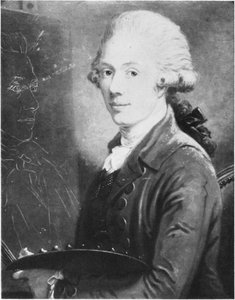
Carl Fredrik von Breda
1759 - 1818 , Szwecja
Krótka nota
- Artistic Movement Or Style: Portretistyka, Romantyzm
- Artists Or Movements Influenced By This Artist: ['Szwedzkie malarze portretowych']
- Artists Who Influenced This Artist:
- Lorens Pasch
- Joshua Reynolds
- Date Of Birth: 1759
- Date Of Death: 1818
- Full Name: Carl Frederik von Breda
- Nationality: Szwedzki
- Notable Artworks:
- Teresa Vandoni
- James Watt
- Matthew Boulton
- Place Of Birth: Stockholm, Szwecja