Podgląd w skali 1:1
 Wyślij jako kartkę
 Udostępnij
 Szczegóły dzieła
 Przewodnik

 Pobierz obraz
 Podobne obiekty
 RTG
RTG Pokaz slajdów
 Pytania i odpowiedzi
 Statystyki
Świt, Efekt Słońca, Eragny

- 65.0 x 81.0 cm


 Rozwiń treść
Giclée / Wydruk artystyczny
Wydruki giclée lub płótna o jakości muzealnej, szybka realizacja i szeroki wybór opcji wykończenia. ( Zamów ręcznie malowaną reprodukcję Przejdź do wersji cyfrowej)




P118B zł10

P118H zł10

P118W zł10

P438Z zł10

P508JH zł12

P508YH zł12

P805H zł10

P805Z zł10

P919BZ zł10

P919G zł10

P919XJ zł10

P959ZH zł10

P968JZ zł12

W106C zł8

W218G zł10

W218JH zł8

W218Y zł10

W307PJ zł10

W316G zł10

W316PJ zł8

W316Y zł10

W398PJ zł8

W4111J zł10

W500HY zł15

W500JH zł15

W692G zł12

W849H zł8

W940BG zł15

W953PJ zł8




Wybierz spośród naszych standardowych rozmiarów, które zachowują oryginalne proporcje dzieła sztuki.

Wpisz wymaganą szerokość i wysokość, aby dopasować grafikę do ramy lub ściany. Wydruk można jedynie przyciąć, nigdy nie powiększając go poza oryginalny obraz, dlatego format o innych proporcjach spowoduje utratę części kompozycji. Przed rozpoczęciem druku prześlemy Ci cyfrowy podgląd do zatwierdzenia. Obraz wyświetlany na tej stronie nie pokazuje rzeczywistego przycięcia — jedynie podgląd oddaje ten efekt.
Dostawa na cały świat () w ciągu 2 tygodni zamiast standardowych 4/5 tygodni. (9 Listopad)

Bezpłatna ekspresowa wysyłka na cały świat

Wysokiej jakości płótno lniane

Pełne ubezpieczenie przesyłki

Gwarancja zwrotu należności celnych i podatków importowych

Gwarancja wiernego odwzorowania kolorów

100-dniowa polityka zwrotów (tylko w przypadku wad)

Gwarancja 100% zwrotu pieniędzy

Zniżka przy zakupie wielu sztuk
 Opcja ze szkłem jest dostępna wyłącznie w rozmiarach poniżej 110 cm

Świt, Efekt Słońca, Eragny
Giclée / Wydruk artystyczny
Wymiary reprodukcji
-


Cena całkowita
zł 317
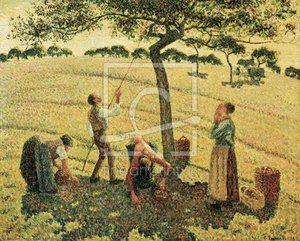
Poranek Słońca Efektu – Eragny przez Camille Pissarro
Kamilla Pissarro, mistrz impresjonizmu i jego następcy, nie był jedynie malarzem; był obserwatorem świata, który przekazywał na płótno z niezwykłą delikatnością i głębią emocji. Jego życie, choć naznaczone trudami rodzinnymi i podróżami między wyspami Karaibskimi a Paryżem, stanowiło doskonałe tło dla jego twórczości – twórczości która stała się jednym z najważniejszych punktów odniesienia dla całej sztuki europejskiej XIX wieku. Narodzony Jacob Abraham Camille Pissarro 10 lipca 1830 roku w Charlotte Amalie na wyspie Świętej Heleny, potomkiem portugalskiego kupca żydowskiego i francuskiej pochodzenia żydowskiego, otrzymał edukację rodzinną niezwykle bogatą kulturowo – świadczącą o jego wrażliwości na piękno otaczającego świata. Jego pierwsze szkolenie akademijne w Akademii Savary w Paryżu przygotowało go do pracy z tradycyjnymi technikami malarskimi, lecz prawdziwy rozwój jego talentu nastąpił podczas pobytu w stolicy Francji i współpracy z innymi pionierami impresjonizmu, takimi jak Gustave Courbet i Jean-Baptiste-Camille Corot.- Styl i Technika: Pissarro był jednym z twórców ruchu impresjonistycznego oraz jego następcy – neoimpresjonizmu. Jego obrazy charakteryzują się szybkim szkicowaniem na świeżym powietrzu, wykorzystaniem drobnych kolorystycznych zmian i refleksów światła, co pozwala uzyskać efekt ulotnej chwili rzeczywistości. Szczególną uwagę zwrócono należy uwagę na zastosowanie impasto – grubszego nakładania farb na powierzchnię płótna – które dodaje obrazom faktury i głębi oraz wzmacnia emocjonalny przekaz artysty.
- Historia i Kontekst: Obraz „Poranek Słońca Efektu” powstał w 1899 roku, w okresie największego rozkwitu impresjonizmu. Pissarro był jednym z twórców grupy „Salon des Impressionnistes”, która odniosła ogromną sławę dzięki swoim ekspozycjom i publikacjom w czasopismach sztuki. Jego dzieła były odpowiedzią na krytykę akademickiego stylu malarstwa oraz stanowiły próbę stworzenia sztuki pięknej i emocjonalnie angażującej.
- Symbolizm i Interpretacja: Krajobraz przedstawiony przez Pissarro nie jest jedynie dekoracją – jest miejscem pełnym znaczeń. Światło słoneczne, przebijające się przez liście drzew, symbolizuje nadzieję i odrodzenie oraz stanowi kontrast dla ciemnych cieni, które reprezentują przeszłość i ograniczenia. Figura kobiety siedzącej na trawie może być interpretowana jako symbole spokoju, harmonii i połączenia z naturą.
- Emocjonalny Impresjonizm: „Poranek Słońca Efektu” emanuje ciepłem i delikatnością. Obraz oddaje atmosferę poranka – czas piękna i ciszy oraz zapowiedź nowego dnia. Widok na krajobraz wprawia odbiorcę w stan kontemplacji i pozwala poczuć bliskość natury oraz jej energii.
Pytania i odpowiedzi
Jaki klimat wnosi „Świt, Efekt Słońca, Eragny” – Kamille Pissarro do wnętrza?
„Świt, Efekt Słońca, Eragny” – Kamille Pissarro ma Pełen spokoju atmosferę i jest polecane do Salon lub strefa dzienna. Nastrój to to, co dzieło wnosi do otaczającej je przestrzeni.
Jaki poziom luminancji ma „Świt, Efekt Słońca, Eragny” – Kamille Pissarro?
Kolory dzieła "Świt, Efekt Słońca, Eragny" charakteryzują się luminancją na poziomie Miękki cień.
Czy kolory w „Świt, Efekt Słońca, Eragny” – Kamille Pissarro są nasycone, czy stonowane?
Dzieło „Świt, Efekt Słońca, Eragny” – Kamille Pissarro charakteryzuje się Zrównoważona łagodność nasyceniem kolorów.
Biografia artysty
A Life Rooted in Observation: The World of Camille Pissarro
Camille Pissarro, a name synonymous with both the birth and evolution of Impressionism, was an artist whose life mirrored the shifting landscapes he so devotedly captured on canvas. Born Jacob Abraham Camille Pissarro on July 10, 1830, in Charlotte Amalie, St. Thomas – then part of the Danish West Indies, now the US Virgin Islands – his origins were as diverse and vibrant as the scenes that would later define his artistic vision. His father, a Portuguese Jewish merchant with French nationality, and his mother, from a French-Jewish family on the island, instilled in him a unique cultural heritage. This upbringing, somewhat unconventional due to familial complexities, fostered an early sensitivity to the world around him, a quality that would become the cornerstone of his artistic practice. His initial formal training at the Savary Academy near Paris provided a foundation in traditional techniques, but it was his return to St. Thomas and subsequent work as a cargo clerk that truly ignited his passion for observation. The bustling harbor, the vibrant local life, and the raw beauty of the Caribbean landscape became his first subjects, shaping an eye keenly attuned to the nuances of everyday existence.From Realism to Revolution: Artistic Development
Pissarro’s artistic journey was one of constant exploration and refinement. After a period assisting Danish painter Anton Melbye in Paris, he immersed himself in the works of masters like Gustave Courbet, Jean-Baptiste-Camille Corot, and Honoré Daumier – artists who championed realism and social commentary. He initially sought acceptance within the established art world, exhibiting at the Paris Salon, but soon found its constraints stifling. A pivotal moment came with his embrace of *plein air* painting—working outdoors directly from nature—a practice encouraged by Corot that would become central to Impressionism. This shift wasn’t merely technical; it represented a philosophical change, a desire to capture the fleeting effects of light and atmosphere, the very essence of a scene rather than its precise representation. He began experimenting with looser brushwork and brighter palettes, moving away from academic conventions towards a more subjective and expressive style. His early landscapes, though still grounded in realism, hinted at the revolutionary path he was about to forge. This period saw him grappling with finding his own voice amidst the burgeoning artistic ferment of Paris, a city undergoing rapid transformation that provided endless inspiration.The Father Figure of Impressionism
Camille Pissarro wasn’t simply *an* Impressionist; he was arguably its most steadfast and unifying force. Uniquely, he exhibited at all eight Paris Impressionist exhibitions between 1874 and 1886, acting as a stabilizing presence within a group often characterized by internal disagreements and individual ambitions. He wasn’t merely present—he actively encouraged his fellow artists, offering support, guidance, and a much-needed sense of camaraderie. This earned him the affectionate nickname “the father figure” of the movement. His commitment to artistic freedom and innovation was unwavering, even in the face of critical scorn and public indifference. He believed in the power of collective action and championed the idea of artists exhibiting independently from the Salon’s restrictive rules. Beyond his own work, Pissarro's influence extended to a younger generation of artists, including Paul Cézanne, Vincent van Gogh, and Paul Gauguin, whom he mentored and profoundly impacted. He provided them with not only technical advice but also a philosophical framework for their artistic explorations. His willingness to experiment led him briefly into Neo-Impressionism, influenced by Georges Seurat and Paul Signac’s pointillist techniques, before ultimately returning to a more personal style that blended his earlier influences with new discoveries.Landscapes of Life: Themes and Legacy
Pissarro's artistic output was remarkably diverse, yet consistently focused on the world around him. He is celebrated for his depictions of both rural and urban landscapes, often portraying scenes of everyday life—peasants working in fields, bustling Parisian streets, quiet village squares. His paintings weren’t simply picturesque views; they were social commentaries, reflecting his deep empathy for the working class and his commitment to depicting their lives with dignity and respect.- Landscapes: Renowned for capturing the beauty of both countryside and city life.
- Scenes of Parisian Life: Vivid portrayals of a rapidly changing metropolis.
- Peasant Life: Reflecting his social consciousness and empathy for the working class.

Kamille Pissarro
1830 - 1903 , Stany Zjednoczone Wyspy Dziewicze
Krótka nota
- Artistic Movement Or Style: Impresjonizm, Neo-Impresjonizm
- Artists Or Movements Influenced By This Artist:
- Cézanne
- Van Gogh
- Gauguin
- Artists Who Influenced This Artist:
- Courbet
- Corot
- Daubigny
- Date Of Birth: 10 lipca 1830
- Date Of Death: 13 listopada 1903
- Full Name: Camille Pissarro
- Nationality: Dansk-Francuz
- Notable Artworks:
- Boulevard Montmartre
- Norwood pod śniegiem
- Place Of Birth: Charlotte Amalie, Francja
Powiązane artykuły

Paul Cézanne: 25 Arcydzieł, które Zrewolucjonizowały Świat Sztuki | OriginalUniqueArt
Odkryj 25 arcydzieł Paula Cézanne'a – od impresjonizmu po postimpresjonizm. Poznaj historie, techniki i inspiracje malarza, który zrewolucjonizował sztukę. Reprodukcje obrazów najwyższej jakości na OriginalUniqueArt.com!
10 Arcydzieł Impresjonizmu Krajobrazowego, Które Zdefiniowały Sztukę
Odkryj 10 arcydzieł impresjonizmu krajobrazowego! Poznaj historie Moneta, Renoir'a i Van Gogha. Inspiracje wnętrzarskie, techniki malarskie i piękne reprodukcje obrazów na OriginalUniqueArt.com. Eksploruj kolekcję online!
Cultivating Paradise: A Historical & Artistic Exploration of Gardens in Painting
Explore the rich history of gardens in painting! Discover masterpieces from Renaissance to Impressionism & beyond. Learn about symbolism, artists like Monet & Klimt, and find your perfect artwork at OriginalUniqueArt.

Evocations of Place: A Historical Journey Through Landscape Art
Explore the rich history of landscape art with OriginalUniqueArt. Discover renowned artists, movements like Impressionism & Romanticism, and expert guidance for collecting timeless pieces. Find your perfect serene escape today!

Camille Pissarro: Pioneer of Impressionism & Father of Modern Art – A Legacy Explored
Explore the life & art of Camille Pissarro, a pivotal figure in Impressionism and Post-Impressionism. Discover his techniques, influences, and lasting legacy on modern painting. Learn more at OriginalUniqueArt.