Zobacz w skali 1:1
 Wyślij
 Udostępnij
 Szczegóły
 Przewodnik

 Pobierz plik obrazu
 Podobne obiekty
 RTG
RTG Pokaz slajdów
 Statystyki
Sunset at Eragny
 Oil On Canvas
- WallArt
- Impressionistic Landscape
 1890
1890 81.0 x 65.0 cm
 Czytaj więcej
Giclée / Wydruk artystyczny
Wydruki giclée lub płótna o jakości muzealnej, szybka realizacja i szeroki wybór opcji wykończenia. ( Kup ręcznie malowany obraz Przełącz na wersję cyfrową)




P118B $10

P118H $10

P118W $10

P438Z $10

P508JH $12

P508YH $12

P805H $10

P805Z $10

P919BZ $10

P919G $10

P919XJ $10

P959ZH $10

P968JZ $12

W106C $8

W218G $10

W218JH $8

W218Y $10

W307PJ $10

W316G $10

W316PJ $8

W316Y $10

W398PJ $8

W4111J $10

W500HY $15

W500JH $15

W692G $12

W849H $8

W940BG $15

W953PJ $8




Wybierz spośród naszych standardowych rozmiarów, które zachowują oryginalne proporcje dzieła sztuki.

Możesz wprowadzić własne wymiary, aby dopasować dzieło do konkretnej ramy lub przestrzeni. Jeśli wybrany rozmiar nie będzie odpowiadał proporcjom oryginalnego obrazu, przytniecie dzieło lub rozszerzymy obraz za pomocą odbicia lustrzanego lub jednolitego wypełnienia krawędzi. Przed rozpoczęciem produkcji prześlemy cyfrową wizualizację do Twojej akceptacji.
Prosimy pamiętać, że podgląd na ekranie nie odzwierciedla faktycznego przycinania ani rozszerzania. Tylko wizualizacja dokładnie pokaże końcową kompozycję.
Mimo dostępności niestandardowych rozmiarów, zalecamy wybór wymiaru z listy zdefiniowanej, aby zachować oryginalne proporcje.
Dostawa na cały świat () w ciągu 2 tygodni zamiast standardowych 4/5 tygodni. (27 Wrzesień)

Bezpłatna ekspresowa wysyłka na cały świat

Wysokiej jakości płótno lniane

Pełne ubezpieczenie transportowe

Gwarancja zwrotu należności celnych i podatków importowych

Gwarancja idealnego odwzorowania barw

100-dniowy okres na zwrot dzieła w przypadku wykrycia wad produkcyjnych

Gwarancja 100% zwrotu pieniędzy

Oferta przy zakupie wielu sztuk
 Opcja ze szkłem jest dostępna wyłącznie w rozmiarach poniżej 110 cm

Sunset at Eragny
Giclée / Wydruk artystyczny
Rozmiar reprodukcji
-


Suma do zapłaty
$ 80
A Symphony of Light and Landscape: Exploring Camille Pissarro’s Sunset at Eragny
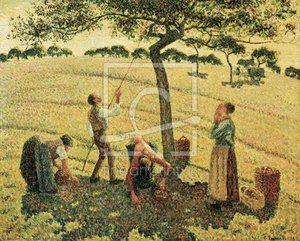
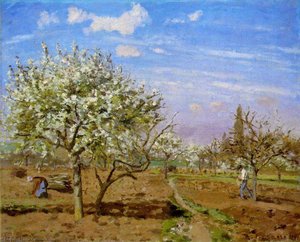
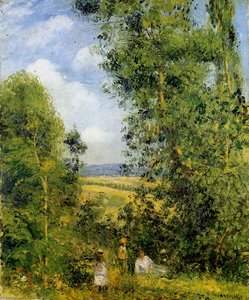
The painting “Sunset at Eragny” by Camille Pissarro stands as a quintessential embodiment of Impressionism, transporting viewers back to the late 1890s and capturing not merely a visual representation but an emotional resonance deeply rooted in observation. Executed in 1890, this canvas – measuring 81 x 65 cm – resides within the Ashmolean Museum’s collection in Oxford, offering visitors a chance to experience firsthand the brilliance of Pissarro's artistic vision.The Essence of Impressionism: Capturing Fleeting Moments
Impressionism, born from a rebellion against academic conventions, prioritized capturing the ephemeral qualities of light and atmosphere over meticulous detail. Artists like Pissarro sought to depict how the eye perceives color and luminosity as they shift throughout the day – specifically focusing on the dramatic beauty of sunset. Unlike traditional landscapes that aimed for idealized representations, “Sunset at Eragny” presents a raw, honest depiction of nature as it unfolds before the artist’s gaze. This stylistic choice reflects the broader intellectual currents of the time, influenced by thinkers like Claude Monet and Auguste Comte who championed scientific observation as a path to understanding reality.Technique and Material: Oil on Canvas – A Masterful Medium
Pissarro's masterful technique is evident in his use of oil paint on canvas. The medium allows for layering colors and textures, creating depth and luminosity that would have been unattainable with watercolor or pastel. Notice the subtle gradations of color across the sky—from pale blues to fiery oranges—a testament to Pissarro’s meticulous attention to detail. Brushstrokes are loose and expressive, conveying movement and capturing the dynamism of the sunset’s changing light. The artist skillfully blended pigments to achieve a velvety surface finish, enhancing the painting's visual impact and preserving its vibrancy for generations to come.Historical Context: Parisian Landscape Painting in Transition
“Sunset at Eragny” emerged during a period of significant artistic transformation in Paris. Following the Franco-Prussian War (1870-1871), artists were increasingly drawn to depicting scenes from everyday life and exploring the beauty of the natural world—a reaction against the grand narratives favored by earlier generations. The Impressionists rejected the Salon’s rigid rules regarding subject matter and composition, establishing independent exhibitions that championed their innovative approach. Eragny, a village near Paris where Pissarro resided, served as an inspiration for countless artists seeking solace and beauty amidst the urban sprawl of the Belle Époque.Symbolism Beyond Representation: Tranquility and Reflection
Beyond its stunning visual qualities, “Sunset at Eragny” carries symbolic weight. The sunset itself represents endings, transitions, and contemplation—themes that resonate deeply within Impressionist art. The trees in the foreground offer a grounding element, anchoring the viewer’s gaze amidst the expansive sky. The painting invites viewers to pause and appreciate the simple grandeur of nature, prompting reflection on its beauty and fragility. It's a reminder that even fleeting moments can hold profound emotional significance.A Legacy Enduring Inspiration
Camille Pissarro’s “Sunset at Eragny” continues to inspire artists and collectors alike. Its enduring appeal lies in its ability to convey not just what the eye sees but how it feels—a testament to the transformative power of Impressionism and a celebration of the artist's unwavering dedication to capturing the essence of the natural world. Reproductions available from OriginalUniqueArt.com allow enthusiasts worldwide to experience this masterpiece’s beauty and tranquility.Biografia artysty
A Life Rooted in Observation: The World of Camille Pissarro
Camille Pissarro, a name synonymous with both the birth and evolution of Impressionism, was an artist whose life mirrored the shifting landscapes he so devotedly captured on canvas. Born Jacob Abraham Camille Pissarro on July 10, 1830, in Charlotte Amalie, St. Thomas – then part of the Danish West Indies, now the US Virgin Islands – his origins were as diverse and vibrant as the scenes that would later define his artistic vision. His father, a Portuguese Jewish merchant with French nationality, and his mother, from a French-Jewish family on the island, instilled in him a unique cultural heritage. This upbringing, somewhat unconventional due to familial complexities, fostered an early sensitivity to the world around him, a quality that would become the cornerstone of his artistic practice. His initial formal training at the Savary Academy near Paris provided a foundation in traditional techniques, but it was his return to St. Thomas and subsequent work as a cargo clerk that truly ignited his passion for observation. The bustling harbor, the vibrant local life, and the raw beauty of the Caribbean landscape became his first subjects, shaping an eye keenly attuned to the nuances of everyday existence.From Realism to Revolution: Artistic Development
Pissarro’s artistic journey was one of constant exploration and refinement. After a period assisting Danish painter Anton Melbye in Paris, he immersed himself in the works of masters like Gustave Courbet, Jean-Baptiste-Camille Corot, and Honoré Daumier – artists who championed realism and social commentary. He initially sought acceptance within the established art world, exhibiting at the Paris Salon, but soon found its constraints stifling. A pivotal moment came with his embrace of *plein air* painting—working outdoors directly from nature—a practice encouraged by Corot that would become central to Impressionism. This shift wasn’t merely technical; it represented a philosophical change, a desire to capture the fleeting effects of light and atmosphere, the very essence of a scene rather than its precise representation. He began experimenting with looser brushwork and brighter palettes, moving away from academic conventions towards a more subjective and expressive style. His early landscapes, though still grounded in realism, hinted at the revolutionary path he was about to forge. This period saw him grappling with finding his own voice amidst the burgeoning artistic ferment of Paris, a city undergoing rapid transformation that provided endless inspiration.The Father Figure of Impressionism
Camille Pissarro wasn’t simply *an* Impressionist; he was arguably its most steadfast and unifying force. Uniquely, he exhibited at all eight Paris Impressionist exhibitions between 1874 and 1886, acting as a stabilizing presence within a group often characterized by internal disagreements and individual ambitions. He wasn’t merely present—he actively encouraged his fellow artists, offering support, guidance, and a much-needed sense of camaraderie. This earned him the affectionate nickname “the father figure” of the movement. His commitment to artistic freedom and innovation was unwavering, even in the face of critical scorn and public indifference. He believed in the power of collective action and championed the idea of artists exhibiting independently from the Salon’s restrictive rules. Beyond his own work, Pissarro's influence extended to a younger generation of artists, including Paul Cézanne, Vincent van Gogh, and Paul Gauguin, whom he mentored and profoundly impacted. He provided them with not only technical advice but also a philosophical framework for their artistic explorations. His willingness to experiment led him briefly into Neo-Impressionism, influenced by Georges Seurat and Paul Signac’s pointillist techniques, before ultimately returning to a more personal style that blended his earlier influences with new discoveries.Landscapes of Life: Themes and Legacy
Pissarro's artistic output was remarkably diverse, yet consistently focused on the world around him. He is celebrated for his depictions of both rural and urban landscapes, often portraying scenes of everyday life—peasants working in fields, bustling Parisian streets, quiet village squares. His paintings weren’t simply picturesque views; they were social commentaries, reflecting his deep empathy for the working class and his commitment to depicting their lives with dignity and respect.- Landscapes: Renowned for capturing the beauty of both countryside and city life.
- Scenes of Parisian Life: Vivid portrayals of a rapidly changing metropolis.
- Peasant Life: Reflecting his social consciousness and empathy for the working class.

Kamille Pissarro
1830 - 1903 , Stany Zjednoczone Wyspy Dziewicze
Najważniejsze informacje
- Artistic Movement Or Style: Impresjonizm, Neo-Impresjonizm
- Artists Or Movements Influenced By This Artist:
- Cézanne
- Van Gogh
- Gauguin
- Artists Who Influenced This Artist:
- Courbet
- Corot
- Daubigny
- Date Of Birth: 10 lipca 1830
- Date Of Death: 13 listopada 1903
- Full Name: Camille Pissarro
- Nationality: Dansk-Francuz
- Notable Artworks:
- Boulevard Montmartre
- Norwood pod śniegiem
- Place Of Birth: Charlotte Amalie, Francja
Zobacz także powiązane artykuły
10 arcydzieł malarstwa olejnego, które na zawsze zmieniły sztukę | OriginalUniqueArt.com
Poznaj 10 arcydzieł malarstwa olejowego, które zrewolucjonizowały świat sztuki! Van Gogh, Monet, Picasso i inni – odkryj historie, techniki i emocje w słynnych obrazach. Reprodukcje najwyższej jakości na OriginalUniqueArt.com. Eksploruj kolekcję online!

The Soul of Impressionism: Why Oil on Canvas Captures Eternal Light and Timeless Emotion
Discover the enchanting alchemy of Impressionism. Explore how the mastery of oil on canvas, through glazing and impasto, captures eternal light and emotion. Perfect for lovers of Monet and Van Gogh seeking the profound depth of hand-painted fine art.

Paul Cézanne: 25 Arcydzieł, które Zrewolucjonizowały Świat Sztuki | OriginalUniqueArt
Odkryj 25 arcydzieł Paula Cézanne'a – od impresjonizmu po postimpresjonizm. Poznaj historie, techniki i inspiracje malarza, który zrewolucjonizował sztukę. Reprodukcje obrazów najwyższej jakości na OriginalUniqueArt.com!

Trwała Spuścizna Malarstwa Olejnego: Technika, Historia i Estetyczny Wpływ
Poznaj historię i technikę malarstwa olejnego! Eksperckie artykuły o konserwacji, renowacji oraz współczesnych zastosowaniach. Dowiedz się więcej o mistrzach i trwałości obrazów olejnych.

Evocations of Place: A Historical Journey Through Landscape Art
Explore the rich history of landscape art with OriginalUniqueArt. Discover renowned artists, movements like Impressionism & Romanticism, and expert guidance for collecting timeless pieces. Find your perfect serene escape today!