Podgląd w skali 1:1
 Wyślij jako kartkę
 Udostępnij
 Szczegóły dzieła
 Przewodnik

 Pobierz obraz
 Podobne obiekty
 RTG
RTG Pokaz slajdów
 Pytania i odpowiedzi
 Statystyki
Virgil


 Rozwiń treść
Dzieło sztuki prezentowane na tej stronie podlega ochronie prawem autorskim, co oznacza, że nie mamy prawa do tworzenia ani sprzedaży jego identycznej reprodukcji. Ochrona ta jest egzekwowana na mocy umów międzynarodowych, takich jak Konwencja berneńska oraz przez przepisy prawa krajowego, w tym te określone w Prawo autorskie USA – Tytuł 17.
Metoda ta jest w pełni zgodna z przepisami prawa autorskiego, ponieważ nie polega na kopiowaniu ani powielaniu chronionego dzieła. Stanowi ona kreatywną reinterpretację – nowy obraz, który czerpie inspirację z oryginału, ale nie jest z nim tożsamy.
Giclée / Wydruk artystyczny
Wydruki giclée lub płótna o jakości muzealnej, szybka realizacja i szeroki wybór opcji wykończenia. ( Zamów ręcznie malowaną reprodukcję Przejdź do wersji cyfrowej)




P118B zł10

P118H zł10

P118W zł10

P438Z zł10

P508JH zł12

P508YH zł12

P805H zł10

P805Z zł10

P919BZ zł10

P919G zł10

P919XJ zł10

P959ZH zł10

P968JZ zł12

W106C zł8

W218G zł10

W218JH zł8

W218Y zł10

W307PJ zł10

W316G zł10

W316PJ zł8

W316Y zł10

W398PJ zł8

W4111J zł10

W500HY zł15

W500JH zł15

W692G zł12

W849H zł8

W940BG zł15

W953PJ zł8




Wybierz spośród naszych standardowych rozmiarów, które zachowują oryginalne proporcje dzieła sztuki.

Wpisz wymaganą szerokość i wysokość, aby dopasować grafikę do ramy lub ściany. Wydruk można jedynie przyciąć, nigdy nie powiększając go poza oryginalny obraz, dlatego format o innych proporcjach spowoduje utratę części kompozycji. Przed rozpoczęciem druku prześlemy Ci cyfrowy podgląd do zatwierdzenia. Obraz wyświetlany na tej stronie nie pokazuje rzeczywistego przycięcia — jedynie podgląd oddaje ten efekt.
Dostawa na cały świat () w ciągu 2 tygodni zamiast standardowych 4/5 tygodni. (3 Listopad)

Bezpłatna ekspresowa wysyłka na cały świat

Wysokiej jakości płótno lniane

Pełne ubezpieczenie przesyłki

Gwarancja zwrotu należności celnych i podatków importowych

Gwarancja wiernego odwzorowania kolorów

100-dniowa polityka zwrotów (tylko w przypadku wad)

Gwarancja 100% zwrotu pieniędzy

Zniżka przy zakupie wielu sztuk
 Opcja ze szkłem jest dostępna wyłącznie w rozmiarach poniżej 110 cm

Virgil
Giclée / Wydruk artystyczny
Wymiary reprodukcji
-


Cena całkowita
zł 317
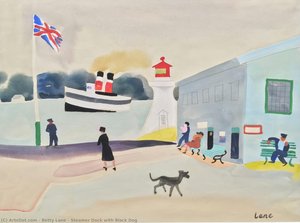
A Quiet Moment Captured in Watercolor: Betty Lane’s “Virgil”
Betty Lane's watercolor painting, "Virgil," embodies the spirit of Impressionism—a movement that sought to capture fleeting impressions of light and color rather than striving for photographic accuracy. Created sometime between 1930 and 1940, this unassuming landscape depicts two figures traversing a rural path, offering a glimpse into a serene tableau of everyday life. The artist’s masterful use of watercolor lends itself beautifully to conveying the subtle nuances of atmosphere and emotion.- Subject Matter: The painting centers around a man and woman walking along a dirt road, bathed in diffused sunlight. Their presence anchors the scene within a recognizable domestic setting—a rural landscape populated by rolling hills and scattered trees.
- Style & Technique: Lane’s approach aligns perfectly with Impressionistic principles. Loose brushstrokes dominate the composition, prioritizing tonal variation over meticulous detail. Notice how the artist skillfully blends hues to create an illusion of depth and luminosity—particularly evident in the depiction of the sky and vegetation. This technique isn't merely decorative; it’s a deliberate strategy to convey the ephemeral quality of light – a hallmark of Impressionist art.
- Historical Context: “Virgil” emerged during a period of significant artistic experimentation following World War I. Impressionism, championed by artists like Monet and Renoir, reacted against academic conventions, prioritizing subjective experience and capturing the immediacy of sensory perception. Lane’s work reflects this broader trend toward embracing emotion and atmosphere; it represents a conscious departure from traditional artistic representations.
- Color Palette: Lane utilizes a restrained color palette, favoring earthy tones to evoke the tranquility of the countryside. The dominant hues are muted yellows and greens, reflecting the sunlight filtering through the trees and grasses.
- Brushwork & Texture: Lane’s brushstrokes are loose and expressive, capturing the movement of light and air. This technique creates a palpable sense of texture—particularly noticeable in the depiction of the hillside vegetation—enhancing the painting's visual richness and inviting contemplation.
Pytania i odpowiedzi
Czy w „Virgil” – Betty Lane zastosowano silne kontrasty czy raczej łagodne harmonie?
Analiza kolorystyczna dzieła „Virgil” – Betty Lane ukazuje Delikatny kontrast oraz Silna spójność kolorystyczna harmonię.
Któremu artyście przypisuje się "Virgil"?
„Virgil” zostało stworzone przez Betty Lane. Informacje na tej stronie dotyczą oryginalnego dzieła autorstwa Betty Lane.
Gdzie można zobaczyć oryginał „Virgil” – Betty Lane?
Oryginał dzieła „Virgil” można zobaczyć w Niagara Historical Society Museum, Niagara-on-the-Lake, Kanada.
Biografia artysty
A Life Painted in Light and Shadow
Betty Lane, born Elizabeth Thoburn Lane in Washington D.C. in 1907, was an American artist whose evocative watercolors and oils quietly charted a course through the shifting currents of modernist art. Her life, spanning nearly a century, was one of constant exploration – not just of artistic technique but also of place and perspective. The daughter of a Marine officer and raised amidst a large family, Lane’s early exposure to diverse locales – her father's postings included the Philippines and Santo Domingo – likely instilled in her a lifelong wanderlust and an observant eye for detail. Even as a child, around the age of nine, she demonstrated a natural aptitude for painting, finding solace and expression in watercolor. Though initially enrolled at the Corcoran College of Art and Design, Lane soon realized it didn’t nurture her burgeoning talent; a transfer to the Massachusetts Normal Art School proved pivotal, offering an environment more attuned to her artistic needs. This early search for the right creative space would become a defining characteristic of her career.Parisian Transformations and Early Recognition
The year 1928 marked a turning point with Lane’s journey to Paris. Immersing herself in the vibrant art scene, she studied under the influential Cubist painter André Lhote. This mentorship profoundly impacted her artistic development, instilling a rigorous understanding of form and composition that would underpin her modernist style. Lhote's influence wasn’t about mimicry but rather a foundational training in seeing the world anew – breaking down shapes, exploring spatial relationships, and embracing abstraction as a means to convey deeper truths. Returning to the United States in 1929, Lane settled in Falls Church, Virginia, and Washington D.C., where her work quickly gained attention. A significant milestone arrived in April 1931 with an exhibition at the Phillips Memorial Gallery alongside established artists John Marin and Harold Weston – a testament to Duncan Phillips’s discerning eye and early belief in Lane's potential. This recognition provided crucial encouragement as she navigated the complexities of establishing herself as a professional artist. She quickly began to develop her own unique style, blending elements of Cubism with Impressionistic color palettes and a sensitivity to light.A Transatlantic Dialogue: Years Abroad and Artistic Refinement
The subsequent decade saw Lane embracing a nomadic existence, dividing her time between Cambridge, England, and Paris. These years were characterized by intense artistic exploration and a broadening of horizons. She wasn’t merely *depicting* landscapes; she was absorbing the atmosphere, light, and cultural nuances of each location. From the bustling streets of European cities to the serene countryside, Lane's canvases began to reflect her experiences – capturing not just what she saw but how it *felt*. This period also witnessed a diversification of her subject matter, encompassing portraits, domestic scenes, and increasingly abstract compositions. The influence of these travels is palpable in her evolving style, marked by expressive brushwork and a growing confidence in her use of color. During World War II, Lane relocated to Ontario, Canada from 1939-1946, continuing to paint and refine her artistic voice amidst global upheaval. This period demonstrated her resilience and adaptability as an artist, navigating challenging circumstances while maintaining her creative practice.Expanding Horizons: Teaching, Experimentation, and Lasting Legacy
In 1946, Lane returned to the United States and embarked on a new chapter as a teacher at Miss Porter's School, where she remained for nearly two decades until 1965. This period wasn’t merely a professional obligation; it was an opportunity to share her passion for art and inspire a new generation of artists. Simultaneously, Lane continued to push the boundaries of her own creative practice, experimenting with woodblock printing, silkscreen, ceramics, and glass – demonstrating a remarkable versatility and willingness to embrace new mediums. After 1960, she settled in Brewster, Massachusetts, but her spirit of exploration remained undimmed. Extensive travels took her to Greece, Mexico, the Soviet Union, and Australia, each journey enriching her artistic vocabulary. Her commitment extended beyond the canvas; in 1977, she became an associate of the Women's Institute for Freedom of the Press (WIFP), demonstrating a dedication to social causes. Betty Lane passed away in Brewster in 1996, leaving behind a rich and varied body of work that is now gaining increasing recognition. Her paintings are held in prestigious institutions including The Metropolitan Museum of Art, The Phillips Collection, The Provincetown Art Association and Museum, and The Cape Cod Museum of Art.Artistic Style and Significance
Lane’s artistic style is characterized by a compelling blend of modernist techniques, expressive brushwork, and an acute sensitivity to detail. She moved fluidly between representational and abstract forms, often imbuing her paintings with a palpable sense of atmosphere and emotional depth. Her landscapes are particularly noteworthy for their evocative use of color and light, capturing the essence of a place rather than merely its appearance. *Her portraits, too, possess a remarkable psychological insight*, revealing not just physical likeness but also the inner lives of her subjects. Lane’s contribution to American art resides in her ability to synthesize diverse influences – from Cubism to Impressionism and beyond – into a cohesive and deeply personal vision. While she may not have achieved widespread fame during her lifetime, her work is now being recognized for its artistic merit and historical significance as an example of a woman artist navigating the complexities of the 20th century art world with grace, intelligence, and unwavering dedication to her craft.
Betty Lane
1907 - 1996 , Stany Zjednoczone
Krótka nota
- Artistic Movement Or Style: Malarski modernistyczny
- Artists Or Movements Influenced By This Artist: ['Cubizm']
- Artists Who Influenced This Artist: ['André Lhote']
- Date Of Birth: 1907-09-30
- Date Of Death: 1996-05-28
- Full Name: Betty Lane
- Nationality: Amerykańska
- Notable Artworks:
- Men in Truck
- Sketch...
- Boathouses & Lighthouse
- Place Of Birth: Washington, USA
Powiązane artykuły

John Constable: 25 Najlepszych Obrazów Mistrza Angielskiego Krajobrazu | OriginalUniqueArt
Odkryj 25 arcydzieł Johna Constable'a – mistrza angielskiego krajobrazu! Poznaj romantyczne pejzaże, technikę malarską i inspiracje z Dedham Vale. Reprodukcje obrazów najwyższej jakości na OriginalUniqueArt.com. Eksploruj pełną kolekcję online!

10 Legendarnych Akwareli, Które Zmieniły Sztukę. Inspiracje do Dekoracji Domu.
Odkryj 10 legendarnych akwareli Turner'a, Monet'a i innych mistrzów! Poznaj historie, techniki i inspiracje tych ponadczasowych dzieł. Reprodukcje obrazów najwyższej jakości na OriginalUniqueArt.com – idealne do dekoracji wnętrz.

Idylliczne Wizje: Pastoralna Scena w Sztuce – Od Arkadii do Współczesności
Odkryj fascynującą historię sztuki pastoralnej – od arkadyjskich wizji po współczesne interpretacje. Analiza symboliki, wpływ na malarstwo i rysunek. Ekspercka wiedza o renesansie, baroku i rokoko.
Evoking Arcadia: A Historical & Aesthetic Exploration of Rural Landscape Art
Explore the rich history of pastoral landscape art, from classical Arcadia to Impressionism & beyond. Discover key artists, movements, and how to collect serene rural scenes for your home. Expert insights at OriginalUniqueArt.

Efemeryczne Wizje: Historia i Współczesna Praktyka Malarstwa Akwarelowego
Poznaj historię i techniki malarstwa akwarelowego! Odkryj inspiracje mistrzów, współczesne trendy oraz praktyczne porady dotyczące materiałów. Rozwiń swoją pasję z naszym przewodnikiem.