
 Podgląd w skali 1:1
 Wyślij jako kartkę
 Udostępnij
 Szczegóły dzieła
 Przewodnik

 Pobierz obraz
 Podobne obiekty
 RTG
RTG Pokaz slajdów
 Pytania i odpowiedzi
 Statystyki
Genesis III

- 111.0 x 76.0 cm


 Rozwiń treść
Dzieło sztuki prezentowane na tej stronie podlega ochronie prawem autorskim, co oznacza, że nie mamy prawa do tworzenia ani sprzedaży jego identycznej reprodukcji. Ochrona ta jest egzekwowana na mocy umów międzynarodowych, takich jak Konwencja berneńska oraz przez przepisy prawa krajowego, w tym te określone w Prawo autorskie USA – Tytuł 17.
Metoda ta jest w pełni zgodna z przepisami prawa autorskiego, ponieważ nie polega na kopiowaniu ani powielaniu chronionego dzieła. Stanowi ona kreatywną reinterpretację – nowy obraz, który czerpie inspirację z oryginału, ale nie jest z nim tożsamy.
Giclée / Wydruk artystyczny
Wydruki giclée lub płótna o jakości muzealnej, szybka realizacja i szeroki wybór opcji wykończenia. ( Zamów ręcznie malowaną reprodukcję Przejdź do wersji cyfrowej)




P118B zł10

P118H zł10

P118W zł10

P438Z zł10

P508JH zł12

P508YH zł12

P805H zł10

P805Z zł10

P919BZ zł10

P919G zł10

P919XJ zł10

P959ZH zł10

P968JZ zł12

W106C zł8

W218G zł10

W218JH zł8

W218Y zł10

W307PJ zł10

W316G zł10

W316PJ zł8

W316Y zł10

W398PJ zł8

W4111J zł10

W500HY zł15

W500JH zł15

W692G zł12

W849H zł8

W940BG zł15

W953PJ zł8




Wybierz spośród naszych standardowych rozmiarów, które zachowują oryginalne proporcje dzieła sztuki.

Wpisz wymaganą szerokość i wysokość, aby dopasować grafikę do ramy lub ściany. Wydruk można jedynie przyciąć, nigdy nie powiększając go poza oryginalny obraz, dlatego format o innych proporcjach spowoduje utratę części kompozycji. Przed rozpoczęciem druku prześlemy Ci cyfrowy podgląd do zatwierdzenia. Obraz wyświetlany na tej stronie nie pokazuje rzeczywistego przycięcia — jedynie podgląd oddaje ten efekt.
Dostawa na cały świat () w ciągu 2 tygodni zamiast standardowych 4/5 tygodni. (3 Listopad)

Bezpłatna ekspresowa wysyłka na cały świat

Wysokiej jakości płótno lniane

Pełne ubezpieczenie przesyłki

Gwarancja zwrotu należności celnych i podatków importowych

Gwarancja wiernego odwzorowania kolorów

100-dniowa polityka zwrotów (tylko w przypadku wad)

Gwarancja 100% zwrotu pieniędzy

Zniżka przy zakupie wielu sztuk
 Opcja ze szkłem jest dostępna wyłącznie w rozmiarach poniżej 110 cm

Genesis III
Giclée / Wydruk artystyczny
Wymiary reprodukcji
-


Cena całkowita
zł 317
A Quiet Universe of Circles
Barbara Hepworth’s Genesis III, a seminal work from 1966, isn't merely a depiction of two circles; it’s an invitation to contemplate the fundamental geometries of existence. Created during a period of profound personal and artistic evolution for the sculptor, this piece embodies her signature exploration of form, texture, and the interplay between abstraction and suggestion. The stark white background acts as a luminous void, amplifying the presence of the circular forms and drawing the viewer into their contained space. It’s a deliberate choice – Hepworth often favored simplicity to allow the inherent qualities of materials and shapes to speak for themselves.
- Material & Technique: Crafted primarily in oil paint on canvas, Genesis III showcases Hepworth's masterful control over layering and texture. The circles aren’t rendered with sharp edges but rather possess a subtly eroded quality, as if sculpted from memory or suggestion. The application of paint is deliberately loose, creating a sense of movement and dynamism that contrasts sharply with the stillness implied by the forms themselves.
- Compositional Balance: The asymmetrical arrangement of the circles – one positioned slightly higher left, the other lower right – generates an immediate visual tension. This imbalance isn’t jarring but rather creates a subtle push and pull, preventing the composition from feeling static or predictable. It mirrors Hepworth's broader interest in exploring balance and equilibrium within her sculptures.
- Color Palette: The restrained color palette—a dominant white punctuated by terracotta and grey—further emphasizes the forms’ presence. These earthy tones evoke a sense of grounding, anchoring the abstract shapes within a more tangible realm. The strategic use of black spots adds an element of spontaneity and visual interest, hinting at the underlying process of creation.
Echoes of Modernism & Sculpture
To fully appreciate Genesis III, it’s crucial to understand Hepworth's place within the broader context of mid-20th century art. She was a key figure in the movement towards abstraction, influenced by European avant-garde artists like Piet Mondrian and Constantin Brâncuși. However, unlike purely geometric abstractions, Hepworth retained a deep connection to her sculptural roots. The circular forms resonate with the organic shapes found in her three-dimensional works – particularly her celebrated “oval forms.” This piece can be seen as a translation of sculptural principles into a two-dimensional format, demonstrating how she explored similar themes of form, space, and material through different mediums.
Historical Context:Created in 1966, the artwork reflects a period of significant artistic experimentation. Hepworth was increasingly focused on exploring the relationship between surface and volume, often referencing her own sculptural practice. The work also aligns with the broader trends of Minimalism and Abstract Expressionism that were gaining prominence during this time.
Symbolic Resonance & Emotional Depth
The circles themselves are open to interpretation, inviting viewers to project their own meanings onto the artwork. They can be seen as representations of wholeness, cycles, or interconnectedness – fundamental concepts explored throughout Hepworth’s career. The scattered black spots, like fleeting moments in time, suggest spontaneity and energy, hinting at the dynamic process of creation. The overall mood is one of quiet contemplation—a serene invitation to lose oneself within the simplicity of form and color.
A Legacy of Form & Texture
Genesis III stands as a testament to Barbara Hepworth’s enduring legacy as one of the most innovative sculptors of the 20th century. It's a deceptively simple work, yet brimming with subtle complexities and emotional depth. Reproductions capture the delicate texture and layered application of paint that are so vital to the original’s impact. It remains a powerful example of how abstraction can be used to explore profound philosophical questions about existence, form, and the human experience.
Pytania i odpowiedzi
Do czego zaleca się wykorzystanie reprodukcji „Genesis III” – Barbara Hepworth?
Zalecanym zastosowaniem wydruku "Genesis III" jest Statement.
Do jakiego pomieszczenia polecane jest dzieło „Genesis III” – Barbara Hepworth?
Zalecaną przestrzenią dla „Genesis III” – Barbara Hepworth jest Living Room. Sugestia ta może być oczywiście dostosowana do Twojego wnętrza.
Czy można pobrać obraz "Genesis III"?
Obraz „Genesis III” – Barbara Hepworth można pobrać na stronie Pobierz plik cyfrowy dzieła: wysokiej rozdzielczości cyfrowe zdjęcie do pobrania.
Biografia artysty
Barbara Hepworth: Pioneer of Organic Abstraction
Barbara Hepworth (1903–1975) stands as one of the most influential figures in British sculpture of the 20th century, a sculptor whose uncompromising vision reshaped artistic conventions and cemented her place among the foremost innovators of modernism. Born Jocelyn Barbara Hepworth on January 10, 1903, in Wakefield, Yorkshire—the eldest child of Herbert and Gertrude Johnson Hepworth—her formative years were steeped in the rugged beauty of the Pennines landscape, an environment that would profoundly inform her artistic sensibility for decades to come.Herbert Hepworth was a civil engineer for the West Riding County Council, who in 1921 advanced to the role of county surveyor.- Early Education: Hepworth attended Wakefield Girls’ High School where she excelled academically and musically.
- Leeds School of Art: At Leeds School of Art from 1920, she encountered Henry Moore, forging a friendship that would endure throughout their careers—a relationship characterized by mutual respect and spirited debate about artistic direction.
Formal Training and Artistic Beginnings
Hepworth’s formal training culminated in her enrollment at the Royal College of Art (RCA) in London in 1921, where she honed her sculptural skills under the tutelage of Henry Moore and others. Her diploma in 1924 marked a pivotal moment, propelling her into the burgeoning avant-garde movement of the time—specifically Abstraction-Création—and establishing her connection with fellow artists like Ben Nicholson and Paul Nash.Together with Moore and other students at the College, makes occasional trips to Paris.- Early Style: Hepworth’s initial explorations embraced simplified forms inspired by Egyptian sculpture, reflecting a fascination with ancient art traditions.
- Direct Carving Technique: She championed “direct carving,” prioritizing the tactile engagement between artist and material—a method that distinguished her work from more conventional modeling techniques.
Collaboration and Influence of Ben Nicholson
Hepworth’s artistic partnership with Ben Nicholson began in 1931, transforming into a deeply intertwined relationship both personally and professionally.She marries sculptor John Skeaping in 1925. Their shared studio in Hampstead became a crucible for experimentation—a space where they wrestled with questions of form, texture, and spatial relationships. Nicholson’s influence on Hepworth's aesthetic was undeniable, fostering her embrace of geometric abstraction and shaping her exploration of the interplay between mass and void.She would later relate this shift to having triplets with Nicholson in 1934, noting that after this ‘the work was more formal, and all traces of naturalism had disappeared, and for some years I was absorbed in the relationships in space, in size and texture and weight, as well as in the tensions between the forms.’- Unit One Movement: Hepworth’s involvement with Unit One—a collective dedicated to synthesizing Surrealist and Abstract Expressionist impulses—solidified her position at the forefront of British modernism.
- Landscape Sculpture: Hepworth's artistic vision was profoundly shaped by her immersion in the Yorkshire landscape, which served as a constant source of inspiration for her sculptures—particularly those exploring the relationship between organic forms and geometric abstraction.“The main sources of my inspiration are the human figure and the landscape; also the one in relation to the other.” Barbara Hepworth
Mature Style and Legacy
Hepworth’s mature style—characterized by a sensual exploration of material and space—produced monumental sculptures that captivated audiences worldwide.She was made a Commander of the Order of the British Empire in 1958, and was later awarded the rank of Dame in 1965. Notable works include *Oval Form*, *Two Forms*, and *Totem*, which exemplify her unwavering commitment to abstraction while retaining an evocative connection to nature.“Carving to me is more interesting than modelling, because there is an unlimited variety of materials from which to draw inspiration.” Barbara Hepworth- Hepworth Wakefield: Her legacy continues to inspire artists and art enthusiasts alike, enshrined in the Hepworth Wakefield—a museum dedicated to showcasing her oeuvre and fostering dialogue about contemporary sculpture.
- Notable Exhibitions: Hepworth’s sculptures graced prestigious venues such as the Kimbell Art Museum in Fort Worth, Texas, cementing her reputation as a globally recognized artist.The Hepworth Wakefield houses numerous masterpieces from renowned artists, including hepworth's own works.

Barbara Hepworth
1903 - 1975 , Wielka Brytania
Krótka nota
- Artistic Movement Or Style: Modernizm
- Artists Or Movements Influenced By This Artist: ['Unit One']
- Artists Who Influenced This Artist: ['Henry Moore']
- Date Of Birth: 10 stycznia 1903
- Full Name: Jocelyn Barbara Hepworth
- Nationality: Angielka
- Notable Artworks:
- Oval Form
- Two Forms
- Totem
- Place Of Birth: Wakefield, Anglia
Powiązane artykuły

10 Legendarnych Brązów Rzeźbiarskich, Które Zmieniły Sztukę | OriginalUniqueArt
Odkryj 10 legendarnych rzeźb brązowych od Rodina, Degasa i innych mistrzów! Poznaj historię powstania arcydzieł sztuki i inspiruj się do dekoracji wnętrz. Reprodukcje najwyższej jakości na OriginalUniqueArt.com – zobacz kolekcję!

25 Arcydzieł Kandinskiego: Kolor, Duchowość i Abstrakcja w Twoim Domu | OriginalUniqueArt.com
Odkryj 25 arcydzieł Wassily Kandinskiego – pioniera abstrakcji i ekspresjonizmu! Poznaj historie, techniki i emocje kryjące się za jego kolorowymi kompozycjami. Reprodukcje obrazów najwyższej jakości na OriginalUniqueArt.com. Eksploruj pełną kolekcję online!

Trwałe Formy: Ewolucja Technik i Tematów w Rzeźbie Przez Wieki – Od Antyku do Renesansu
Poznaj fascynującą historię rzeźby od antyku do renesansu! Odkryj techniki, wybitnych artystów i wpływ na współczesną sztukę. Ekspercka analiza dla kolekcjonerów i miłośników.

Trwała Forma: Rzeźba w Historii – Technika i Rezonans Emocjonalny
Poznaj historię rzeźby od antyku do współczesności! Ekspercka analiza technik, stylów i emocjonalnego wpływu arcydzieł. Inspiracje dla kolekcjonerów i miłośników sztuki.
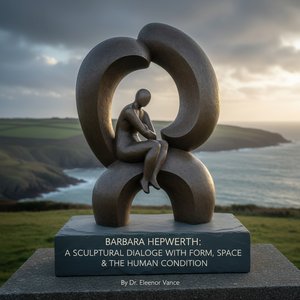
Barbara Hepworth: A Sculptural Dialogue with Form, Space & the Human Condition
Explore the profound world of Barbara Hepworth's sculpture. Discover her artistic evolution, iconic forms, and lasting influence on modern art. A guide for collectors & enthusiasts.


