

 Wyślij jako kartkę
 Udostępnij
 Szczegóły dzieła
 Przewodnik

 Pobierz obraz
 Podobne obiekty
 Pokaz slajdów
 Statystyki
Figura Archaiczna


 Rozwiń treść
Dzieło sztuki prezentowane na tej stronie podlega ochronie prawem autorskim, co oznacza, że nie mamy prawa do tworzenia ani sprzedaży jego identycznej reprodukcji. Ochrona ta jest egzekwowana na mocy umów międzynarodowych, takich jak Konwencja berneńska oraz przez przepisy prawa krajowego, w tym te określone w Prawo autorskie USA – Tytuł 17.
Metoda ta jest w pełni zgodna z przepisami prawa autorskiego, ponieważ nie polega na kopiowaniu ani powielaniu chronionego dzieła. Stanowi ona kreatywną reinterpretację – nowy obraz, który czerpie inspirację z oryginału, ale nie jest z nim tożsamy.
Giclée / Wydruk artystyczny
Wydruki giclée lub płótna o jakości muzealnej, szybka realizacja i szeroki wybór opcji wykończenia. ( Zamów ręcznie malowaną reprodukcję Przejdź do wersji cyfrowej)




































Wybierz spośród naszych standardowych rozmiarów, które zachowują oryginalne proporcje dzieła sztuki.

Wpisz wymaganą szerokość i wysokość, aby dopasować grafikę do ramy lub ściany. Wydruk można jedynie przyciąć, nigdy nie powiększając go poza oryginalny obraz, dlatego format o innych proporcjach spowoduje utratę części kompozycji. Przed rozpoczęciem druku prześlemy Ci cyfrowy podgląd do zatwierdzenia. Obraz wyświetlany na tej stronie nie pokazuje rzeczywistego przycięcia — jedynie podgląd oddaje ten efekt.
Dostawa na cały świat () w ciągu 2 tygodni zamiast standardowych 4/5 tygodni. (27 Październik)

Bezpłatna ekspresowa wysyłka na cały świat

Wysokiej jakości płótno lniane

Pełne ubezpieczenie przesyłki

Gwarancja zwrotu należności celnych i podatków importowych

Gwarancja wiernego odwzorowania kolorów

100-dniowa polityka zwrotów (tylko w przypadku wad)

Gwarancja 100% zwrotu pieniędzy

Zniżka przy zakupie wielu sztuk
 Opcja ze szkłem jest dostępna wyłącznie w rozmiarach poniżej 110 cm

Figura Archaiczna
Giclée / Wydruk artystyczny
Wymiary reprodukcji
-


Cena całkowita
zł 307
Barbara Hepworth: Exploring Form and Void – A Reflection on “Figure (Archaean)”
Barbara Hepworth’s sculptural oeuvre stands as a cornerstone of British modernism, embodying a radical departure from traditional representational art and establishing itself as one of the foremost voices in abstract sculpture. Born in Wakefield, Yorkshire, in 1903, Hepworth pursued her artistic ambitions with unwavering determination, earning a scholarship to study at Leeds School of Art before embarking on her transformative journey to the Royal College of Art (RCA) in London in 1921. It was here that she honed her craft and embraced the burgeoning currents of abstraction, forging an indelible connection with movements like Surrealism and Abstraction-Création. “Figure (Archaean),” created in 1959, exemplifies Hepworth’s signature style – a masterful fusion of geometric precision and organic fluidity. The sculpture, crafted from stone—specifically alabaster—demonstrates Hepworth's meticulous attention to material qualities and her profound understanding of form and void. Unlike many sculptors of her era who sought to depict recognizable subjects, Hepworth deliberately eschewed representation, prioritizing instead the exploration of fundamental sculptural principles. The distinctive hole drilled through the central mass isn’t merely a technical element; it serves as a powerful symbol representing emptiness, contemplation, and the inherent duality within existence – concepts deeply resonant with Hepworth's philosophical outlook. Hepworth’s technique involved painstakingly carving away stone to reveal the underlying form, leaving only the essential contours exposed. This subtractive process demanded immense patience and skill, reflecting Hepworth’s belief that sculpture should be an active engagement with material itself rather than a passive imitation of reality. The resulting surface is smooth and polished, creating a tactile experience that invites viewers to consider the sculpture's materiality alongside its conceptual significance. The historical context surrounding “Figure (Archaean)” is crucial to appreciating its artistic merit. Produced during the mid-1950s, Hepworth’s work aligns with the broader aesthetic concerns of the time – a reaction against postwar austerity and an embrace of humanist values. The sculpture speaks to anxieties about nuclear threat while simultaneously conveying a sense of serenity and spiritual contemplation. Its placement at The Hepworth Wakefield underscores its enduring relevance as a testament to Hepworth's artistic vision and her contribution to the canon of modern art. Ultimately, “Figure (Archaean)” transcends mere visual aesthetics; it invites viewers into a dialogue about fundamental questions concerning perception, materiality, and the human condition. It remains an inspiring example of sculptural innovation—a celebration of form and void that continues to captivate audiences worldwide.Pytania i odpowiedzi
Czy kolory w „Figura Archaiczna” – Barbara Hepworth są nasycone czy stonowane?
Paleta dzieła "Figura Archaiczna" charakteryzuje się Przygaszone nasyceniem kolorów.
Kto stworzył "Figura Archaiczna" i w jakim stylu jest to dzieło?
Barbara Hepworth stworzył "Figura Archaiczna", reprezentujące nurt Abstraction-Création.
Jak opisuje się paletę kolorystyczną dzieła „Figura Archaiczna” – Barbara Hepworth?
Paleta dzieła „Figura Archaiczna” – Barbara Hepworth jest opisywana jako Barwy ziemi. Stanowi ona zwięzłe zestawienie barw użytych w pracy.
Biografia artysty
Barbara Hepworth: Pioneer of Organic Abstraction
Barbara Hepworth (1903–1975) stands as one of the most influential figures in British sculpture of the 20th century, a sculptor whose uncompromising vision reshaped artistic conventions and cemented her place among the foremost innovators of modernism. Born Jocelyn Barbara Hepworth on January 10, 1903, in Wakefield, Yorkshire—the eldest child of Herbert and Gertrude Johnson Hepworth—her formative years were steeped in the rugged beauty of the Pennines landscape, an environment that would profoundly inform her artistic sensibility for decades to come.Herbert Hepworth was a civil engineer for the West Riding County Council, who in 1921 advanced to the role of county surveyor.- Early Education: Hepworth attended Wakefield Girls’ High School where she excelled academically and musically.
- Leeds School of Art: At Leeds School of Art from 1920, she encountered Henry Moore, forging a friendship that would endure throughout their careers—a relationship characterized by mutual respect and spirited debate about artistic direction.
Formal Training and Artistic Beginnings
Hepworth’s formal training culminated in her enrollment at the Royal College of Art (RCA) in London in 1921, where she honed her sculptural skills under the tutelage of Henry Moore and others. Her diploma in 1924 marked a pivotal moment, propelling her into the burgeoning avant-garde movement of the time—specifically Abstraction-Création—and establishing her connection with fellow artists like Ben Nicholson and Paul Nash.Together with Moore and other students at the College, makes occasional trips to Paris.- Early Style: Hepworth’s initial explorations embraced simplified forms inspired by Egyptian sculpture, reflecting a fascination with ancient art traditions.
- Direct Carving Technique: She championed “direct carving,” prioritizing the tactile engagement between artist and material—a method that distinguished her work from more conventional modeling techniques.
Collaboration and Influence of Ben Nicholson
Hepworth’s artistic partnership with Ben Nicholson began in 1931, transforming into a deeply intertwined relationship both personally and professionally.She marries sculptor John Skeaping in 1925. Their shared studio in Hampstead became a crucible for experimentation—a space where they wrestled with questions of form, texture, and spatial relationships. Nicholson’s influence on Hepworth's aesthetic was undeniable, fostering her embrace of geometric abstraction and shaping her exploration of the interplay between mass and void.She would later relate this shift to having triplets with Nicholson in 1934, noting that after this ‘the work was more formal, and all traces of naturalism had disappeared, and for some years I was absorbed in the relationships in space, in size and texture and weight, as well as in the tensions between the forms.’- Unit One Movement: Hepworth’s involvement with Unit One—a collective dedicated to synthesizing Surrealist and Abstract Expressionist impulses—solidified her position at the forefront of British modernism.
- Landscape Sculpture: Hepworth's artistic vision was profoundly shaped by her immersion in the Yorkshire landscape, which served as a constant source of inspiration for her sculptures—particularly those exploring the relationship between organic forms and geometric abstraction.“The main sources of my inspiration are the human figure and the landscape; also the one in relation to the other.” Barbara Hepworth
Mature Style and Legacy
Hepworth’s mature style—characterized by a sensual exploration of material and space—produced monumental sculptures that captivated audiences worldwide.She was made a Commander of the Order of the British Empire in 1958, and was later awarded the rank of Dame in 1965. Notable works include *Oval Form*, *Two Forms*, and *Totem*, which exemplify her unwavering commitment to abstraction while retaining an evocative connection to nature.“Carving to me is more interesting than modelling, because there is an unlimited variety of materials from which to draw inspiration.” Barbara Hepworth- Hepworth Wakefield: Her legacy continues to inspire artists and art enthusiasts alike, enshrined in the Hepworth Wakefield—a museum dedicated to showcasing her oeuvre and fostering dialogue about contemporary sculpture.
- Notable Exhibitions: Hepworth’s sculptures graced prestigious venues such as the Kimbell Art Museum in Fort Worth, Texas, cementing her reputation as a globally recognized artist.The Hepworth Wakefield houses numerous masterpieces from renowned artists, including hepworth's own works.

Barbara Hepworth
1903 - 1975 , Wielka Brytania
Krótka nota
- Artistic Movement Or Style: Modernizm
- Artists Or Movements Influenced By This Artist: ['Unit One']
- Artists Who Influenced This Artist: ['Henry Moore']
- Date Of Birth: 10 stycznia 1903
- Full Name: Jocelyn Barbara Hepworth
- Nationality: Angielka
- Notable Artworks:
- Oval Form
- Two Forms
- Totem
- Place Of Birth: Wakefield, Anglia
Powiązane artykuły

Trwałe Formy: Ewolucja Technik i Tematów w Rzeźbie Przez Wieki – Od Antyku do Renesansu
Poznaj fascynującą historię rzeźby od antyku do renesansu! Odkryj techniki, wybitnych artystów i wpływ na współczesną sztukę. Ekspercka analiza dla kolekcjonerów i miłośników.
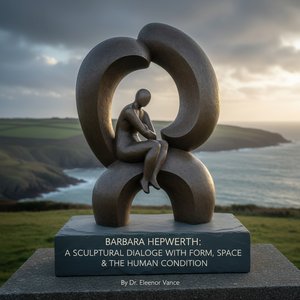
Barbara Hepworth: A Sculptural Dialogue with Form, Space & the Human Condition
Explore the profound world of Barbara Hepworth's sculpture. Discover her artistic evolution, iconic forms, and lasting influence on modern art. A guide for collectors & enthusiasts.

Trwała Forma: Rzeźba w Historii – Technika i Rezonans Emocjonalny
Poznaj historię rzeźby od antyku do współczesności! Ekspercka analiza technik, stylów i emocjonalnego wpływu arcydzieł. Inspiracje dla kolekcjonerów i miłośników sztuki.

10 Legendarnych Brązów, Które Zrewolucjonizowały Sztukę | OriginalUniqueArt
Odkryj 10 legendarnych rzeźb brązowych, które zrewolucjonizowały sztukę! Poznaj historie Rodina, Donatello i innych mistrzów. Inspiracje wnętrzarskie & reprodukcje najwyższej jakości na OriginalUniqueArt.com.

10 Legendarnych Brązów Rzeźbiarskich, Które Zmieniły Sztukę | OriginalUniqueArt
Odkryj 10 legendarnych rzeźb brązowych od Rodina, Degasa i innych mistrzów! Poznaj historię powstania arcydzieł sztuki i inspiruj się do dekoracji wnętrz. Reprodukcje najwyższej jakości na OriginalUniqueArt.com – zobacz kolekcję!


