Zobacz w skali 1:1
 Wyślij
 Udostępnij
 Szczegóły
 Przewodnik

 Pobierz plik obrazu
 Podobne obiekty
 RTG
RTG Pokaz slajdów
 Statystyki
Nude in Profile


 Czytaj więcej
Dzieło sztuki prezentowane na tej stronie podlega ochronie prawem autorskim, co oznacza, że nie mamy prawa do tworzenia ani sprzedaży jego identycznej reprodukcji. Ochrona ta jest egzekwowana na mocy umów międzynarodowych, takich jak Konwencja berneńska oraz przez przepisy prawa krajowego, w tym te określone w Prawo autorskie USA – Tytuł 17.
Jako pełną szacunku i legalną alternatywę oferujemy personalizowane, malowane ręcznie dzieła sztuki inspirowane oryginałem. Nasi wykwalifikowani i profesjonalni artyści starannie analizują styl, nastrój oraz artystyczną esencję pierwowzoru, aby stworzyć nowe, unikalne dzieło, które przywołuje te same emocje – pozostając jednocześnie w pełni oryginalną kreacją.
Metoda ta jest w pełni zgodna z przepisami prawa autorskiego, ponieważ nie polega na kopiowaniu ani powielaniu chronionego dzieła. Stanowi ona kreatywną reinterpretację – nowy obraz, który czerpie inspirację z oryginału, ale nie jest z nim tożsamy.
Ręcznie malowana reprodukcja olejowa
Ręcznie malowany obraz olejny na płótnie, wykonany na zamówienie przez naszych artystów w wybranym przez Ciebie wymiarze i oprawie. ( Przełącz na wersję drukowaną Przełącz na wersję cyfrową)




P118B zł10

P118H zł10

P118W zł10

P438Z zł10

P508JH zł12

P508YH zł12

P805H zł10

P805Z zł10

P919BZ zł10

P919G zł10

P919XJ zł10

P959ZH zł10

P968JZ zł12

W106C zł8

W218G zł10

W218JH zł8

W218Y zł10

W307PJ zł10

W316G zł10

W316PJ zł8

W316Y zł10

W398PJ zł8

W4111J zł10

W500HY zł15

W500JH zł15

W692G zł12

W849H zł8

W940BG zł15

W953PJ zł8




Wybierz spośród naszych standardowych rozmiarów, które zachowują oryginalne proporcje dzieła sztuki.

Wpisz wymaganą szerokość i wysokość, aby obraz pasował do Twojej ramy lub ściany. Ponieważ jest to dzieło malowane ręcznie, w przypadku rozmiaru o innym proporcji artysta może domalować nieco więcej wokół obrazu lub przyciąć fragmenty — wybór należy do Ciebie. Przed rozpoczęciem pracy prześlemy Ci cyfrową wizualizację do zatwierdzenia. Obraz widoczny na tej stronie nie przedstawia rzeczywistego efektu — jedynie wizualizacja oddaje realny rezultat.
Po złożeniu zamówienia zespół OriginalUniqueArt.com skontaktuje się z klientem drogą mailową w celu uzyskania instrukcji i prześle wizualizację projektu
Dostawa na całym świecie () w ciągu 3–4 tygodni zamiast standardowych 5 tygodni. (25 Październik). Bez kompromisów w kwestii jakości.

Bezpłatna ekspresowa wysyłka na cały świat

Wysokiej jakości płótno lniane

Pełne ubezpieczenie transportowe

Gwarancja zwrotu należności celnych i podatków importowych

Gwarancja idealnego odwzorowania barw

100-dniowy okres na zwrot dzieła w przypadku wykrycia wad produkcyjnych

Gwarancja 100% zwrotu pieniędzy

Oferta przy zakupie wielu sztuk
 Opcja ze szkłem jest dostępna wyłącznie w rozmiarach poniżej 110 cm

Nude in Profile
Technika wykonania
Rozmiar reprodukcji
-


Suma do zapłaty
zł 1151
A Portrait of Quietude: Exploring Balthus’s “Nude in Profile”
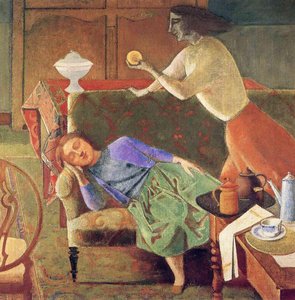
The painting "Nude in Profile" by Balthus, completed in 1975, stands as a testament to the artist's unwavering commitment to classical ideals infused with a profound sensitivity to human emotion. More than just a depiction of the female nude—a motif frequently revisited throughout art history—this work delves into themes of vulnerability and introspection within a deceptively simple domestic setting. It’s a piece that invites contemplation, prompting viewers to consider the unspoken narratives residing beneath its surface.Style and Technique: Embracing Naive Art's Essence
Balthus’s artistic approach defies easy categorization. He firmly rejected the stylistic upheavals of his time, opting instead for a style rooted in the traditions of Northern Renaissance painting—specifically, the influence of Jan van Eyck and Rogier van der Weyden. This deliberate choice resulted in an aesthetic characterized by meticulous realism combined with a deliberately understated palette and expressive brushwork. The artist eschewed grand gestures or dramatic lighting, favoring subtle gradations of color and textured surfaces that convey a palpable sense of atmosphere. Like Naive Art practitioners before him, Balthus prioritized direct observation and emotional honesty over intellectual conceptualization. This technique—often described as “primitive”—allows for an unfiltered portrayal of the human form, capturing fleeting expressions and nuances of gesture with remarkable precision. The oil on canvas medium contributes to this textural richness, creating a surface that feels both tactile and luminous.Historical Context: A Reaction Against Modernism
Painted during the mid-20th century, “Nude in Profile” represents a significant counterpoint to the dominant artistic currents of the era—namely, Surrealism and Abstract Expressionism. While these movements championed experimentation and abstraction as pathways to artistic innovation, Balthus steadfastly upheld the values of observation and anatomical accuracy. His refusal to engage with prevailing trends stemmed from a deep conviction that true beauty resided in capturing the essence of human experience with unflinching honesty. The painting emerged from a period marked by anxieties surrounding societal change and technological advancement—a reaction against the perceived dehumanizing effects of modernity. Balthus sought refuge in the quiet contemplation of the natural world and the intimate portrayal of human subjects, asserting a humanist sensibility that prioritized empathy and psychological depth.Symbolism: Beyond Mere Representation
Despite its apparent simplicity, “Nude in Profile” is laden with symbolic resonance. The woman’s pose—facing away from the viewer—suggests a deliberate act of concealment, inviting speculation about her inner thoughts and feelings. The towel she holds serves as a visual metaphor for ritual cleansing and preparation—a subtle allusion to themes of purity and vulnerability. Furthermore, the muted beige walls of the interior create a sense of enclosure and isolation, mirroring the psychological state of the subject. These elements coalesce into a portrait not merely of the body but also of the soul—a testament to Balthus’s ability to imbue his canvases with profound emotional depth.Emotional Impact: A Moment Frozen in Time
Ultimately, “Nude in Profile” succeeds in conveying a powerful sense of melancholy and quiet contemplation. The soft lighting casts gentle shadows that heighten the three-dimensionality of the scene without resorting to theatrical effects. The artist’s masterful use of color—primarily earthy tones—further reinforces this atmosphere of subdued emotion. Viewing this painting evokes a feeling of stillness, prompting reflection on themes of solitude and introspection. It's a work that lingers in the mind long after it has been observed, demonstrating Balthus’s enduring legacy as an artist who prioritized emotional truth above stylistic convention.Pytania i odpowiedzi
Czy "Nude in Profile" to słynne dzieło należące do nurtu Other?
W ramach nurtu Other, dzieło „Nude in Profile” cechuje się poziomem popularności Recognized.
Do jakiego stylu należy "Nude in Profile"?
„Nude in Profile” to dzieło należące do nurtu Other. Nurt ten określa tradycję artystyczną, w której osadzone jest dzieło.
W jaki sposób kolory dzieła „Nude in Profile” autorstwa Balthus odnoszą się do jego emocjonalnego przekazu?
Paleta Dark dzieła „Nude in Profile” autorstwa Balthus współgra z jego Melancholic wydźwiękiem emocjonalnym. Kolor jest jednym ze sposobów, w jakie praca przekazuje uczucia.
Biografia artysty
A World Apart: The Enigmatic Vision of Balthus
Balthasar Klossowski de Rola, universally known as Balthus, remains one of the most compelling and controversial figures in 20th-century art. Born in Paris on February 29, 1908, into a family steeped in intellectual and artistic circles, his life was marked by an early immersion in culture and a deliberate rejection of prevailing artistic trends. His father, Erich Klossowski, was a respected art historian, while his mother, Baladine Klossowska, was a painter herself, fostering an environment where aesthetic contemplation was not merely encouraged but lived. This upbringing instilled in the young Balthus a deep reverence for the Old Masters and a skepticism towards the burgeoning avant-garde movements that dominated the Parisian scene. He wasn’t interested in breaking with tradition; rather, he sought to revitalize classical forms with a distinctly modern sensibility, creating a world uniquely his own—a world often unsettling, always captivating.Formative Years and Artistic Awakening
Balthus's early life was nomadic, disrupted by the outbreak of World War I and his parents’ subsequent separation. These experiences instilled in him a sense of displacement and introspection that would profoundly influence his artistic vision. He began drawing at a remarkably young age, demonstrating an exceptional talent for capturing form and atmosphere. Mentored by Rainer Maria Rilke during his mother's relationship with the poet, Balthus received encouragement to pursue his artistic inclinations. This period was crucial in shaping his aesthetic sensibilities; Rilke’s poetic explorations of inner life resonated deeply with the young artist, fostering a fascination with psychological depth and symbolic resonance. He absorbed influences from diverse sources—pre-Renaissance Italian painters like Piero della Francesca and Simone Martini, as well as literary figures such as Emily Brontë and Lewis Carroll—creating a unique artistic language that defied easy categorization. His early works already hinted at the themes that would define his career: adolescence, solitude, and the complex interplay between innocence and desire. The influence of Rilke’s melancholic beauty is particularly evident in Balthus's early landscapes, which possess a haunting stillness and an almost unbearable sense of longing.Controversy and Recognition
Balthus first exhibited publicly in 1934, presenting a body of work that immediately sparked controversy. Paintings like *The Guitar Lesson*, with its ambiguous depiction of a young girl receiving instruction from an older man, ignited debate about the artist’s intentions and the nature of his gaze. Critics were divided, some condemning the perceived eroticism while others praised the painting's psychological complexity and technical mastery. The subject matter itself – a seemingly innocent scene imbued with a subtle undercurrent of tension – became a focal point of discussion. This controversy, however, only served to solidify Balthus’s reputation as a provocative and unconventional artist. He deliberately cultivated an air of mystery around himself, resisting attempts at biographical interpretation and insisting that his paintings should be experienced directly, without the filter of external commentary. Throughout the 1930s and 40s, he continued to develop his distinctive style, characterized by elongated figures, dramatic lighting, and a meticulous attention to detail. His compositions often featured young girls in states of reverie or contemplation, their poses both graceful and unsettling. The paintings were not simply portraits; they were explorations of mood, memory, and the unspoken anxieties of youth.A Legacy of Introspection and Influence
Despite remaining somewhat aloof from the mainstream art world, Balthus achieved significant recognition during his lifetime. He held major exhibitions at the Museum of Modern Art in New York (1956) and throughout Europe, solidifying his position as a leading figure in 20th-century painting. In 1977, he was appointed director of the Académie de France in Rome, a prestigious post that further cemented his status within the artistic establishment. His influence can be seen in the work of numerous contemporary artists, including Jan Saudek, Will Barnet, Duane Michals, and John Currin, who share his interest in figurative painting, psychological realism, and the exploration of complex emotional states. Balthus’s enduring appeal lies not only in his technical virtuosity but also in his ability to tap into universal human experiences—the longing for connection, the fear of isolation, and the search for meaning in a chaotic world. His work continues to be studied and debated, revealing new layers of complexity with each viewing.Key Works and Enduring Themes
Throughout his career, Balthus consistently returned to certain motifs and themes. *La Rue* (1933) exemplifies his early mastery of composition and atmosphere, depicting a street scene with an unsettling sense of isolation. *The Mountain* (1937), a monumental work featuring two adolescent girls in a stark landscape, embodies the artist’s fascination with youth and solitude. Later works, such as *Girl at a Window* (1957) – famously featured in François Truffaut's film Domicile Conjugal – showcase his ability to capture fleeting moments of introspection and vulnerability. His paintings are often characterized by a sense of stillness and silence, inviting viewers to contemplate the inner lives of his subjects. He was also deeply influenced by music, particularly the works of Wolfgang Amadeus Mozart, which he believed reflected the same balance between order and emotion that he sought to achieve in his art. Balthus’s enduring appeal lies not only in his technical skill but also in his ability to create images that resonate with a profound sense of mystery and emotional depth. His paintings are not merely representations; they are windows into a world of dreams, anxieties, and unspoken desires—a testament to the enduring power of art to challenge our perceptions and illuminate the hidden corners of the human soul.
Balthus
1908 - 2001 , Francja
Najważniejsze informacje
- Artistic Movement Or Style: Klasyczny, Figuracyjny
- Artists Or Movements Influenced By This Artist:
- Rilke
- Surrealizm
- Artists Who Influenced This Artist:
- Masaccio
- Piero
- Ingres
- Date Of Birth: 29 lutego 1908
- Date Of Death: 18 lutego 2001
- Full Name: Balthasar Klossowski de Rola
- Nationality: Francuz-Polak
- Notable Artworks:
- La Rue
- Góra
- Dziewczyna
- Okno
- Place Of Birth: Paryż, Francja
Zobacz także powiązane artykuły

Urok Nagiego Ciała w Sztuce: Historyczna i Artystyczna Eksploracja Aktu
Poznaj fascynującą historię aktu w sztuce – od starożytnych korzeni po współczesne interpretacje. Analiza technik, wybitnych artystów i wpływu anatomii na przedstawianie ludzkiego ciała. Ekskluzywne artykuły dla miłośników sztuki.

Nagość w Sztuce: Od Klasycznej Harmonii do Współczesnych Interpretacji
Odkryj fascynującą historię nagiego ciała w sztuce – od antycznych ideałów piękna po współczesne interpretacje. Analiza symboliki, wpływ humanizmu i klasycyzmu na przedstawianie formy ludzkiej. Ekspercka analiza obrazów.

Bunt Przeciw Konwencji: Odkrywanie Naiwnego Sztuki i Prymitywizmu jako Wyraz Odwrócenia Akademickich Tradycji
Odkryj fascynujący świat sztuki naiwnej i prymitywizmu! Analiza porównawcza, historia, wpływ na awangardę oraz współczesne interpretacje. Ekspercka wiedza dla kolekcjonerów i miłośników sztuki.

Balthus: Exploring the Enigmatic World of Childhood, Myth & Modernist Disquiet
Explore the captivating world of Balthus – a master of figurative art renowned for dreamlike compositions & psychologically charged portraits. Discover his unique style, symbolism, and controversial legacy at OriginalUniqueArt.

The Pure Charm of Naïve Art: Finding Beauty in Simplicity, Soul, and the Unfiltered Vision
Discover the profound beauty of Naïve Art. Explore how self-taught masters bypass academic tradition to capture raw emotional truth through vibrant color and soulful simplicity. A cultural journey for the true art lover seeking depth beyond convention.