Zobacz w skali 1:1
 Wyślij
 Udostępnij
 Szczegóły
 Przewodnik

 Pobierz plik obrazu
 Podobne obiekty
 RTG
RTG Pokaz slajdów
 Statystyki
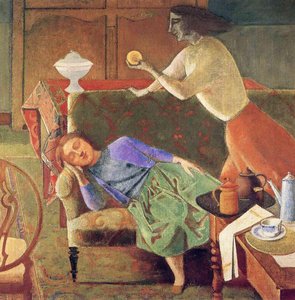
Nude at Rest
 Oil On Canvas
- WallArt
- Contemporary Realism
 1977
1977 150.0 x 200.0 cm
 Czytaj więcej
Dzieło sztuki prezentowane na tej stronie podlega ochronie prawem autorskim, co oznacza, że nie mamy prawa do tworzenia ani sprzedaży jego identycznej reprodukcji. Ochrona ta jest egzekwowana na mocy umów międzynarodowych, takich jak Konwencja berneńska oraz przez przepisy prawa krajowego, w tym te określone w Prawo autorskie USA – Tytuł 17.
Metoda ta jest w pełni zgodna z przepisami prawa autorskiego, ponieważ nie polega na kopiowaniu ani powielaniu chronionego dzieła. Stanowi ona kreatywną reinterpretację – nowy obraz, który czerpie inspirację z oryginału, ale nie jest z nim tożsamy.
Giclée / Wydruk artystyczny
Wydruki giclée lub płótna o jakości muzealnej, szybka realizacja i szeroki wybór opcji wykończenia. ( Kup ręcznie malowany obraz Przełącz na wersję cyfrową)




P118B zł10

P118H zł10

P118W zł10

P438Z zł10

P508JH zł12

P508YH zł12

P805H zł10

P805Z zł10

P919BZ zł10

P919G zł10

P919XJ zł10

P959ZH zł10

P968JZ zł12

W106C zł8

W218G zł10

W218JH zł8

W218Y zł10

W307PJ zł10

W316G zł10

W316PJ zł8

W316Y zł10

W398PJ zł8

W4111J zł10

W500HY zł15

W500JH zł15

W692G zł12

W849H zł8

W940BG zł15

W953PJ zł8




Wybierz spośród naszych standardowych rozmiarów, które zachowują oryginalne proporcje dzieła sztuki.

Wpisz wymaganą szerokość i wysokość, aby dopasować grafikę do ramy lub ściany. Wydruk można jedynie przyciąć, nigdy nie powiększając go poza oryginalny obraz, dlatego format o innym proporcji spowoduje utratę części kompozycji. Przed rozpoczęciem druku prześlemy Ci cyfrowy podgląd do zatwierdzenia. Obraz wyświetlany na tej stronie nie pokazuje rzeczywistego przycięcia — jedynie podgląd oddaje ten efekt.
Dostawa na cały świat () w ciągu 2 tygodni zamiast standardowych 4/5 tygodni. (25 Październik)

Bezpłatna ekspresowa wysyłka na cały świat

Wysokiej jakości płótno lniane

Pełne ubezpieczenie transportowe

Gwarancja zwrotu należności celnych i podatków importowych

Gwarancja idealnego odwzorowania barw

100-dniowy okres na zwrot dzieła w przypadku wykrycia wad produkcyjnych

Gwarancja 100% zwrotu pieniędzy

Oferta przy zakupie wielu sztuk
 Opcja ze szkłem jest dostępna wyłącznie w rozmiarach poniżej 110 cm

Nude at Rest
Giclée / Wydruk artystyczny
Rozmiar reprodukcji
-


Suma do zapłaty
zł 307
The Quiet Introspection of 'Nude at Rest'
To stand before Balthus’s Nude at Rest is to enter a space suspended between wakefulness and dream. The composition centers on a figure seated in an armchair, enveloped by a palpable stillness that seems to absorb all surrounding sound. It is not merely a depiction of the nude form; rather, it is an exploration of repose itself—a moment caught just as consciousness drifts toward contemplation. The subject matter, rendered with such profound intimacy, invites the viewer into a private chamber of quietude. Balthus masterfully frames this solitary figure against a plain wall, allowing the subtle interplay between the soft curves of the body and the rigid geometry of the furniture to create a compelling visual dialogue.
Mastery in Technique and Tone
Technically, the painting speaks volumes through its visible brushwork. While the overall impression is one of smooth, almost ethereal blending, closer inspection reveals the artist’s hand at work—broad strokes applied with confident deliberation. The medium, oil paint on canvas, allows for a nuanced handling of light and shadow. Notice how the illumination, seemingly originating from the upper left, sculpts the skin and the draped fabric, defining form through delicate gradations of tone. The palette itself is remarkably restrained, dominated by muted creams, beiges, and soft whites. This deliberate chromatic choice prevents any single element from shouting for attention; instead, it encourages the eye to wander slowly, absorbing the subtle variations in texture—the slight roughness suggested on the wall contrasting with the yielding softness of the flesh.
Historical Echoes and Emotional Resonance
Balthus’s work has always been steeped in a complex relationship with tradition. While this piece dates from 1977, it carries echoes that reach back to classical portraiture, yet filters them through a distinctly modern lens. The emotional core of Nude at Rest is one of gentle melancholy and profound stillness. The figure’s posture suggests a deep internal dialogue—a moment of quiet reckoning. For the collector or designer, this translates into an object that does not merely decorate a wall but rather imbues a room with a sophisticated sense of thoughtful calm. It speaks to moments of pause in a busy life.
A Study in Form and Atmosphere
The composition is built upon organic shapes meeting architectural simplicity. The armchair acts as both support and boundary, grounding the ethereal quality of the figure. This balance between containment and release—between the solid structure and the yielding form—is what gives the piece its enduring power. When considering a reproduction for your space, understand that you are acquiring more than just an image; you are inviting a mood. It is an atmosphere of quiet introspection, perfect for a drawing-room or a private study where contemplation is valued above spectacle.
Pytania i odpowiedzi
Czy „Nude at Rest” autorstwa Balthus znajduje się w domenie publicznej?
Status praw autorskich dla „Nude at Rest” autorstwa Balthus: dzieło znajduje się w nadal chronione prawem autorskim. Określa to, czy reprodukcje obrazu mogą być sporządzane swobodnie.
Z jakim uczuciem wiąże się "Nude at Rest"?
„Nude at Rest” autorstwa Balthus przekazuje Reflective wydźwięk emocjonalny.
Jakie tematy pojawiają się w „Nude at Rest” autorstwa Balthus?
Tematyka obecna w „Nude at Rest” autorstwa Balthus obejmuje nude figure, interior scene, contemplation, quietness, classical art, muted palette, portraiture, seated pose. Razem stanowią one podsumowanie tematyki dzieła.
Biografia artysty
A World Apart: The Enigmatic Vision of Balthus
Balthasar Klossowski de Rola, universally known as Balthus, remains one of the most compelling and controversial figures in 20th-century art. Born in Paris on February 29, 1908, into a family steeped in intellectual and artistic circles, his life was marked by an early immersion in culture and a deliberate rejection of prevailing artistic trends. His father, Erich Klossowski, was a respected art historian, while his mother, Baladine Klossowska, was a painter herself, fostering an environment where aesthetic contemplation was not merely encouraged but lived. This upbringing instilled in the young Balthus a deep reverence for the Old Masters and a skepticism towards the burgeoning avant-garde movements that dominated the Parisian scene. He wasn’t interested in breaking with tradition; rather, he sought to revitalize classical forms with a distinctly modern sensibility, creating a world uniquely his own—a world often unsettling, always captivating.Formative Years and Artistic Awakening
Balthus's early life was nomadic, disrupted by the outbreak of World War I and his parents’ subsequent separation. These experiences instilled in him a sense of displacement and introspection that would profoundly influence his artistic vision. He began drawing at a remarkably young age, demonstrating an exceptional talent for capturing form and atmosphere. Mentored by Rainer Maria Rilke during his mother's relationship with the poet, Balthus received encouragement to pursue his artistic inclinations. This period was crucial in shaping his aesthetic sensibilities; Rilke’s poetic explorations of inner life resonated deeply with the young artist, fostering a fascination with psychological depth and symbolic resonance. He absorbed influences from diverse sources—pre-Renaissance Italian painters like Piero della Francesca and Simone Martini, as well as literary figures such as Emily Brontë and Lewis Carroll—creating a unique artistic language that defied easy categorization. His early works already hinted at the themes that would define his career: adolescence, solitude, and the complex interplay between innocence and desire. The influence of Rilke’s melancholic beauty is particularly evident in Balthus's early landscapes, which possess a haunting stillness and an almost unbearable sense of longing.Controversy and Recognition
Balthus first exhibited publicly in 1934, presenting a body of work that immediately sparked controversy. Paintings like *The Guitar Lesson*, with its ambiguous depiction of a young girl receiving instruction from an older man, ignited debate about the artist’s intentions and the nature of his gaze. Critics were divided, some condemning the perceived eroticism while others praised the painting's psychological complexity and technical mastery. The subject matter itself – a seemingly innocent scene imbued with a subtle undercurrent of tension – became a focal point of discussion. This controversy, however, only served to solidify Balthus’s reputation as a provocative and unconventional artist. He deliberately cultivated an air of mystery around himself, resisting attempts at biographical interpretation and insisting that his paintings should be experienced directly, without the filter of external commentary. Throughout the 1930s and 40s, he continued to develop his distinctive style, characterized by elongated figures, dramatic lighting, and a meticulous attention to detail. His compositions often featured young girls in states of reverie or contemplation, their poses both graceful and unsettling. The paintings were not simply portraits; they were explorations of mood, memory, and the unspoken anxieties of youth.A Legacy of Introspection and Influence
Despite remaining somewhat aloof from the mainstream art world, Balthus achieved significant recognition during his lifetime. He held major exhibitions at the Museum of Modern Art in New York (1956) and throughout Europe, solidifying his position as a leading figure in 20th-century painting. In 1977, he was appointed director of the Académie de France in Rome, a prestigious post that further cemented his status within the artistic establishment. His influence can be seen in the work of numerous contemporary artists, including Jan Saudek, Will Barnet, Duane Michals, and John Currin, who share his interest in figurative painting, psychological realism, and the exploration of complex emotional states. Balthus’s enduring appeal lies not only in his technical virtuosity but also in his ability to tap into universal human experiences—the longing for connection, the fear of isolation, and the search for meaning in a chaotic world. His work continues to be studied and debated, revealing new layers of complexity with each viewing.Key Works and Enduring Themes
Throughout his career, Balthus consistently returned to certain motifs and themes. *La Rue* (1933) exemplifies his early mastery of composition and atmosphere, depicting a street scene with an unsettling sense of isolation. *The Mountain* (1937), a monumental work featuring two adolescent girls in a stark landscape, embodies the artist’s fascination with youth and solitude. Later works, such as *Girl at a Window* (1957) – famously featured in François Truffaut's film Domicile Conjugal – showcase his ability to capture fleeting moments of introspection and vulnerability. His paintings are often characterized by a sense of stillness and silence, inviting viewers to contemplate the inner lives of his subjects. He was also deeply influenced by music, particularly the works of Wolfgang Amadeus Mozart, which he believed reflected the same balance between order and emotion that he sought to achieve in his art. Balthus’s enduring appeal lies not only in his technical skill but also in his ability to create images that resonate with a profound sense of mystery and emotional depth. His paintings are not merely representations; they are windows into a world of dreams, anxieties, and unspoken desires—a testament to the enduring power of art to challenge our perceptions and illuminate the hidden corners of the human soul.
Balthus
1908 - 2001 , Francja
Najważniejsze informacje
- Artistic Movement Or Style: Klasyczny, Figuracyjny
- Artists Or Movements Influenced By This Artist:
- Rilke
- Surrealizm
- Artists Who Influenced This Artist:
- Masaccio
- Piero
- Ingres
- Date Of Birth: 29 lutego 1908
- Date Of Death: 18 lutego 2001
- Full Name: Balthasar Klossowski de Rola
- Nationality: Francuz-Polak
- Notable Artworks:
- La Rue
- Góra
- Dziewczyna
- Okno
- Place Of Birth: Paryż, Francja
Zobacz także powiązane artykuły

The Enduring Power of Painting: A Historical & Contemporary Exploration of Form and Emotion
Explore the rich history & enduring techniques of oil painting with OriginalUniqueArt. Discover masterpieces, learn about art collecting, and find authentic handmade reproductions crafted by skilled artists.

Trwała Spuścizna Malarstwa Olejnego: Technika, Historia i Estetyczny Wpływ
Poznaj historię i technikę malarstwa olejnego! Eksperckie artykuły o konserwacji, renowacji oraz współczesnych zastosowaniach. Dowiedz się więcej o mistrzach i trwałości obrazów olejnych.
Trwała Spuścizna Klasycyzmu: Zasady, Ewolucja i Wpływ na Sztukę Zachodnią
Poznaj historię klasycyzmu w sztuce! Odkryj zasady estetyczne, wybitnych artystów i trwały wpływ tego nurtu na architekturę, malarstwo i rzeźbę. Ekspercka analiza i inspiracje od OriginalUniqueArt.

Olej na płótnie: Historia, techniki i ponadczasowy urok malarskiego medium
Poznaj historię i techniki malarstwa olejowego! Od renesansowych mistrzów po współczesne zastosowania – wszystko o oleju na płótnie. Poradniki, konserwacja i inspiracje dla pasjonatów sztuki.

Urok Nagiego Ciała w Sztuce: Historyczna i Artystyczna Eksploracja Aktu
Poznaj fascynującą historię aktu w sztuce – od starożytnych korzeni po współczesne interpretacje. Analiza technik, wybitnych artystów i wpływu anatomii na przedstawianie ludzkiego ciała. Ekskluzywne artykuły dla miłośników sztuki.