

 Zobacz w skali 1:1
 Wyślij
 Udostępnij
 Szczegóły
 Przewodnik

 Pobierz plik obrazu
 Podobne obiekty
 RTG
RTG Pokaz slajdów
 Statystyki
David and Caspar
 Oil On Panel
- Post-Impressionism
 1912
1912 53.0 x 35.0 cm
 Fitzwilliam College
 Czytaj więcej
Giclée / Wydruk artystyczny
Wydruki giclée lub płótna o jakości muzealnej, szybka realizacja i szeroki wybór opcji wykończenia. ( Kup ręcznie malowany obraz Przełącz na wersję cyfrową)




P118B $10

P118H $10

P118W $10

P438Z $10

P508JH $12

P508YH $12

P805H $10

P805Z $10

P919BZ $10

P919G $10

P919XJ $10

P959ZH $10

P968JZ $12

W106C $8

W218G $10

W218JH $8

W218Y $10

W307PJ $10

W316G $10

W316PJ $8

W316Y $10

W398PJ $8

W4111J $10

W500HY $15

W500JH $15

W692G $12

W849H $8

W940BG $15

W953PJ $8




Wybierz spośród naszych standardowych rozmiarów, które zachowują oryginalne proporcje dzieła sztuki.

Możesz wprowadzić własne wymiary, aby dopasować dzieło do konkretnej ramy lub przestrzeni. Jeśli wybrany rozmiar nie będzie odpowiadał proporcjom oryginalnego obrazu, przytniecie dzieło lub rozszerzymy obraz za pomocą odbicia lustrzanego lub jednolitego wypełnienia krawędzi. Przed rozpoczęciem produkcji prześlemy cyfrową wizualizację do Twojej akceptacji.
Prosimy pamiętać, że podgląd na ekranie nie odzwierciedla faktycznego przycinania ani rozszerzania. Tylko wizualizacja dokładnie pokaże końcową kompozycję.
Mimo dostępności niestandardowych rozmiarów, zalecamy wybór wymiaru z listy zdefiniowanej, aby zachować oryginalne proporcje.
Dostawa na cały świat () w ciągu 2 tygodni zamiast standardowych 4/5 tygodni. (27 Wrzesień)

Bezpłatna ekspresowa wysyłka na cały świat

Wysokiej jakości płótno lniane

Pełne ubezpieczenie transportowe

Gwarancja zwrotu należności celnych i podatków importowych

Gwarancja idealnego odwzorowania barw

100-dniowy okres na zwrot dzieła w przypadku wykrycia wad produkcyjnych

Gwarancja 100% zwrotu pieniędzy

Oferta przy zakupie wielu sztuk
 Opcja ze szkłem jest dostępna wyłącznie w rozmiarach poniżej 110 cm

David and Caspar
Giclée / Wydruk artystyczny
Rozmiar reprodukcji
-


Suma do zapłaty
$ 80
The Enigmatic Duo: David and Caspar
Augustus Edwin John’s “David and Caspar,” painted in 1912, isn't merely a portrait; it’s a carefully constructed tableau of youthful camaraderie and profound introspection. The canvas immediately draws the viewer into a quiet, sun-drenched meadow, dominated by two figures – a young boy, identified as David, and a slightly older youth, Caspar – standing in relaxed contemplation. Their postures are remarkably naturalistic, suggesting an easy familiarity born from shared experience and mutual respect. John masterfully captures the fleeting expressions of their faces, hinting at unspoken thoughts and a deep connection that transcends mere friendship. The scene is imbued with a palpable sense of serenity, yet beneath this surface tranquility lies a subtle current of melancholy, reflecting perhaps the transient nature of youth and beauty.
John’s style during this period leaned heavily into Post-Impressionism, characterized by bold brushstrokes, vibrant color palettes, and an emphasis on capturing subjective experience rather than photographic realism. He eschewed meticulous detail in favor of conveying mood and atmosphere. Notice the loose application of paint, particularly in the rendering of the sky – a wash of blues and purples that evokes both warmth and a hint of foreboding. The figures themselves are painted with a slightly flattened perspective, contributing to the overall sense of intimacy and immediacy. The choice of medium—oil on panel—allowed John to build up layers of color and texture, creating a rich and luminous surface.
Echoes of Myth and Romanticism
The pairing of “David” and “Caspar” is deliberately evocative, immediately conjuring associations with the biblical story of David and Jonathan. While not a direct illustration of that famous tale, John clearly intended to tap into its powerful themes of loyalty, brotherhood, and sacrifice. The names themselves—David, after the shepherd king, and Caspar, referencing the biblical figure known for his wisdom—suggest a deliberate layering of symbolism. Furthermore, the painting resonates with the spirit of Romanticism, a movement that prized emotion, individualism, and the sublime beauty of nature. The meadow setting, bathed in golden light, embodies this ideal – a space of tranquility and spiritual reflection.
The inclusion of Caspar adds an intriguing layer to the composition. He’s not simply a companion; he possesses a certain gravitas, a quiet intensity that contrasts with David's youthful exuberance. Some art historians have suggested that Caspar represents the older generation, offering guidance and wisdom to the younger boy. The subtle shift in gaze between the two figures—David looking slightly upwards, as if contemplating something beyond the immediate scene—further reinforces this interpretation. The painting invites us to ponder the complexities of human relationships and the enduring power of youthful bonds.
A Window into John’s World
Augustus Edwin John was a complex and often enigmatic figure, known for his bohemian lifestyle and unconventional artistic practices. Born in Wales, he spent much of his life traveling throughout Europe, immersing himself in diverse cultures and artistic traditions. His work is deeply personal, reflecting his own experiences and emotions. “David and Caspar” offers a glimpse into this world—a world of passionate friendships, spiritual quests, and a profound appreciation for the beauty of the natural world. The painting’s enduring appeal lies not only in its technical skill but also in its ability to evoke a sense of nostalgia and wonder.
Further research reveals that John was particularly fascinated by the Romani people, whom he often depicted in his paintings. His interest in their culture led him to travel extensively throughout Europe, documenting their lives and customs. The painting’s composition—with its emphasis on natural light and simple forms—can be seen as a reflection of this fascination with the beauty of everyday life. The inclusion of Caspar, a figure who appears to be of Romani descent, adds another layer of complexity to the painting's symbolism.
Useful Links:
- David and Caspar (OriginalUniqueArt)
- David and Caspar, 1912 - Augustus John - WikiArt.org (WikiArt)
- Augustus Edwin John (Wikipedia)
Biografia artysty
A Welsh Bohemian: The Life and Art of Augustus Edwin John
Augustus Edwin John, a name synonymous with vibrant color and intensely personal portraits, emerged as one of the most distinctive figures in early 20th-century British art. Born on January 4, 1878, in Tenby, a charming coastal town nestled within the Pembrokeshire county of Wales, his life was a tapestry woven with artistic passion, bohemian adventures, and a profound connection to both the natural world and its marginalized communities. From his humble beginnings as the third child of Edwin William John, a solicitor, and Augusta Smith (who tragically died when he was just six years old), John’s early exposure to art—primarily through his elder sister Gwen’s drawing lessons—laid the foundation for a career that would challenge conventions and leave an indelible mark on the British artistic landscape.Early Influences and Artistic Training
John's artistic journey began formally at the Tenby School of Art, where his innate talent quickly became evident. However, it was his enrollment at the Slade School of Fine Art in London in 1894 that truly shaped his development. Under the tutelage of Henry Tonks, a renowned and demanding instructor, John honed his draughtsmanship to an extraordinary degree, mastering the fundamentals of line, form, and perspective with remarkable precision. The Slade’s rigorous curriculum instilled in him a deep appreciation for academic tradition while simultaneously encouraging experimentation and innovation—a balance that would become characteristic of his artistic style. Crucially, during this period, John's exposure to the works of Old Masters like Peter Paul Rubens profoundly influenced his approach to composition, color, and dramatic lighting. Simultaneously, he absorbed the spirit of French Impressionists such as Matisse and Gauguin, embracing their use of vibrant hues and a rejection of traditional academic constraints. The subtle tonal harmonies of Puvis de Chavannes also resonated deeply with John’s aesthetic sensibilities, informing his ability to capture fleeting emotions and atmospheric effects. A pivotal moment arrived in 1897 when a diving accident in Tenby resulted in a severe head injury. This traumatic event dramatically altered John's personality, unleashing a newfound spontaneity and boldness that would become central to his artistic expression.The Romani Connection and a Life Beyond the Studio
Following the Slade years, John embarked on a period of intense exploration, seeking inspiration beyond the confines of London’s art scene. He spent considerable time in France, immersing himself in the vibrant culture of Montmartre, and later found himself captivated by the landscapes and people of Provence. However, it was his encounter with the Romani (Gypsy) community that proved to be a transformative experience. Drawn to their nomadic lifestyle, rich traditions, and captivating spirit, John became deeply involved in documenting their lives through painting, photography, and extensive research. He traveled extensively throughout Europe and Britain, living alongside the Roma, learning their language, customs, and beliefs. This immersion profoundly impacted his art, imbuing it with a sense of freedom, wanderlust, and an appreciation for the beauty of the natural world—qualities that are particularly evident in works like *Air Mechanic Shaw* (1935), a powerful portrait of T.E. Lawrence capturing both his heroic stature and underlying vulnerability. His presidency of the Gypsy Lore Society further solidified his commitment to understanding and celebrating this often-misunderstood community.A Portraitist of Distinction: Capturing the Essence of Character
While John’s engagement with Romani culture is undeniably significant, he is perhaps most celebrated for his extraordinary portraits. Possessing an uncanny ability to capture not just likeness but also the inner life of his subjects—their personality, mood, and fleeting emotions—John created some of the most psychologically astute and compelling portraits of the early 20th century. His style was characterized by a loose, expressive brushwork, vibrant colors, and a willingness to experiment with unconventional techniques. He famously described his approach as seeking an “instantaneous attitude,” striving to capture a momentary glimpse into the soul of his sitter. From aristocratic figures like Lord Leverhulme (whose notoriously unhappy portrait is a testament to John’s uncompromising honesty) to literary giants such as George Bernard Shaw and Dylan Thomas, John's portraits graced the walls of homes and galleries across Britain and beyond. Notable works include *Caspar* (1909), a poignant depiction of youthful innocence, and numerous studies of Gwen John, his sister and lifelong companion.Legacy and Critical Reception
Throughout his career, Augustus Edwin John experienced both widespread acclaim and periods of critical fluctuation. Initially celebrated for his innovative oil sketching techniques and figure drawings, some critics later found his work to be overly flamboyant or lacking in painterly finesse. His service as a war artist during World War I, attached to the Canadian forces, yielded memorable portraits of soldiers, but an unfortunate incident led to his recall to England. Despite these challenges, John remained a significant force in British art history. He was one of the few artists of his time to achieve widespread public recognition and played a crucial role in popularizing Post-Impressionism within the United Kingdom. Awarded the Order of Merit in 1942, he also documented his life and artistic philosophy in two volumes of autobiography: *Chiaroscuro* (1952) and *Finishing Touches* (published posthumously in 1964). While his reputation waned somewhat after World War II, there has been a renewed appreciation for his work in recent years, particularly for the vibrancy and originality of his early pieces. Augustus Edwin John’s art continues to captivate and inspire, reminding us of the power of individual expression and the enduring allure of a life lived with passion and artistic integrity.
Augustus Edwin John
1878 - 1961 , Walia
Najważniejsze informacje
- Artistic Movement Or Style: Postimpresjonizm
- Artists Or Movements Influenced By This Artist: ['Nowoczesne malarstwo brytyjskie']
- Artists Who Influenced This Artist:
- Rubens
- Matisse
- Gauguin
- Date Of Birth: 4 stycznia 1878
- Date Of Death: 31 października 1961
- Full Name: Augustus Edwin John
- Nationality: Walijski
- Notable Artworks:
- Caspar
- Air Mechanic Shaw
- David John
- Place Of Birth: Tenby, Walia
Zobacz także powiązane artykuły
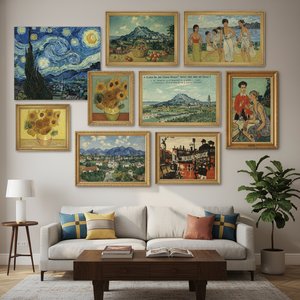
10 Arcydzieł Postimpresjonizmu, Które Zdefiniowały Sztukę. Inspiracje do Dekoracji Domu.
Odkryj 10 arcydzieł postimpresjonizmu Van Gogha, Moneta i Cézanne'a! Poznaj historie artystów, techniki malarskie i inspiracje do dekoracji wnętrz. Reprodukcje obrazów najwyższej jakości na OriginalUniqueArt.com – sztuka dla Twojego domu.

Poza Światłem i Kolorem: Impresjonizm a Postimpresjonizm dla Wymagającego Kolekcjonera
Poznaj subtelne różnice między impresjonizmem a postimpresjonizmem. Ekspercka analiza dla wymagających kolekcjonerów sztuki. Inwestycje, historia i wartość dzieł.

John Singer Sargent: 25 Arcydzieł Pełnych Elegancji i Światła | OriginalUniqueArt.com
Odkryj 25 arcydzieł Johna Singera Sargenta – mistrza portretu i impresjonizmu. Poznaj historie, techniki i inspiracje za jego najsłynniejszymi obrazami. Reprodukcje najwyższej jakości na OriginalUniqueArt.com. Eksploruj pełną kolekcję online!

John Constable: 25 Najlepszych Obrazów Mistrza Angielskiego Krajobrazu | OriginalUniqueArt
Odkryj 25 arcydzieł Johna Constable'a – mistrza angielskiego krajobrazu! Poznaj romantyczne pejzaże, technikę malarską i inspiracje z Dedham Vale. Reprodukcje obrazów najwyższej jakości na OriginalUniqueArt.com. Eksploruj pełną kolekcję online!
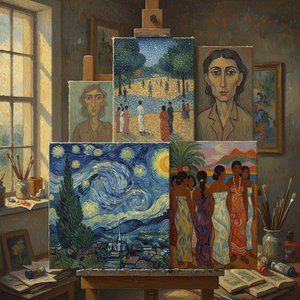
Poza Impresjonizmem: Eksploracja Głębii Emocjonalnej Malarstwa Postimpresjonistycznego
Odkryj fascynujący świat postimpresjonizmu! Analiza dzieł Van Gogha, Cézanne'a i Gauguina. Poznaj techniki malarskie, symbolikę oraz wpływ tego ruchu na sztukę współczesną. Ekspercka wiedza i inspiracje dla miłośników sztuki.

