Post-Impressionism · 1909
Caspar (Augustus Edwin John, 1909)
Augustus Edwin John (1878–1961) stworzył Caspar. Dzieło pochodzi z 1909. Należy do nurtu Post-Impressionism. Wykonano w technice Oil On Canvas. Przechowywane jest w Fitzwilliam College w Cambridge, Wielka Brytania. Wymiary to 41 × 33 cm.
- 1909
- Oil On Canvas
- 41 × 33 cm
- Fitzwilliam College, Cambridge

 Podgląd w skali 1:1

 Ręcznie malowany obraz olejny
 Wyślij jako kartkę
 Udostępnij
 Karta informacyjna


 Pobierz obraz
 Podobne obiekty
 RTG
 Pokaz slajdów
 Pytania i odpowiedzi

 Statystyki
Caspar w skrócie
- Tytuł
- Caspar
- Artysta
- Augustus Edwin John (1878–1961)
- Miejsce urodzenia artysty
- Tenby, Walia
- Data powstania
- 1909
- Technika wykonania
- Oil On Canvas
- Wymiary
- 41 × 33 cm
- Gdzie można je zobaczyć
- Fitzwilliam College, Cambridge, Wielka Brytania
- Epoka
- Modern
- Temat
- portrait, youth, innocence, reflection, texture, observation
Co przedstawia Caspar?
A Glimpse into Youthful Innocence
In the tenderly rendered portrait Caspar, created in 1909 by the celebrated Welsh artist Augustus Edwin John, we are invited into a moment of profound quietude. This intimate work captures the essence of a young boy, whose face serves as the emotional anchor of the composition. Through a masterful use of realistic brushstrokes and a soft, diffused light, John breathes life into the subject, presenting a study of youthful innocence that feels both timeless and deeply personal. The close-up framing pulls the viewer into the boy's immediate orbit, creating a sense of gentle observation that borders on the voyeuristic, yet remains entirely respectful of the subject's quiet contemplation.
The painting is a triumph of texture and light, where the organic forms of the boy’s features are balanced against a rich, layered background. The artist employs a technique reminiscent of Post-Impressionism, where visible brushwork does not merely define shape but adds a rhythmic, tactile quality to the canvas. This textured approach allows the background to pulse with a life of its own, providing a sense of depth and atmosphere without ever distracting from the central figure. The interplay of light and shadow across the boy's face emphasizes the soft contours of his skin and the structural elements of his clothing, lending a sculptural weight to an otherwise ethereal moment.
Symbolism and Artistic Legacy
Beyond its surface beauty, Caspar carries subtle symbolic weight. The inclusion of the boy's hat serves as more than just a compositional element; it hints at identity and perhaps a burgeoning sense of social standing or persona. Within the broader context of Augustus Edwin John’s career, this piece reflects his ability to blend exceptional draughtsmanship—honed during his years at the Slade School of Fine Art—with a bohemian, expressive spirit. The painting captures a pivotal era in British art, where the boundaries between realism and impressionistic emotion were being beautifully redrawn.
For the discerning collector or interior designer, this reproduction offers more than just a decorative element; it provides a focal point of emotional depth. The muted palette and soft textures make it an ideal addition to spaces that require a sense of calm, sophistication, and historical resonance. Whether placed in a sunlit study or a contemporary living space, Caspar acts as a window into the early 20th century, evoking a nostalgic longing for simplicity and the quiet beauty found in the most fleeting of human expressions.
W którym muzeum znajduje się Caspar?
Fitzwilliam College
Cambridge, Wielka Brytania
A Sanctuary of Art and Antiquity: Exploring the Fitzwilliam College Nestled within the venerable heart of Cambridge, England, the Fitzwilliam College stands as more than simply a museum; it’s an immersive journey through the very soul of human creativity. Founded in 1816 by Richard FitzWilliam, 7th Viscount FitzWilliam with a profound desire to share his extraordinary collection, the institution has blossomed into one of the United Kingdom's most treasured cultural landmarks – a vibrant space where history whispers from ancient artifacts and masterpieces ignite the imagination. The building itself is a testament to architectural grace, George Basevi’s Founder’s Building, completed in 1843, embodies classical elegance, its inviting façade hinting at the world of artistic wonders contained within.


Zdjęcia w wysokiej rozdzielczości dzieła Caspar
Chronione prawem autorskim: pliki te służą wyłącznie do osobistego wglądu i nie stanowią licencji na ich powielanie.
Augustus Edwin John, Caspar (1909), Fitzwilliam College.
Odpowiedzi na pytania dotyczące Caspar
W którym muzeum znajduje się oryginał "Caspar"?
„Caspar” – Augustus Edwin John znajduje się w zbiorach Fitzwilliam College, Cambridge, Wielka Brytania. Informacja o muzeum dotyczy oryginału, a nie reprodukcji.
W którym roku powstało dzieło „Caspar” – Augustus Edwin John?
"Caspar" powstało w 1909 roku. Data ta pozwala umiejscowić dzieło w kontekście twórczości Augustus Edwin John oraz epoki, w której powstało.
Z jakiej techniki wykorzystano "Caspar"?
Technika wykonania dzieła „Caspar” – Augustus Edwin John to Oil On Canvas. Reprodukcje mają na celu wierne oddanie wyglądu tej techniki.
Jakie są wymiary oryginalnego dzieła „Caspar” – Augustus Edwin John?
Wymiary dzieła „Caspar” – Augustus Edwin John to 41 x 33 cm. Reprodukcje można zamówić w innych rozmiarach, zachowując te same proporcje.
Co przedstawia "Caspar"?
„Caspar” – Augustus Edwin John przedstawia: portrait, youth, innocence, reflection, texture, observation, victorian, welshart.
Czy obraz „Caspar” – Augustus Edwin John można swobodnie reprodukować?
„Caspar” – Augustus Edwin John znajduje się w domenie publicznej (nadal objęte ochroną prawa autorskiego). Status ten określa zasady reprodukcji obrazu tego dzieła.
Któremu artyście przypisuje się "Caspar"?
Autorstwo dzieła "Caspar" przypisuje się Augustus Edwin John.
Do jakiego nurtu należy "Caspar"?
Nurt związany z „Caspar” – Augustus Edwin John to Post-Impressionism. Ta klasyfikacja sytuuje dzieło wśród pokrewnych artystów i dzieł sztuki.
Do którego okresu twórczości Augustus Edwin John należy dzieło "Caspar"?
"Caspar" reprezentuje Mature Period twórczości Augustus Edwin John.
O artyście: Augustus Edwin John

1878–1961, Walia
Augustus Edwin John
A Welsh Bohemian: The Life and Art of Augustus Edwin John Augustus Edwin John, a name synonymous with vibrant color and intensely personal portraits, emerged as one of the most distinctive figures in early 20th-century British art. Born on January 4, 1878, in Tenby, a charming coastal town nestled within the Pembrokeshire county of Wales, his life was a tapestry woven with artistic passion, bohemian adventures, and a profound connection to both the natural world and its marginalized communities. From his humble beginnings as the third child of Edwin William John, a solicitor, and Augusta Smith (who tragically died when he was just six years old), John’s early exposure to art—primarily through his elder sister Gwen’s drawing lessons—laid the foundation for a career that would challenge conventions and leave an indelible mark on the British artistic landscape. Early Influences and Artistic Training John's artistic journey began formally at the Tenby School of Art, where his innate talent quickly became evident.
O Augustus Edwin John Najważniejsze dzieła Augustus Edwin John
Inne prace Augustus Edwin John
 Portrait of a Young Man1929
 Air Mechanic Shaw (Colonel T. E. Lawrence of Arabia, 1888–1935)1935
 Two Jamaican Girls1937
 Carlotta1904
Eseje o Caspar
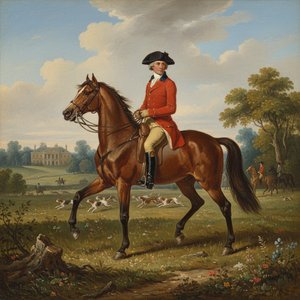 John Nost Sartorius: Equestrian Portraiture & the Shifting Social Landscape of 18th-Century EnglandExplore the captivating equestrian art of John Nost Sartorius (1759-1828). Discover his detailed paintings of racehorses, hunting scenes & …
 British pre-raphaelite paintersMasterpieces by Rossetti and Millais define British Pre-Raphaelite art. Explore the full collection online at OriginalUniqueArt.com.
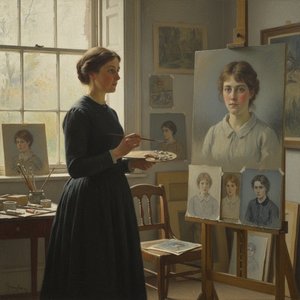 Gwen John: Intimacy, Modernity & the Quiet Power of Welsh PortraitureExplore the captivating world of Gwen John, a pioneering Welsh artist renowned for her intimate portraits & subtle style. Discover her life…