German Expressionism · 1913
Three acts (August Macke, 1913)
August Macke (1887–1914) stworzył Three acts. Dzieło pochodzi z 1913. Należy do nurtu German Expressionism. Wykonano w technice Oil On Canvas. Wymiary to 82 × 51 cm.
- 1913
- Oil On Canvas
- 82 × 51 cm

 Podgląd w skali 1:1

 Ręcznie malowany obraz olejny
 Wyślij jako kartkę
 Udostępnij
 Karta informacyjna


 Pobierz obraz
 Podobne obiekty
 RTG
 Pokaz slajdów
 Pytania i odpowiedzi

 Statystyki
Three acts w skrócie
- Tytuł
- Three acts
- Artysta
- August Macke (1887–1914)
- Miejsce urodzenia artysty
- Meschede, Niemcy
- Data powstania
- 1913
- Technika wykonania
- Oil On Canvas
- Wymiary
- 82 × 51 cm
- Epoka
- Modern
- Temat
- women, nude figures, trees, foliage, nature, vibrant colors
Co przedstawia Three acts?
A Symphony of Color and Form
In the vibrant tapestry of German Expressionism, few works capture the ephemeral beauty of life as poignantly as August Macke’s Three Acts. Painted in 1913, this masterpiece serves as a window into a world where color is not merely a descriptive tool but an emotional language. The canvas presents a breathtaking scene of three naked women standing amidst a lush, natural setting, their forms harmoniously integrated with the surrounding trees and foliage. There is an undeniable sense of rhythm in the composition; the way the figures are positioned—one partially obscuring another—creates a captivating visual dance that draws the eye through the depth of the forest. This arrangement does more than just showcase the human form; it establishes an intimate connection between the subjects, suggesting a shared moment of peace and profound togetherness.
The technique employed by Macke is nothing short of luminous. Utilizing bold brushstrokes and a palette of rich, saturated hues, he breathes life into the canvas, imbuing the scene with a palpable energy. The interplay of light and shadow across the skin of the women and the verdant leaves of the backdrop creates a sense of movement, as if a gentle breeze is passing through the clearing. For the discerning collector or interior designer, this painting offers a dynamic focal point that can transform a room, bringing an infusion of vitality and warmth to any sophisticated space.
The Spirit of Expressionism and Historical Resonance
To understand Three Acts, one must look toward the historical currents that shaped Macke’s brief but brilliant career. As a key figure associated with the Der Blaue Reiter movement, Macke was deeply influenced by the avant-garde explorations of his contemporaries, such as Franz Marc and Robert Delaunay. His work sits at a fascinating intersection of Fauvism and Orphism, where the structural integrity of form meets the wild, uninhibited use of color. This specific piece, created just a year before Macke’s untimely death in the First World War, embodies the optimistic, experimental spirit of pre-war European modernism.
The symbolism within the painting transcends the literal depiction of a pastoral scene. The "three acts" suggested by the title can be interpreted as a celebration of the cycles of nature or perhaps a metaphorical representation of stages of life and connection. By stripping the figures of clothing, Macke removes the distractions of social class or era, presenting a universalized vision of humanity in its most natural state. This raw, unadorned beauty, paired with the distorted yet graceful forms characteristic of Expressionism, evokes an emotional intensity that resonates deeply with the viewer, inviting contemplation on the harmony between the human spirit and the natural world.
An Invitation to Timeless Elegance
Owning a piece of art history is a profound experience, and a high-quality reproduction of Three Acts offers an opportunity to bring this era of German Expressionism into the modern home. Whether you are an art historian captivated by the technical nuances of Macke’s brushwork or an interior designer seeking to add a layer of sophisticated narrative to a curated collection, this artwork provides endless inspiration. The painting's ability to balance vibrant energy with a serene, meditative atmosphere makes it a versatile treasure for any decor style, from contemporary minimalism to classic luxury.
Investing in a hand-painted reproduction allows the enduring legacy of August Macke to live on within your personal sanctuary. Each stroke of the brush in a faithful recreation seeks to honor the original's texture and light, ensuring that the emotional impact of those three figures in the forest remains as potent today as it was in 1913. It is more than just a decoration; it is an invitation to experience a moment of eternal summer, frozen in a masterpiece of color and soul.
Zdjęcia w wysokiej rozdzielczości dzieła Three acts
Domena publiczna: artysta zmarł w 1914.
August Macke, Three acts (1913).
August Macke (1887–1914), Three acts, 1913, oil on canvas. Domena publiczna Źródło obrazu: OriginalUniqueArt.com.
Odpowiedzi na pytania dotyczące Three acts
W którym roku powstało dzieło „Three acts” – August Macke?
"Three acts" powstało w 1913 roku. Data ta pozwala umiejscowić dzieło w kontekście twórczości August Macke oraz epoki, w której powstało.
W jakiej technice wykonano „Three acts” – August Macke?
August Macke wykorzystał/a technikę Oil On Canvas w pracy „Three acts”. Technika ta definiuje materię oryginalnego dzieła.
Jakie są wymiary oryginału "Three acts"?
Wymiary dzieła „Three acts” – August Macke to 82 x 51 cm. Reprodukcje można zamówić w innych rozmiarach, zachowując te same proporcje.
Co przedstawia „Three acts” – August Macke?
Tematyka obecna w „Three acts” – August Macke obejmuje women, nude figures, trees, foliage, nature, vibrant colors. Razem stanowią one podsumowanie tematyki dzieła.
Czy „Three acts” – August Macke znajduje się w domenie publicznej?
„Three acts” – August Macke znajduje się w domenie publicznej (należy do domeny publicznej – autorskie prawa majątkowe wygasły). Status ten określa zasady reprodukcji obrazu tego dzieła.
Kto stworzył "Three acts"?
„Three acts” zostało stworzone przez August Macke. Informacje na tej stronie dotyczą oryginalnego dzieła autorstwa August Macke.
Do jakiego nurtu należy "Three acts"?
„Three acts” – August Macke należy do nurtu German Expressionism. Nurt ten stanowi stylistyczny kontekst dzieła.
Do którego okresu twórczości August Macke należy dzieło "Three acts"?
„Three acts” pochodzi z okresu Mature Period w twórczości August Macke. Klasyfikacja ta wiąże dzieło z rozwojem artysty.
Ile lat miał(a) August Macke, tworząc "Three acts" w 1913 roku?
August Macke stworzył/a "Three acts" w wieku 26 lat. Artysta urodził/a się w 1887, a datowanie dzieła to 1913.
O artyście: August Macke
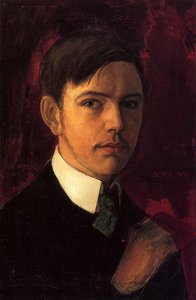
1887–1914, Niemcy
August Macke
Wczesne lata, rodzina i edukacja Historia, którą napisał August Macke, bierze swój początek w niemieckim miasteczku Meschede, gdzie 3 stycznia 1887 roku przyszedł na świat pierwszy i jedyny syn Augusta Friedricha Hermanna Macke, budowniczego i artysty amatora, oraz Marii Florentine. Dzieciństwo artysty kształtowały zmienne losy firmy jego ojca, które rzucały rodzinę raz do Kolonii, a raz do Bonn. Już jako mały chłopiec, August wykazywał nieodparty pociąg do ekspresji wizualnej; spędzał wczesne lata na szkicowaniu i projektowaniu scenografii do szkolnych przedstawień, znajdując sposób na przenoszenie otaczającego go świata na papier na długo przed tym, zanim przekroczył progi formalnej akademii. Jego właściwa edukacja artystyczna rozpoczęła się z pełną mocą, gdy trafił do Akademii w Düsseldorfie, gdzie kształcił się w latach 1904–1906.
Inne prace August Macke
 Kobieta w zielonej kurtce1913
 Bathing girls z miastem w tle1913
 "Hat Shop" -> "Sklep z kapeluszami"1913
 Portret żony artysty w kapeluszu1909
Eseje o Three acts
 German artworks of the 1890sIn 1893, Franz von Stuck created The Sin, a work exploring psychological temptation through a luminous figure and a dark, coiled serpent.
 Comparing Der Blaue Reiter and Die Brücke: Two Paths of German ExpressionismDie Brücke was founded in Dresden in 1905 by architecture students like Ernst Ludwig Kirchner. Why did their raw style clash with Munich's …
 German artworks of the 1910sIn 1911, Franz Marc used blue to represent masculinity and spirituality. See how ten works from the 1910s redefined the purpose of the imag…