German Expressionism · 1909
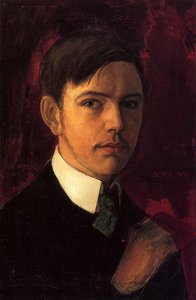
Self-Portrait with Hat (August Macke, 1909)
August Macke (1887–1914) stworzył Self-Portrait with Hat. Dzieło pochodzi z 1909. Należy do nurtu German Expressionism. Wykonano w technice Oil On Canvas. Wymiary to 41 × 32 cm.
- 1909
- Oil On Canvas
- 41 × 32 cm

 Podgląd w skali 1:1

 Ręcznie malowany obraz olejny
 Wyślij jako kartkę
 Udostępnij
 Karta informacyjna


 Pobierz obraz
 Podobne obiekty
 RTG
 Pokaz slajdów
 Pytania i odpowiedzi

 Statystyki
Self-Portrait with Hat w skrócie
- Tytuł
- Self-Portrait with Hat
- Artysta
- August Macke (1887–1914)
- Miejsce urodzenia artysty
- Meschede, Niemcy
- Data powstania
- 1909
- Technika wykonania
- Oil On Canvas
- Wymiary
- 41 × 32 cm
- Temat
- self-portrait, hat, suit, group portrait, male figure, expressionism
Co przedstawia Self-Portrait with Hat?
A Glimpse into Modern Conversation: Self-Portrait with Hat
August Macke’s Self-Portrait with Hat, painted in 1909, captures more than just a likeness; it arrests a moment of vibrant, almost theatrical engagement. The central figure dominates the canvas, presented in an air of studied elegance, clad in a sharp suit and tie. Yet, this portrait is far from static. With his mouth slightly open—whether caught mid-sentence or in a soft yawn—the subject seems to breathe life into the painted surface, inviting the viewer not merely to observe, but to participate in the unfolding dialogue.
The Echoes of Modern Life and Company
What elevates this piece beyond a simple study is the inclusion of surrounding figures. To the left and right, two other individuals are visible, smaller yet integral to the composition's narrative weight. They serve as silent witnesses to the main subject’s momentary expression. This grouping suggests a social gathering, a moment plucked from the bustling energy of early 20th-century urban life. Macke masterfully uses these secondary figures to frame and amplify the central personality, creating a dynamic tension between individual focus and communal experience.
Macke's Brushwork: A Symphony of Color and Expression
Technically, this work is deeply rooted in the currents of German Expressionism, though it retains echoes of Impressionist light that Macke absorbed during his formative years. His palette, characteristic of his time, pulses with bold color choices applied with a confident, visible hand. One can almost feel the texture beneath the paint—the quick, decisive strokes that give the figures and their attire a palpable energy. It is a style that refuses to be purely academic; instead, it vibrates with an inner emotional truth, making the painting feel immediate and intensely alive.
Historical Resonance and Emotional Depth
Painted just before the seismic shifts of World War I, this portrait carries an undercurrent of poignant anticipation. Macke’s career, tragically cut short by the war, imbues his work with a bittersweet quality—a celebration of vibrant life against the backdrop of impending historical upheaval. Owning a reproduction of Self-Portrait with Hat is to possess a piece of that pre-war effervescence; it speaks to the confidence and intellectual curiosity of an era at its zenith, while simultaneously whispering of the fragility of human connection.
Bringing the Salon Home
For the discerning collector or interior designer, this artwork offers unparalleled versatility. Its sophisticated blend of formal portraiture with expressive color allows it to anchor a room—be it a study demanding intellectual gravitas or a drawing-room celebrating vibrant social life. The energy contained within Macke’s brushstrokes ensures that the piece remains captivating, inviting contemplation on conversation, identity, and the fleeting beauty of shared moments.
Zdjęcia w wysokiej rozdzielczości dzieła Self-Portrait with Hat

Domena publiczna: artysta zmarł w 1914.
Inne rozmiary, kadrowanie i cytowanie →August Macke, Self-Portrait with Hat (1909). Domena publiczna
Odpowiedzi na pytania dotyczące Self-Portrait with Hat
W którym roku powstało dzieło "Self-Portrait with Hat"?
Powstanie „Self-Portrait with Hat” – August Macke datuje się na 1909.
W jakiej technice wykonano „Self-Portrait with Hat” – August Macke?
August Macke wykorzystał/a technikę Oil On Canvas w pracy „Self-Portrait with Hat”. Technika ta definiuje materię oryginalnego dzieła.
Jakie są wymiary oryginału "Self-Portrait with Hat"?
Oryginalny utwór „Self-Portrait with Hat” – August Macke ma wymiary 41 x 32 cm.
Co przedstawia „Self-Portrait with Hat” – August Macke?
Tematyka obecna w „Self-Portrait with Hat” – August Macke obejmuje self-portrait, hat, suit, group portrait, male figure, expressionism, modern life. Razem stanowią one podsumowanie tematyki dzieła.
Czy „Self-Portrait with Hat” – August Macke znajduje się w domenie publicznej?
„Self-Portrait with Hat” – August Macke znajduje się w domenie publicznej (należy do domeny publicznej – autorskie prawa majątkowe wygasły). Status ten określa zasady reprodukcji obrazu tego dzieła.
Kto stworzył "Self-Portrait with Hat"?
„Self-Portrait with Hat” zostało stworzone przez August Macke. Informacje na tej stronie dotyczą oryginalnego dzieła autorstwa August Macke.
Do jakiego nurtu należy "Self-Portrait with Hat"?
Nurt związany z „Self-Portrait with Hat” – August Macke to German Expressionism. Ta klasyfikacja sytuuje dzieło wśród pokrewnych artystów i dzieł sztuki.
Do którego etapu twórczości August Macke należy dzieło „Self-Portrait with Hat”?
W dorobku artystycznym August Macke dzieło „Self-Portrait with Hat” przypada na Early Career. Ten etap pozwala zestawić je z innymi pracami twórcy.
Ile lat miał August Macke, gdy powstało dzieło „Self-Portrait with Hat”?
August Macke miał 22 lat w momencie powstania „Self-Portrait with Hat” w 1909. Wiek ten obliczono na podstawie roku urodzenia artysty, 1887.
O artyście: August Macke
1887–1914, Niemcy
August Macke
Wczesne lata, rodzina i edukacja Historia, którą napisał August Macke, bierze swój początek w niemieckim miasteczku Meschede, gdzie 3 stycznia 1887 roku przyszedł na świat pierwszy i jedyny syn Augusta Friedricha Hermanna Macke, budowniczego i artysty amatora, oraz Marii Florentine. Dzieciństwo artysty kształtowały zmienne losy firmy jego ojca, które rzucały rodzinę raz do Kolonii, a raz do Bonn. Już jako mały chłopiec, August wykazywał nieodparty pociąg do ekspresji wizualnej; spędzał wczesne lata na szkicowaniu i projektowaniu scenografii do szkolnych przedstawień, znajdując sposób na przenoszenie otaczającego go świata na papier na długo przed tym, zanim przekroczył progi formalnej akademii. Jego właściwa edukacja artystyczna rozpoczęła się z pełną mocą, gdy trafił do Akademii w Düsseldorfie, gdzie kształcił się w latach 1904–1906.
Inne prace August Macke
 Kobieta w zielonej kurtce1913
 Bathing girls z miastem w tle1913
 "Hat Shop" -> "Sklep z kapeluszami"1913
 Portrait of the Artist's Wife with Hat1909

Eseje o Self-Portrait with Hat
 August Macke: Expressionist Visions of Harmony & Modern LifeExplore the vibrant Expressionist paintings of August Macke (1887-1914). Discover his key role in Der Blaue Reiter, Fauvist influences, and…
 Egon Schiele: 25 Arcydzieł Ekspresjonizmu dla Kolekcjonerów i Miłośników Sztuki | OriginalUniqueArt.comOdkryj 25 najbardziej znanych dzieł Egona Schiele – ikony ekspresjonizmu austriackiego. Poznaj historie, techniki i emocje ukryte w jego po…
 Capturing Elegance: The Art of the Formal Gathering in Masterpiece PaintingsExplore the timeless elegance of formal gatherings through the lens of art history. Discover how master painters captured social grace, sta…