

 Zobacz w skali 1:1
 Wyślij
 Udostępnij
 Szczegóły

 Pobierz plik obrazu
 Podobne obiekty
 RTG
RTG Pokaz slajdów
 Statystyki
Sailing boat on the Tegernsee
 Oil On Canvas
- WallArt
- German Expressionism
 1910
1910 72.0 x 50.0 cm
 Czytaj więcej
Kup wysokiej rozdzielczości, ulepszony obraz cyfrowy o jakości znacznie przewyższającej podgląd online.
Każdy plik jest starannie przygotowywany przez naszych specjalistów przy użyciu zaawansowanych narzędzi oraz profesjonalnej, ręcznej retuszy. Dbamy o to, aby każdy obraz cechował się wyjątkową ostrością, precyzyjnym odwzorowaniem kolorów i subtelnymi detalami.
Ostateczny plik dostarczany jest drogą mailową w ciągu 72 godzin, zoptymalizowany do natychmiastowego wykorzystania w profesjonalnych zastosowaniach redakcyjnych i poligraficznych. To ta sama jakość, której ufają czołowe studia projektowe, wydawnictwa oraz galerie sztuki.
Obraz cyfrowy
Pobierz plik o wysokiej rozdzielczości do osobistego użytku, druku oraz projektów kreatywnych. ( Przełącz na wersję drukowaną Kup ręcznie malowany obraz)
W każdym zamówieniu na obraz cyfrowy znajduje się
Profesjonalna dostawa cyfrowa z gwarancją
Wybierając OriginalUniqueArt.com, nie otrzymujesz jedynie obrazu – otrzymujesz profesjonalnie udoskonalone cyfrowe dzieło sztuki, stworzone z najwyższą precyzją i objęte gwarancją satysfakcji. Oto wszystko, co automatycznie dołączane jest do Twojego zamówienia:

Błyskawiczna dostawa e-mailowa
Plik z obrazem cyfrowym w wysokiej rozdzielczości zostanie przesłany na Twój adres e-mail w ciągu 72 godzin od złożenia zamówienia – gotowy do natychmiastowego użycia.

Plik cyfrowy ulepszony przez AI
Twoja grafika została profesjonalnie zoptymalizowana przy użyciu zaawansowanych narzędzi AI oraz ręcznej edycji, co zapewnia maksymalną szczegółowość, klarowność i wierność kolorów.

Bezpłatna dożywotnia ponowna dostawa
Przypadkowo usunąłeś lub zgubiłeś swój plik? Bez obaw – prześlemy go Tobie ponownie w dowolnym momencie, bez żadnych opłat.

Bez opłat importowych – zawsze
Ciesz się swoją sztuką natychmiast, bez żadnych opłat celnych, należności ani kosztów dostawy – pliki cyfrowe są zawsze wolne od podatku.

Gwarancja odwzorowania kolorów
Dzięki zastosowaniu profesjonalnych narzędzi i procesów zarządzania barwą zapewniamy, że Twoje cyfrowe zdjęcie odzwierciedla oryginalne kolory tak wiernie, jak to tylko możliwe.

100 dni na satysfakcję
Jeśli nie będziesz zadowolony ze swojego cyfrowego obrazu, poprawimy go lub zwrócimy 100% kosztów w ciągu 100 dni – bez zbędnych pytań.

100% Gwarancja zwrotu pieniędzy
Nie jesteś zadowolony? Otrzymaj pełny zwrot kosztów w ciągu 100 dni od otrzymania pliku cyfrowego – bez zbędnych pytań.

Rabaty przy zamówieniach hurtowych
Kup 3 obrazy, oszczędź 10% - Kup 5, oszczędź 15% - Kup 10+, oszczędź 20%. Idealne do projektów kreatywnych, galerii i agencji.
A Day on the Tegernsee: Capturing Light and Leisure
August Macke’s Sailing boat on the Tegernsee, painted in 1910, transports the viewer directly to a sun-drenched moment of leisure. This vibrant scene is more than just a depiction of Bavarian waters; it is an immersion into the joyful spirit of early 20th-century life by the Alpine lakes. The composition is rich with human activity—figures gathered in the larger vessel, another standing nearby, and the graceful presence of the smaller boat to the right. Macke masterfully captures the interplay between man’s enjoyment of nature and the sheer beauty of the landscape unfolding behind them.
The Luminous Touch of German Expressionism
While rooted in the vibrant color palettes that suggest Impressionist influences, this work carries the emotional resonance characteristic of early German modernism. Macke was a painter whose career burned brightly before the shadow of war fell across Europe. His style here is characterized by an almost palpable sense of light—the way it catches the sails, glints off the water, and illuminates the faces of the people enjoying the outing. The technique allows for bold strokes that define form while maintaining an overall feeling of airy movement. It speaks to a period of burgeoning modern sensibility, where everyday pleasures were elevated to subjects worthy of high art.
Symbolism of Movement and Community
The water itself often serves as a canvas for deeper meaning in Macke’s work. Here, the boats symbolize journeys—journeys of pleasure, community, or perhaps even the fleeting nature of perfect moments. The sailboat with its taut sails embodies forward momentum and freedom, contrasting beautifully with the more settled grouping of people on the main boat. These elements combine to create a harmonious balance: the energy of movement set against the grounding stability of the mountainous backdrop. It is an ode to connection, both between people and between humanity and the sublime power of nature.
Bringing Alpine Serenity Home
For collectors and designers alike, this reproduction offers more than just decoration; it offers a mood. The scale of 72 x 50 cm allows it to serve as a breathtaking focal point in any room—perhaps above a console table or within an airy living space that appreciates natural light. Owning a piece echoing Macke’s vision means bringing home not merely paint on canvas, but the captured warmth of a perfect summer day by the crystalline waters of the Tegernsee. It is a vibrant whisper of joy from a time just before history changed course.
Biografia artysty
A Life Cut Short: The Vibrant World of August Macke
August Robert Ludwig Macke, a name inextricably linked to the brief but intensely vibrant flowering of German Expressionism, lived a life tragically curtailed by the horrors of the First World War. Born in 1887 in Meschede, a small town nestled within the Westphalian countryside, his artistic journey was one of rapid evolution and profound exploration – a relentless pursuit of capturing not just what he *saw*, but how he *felt* about it. Macke’s early years were marked by a restless spirit and an innate curiosity, leading him to abandon formal schooling at the age of seventeen to dedicate himself entirely to his artistic ambitions. He initially supplemented his income through stage design work in Bonn, honing his compositional skills and developing a keen eye for color – experiences that would prove invaluable as he navigated the complex landscape of early 20th-century art.Early Influences and Artistic Foundations
Macke’s formative years were deeply shaped by encounters with key artistic movements and individuals. His relocation to Bonn, alongside his family, provided a crucial foundation for his development. He immersed himself in the works of Hans Thuar, a fellow artist who fostered Macke's appreciation for Impressionism and its emphasis on capturing fleeting moments of light and color. Crucially, he also studied at the Düsseldorf Art Academy from 1904 to 1906 under Adolf Maennchen, though he found the academy’s rigid curriculum restrictive. Seeking a more liberating approach, Macke supplemented his formal training with independent study and travel, particularly a transformative trip to Paris in 1907. This experience exposed him to the revolutionary ideas of Impressionism, Post-Impressionism, and the burgeoning Fauvist movement – artists like Henri Matisse who were boldly experimenting with color and form. He was profoundly influenced by Matisse’s use of vibrant hues and simplified shapes, a departure from the traditional academic approach. Simultaneously, he developed a close friendship with Franz Marc, a fellow artist and a key figure in the influential group Der Blaue Reiter (The Blue Rider). Their shared interest in spirituality and their exploration of symbolism would profoundly impact Macke’s artistic vision.Der Blaue Reiter and the Embrace of Modernity
Macke's arrival in Munich in 1909 marked his full integration into the orbit of Der Blaue Reiter, a group dedicated to pushing the boundaries of art and exploring new modes of expression. This association proved pivotal, introducing him to Wassily Kandinsky and other avant-garde thinkers who championed abstraction and spiritual themes. He began experimenting with broken planes of color and increasingly simplified forms, moving away from strict representational accuracy towards a more emotive and subjective approach. The group’s emphasis on “inner necessity” – the driving force behind artistic creation – resonated deeply with Macke's own creative impulses. His style began to evolve rapidly, incorporating elements of Cubism, Orphism (influenced by Robert Delaunay’s exploration of simultaneous contrast), and even hints of Futurism’s dynamism. He wasn’t simply imitating these movements; he was synthesizing them into a uniquely personal language of color and form. His paintings became increasingly infused with a sense of movement, light, and atmosphere – capturing the essence of modern experience rather than merely depicting it.A Luminist Vision: Landscapes and Everyday Life
Despite his engagement with abstract tendencies, Macke remained fundamentally rooted in the observation of the natural world. He developed a distinctive style that he termed “luminism,” characterized by an intense focus on light, color, and atmosphere. His landscapes – particularly those depicting the Sauerland region of Westphalia – are imbued with a palpable sense of joy and vitality. Figures are often rendered as simplified silhouettes against vibrant backgrounds, creating a dreamlike quality. He also found inspiration in everyday life, capturing scenes of family gatherings, children at play, and intimate moments between lovers. These paintings, such as *Woman in a Green Jacket*, radiate warmth and optimism through their bold color palettes and confident brushwork. His ability to convey emotion through the subtle interplay of light and color was truly remarkable. The influence of Robert Delaunay’s “Orphism” is particularly evident in works like *Shop Windows*, where he employed broken planes of color to create a dazzling, kaleidoscopic effect.A Tragic Interruption: Death on the Western Front
The outbreak of World War I tragically cut short Macke's promising career. Driven by patriotic fervor, he enlisted as a soldier in 1914 and was killed in action near Champagne, France, on September 26th at the young age of 27. His final painting, *Farewell*, is a haunting testament to the horrors of war – a somber depiction of departing soldiers that foreshadows his own untimely demise. Despite his brief life, August Macke left behind a remarkable body of work that continues to captivate and inspire artists and art lovers alike. His paintings are celebrated for their vibrant colors, dynamic compositions, and enduring optimism—a testament to the power of art to transcend even the darkest of times.Exploring Macke’s World Today
Today, August Macke's works are held in prominent collections across Europe, including the Staatsgalerie Moderner Kunst in Munich, the Museum Ludwig in Cologne, and the Kunsthaus Zürich. Numerous museums dedicated to Expressionism showcase his paintings prominently, offering visitors a chance to experience the emotional intensity and visual brilliance of his art firsthand. The Westfälisches Landesmuseum Münster and the Kunstmuseum Bonn are particularly noteworthy for their extensive holdings of Macke’s oeuvre. His influence can be seen in the continued exploration of color and emotion by contemporary artists, solidifying his place as a pivotal figure in the history of modern art. Resources like Artnet and Wikipedia provide valuable biographical information and insights into his artistic development, allowing us to delve deeper into the life and legacy of this tragically short-lived but profoundly influential artist.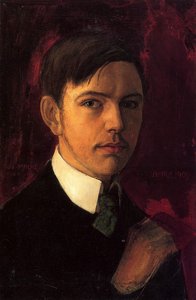
August Macke
1887 - 1914 , Niemcy
Najważniejsze informacje
- Artistic Movement Or Style: Ekspresjonizm
- Artists Or Movements Influenced By This Artist: ['Der Blaue Reiter']
- Artists Who Influenced This Artist:
- Robert Delaunay
- Franz Marc
- Date Of Birth: 3 stycznia 1887
- Date Of Death: 26 września 1914
- Full Name: August Robert Ludwig Macke
- Nationality: Niemiecki
- Notable Artworks:
- Bathing girls z miastem
- Woman in a Green Jacket
- Farewell
- Place Of Birth: Meschede, Niemcy