German Expressionism
Milliner (August Macke)
August Macke (1887–1914) stworzył Milliner. Należy do nurtu German Expressionism. Wykonano w technice Oil On Canvas. Przechowywane jest w Museum Folkwang w Essen, Niemcy.
- Oil On Canvas
- Museum Folkwang, Essen

 Podgląd w skali 1:1

 Ręcznie malowany obraz olejny
 Wyślij jako kartkę
 Udostępnij
 Przewodnik


 Pobierz obraz
 Podobne obiekty
 RTG
 Pokaz slajdów
 Pytania i odpowiedzi

 Statystyki
Milliner: najważniejsze informacje
- Tytuł
- Milliner
- Artysta
- August Macke (1887–1914)
- Miejsce urodzenia artysty
- Meschede, Niemcy
- Technika wykonania
- Oil On Canvas
- Gdzie można je zobaczyć
- Museum Folkwang, Essen, Niemcy
- Temat
- street scene, woman portrait, hat shop display, umbrella, birds, thun lake
Co przedstawia Milliner?
A Moment Captured on the Thuner Lake Promenade
August Macke’s Milliner transports us to a sun-drenched summer afternoon in Hilterfingen, a place that held such profound resonance for the artist during his final years. This painting is more than just a depiction of a street scene; it is an immersion into a specific, luminous moment—a pause in the vibrant flow of daily life along the Thuner Lake promenade. The composition centers on a woman, elegantly poised with her parasol held nearby, seemingly absorbed by the colorful spectacle of the hat shop display before her. Macke masterfully captures the interplay between human stillness and the riotous energy suggested by the merchandise and the scattered birds that populate the scene.
The Geometry of Light and Commerce
What immediately draws the eye is the fascinating tension between structure and spontaneity. The façade of the hat shop, along with the surrounding showcase walls, are rendered as strictly structured geometric planes. These architectural elements provide a stable, almost crystalline framework against which the softer, more organic forms—the woman’s drapery, the curve of the umbrella, the flutter of wings—are set in delightful contrast. This structural underpinning hints at Macke's fascination with modern urban life and the way commerce organizes our visual experience. One can almost feel the crisp geometry of the painted glass and polished wood.
Echoes of Impressionism and Modernity
While rooted in the vibrant palette associated with German Expressionism, this work carries a distinct echo of Impressionist light play, perhaps even nodding toward Delaunay’s explorations of simultaneous windows. However, Macke tempers that potential dynamism with a calmer, almost meditative quality. The colors—the striking red of the woman's coat against the pastel tones of the shop display—are applied with a luminous touch, suggesting the way sunlight refracts off various surfaces. It is a study in controlled color theory, where every hue contributes to the overall atmospheric glow.
Symbolism and Emotional Resonance
The inclusion of the birds adds a layer of delicate symbolism. They are fleeting elements, embodying freedom and the ephemeral nature of beauty itself. Paired with the woman’s statue-like contemplation, they invite the viewer to ponder what holds our attention in the modern world—is it the dazzling display, the quiet moment of reflection, or the simple act of observing life unfold? Owning a reproduction of Milliner is not merely decorating a space; it is inviting a piece of that luminous, contemplative summer air into your home, transforming any room into a gallery overlooking a sunlit European promenade.
W którym muzeum znajduje się Milliner?
Museum Folkwang
Essen, Niemcy
Początki i historia Museum Folkwang Historia Museum Folkwang bierze swój początek w konwergencji dwóch odrębnych dziedzictw. W 1902 roku Karl Ernst Osthaus założył prywatne Folkwang Museum – kolekcję napędzaną szczególną wizją nowoczesnej ekspresji. Wkrótce potem dołączyło do niej Essener Kunstmuseum, założone w 1906 roku.


Milliner w wysokiej rozdzielczości

Domena publiczna: artysta zmarł w 1914.
Więcej rozmiarów, kadrowania i cytowań →August Macke, Milliner, Museum Folkwang. Domena publiczna
Ekspert ds. cyfrowych weryfikuje kolory względem oryginału i retuszuje plik, zachowując wierność pociągnięciom pędzla artysty.
Kup obraz w wysokiej rozdzielczościPytania o Milliner
Gdzie można zobaczyć oryginał „Milliner” – August Macke?
Oryginał dzieła „Milliner” – August Macke znajduje się w Museum Folkwang, Essen, Niemcy. Reprodukcja pozwala na eksponowanie pracy w domu.
W jakiej technice wykonano „Milliner” – August Macke?
„Milliner” wykonano w technice Oil On Canvas.
Co przedstawia "Milliner"?
Tematyka dzieła "Milliner" to street scene, woman portrait, hat shop display, umbrella, birds, thun lake, outdoor life.
Czy dzieło "Milliner" znajduje się w domenie publicznej?
Jeśli chodzi o prawa autorskie, "Milliner" znajduje się w należy do domeny publicznej – autorskie prawa majątkowe wygasły.
Kto jest autorem dzieła "Milliner"?
Autorem dzieła „Milliner” jest August Macke. Praca ta figuruje w katalogu pod nazwiskiem August Macke.
Do jakiego nurtu artystycznego należy „Milliner” – August Macke?
Nurt związany z „Milliner” – August Macke to German Expressionism. Ta klasyfikacja sytuuje dzieło wśród pokrewnych artystów i dzieł sztuki.
Do którego etapu twórczości August Macke należy dzieło „Milliner”?
"Milliner" reprezentuje Summer 1914 twórczości August Macke.
Z czego wynika obecny status praw autorskich dzieła "Milliner"?
„Milliner” – August Macke jest należy do domeny publicznej – autorskie prawa majątkowe wygasły. Okres ochrony praw autorskich liczony jest od śmierci artysty, która nastąpiła w 1914.
Czy dzieło „Milliner” – August Macke znajduje się w kraju pochodzenia artysty?
Tak – dzieło znajduje się w kraju pochodzenia artysty. August Macke urodził(a) się w Niemcy, natomiast muzeum przechowujące oryginał dzieła „Milliner” znajduje się w Niemcy.
O artyście: August Macke
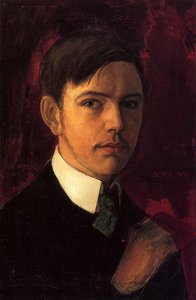
1887–1914, Niemcy
August Macke
Wczesne lata, rodzina i edukacja Historia, którą napisał August Macke, bierze swój początek w niemieckim miasteczku Meschede, gdzie 3 stycznia 1887 roku przyszedł na świat pierwszy i jedyny syn Augusta Friedricha Hermanna Macke, budowniczego i artysty amatora, oraz Marii Florentine. Dzieciństwo artysty kształtowały zmienne losy firmy jego ojca, które rzucały rodzinę raz do Kolonii, a raz do Bonn. Już jako mały chłopiec, August wykazywał nieodparty pociąg do ekspresji wizualnej; spędzał wczesne lata na szkicowaniu i projektowaniu scenografii do szkolnych przedstawień, znajdując sposób na przenoszenie otaczającego go świata na papier na długo przed tym, zanim przekroczył progi formalnej akademii. Jego właściwa edukacja artystyczna rozpoczęła się z pełną mocą, gdy trafił do Akademii w Düsseldorfie, gdzie kształcił się w latach 1904–1906.
Inne prace August Macke
 Kobieta w zielonej kurtce1913
 Bathing girls z miastem w tle1913
 "Hat Shop" -> "Sklep z kapeluszami"1913
 Portrait of the Artist's Wife with Hat1909

Eseje o Milliner
 Biedermeier vs. Romanticism: Understanding Two 19th-Century StylesMaster the nuances between Biedermeier and Romanticism through expert analysis. Discover the soul of 19th-century art today.
 Impressionism vs. Expressionism: Capturing Light and EmotionMaster the technical differences between Impressionism and Expressionism. Discover the art of light and emotion now.
 August Macke: Expressionist Visions of Harmony & Modern LifeExplore the vibrant Expressionist paintings of August Macke (1887-1914). Discover his key role in Der Blaue Reiter, Fauvist influences, and…