
 Podgląd w skali 1:1
 Wyślij jako kartkę
 Udostępnij
 Szczegóły dzieła
 Przewodnik

 Pobierz obraz
 Podobne obiekty
 RTG
RTG Pokaz slajdów
 Q&A
Q&A Statystyki
Emil Hertzka

- 29.0 x 36.0 cm


 Rozwiń treść
Giclée / Wydruk artystyczny
Wydruki giclée lub płótna o jakości muzealnej, szybka realizacja i szeroki wybór opcji wykończenia. ( Zamów ręcznie malowaną reprodukcję Przejdź do wersji cyfrowej)




P118B zł10

P118H zł10

P118W zł10

P438Z zł10

P508JH zł12

P508YH zł12

P805H zł10

P805Z zł10

P919BZ zł10

P919G zł10

P919XJ zł10

P959ZH zł10

P968JZ zł12

W106C zł8

W218G zł10

W218JH zł8

W218Y zł10

W307PJ zł10

W316G zł10

W316PJ zł8

W316Y zł10

W398PJ zł8

W4111J zł10

W500HY zł15

W500JH zł15

W692G zł12

W849H zł8

W940BG zł15

W953PJ zł8




Wybierz spośród naszych standardowych rozmiarów, które zachowują oryginalne proporcje dzieła sztuki.

Wpisz wymaganą szerokość i wysokość, aby dopasować grafikę do ramy lub ściany. Wydruk można jedynie przyciąć, nigdy nie powiększając go poza oryginalny obraz, dlatego format o innych proporcjach spowoduje utratę części kompozycji. Przed rozpoczęciem druku prześlemy Ci cyfrowy podgląd do zatwierdzenia. Obraz wyświetlany na tej stronie nie pokazuje rzeczywistego przycięcia — jedynie podgląd oddaje ten efekt.
Dostawa na cały świat () w ciągu 2 tygodni zamiast standardowych 4/5 tygodni. (1 Listopad)

Bezpłatna ekspresowa wysyłka na cały świat

Wysokiej jakości płótno lniane

Pełne ubezpieczenie przesyłki

Gwarancja zwrotu należności celnych i podatków importowych

Gwarancja wiernego odwzorowania kolorów

100-dniowa polityka zwrotów (tylko w przypadku wad)

Gwarancja 100% zwrotu pieniędzy

Zniżka przy zakupie wielu sztuk
 Opcja ze szkłem jest dostępna wyłącznie w rozmiarach poniżej 110 cm

Emil Hertzka
Giclée / Wydruk artystyczny
Wymiary reprodukcji
-


Cena całkowita
zł 311
A Portrait of Ambition: Emil Hertzka by Arnold Schoenberg
This intimate portrait, rendered in 1910, offers a rare glimpse into the burgeoning artistic ambitions of Arnold Schoenberg, one of the most revolutionary figures in musical history. Painted by Schoenberg himself – a surprising and revealing act – the work transcends a simple likeness; it’s a carefully constructed statement about his aspirations and the perceived value of his increasingly influential art. The subject, a man with a distinguished reddish-brown beard and mustache, gazes directly at the viewer, an arresting intensity that speaks to Schoenberg's own self-assurance and desire for recognition. The slightly faded appearance of the painting lends it an aged quality, hinting at the passage of time and perhaps a subtle acknowledgement of the challenges he faced in establishing his reputation.
The Context of Innovation
- Vienna's Artistic Landscape: 1910 Vienna was a crucible of artistic innovation. Schoenberg, along with figures like Alban Berg and Anton Webern, was at the forefront of the Second Viennese School, challenging traditional harmonic structures and paving the way for atonality – a radical departure from established musical norms.
- Hertzka's Role: Emil Hertzka was a prominent art dealer who recognized Schoenberg’s potential early on. The correspondence between them reveals Schoenberg’s strategic thinking; he understood the power of association and sought to leverage his reputation within the music world to gain wider acceptance for his visual work.
- A Moment of Transition: This painting represents a pivotal moment in Schoenberg's career, just as he was solidifying his position as a leading composer and beginning to explore new artistic avenues.
Symbolism and Technique – A Calculated Impression
Schoenberg’s technique is characterized by a meticulous attention to detail, particularly in the rendering of the subject's facial features and the textures of his clothing. The use of muted tones and subtle gradations of light and shadow creates a sense of depth and realism, while simultaneously conveying an air of formality and sophistication. The glasses worn by the sitter are not merely a stylistic choice; they suggest intellectualism and perhaps a detachment from conventional perspectives – qualities central to Schoenberg’s revolutionary approach to music. The direct gaze of the subject is particularly significant, demanding engagement from the viewer and subtly asserting Schoenberg's confidence in his artistic abilities.
Beyond the Brushstroke: A Statement of Value
The inscription accompanying the painting – “You know that I paint. What you do not know is that my work is highly praised by experts…” – reveals Schoenberg’s anxieties and strategic calculations. He was acutely aware of the skepticism surrounding his foray into visual art, particularly given his groundbreaking musical innovations. By emphasizing the praise he received from "experts," he sought to bypass public opinion and directly appeal to a discerning audience. His desire for a patron, coupled with his assertion that owning a painting by him would be “much more interesting” than commissioning a work from a lesser-known artist, underscores his ambition to establish himself as a significant figure in both the music and art worlds. This portrait is not simply a representation of a man; it’s a carefully crafted testament to Schoenberg's belief in his own artistic genius.
Pytania i odpowiedzi
Gdzie można kupić ręcznie malowane reprodukcje dzieła „Emil Hertzka” – Arnold Schönberg?
Ręcznie malowane reprodukcje dzieła „Emil Hertzka” – Arnold Schönberg można nabyć na stronie niniejsza strona: ręcznie malowana reprodukcja olejowa na płótnie lnianym, zamawiając je bezpośrednio w zakładce Ręcznie malowana reprodukcja.
Gdzie mogę kupić cyfrową wersję dzieła „Emil Hertzka” – Arnold Schönberg?
Cyfrową wersję dzieła „Emil Hertzka” – Arnold Schönberg można zakupić na stronie Cyfrowy obraz: wysokiej rozdzielczości cyfrowe zdjęcie do pobrania.
Jaki nastrój oddaje dzieło "Emil Hertzka" należące do nurtu Early Modern Music?
"Emil Hertzka" emanuje Reflective emocjonalnym ładunkiem, wpisując się w nurt Early Modern Music.
Biografia artysty
wczesne lata i muzyczne początki
arnold schoenberg, austriacko-amerykański kompozytor, urodził się 13 września 1874 roku w Wiedniu. Jego wczesne lata upłynęły w skromnych warunkach, gdyż jego ojciec był właścicielem sklepu obuwniczego. Mimo to, wrodzona pasja do muzyki sprawiła, że Schoenberg w dużej mierze samodzielnie kształtował swoje wykształcenie w tej dziedzinie.ewolucja muzyczna i znaczące dzieła
Wczesne prace Schoenberga, takie jak verklärte nacht (1899), prezentowały syntezę stylu brahmsowskiego i wagnerowskiego. W miarę postępów artystycznych stał się on centralną postacią drugiej szkoły wiedeńskiej, występując u boku antona weberna oraz albana berga. Jego kompozycje, w tym kwartet smyczkowy nr 2 (1907–1908), erwartung (1909) oraz pierrot lunaire (1912), stanowiły przykład jego nowatorskiego podejścia do atonalności.późniejsze życie, nauczanie i emigracja
W 1933 roku Schoenberg zrezygnował z członkostwa w pruskiej akademii sztuk wskutek dojścia nazistów do władzy, którzy uznali jego muzykę za „zdegenerowaną”. Następnie wykładał w USA, m.in. na Uniwersytecie Kalifornijskim w Los Angeles (1936–1944), gdzie obiekty uczelni zostały nazwane jego imieniem na jego cześć. [https://OriginalUniqueArt.com/@/arnold-schoenberg](odkryj więcej o życiu i twórczości Schoenberga na OriginalUniqueArt).- Schoenberg zgłębiał muzykę filmową i pisał bardziej tonalną muzykę, kończąc swoją symfonię kameralną nr 2 w 1939 roku.
- W ode to napoleon (1942), inspirowanej Byronem, wyśmiewał faszystowskich tyranów.
- Powojenna Wiedeń przyznała mu honorowe obywatelstwo, lecz artysta zmagał się z chorobą, co odzwierciedla jego trio smyczkowe (1946).
dziedzictwo i wpływ
Gdy świat dowiedział się o Holokauście, Schoenberg upamiętnił jego ofiary w utworze a survivor from warsaw (1947). W 1951 roku Izraelska Konserwatoria i Akademia Muzyczna wybrała go na swojego honorowego prezydenta. [https://OriginalUniqueArt.com/@@/a@d3bqc7-the-museum-destroyed-by-fire-(united-states)](dowiedz się więcej o wpływie jego twórczości na OriginalUniqueArt). kluczowe punkty:- Innowacyjna muzyka Schoenberga należała do najbardziej wpływowych i budzących kontrowersje w muzyce klasycznej XX wieku.
- Przynajmniej trzy pokolenia kompozytorów rozwijało jej sformalizowane zasady.
- Jego estetyka i historyczno-muzyczne poglądy wpłynęły na muzykologów, takich jak Theodor W. Adorno i Carl Dahlhaus.

Arnold Schönberg
1874 - 1951 , Austria
Krótka nota
- Artistic Movement Or Style: Technika dodekafoniczna; Ekspresjonizm
- Artists Or Movements Influenced By This Artist:
- Anton Webern
- Alban Berg
- Artists Who Influenced This Artist:
- Johannes Brahms
- Richard Wagner
- Date Of Birth: 13 września 1874
- Date Of Death: 1951
- Full Name: Arnold Schoenberg
- Nationality: Austro-Amerykanin
- Notable Artworks:
- Suita op. 29
- Maszyna do pisania muzyczna
- Staffliner
- Place Of Birth: Wiedeń, Austria
Powiązane artykuły

Timeless Vienna: Capturing the Imperial Elegance of Austria Through the Lens of Art History
Explore the imperial grandeur of Vienna through art history. Discover the architectural mastery of Otto Wagner and the elegance of the Secessionist movement in this sophisticated guide to Austria's timeless aesthetic legacy.

Beyond Symbolism: Exploring the Spiritual Landscapes of Mikalojus Konstantinas Čiurlionis's Art
Explore the captivating world of Mikalojus Konstantinas Čiurlionis, a pioneer of abstract art. Discover his unique blend of music and painting, spiritual themes, and lasting influence on Lithuanian culture. Learn more at OriginalUniqueArt.
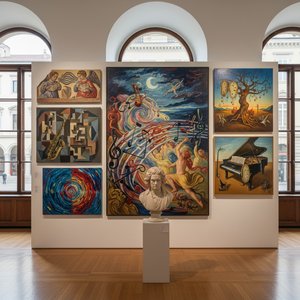
Harmonies on Canvas: Exploring the Visual Representation of Music in Art History
Explore the fascinating history of music's visual representation in art! From ancient symbolism to modern abstraction, discover how artists have captured sound and emotion on canvas. Expert insights & stunning examples.

Gustav Klimt: 25 Arcydzieł Pełnych Złota i Symboliki | OriginalUniqueArt.com
Odkryj 25 arcydzieł Gustava Klimta – od 'Pocałunku' po 'Kobietę w złocie'. Poznaj historię, symbolikę i technikę malarstwa secesyjnego. Reprodukcje najwyższej jakości na OriginalUniqueArt.com! Eksploruj pełną kolekcję online.

Secesja Wiedeńska: Bunt Formy i Duch w Sztuce Fin-de-Siècle – Przełomowy Ruch Artystyczny
Poznaj historię Secesji Wiedeńskiej – przełomowego ruchu artystycznego fin de siècle. Analiza dzieł Klimta, Olbricha i innych mistrzów. Ekspercka wiedza o ideologii, architekturze i wpływie tego wyjątkowego stylu.


