Symbolist Painting · 1879
Spring Evening (Arnold Böcklin, 1879)
Arnold Böcklin (1827–1901) stworzył Spring Evening. Dzieło pochodzi z 1879. Należy do nurtu Symbolist Painting. Wykonano w technice Oil On Panel. Przechowywane jest w Szépművészeti Múzeum w Budapeszt, Węgry. Wymiary to 67 × 129 cm.
- 1879
- Oil On Panel
- 67 × 129 cm
- Szépművészeti Múzeum, Budapeszt

 Podgląd w skali 1:1

 Ręcznie malowany obraz olejny
 Wyślij jako kartkę
 Udostępnij
 Karta informacyjna


 Pobierz obraz
 Podobne obiekty
 RTG
 Pokaz slajdów
 Pytania i odpowiedzi

 Statystyki
Spring Evening w skrócie
- Tytuł
- Spring Evening
- Artysta
- Arnold Böcklin (1827–1901)
- Miejsce urodzenia artysty
- Bazylea, Szwajcaria
- Data powstania
- 1879
- Technika wykonania
- Oil On Panel
- Wymiary
- 67 × 129 cm
- Gdzie można je zobaczyć
- Szépművészeti Múzeum, Budapeszt, Węgry
- Temat
- mythology, nymphs, pan, forest, evening, landscape
Co przedstawia Spring Evening?
The Ethereal Embrace of Spring Evening
Arnold Böcklin’s “Spring Evening,” painted in 1879, isn't merely a depiction of a woodland scene; it’s an immersion into a realm of melancholic beauty and profound symbolism. Created during his time in Florence – a city that profoundly shaped his artistic vision – the painting captures a fleeting moment of enchantment, steeped in the atmosphere of late Romanticism and foreshadowing the rise of Symbolism. The canvas breathes with a quiet intensity, dominated by muted greens, blues, and browns, creating an almost dreamlike quality that immediately draws the viewer into its hushed world.
At the heart of the composition stands a woman, her posture suggesting both contemplation and vulnerability. Her hand gently resting on her head is a gesture simultaneously of yielding and quiet strength – she’s not passively observing but actively engaged with the scene unfolding before her. Beside her sits a man, seemingly lost in thought as he peruses a book, his presence offering a grounding element to the ethereal atmosphere. A bear, rendered with surprising tenderness, interacts playfully with both figures, blurring the lines between human and animal, nature and civilization. This carefully orchestrated tableau speaks of harmony, connection, and the delicate balance of the natural world.
A Symphony of Symbolism
Böcklin’s work is deeply rooted in mythology and folklore, drawing heavily on ancient Greek and Roman traditions. The central figure, often interpreted as Pan – the god of nature, shepherds, and wild music – plays his pipes, summoning a chorus of unseen nymphs from the surrounding forest. These dryads, with their flowing hair and graceful movements, represent the spirit of the woods, embodying both beauty and danger. The bear itself is a potent symbol, frequently associated with strength, wisdom, and primal instincts—a reminder of humanity’s connection to the earth.
The painting's muted palette contributes significantly to its symbolic weight. The cool blues and greens evoke a sense of melancholy and introspection, while the browns ground the scene in the tangible reality of the forest floor. The lighting is soft and diffused, creating an atmosphere of twilight—a liminal space between day and night, representing transition, mystery, and perhaps even mortality. Böcklin masterfully uses color not to simply depict a landscape but to convey complex emotions and ideas.
Technique and Artistic Influences
“Spring Evening” exemplifies Böcklin’s distinctive artistic style, characterized by meticulous detail, rich textures, and an almost obsessive attention to the natural world. He employed a technique of layering thin glazes of oil paint, building up color gradually to achieve remarkable depth and luminosity. The brushwork is subtle yet expressive, conveying both the smoothness of the forest floor and the intricate details of the foliage.
Böcklin’s artistic journey was profoundly influenced by his time in Düsseldorf, where he studied under Schirmer and became associated with the Düsseldorf School of Painting. However, it was in Florence that he truly developed his unique Symbolist vision, drawing inspiration from the city's rich cultural heritage and its connection to antiquity. The painting also reflects the influence of Romanticism, particularly the emphasis on emotion, imagination, and the sublime beauty of nature—themes central to the movement.
A Timeless Resonance
“Spring Evening” continues to resonate with viewers today because it taps into universal themes of longing, connection, and the search for meaning. Its evocative atmosphere and symbolic richness invite contemplation and offer a glimpse into the artist’s deeply personal vision. The painting's enduring appeal lies in its ability to transport us to another time and place—a world where myth and reality intertwine, and where the beauty of nature is inextricably linked to the mysteries of the human soul.
W którym muzeum znajduje się Spring Evening?
Szépművészeti Múzeum
Budapeszt, Węgry
Początki i historia Szépművesti Múzeum Powstanie Szépművészeti Múzeum zostało usankcjonowane przez ustawę milenijną z 1896 roku. Ta legislacyjna decyzja miała na celu powołanie w Budapesztecie wyspecjalizowanej instytucji poświęconej sztukom pięknym. Miejsce wybrane na ten cel zajmowało wcześniej miejsce pawilonu Rotunda, struktury wzniesionej specjalnie po to, by prezentować Feszty-körkép.


Zdjęcia w wysokiej rozdzielczości dzieła Spring Evening

Domena publiczna: artysta zmarł w 1901.
Inne rozmiary, kadrowanie i cytowanie →Arnold Böcklin, Spring Evening (1879), Szépművészeti Múzeum. Domena publiczna
Kolory dopasowane do oryginału przez cyfrowego eksperta, plik poddany precyzyjnej retuszy, wierny pociągnięciom pędzla artysty.
Kup plik w wysokiej rozdzielczościOdpowiedzi na pytania dotyczące Spring Evening
Gdzie można zobaczyć oryginał „Spring Evening” – Arnold Böcklin?
Oryginał dzieła „Spring Evening” – Arnold Böcklin znajduje się w Szépművészeti Múzeum, Budapeszt, Węgry. Reprodukcja pozwala na eksponowanie pracy w domu.
W którym roku powstało „Spring Evening” – Arnold Böcklin?
"Spring Evening" powstało w 1879 roku. Data ta pozwala umiejscowić dzieło w kontekście twórczości Arnold Böcklin oraz epoki, w której powstało.
Z jakiej techniki wykorzystano "Spring Evening"?
„Spring Evening” wykonano w technice Oil On Panel.
Jakie są wymiary oryginału "Spring Evening"?
Oryginalny utwór „Spring Evening” – Arnold Böcklin ma wymiary 67 x 129 cm.
Co przedstawia „Spring Evening” – Arnold Böcklin?
Tematyka dzieła "Spring Evening" to mythology, nymphs, pan, forest, evening, landscape, symbolism, böcklin.
Czy obraz „Spring Evening” – Arnold Böcklin można swobodnie reprodukować?
Status praw autorskich dla „Spring Evening” – Arnold Böcklin: dzieło znajduje się w należy do domeny publicznej – autorskie prawa majątkowe wygasły. Określa to, czy reprodukcje obrazu mogą być sporządzane swobodnie.
Któremu artyście przypisuje się "Spring Evening"?
Autorstwo dzieła "Spring Evening" przypisuje się Arnold Böcklin.
Do jakiego nurtu artystycznego należy „Spring Evening” – Arnold Böcklin?
Nurt związany z „Spring Evening” – Arnold Böcklin to Symbolist Painting. Ta klasyfikacja sytuuje dzieło wśród pokrewnych artystów i dzieł sztuki.
Do którego okresu twórczości Arnold Böcklin należy dzieło "Spring Evening"?
W dorobku artystycznym Arnold Böcklin dzieło „Spring Evening” przypada na Late Period. Ten etap pozwala zestawić je z innymi pracami twórcy.
O artyście: Arnold Böcklin
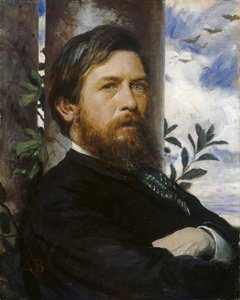
1827–1901, Szwajcaria
Arnold Böcklin
Cień Wyspy Bazylea w Szwajcarii stanowi punkt wyjścia dla życia zdefiniowanego przez napięcie między tym, co namacalne, a tym, co spektralne. Urodzony 16 października 1827 roku przez Christiana Frederica Böcklina i Ursulę Lippe, młody człowiek ostatecznie wzniósł się ponad handel jedwabiem swojego ojca, by trafić do surowych murów Akademii w Düsseldorfie. Pod okiem Schirmera zaczął chłonąć język pejzażu – umiejętność, która w przyszłości miała posłużyć do mapowania geografii ludzkiej duszy. Nie malował on jedynie scenerii; on konstruował krainy, w których klasyka zderza się z makabrą.
Inne prace Arnold Böcklin
 Wyspa umarłych (Pierwsza wersja)1880
 Autoportret ze śmiercią grającą na skrzypcach
 Wojna1896
 The Isle of the Dead (Version 2)1880

Eseje o Spring Evening
 French artworks of the 1880sFrench Impressionist masterpieces by Claude Monet, Pierre-Auguste Renoir, and Georges Seurat. Find museum-quality reproductions on Original…
 Symphony of Sunlight: The Luminous Legacy of Pine Tree Landscapes in Art HistoryExplore the luminous history of pine landscapes through Sorolla and Shishkin. Discover the magic of forest art today.
 En Plein Air Serenity: Exploring the Luminous Beauty of Impressionist Garden ArtExplore the luminous history of Impressionist garden art through Monet and Van Gogh. Discover the magic of plein air painting today.