

 Zobacz w skali 1:1
 Wyślij
 Udostępnij
 Szczegóły
 Przewodnik

 Pobierz plik obrazu
 Podobne obiekty
 RTG
RTG Pokaz slajdów
 Statystyki
Sleeping Diana Watched by Two Fauns
 Acrylic On Canvas
- WallArt
- Symbolist Painting
 1877
1877 50.0 x 774.0 cm
 Kunstpalast
 Czytaj więcej
Giclée / Wydruk artystyczny
Wydruki giclée lub płótna o jakości muzealnej, szybka realizacja i szeroki wybór opcji wykończenia. ( Kup ręcznie malowany obraz Przełącz na wersję cyfrową)




P118B $10

P118H $10

P118W $10

P438Z $10

P508JH $12

P508YH $12

P805H $10

P805Z $10

P919BZ $10

P919G $10

P919XJ $10

P959ZH $10

P968JZ $12

W106C $8

W218G $10

W218JH $8

W218Y $10

W307PJ $10

W316G $10

W316PJ $8

W316Y $10

W398PJ $8

W4111J $10

W500HY $15

W500JH $15

W692G $12

W849H $8

W940BG $15

W953PJ $8




Wybierz spośród naszych standardowych rozmiarów, które zachowują oryginalne proporcje dzieła sztuki.

Możesz wprowadzić własne wymiary, aby dopasować dzieło do konkretnej ramy lub przestrzeni. Jeśli wybrany rozmiar nie będzie odpowiadał proporcjom oryginalnego obrazu, przytniecie dzieło lub rozszerzymy obraz za pomocą odbicia lustrzanego lub jednolitego wypełnienia krawędzi. Przed rozpoczęciem produkcji prześlemy cyfrową wizualizację do Twojej akceptacji.
Prosimy pamiętać, że podgląd na ekranie nie odzwierciedla faktycznego przycinania ani rozszerzania. Tylko wizualizacja dokładnie pokaże końcową kompozycję.
Mimo dostępności niestandardowych rozmiarów, zalecamy wybór wymiaru z listy zdefiniowanej, aby zachować oryginalne proporcje.
Dostawa na cały świat () w ciągu 2 tygodni zamiast standardowych 4/5 tygodni. (26 Wrzesień)

Bezpłatna ekspresowa wysyłka na cały świat

Wysokiej jakości płótno lniane

Pełne ubezpieczenie transportowe

Gwarancja zwrotu należności celnych i podatków importowych

Gwarancja idealnego odwzorowania barw

100-dniowy okres na zwrot dzieła w przypadku wykrycia wad produkcyjnych

Gwarancja 100% zwrotu pieniędzy

Oferta przy zakupie wielu sztuk
 Opcja ze szkłem jest dostępna wyłącznie w rozmiarach poniżej 110 cm

Sleeping Diana Watched by Two Fauns
Giclée / Wydruk artystyczny
Rozmiar reprodukcji
-


Suma do zapłaty
$ 80
The Enigmatic Realm of Arnold Böcklin’s “Sleeping Diana”
Arnold Böcklin's "Sleeping Diana Watched by Two Fauns," painted in 1877-85, is not merely a depiction of a serene woodland scene; it’s an immersion into a realm of potent symbolism and haunting beauty. This tempera on panel masterpiece, currently residing in the Museum Kunstpalast in Düsseldorf, immediately draws the viewer into a world where classical mythology intertwines with unsettling introspection. The painting's power lies not just in its exquisite detail – the dappled sunlight filtering through ancient trees, the delicate folds of Diana’s gown – but in the palpable tension between innocence and primal instinct, restraint and desire.
Böcklin, a key figure in the Symbolist movement, rejected the naturalism prevalent in earlier art. Instead, he sought to evoke emotions and ideas through suggestive imagery, often drawing upon folklore, mythology, and the darker aspects of human experience. His work frequently explores themes of death, decay, and the subconscious—elements subtly woven into this particular composition. The painting’s genesis is rooted in a fascination with the ancient world, particularly Roman art and literature, combined with a deeply personal exploration of mortality and the fleeting nature of beauty.
A Dance of Contrasts: Goddess and Creatures
At the heart of “Sleeping Diana” lies a captivating interplay of figures. The goddess Diana, depicted in a state of languid repose upon a moss-covered rock, embodies purity, chastity, and the hunt—attributes traditionally associated with her role as protector of young women. Her serene expression and graceful posture suggest both vulnerability and an underlying strength. However, this idealized image is dramatically contrasted by the two fauns flanking her. These creatures, rendered with a touch of unsettling realism, possess a distinctly animalistic quality, their hands almost touching in a gesture that hints at a suppressed, perhaps even forbidden, attraction.
The positioning of the fauns—one reaching out tentatively towards Diana, the other holding back—creates a dynamic tension. It’s not a violent confrontation, but rather a delicate negotiation between opposing forces: the divine and the earthly, the rational and the instinctual, the controlled and the wild. The subtle shift in their postures suggests a moment suspended in time, a fleeting glimpse into a primal drama.
Technique and Atmosphere – A Palette of Twilight
Böcklin’s masterful technique contributes significantly to the painting's evocative atmosphere. He employed a rich, layered application of tempera paint, creating a sense of depth and texture that captures the dappled light filtering through the trees. The color palette is dominated by muted greens, browns, and blues—tones reminiscent of twilight or early morning—which imbue the scene with a melancholic beauty. Böcklin’s use of chiaroscuro – the dramatic contrast between light and shadow – further enhances the painting's emotional impact, drawing attention to Diana’s form while simultaneously shrouding the surrounding landscape in mystery.
Notably, Böcklin was influenced by the Italian Renaissance color palettes, particularly those favored during the Early Renaissance. This influence is evident in the warm, earthy tones and the overall sense of harmony and balance within the composition. The meticulous detail in rendering the foliage and the subtle nuances of light and shadow demonstrate Böcklin’s exceptional skill as a landscape painter.
Symbolism and Enduring Resonance
“Sleeping Diana Watched by Two Fauns” is replete with symbolic meaning, inviting multiple interpretations. The painting can be read as an allegory for the tension between desire and restraint, innocence and experience, or perhaps even the struggle to maintain control over one’s impulses. The fauns themselves are often interpreted as representing the darker aspects of human nature—the primal instincts that lie beneath the surface of civilized society. Diana's sleep can be seen as a state of vulnerability, while the watchful fauns embody the constant threat of temptation and transgression.
Despite its somewhat unsettling undertones, “Sleeping Diana” remains a profoundly beautiful and captivating work of art. It’s a testament to Böcklin’s ability to capture not just visual beauty but also the complex emotions and psychological states that lie beneath the surface of human experience. Reproductions of this iconic painting continue to resonate with viewers today, offering a glimpse into a world where myth, symbolism, and timeless beauty converge.
Biografia artysty
early life and training
Arnold Böcklin, a name synonymous with haunting beauty and melancholic symbolism, was born on October 16, 1827, in Basel, Switzerland—a city that would profoundly shape his artistic vision. His lineage traced back to an old family of Schaffhausen, distinguished by its involvement in the silk trade, while his mother, Ursula Lippe, hailed from the same vibrant city. Böcklin’s early years were marked by a rigorous academic training at the Düsseldorf Academy, where he studied under the esteemed Julius Wilhelm Schirmer. This period proved pivotal, forging a connection with Anselm Feuerbach and firmly establishing him within the circle of the Düsseldorf School of Painting—a movement known for its dramatic realism and exploration of psychological themes. The influence of this school is evident in Böcklin’s early works, characterized by a somber palette and an intense focus on capturing mood and atmosphere. His travels during his studies exposed him to diverse artistic traditions, particularly in Brussels, Antwerp, and Genoa, where he honed his skills under the guidance of Angelo Calame, absorbing elements of Italian landscape painting and classical antiquity. These formative experiences laid the groundwork for Böcklin’s unique approach to art—one that would later become deeply intertwined with themes of death, dreams, and the mystical.artistic career and symbolism
Böcklin's artistic journey extended far beyond the confines of Düsseldorf, leading him through the vibrant cities of Paris and Rome, each leaving an indelible mark on his creative development. In Paris, he found employment at the Louvre, immersing himself in the masterpieces of the Old Masters and gaining invaluable insights into composition and technique. His time in Rome proved particularly transformative, exposing him to the grandeur of ancient ruins and fostering a fascination with classical mythology—a theme that would recur frequently throughout his oeuvre. Böcklin’s artistic style evolved significantly during this period, moving away from the stark realism of the Düsseldorf School towards a more evocative and symbolic approach. He began to explore allegorical and mythological figures within carefully constructed settings featuring classical architecture, creating works that resonated with a profound sense of mystery and introspection. Notable early examples include *Great Park* (1857), which depicted ancient mythology in a dreamlike landscape, and the hauntingly beautiful *Nymph and Satyr* (1858) and *Sappho* (1859)—paintings that showcased his burgeoning talent for capturing emotion and atmosphere. A particularly striking example of this period is *Portrait of Myself, with Death Playing a Violin* (1872), a deeply personal work that explored the themes of mortality and artistic creation—a recurring motif in Böcklin’s art.the isle of the dead and legacy
Perhaps the most enduring testament to Böcklin's artistic vision is his five versions of *The Isle of the Dead* (1880-1886). Inspired by the English Cemetery in Florence—where his daughter was buried—these monumental paintings became instantly iconic, capturing the essence of loss, remembrance, and the passage of time. The series evokes a profound sense of melancholy and mystery, utilizing a muted color palette, atmospheric perspective, and carefully arranged figures to create an unforgettable visual experience. Böcklin’s *Isle of the Dead* profoundly influenced a generation of artists, including Hans Thoma, who sought to capture similar moods and themes in their own work. Clement Greenberg famously described Böcklin's work as "one of the most consummate expressions" of its time, recognizing its profound impact on the development of Symbolism and its subsequent influence on 20th-century art movements such as Surrealism. Böcklin’s style resonated with the Pre-Raphaelites, sharing their fascination with dreams, mysticism, and the darker aspects of human experience—a shared sensibility that cemented his place within the broader artistic landscape of the late 19th century.museums and collections
Arnold Böcklin's works are cherished by museums across Europe, offering visitors a chance to encounter the depth and complexity of his artistic vision. Key locations where you can find his paintings include:- Öffentliche Kunstsammlung (Basel, Switzerland)
- Kunstmuseum Basel (Switzerland)
- Museum Kunsthaus Zürich (Zürich, Switzerland)
conclusion
Arnold Böcklin remains a pivotal figure in the history of Symbolism, renowned for his evocative landscapes, haunting allegories, and profound exploration of mortality. His work continues to captivate audiences with its dreamlike quality and emotional resonance, solidifying his legacy as one of the most influential artists of the late 19th century. His art serves as a poignant reminder of the beauty that can be found even in darkness—a testament to the enduring power of the human spirit and the mysteries of existence.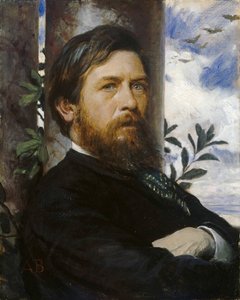
Arnold Böcklin
1827 - 1901 , Szwajcaria
Najważniejsze informacje
- Artistic Movement Or Style: Symbolizm
- Artists Or Movements Influenced By This Artist:
- Hans Thoma
- Prerafaeliści
- Artists Who Influenced This Artist:
- Schirmer
- Feuerbach
- Date Of Birth: 16 października 1827
- Date Of Death: 16 stycznia 1901
- Full Name: Arnold Böcklin
- Nationality: Szwajcarski
- Notable Artworks:
- Wyspa umarłych
- Nymph i Satyr
- Sappho
- Portret samego siebie
- Place Of Birth: Bazylea, Szwajcaria
Zobacz także powiązane artykuły

Timeless Legends: The Eternal Allure of Mythological Figures in Masterpiece Art
Explore the profound beauty of mythological figures through the lens of art history. From Renaissance masterpieces to custom oil reproductions, discover how legendary tales of heroism and divinity are immortalized in fine art for discerning collectors.
Echa Olimpu: Mity w sztuce Zachodu – od antycznych korzeni do współczesnych reinterpretacji
Odkryj fascynującą historię mitów w sztuce Zachodu! Analizujemy wpływ greckich bogów na ikonografię, reinterpretacje klasycznych opowieści i ich obecność we współczesnej kulturze. Ekspercka wiedza dla miłośników sztuki.
Timeless Legends: A Curated Guide to the Eternal Allure of Mythological Masterpieces
Embark on a sophisticated journey through the eternal allure of mythological art. Discover how master painters breathe life into ancient legends, from Greek deities to Baroque masterpieces, and learn to curate these timeless narratives within your own exquisite art collection.
Franz von Stuck: Symbolism, Decadence & the Pursuit of Ideal Beauty
Explore the captivating world of Franz von Stuck, a leading Symbolist painter. Discover his mythological masterpieces, decadent themes, & investment potential. Expert analysis for discerning collectors.
Osobiste Mitologie: Przekształcanie Idei w Symboliczne Arcydzieła – Sztuka Narracji Wizualnej i Indywidualnego Wyrazu
Odkryj fascynujący świat symbolizmu w sztuce! Analiza dzieł Moreau, Redona i Muncha, historia polskiego symbolizmu oraz praktyczne wskazówki wyboru reprodukcji. Ekspercka wiedza dla kolekcjonerów i miłośników sztuki.
