Przełącz na wydania drukowane
 Rozwiń treść







































 W przypadku dzieł sztuki lub reprodukcji, których którykolwiek z boków przekracza 105 cm (około 41 cali), rama zostanie wysłana w formie zestawu do samodzielnego montażu. Metoda ta zapewnia bezpieczną dostawę i zapobiega uszkodzeniom podczas transportu.


António Xavier Trindade: A Bridge Between East and West
António Xavier Trindade stands as an enduring figure in Portuguese art history—a painter who transcended geographical boundaries, forging connections between European academic tradition and the vibrant spirit of Indian culture. Born in Sanguem, Goa, in 1870 to Catholic parents amidst the colonial legacy of Portugal, his artistic journey was marked by a profound engagement with both worlds, resulting in a distinctive style that captivated audiences and cemented his place as “The Rembrandt of the East.” This essay delves into Trindade’s life, oeuvre, and lasting influence on Indian art.- Early Life & Training: Trindade's formative years were spent at Sir Jamsetjee Jeejeebhoy School of Art in Bombay, where he honed his skills under the tutelage of European masters—a crucial step in absorbing the principles of naturalism prevalent during that era. However, this Western influence was tempered by a deep appreciation for Indian aesthetics and spirituality, shaping his artistic vision from its inception.
- The Mayo Silver Medal & Recognition: In 1892, Trindade’s exceptional talent earned him the prestigious Mayo Silver Medal—a testament to his artistic merit and signaling the beginning of his celebrated career. This accolade underscored the burgeoning recognition of Indian artists within the broader European art landscape.
- Bombay School Style & Portraiture: Trindade's signature style, firmly rooted in the Bombay School, characterized by meticulous realism combined with expressive brushwork—a hallmark of Impressionism—allowed him to portray subjects with remarkable sensitivity and detail. His portraits captured not merely physical likeness but also inner character, reflecting a humanist approach that resonated deeply with his contemporaries.
- Religious Symbolism & Trindadism: Beyond mere representation, Trindade’s art explored profound spiritual themes—particularly Christian iconography—infused with the symbolic dimensions of the triangle and the trinity—a concept central to Hindu cosmology. This innovative technique, termed “Trindadism,” distinguished him from other artists of his time and cemented his reputation as a visionary innovator.
- Legacy & Enduring Influence: Trindade’s legacy extends far beyond his artistic achievements; he served as Teacher of Drawing and Painting at the J.J. School of Art for decades, nurturing generations of Indian painters and shaping the trajectory of Bombay School art. Today, his paintings—particularly those housed in Fundação Oriente—continue to inspire admiration and serve as a poignant reminder of Portugal’s artistic heritage in India.
Notable Works: Dolce Farniente & Rakshasa
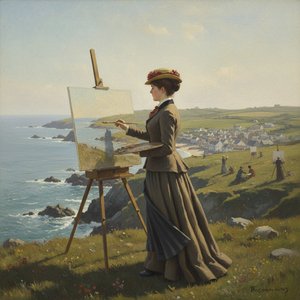
Among Trindade's most celebrated canvases are Dolce Farniente (1903) and Rakshasa (1905), masterpieces that exemplify his mastery of watercolor and meticulous attention to detail. Dolce Farniente, depicting a serene landscape bathed in soft light—a quintessential Impressionist scene—captures the beauty of nature with unparalleled subtlety. Rakshasa, on the other hand, portrays a dramatic narrative infused with Hindu symbolism—demonstrating Trindade’s ability to synthesize Eastern and Western artistic traditions into a cohesive visual experience.Exploring Trindadism: A Unique Artistic Approach
Trindade's distinctive style—Trindadism—represented a bold departure from conventional artistic conventions. By incorporating the symbolic dimensions of the triangle and the trinity—concepts deeply rooted in Hindu spirituality—he elevated his paintings beyond mere visual representation, imbuing them with profound emotional resonance. This innovative technique reflects Trindade’s unwavering belief in the transformative power of art to convey spiritual truths—a conviction that continues to inspire artists today.Fondation Oriente & The Preservation of Artistic Heritage
Today, António Xavier Trindade's paintings reside primarily at Fundação Oriente, Goa—where they are meticulously cared for and presented to the public—serving as a testament to Portugal’s artistic heritage in India. Ongoing research and conservation efforts ensure that Trindade’s legacy endures—inspiring future generations of artists and enriching our understanding of the intersection between Eastern and Western artistic traditions.Pytania i odpowiedzi
Jaka paleta i dominujący kolor definiują "Sadhu Kokila"?
Kolorystyka dzieła „Sadhu Kokila” – António Xavier Trindade: paleta Barwy neutralne, w której dominuje Biel (#e9eae5).
Jaki nastrój oddaje dzieło "Sadhu Kokila" należące do nurtu Bombay School?
Spokój emocja dzieła „Sadhu Kokila” współgra z jego stylem Bombay School.
Czy dzieło "Sadhu Kokila" posiada podgląd w rozszerzonej rzeczywistości?
Dzieło „Sadhu Kokila” – António Xavier Trindade możesz zobaczyć na własnej ścianie dzięki stronie Podgląd w AR, wykorzystując rozszerzoną rzeczywistość na kompatybilnym urządzeniu.
 Podgląd w skali 1:1
 Wyślij jako kartkę
 Udostępnij
 Szczegóły dzieła
 Przewodnik

 Pobierz obraz
 Podobne obiekty
 RTG
RTG Pokaz slajdów
 Q&A
Q&A Statystyki