Podgląd w skali
 Wyślij jako kartkę
 Udostępnij
 Szczegóły dzieła

 Pobierz
 Podobne obiekty
 RTG
RTG Pokaz slajdów
 Statystyki
William Fermor
 Oil On Canvas
- WallArt
- Neoclassicism
 1757
1757- Early Modern
 61.0 x 47.0 cm
 Ashmolean Museum of Art and Archaeology
 Rozwiń treść
Giclée / Wydruk artystyczny
Druk giclée lub płótno o jakości muzealnej, szybka realizacja i szeroki wybór opcji wykończenia. ( Zamów ręcznie malowaną reprodukcję Przełącz na obraz cyfrowy)




P118B $10

P118H $10

P118W $10

P438Z $10

P508JH $12

P508YH $12

P805H $10

P805Z $10

P919BZ $10

P919G $10

P919XJ $10

P959ZH $10

P968JZ $12

W106C $8

W218G $10

W218JH $8

W218Y $10

W307PJ $10

W316G $10

W316PJ $8

W316Y $10

W398PJ $8

W4111J $10

W500HY $15

W500JH $15

W692G $12

W849H $8

W940BG $15

W953PJ $8




Wybierz spośród naszych standardowych rozmiarów, które zachowują oryginalne proporcje dzieła sztuki.

Możesz wprowadzić własne wymiary, aby dopasować dzieło do konkretnej ramy lub przestrzeni. Jeśli wybrany rozmiar nie będzie odpowiadał proporcjom oryginalnego obrazu, przytniecie dzieło lub rozszerzymy obraz za pomocą odbicia lustrzanego lub jednolitego wypełnienia krawędzi. Przed rozpoczęciem produkcji prześlemy cyfrową wizualizację do Twojej akceptacji.
Prosimy pamiętać, że podgląd na ekranie nie odzwierciedla faktycznego przycinania ani rozszerzania. Tylko wizualizacja dokładnie pokaże końcową kompozycję.
Mimo dostępności niestandardowych rozmiarów, zalecamy wybór wymiaru z listy zdefiniowanej, aby zachować oryginalne proporcje.
Dostawa na cały świat () w ciągu 2 tygodni zamiast standardowych 4/5 tygodni. (10 Wrzesień)

Bezpłatna ekspresowa wysyłka na cały świat

Wysokiej jakości płótno lniane

Pełne ubezpieczenie przesyłki

Gwarancja zwrotu należności celnych i podatków importowych

Gwarancja wiernego odwzorowania kolorów

100-dniowa polityka zwrotów (tylko w przypadku wad)

Gwarancja 100% zwrotu kosztów

Zniżka przy zamówieniu wielu produktów
 Opcja ze szkłem jest dostępna wyłącznie w rozmiarach poniżej 110 cm

William Fermor
Giclée / Wydruk artystyczny
Wymiary reprodukcji
-


Cena całkowita
$ 80
A Vision of Neoclassical Grace: The Portrait of William Fermor
In the delicate transition between the exuberant flourishes of the Rococo and the disciplined clarity of Neoclassicism, Anton Raphael Mengs’s 1757 masterpiece, “William Fermor,” emerges as a profound testament to artistic evolution. This striking oil on canvas does more than merely capture the likeness of a Scottish-born officer in the Imperial Russian Army; it serves as a window into an era where the intellectual rigor of the Enlightenment began to reshape the visual language of Europe. As one gazes upon the portrait, there is an immediate sense of dignified resolve, a quality that transcends the sitter's individual identity to touch upon universal ideals of nobility and strength.
The technical execution of the piece reveals Mengs’s unparalleled mastery over light and form. Utilizing a sophisticated application of chiaroscuro, the artist orchestrates a dramatic interplay between shadow and illumination to sculpt Fermor’s features with sculptural precision. The subtle textures of the background wall act as a quiet stage, ensuring that the viewer's focus remains anchored on the subject's commanding presence. Every brushstroke contributes to a sense of tactile reality, from the crispness of the white cravat to the heavy, luxurious weight of the crimson coat, inviting the observer to appreciate the meticulous craftsmanship that defines this pivotal work of the mid-18th century.
Symbolism and the Language of Authority
Beyond its surface beauty, “William Fermor” is rich with symbolic layers that would have been deeply legible to a contemporary audience. The sitter’s attire—a vibrant crimson coat embellished with gleaming gold buttons—is far from a mere fashion statement; it is a deliberate reference to royal heraldry, signaling prestige, authority, and a high social standing. This sartorial grandeur is balanced by the refined elegance of his powdered wig and cravat, elements that evoke the idealized dignity of Roman antiquity. Through these details, Mengs aligns Fermor with the classical virtues of gravitas and decorum, echoing the influential aesthetic theories of Johann Joachim Winckelmann.
The composition itself functions as a visual anchor for the Neoclassical movement. By placing Fermor against a restrained, subtly textured backdrop, Mengs avoids the distracting ornamentation typical of the preceding Rococo style, opting instead for a clarity that mirrors the stability and order sought during the Seven Years’ War era. This deliberate simplicity allows the emotional weight of the portrait to resonate more deeply, making it an ideal centerpiece for those who appreciate art that communicates power through restraint rather than excess.
An Enduring Legacy for the Modern Collector
For the discerning collector or interior designer, a high-quality reproduction of “William Fermor” offers much more than a decorative element; it provides a profound connection to art history. The painting’s palette of deep reds, brilliant golds, and soft neutrals possesses a timeless versatility, capable of anchoring a room with a sense of historical weight and intellectual sophistication. Whether placed in a formal study, a grand library, or a contemporary living space, the portrait introduces an atmosphere of stately composure and refined taste.
Owning a piece that embodies the bridge between two great eras allows for a continuous dialogue with the past. The artwork’s ability to evoke both the warmth of human character and the cold precision of classical ideals makes it a captivating subject for contemplation. It remains an evocative choice for those seeking to surround themselves with art that inspires respect, commands attention, and celebrates the enduring beauty of the human spirit captured through the lens of classical perfection.
O artyście
Most między światami: Życie i sztuka Anton Raphaela Mengsa
Anton Raphael Mengs pojawił się w fascynującym okresie w historii sztuki europejskiej, w czasach, gdy ozdobne finezje rokoka zaczynały ustępować miejsca odrodzonemu uwielbieniu dla ideałów klasycznych. Urodzony w 1728 roku w Ústí nad Labem w Czechach – regionie, który dziś stanowi część Republiki Czeskiej – jego artystyczna droga została głęboko ukształtowana zarówno przez jego dziedzictwo, jak i intelektualne prądy Oświecenia. Jego ojciec, Ismael Mengs, duński malarz cieszący się mecenatem na dworze w Dreźnie, wcześnie dostrzegł wyjątkowy talent młodego Antona. To uznanie doprowadziło do przełomowego wydarzenia w 1741 roku: przeprowadzki do Rzymu, gdzie rodzący się artysta zanurzył się w studiach nad antycznymi arcydziełami oraz dziełami mistrzów renesansu, takich jak Rafael. To właśnie to obcowanie z przeszłością nieodwracalnie odcisnęło piętno na jego wrażliwości estetycznej, zaszczepiając w nim głęboki szacunek do klasycznej formy, klarowności i kompozycji – cech, które stały się znakami rozpoznawczymi jego dojrzałego stylu. Wczesne lata poświęcił skrupulatnemu kopiowaniu dzieł, nie tylko jako ćwiczeniu technicznemu, ale jako głębokiemu aktowi artystycznej pielgrzymki, chłonąc esencję geniuszu Rafaela.Od Drezna do Madrytu: Kariera na europejskich dworach
Kariera Mengsa rozwijała się na kilku prestiżowych dworach Europy, a każdy z nich pozostawił swój unikalny ślad w jego rozwoju artystycznym. W 1749 roku uzyskał zaszczytną funkcję malarza dworskiego Fryderyka Augusta, elektora Saksonii – rolę, która zapewniła mu zarówno stabilność finansową, jak i swobodę utrzymywania bazy w Rzymie, będącym epicentrum jego artystycznej inspiracji. Jednak to właśnie freski przyniosły mu prawdziwą sławę. *Parnas* w Villa Albani w Rzymie, ukończony około 1761 roku, stał się natychmiastową sensacją, wychwalany za harmonijną kompozycję, eleganckie postaci oraz subtelne, a zarazem potężne przywołanie mitologii klasycznej. Dzieło to nie było jedynie dekoracyjnym akcentem; stanowiło manifest – świadomą próbę syntezy barokowego przepychu z rodzącymiymi się zasadami klasycyzmu. Następowały kolejne zlecenia, w tym oszałamiający fresk zdobiący kopułę kościoła Sant'Eusebio w Rzymie, prezentujący jego mistrzostwo w monumentalnej dekoracji i iluzji przestrzennej. Być może jego najbardziej ambitnym przedsięwzięciem było zaproszenie z dworu hiszpańskiego w 1761 roku. Podróżował do Madrytu, gdzie powierzono mu dekorację kilku królewskich pałaców, co zwieńczyło wspaniałe sklepienie Sali Bankietowej Pałacu Królewskiego – dzieło uznawane za jedno z jego najwybitniejszych osiągnięć, demonstrujące niezwykłą zdolność do łączenia włoskiej elegancji z hiszpańską wrażliwością.Relacja z Winckelmannem: Kształtowanie myśli neoklasycznej
Ewolucja artystyczna Mengsa nie wynikała wyłącznie ze studiów wizualnych; była ona głęboko spleciona z dyskursem intelektualnym. Kluczowy punkt zwrotny nastąpił wraz z jego bliską przyjaźnią i współpracą z Johannem Joachimem Winckelmannem, pionierem historii sztuki, którego pisma stały się fundamentem ruchu neoklasycznego. Winckelmann opowiadał się za powrotem do postrzeganej czystości i prostoty sztuki starożytnej Grecji, postulując estetykę opartą na rozumie, porządku i idealizowanych formach. Mengs nie tylko ilustrował teorie Winckelmanna; on aktywnie uczestniczył w ich kształtowaniu, przekładając abstrakcyjne koncepcje na namacalne wyrazy artystyczne. Wspólnie wierzyli, że prawdziwe piękno nie tkwi w powierzchownej ornamentyce, lecz w podstawowych zasadach harmonii i proporcji odnalezionych w antyku. To partnerstwo wykraczało poza dyskusje teoretyczne; objawiało się w samych malowidłach Mengsa, które coraz częściej odzwierciedlały nacisk Winckelmanna na szlachetną prostotę i powściągliwość emocji. Wpływ ten był obustronny: pisma Winckelmanna dostarczały ram filozoficznych dla artystycznych dążeń Mengsa, podczas gdy sztuka Mengsa służyła jako wizualny dowód na żywotność – i piękno – ideałów neoklasycznych.Dziedzictwo i wpływ: Pionier swoich czasów
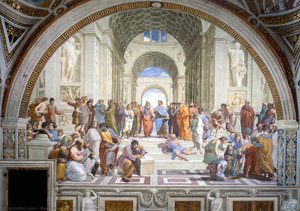
Anton Raphael Mengs zmarł w Rzymie w 1779 roku, pozostawiając po sobie dziedzictwo wykraczające daleko poza jego imponujący dorobek artystyczny. Był kimś więcej niż tylko malarzem; był kluczową postacią w procesie przejścia od jednej ery artystycznej do drugiej. Choć zakorzeniony w tradycji barokowej – co widoczne jest w dramatycznym operowaniu światłocieniem i mistrzostwie technik iluzjonistycznych – Mengs odważnie przyjął rodzące się zasady klasycyzmu, torując drogę artystom takim jak Jacques-Louis David czy Antonio Canova. Jego nacisk na ideały klasyczne, w połączeniu z techniczną wirtuozerią, uczynił go wiodącą siłą kształtującą sztukę XVIII wieku. *Szkoła Ateńska*, namalowana dla księcia Northumberland, stanowi świadectwo jego zdolności do syntezy historycznego precedensu ze współczesną wrażliwością artystyczną. Poza malarstwem i freskami, wpływ Mengsa rozciągał się na edukację; pełnił funkcję dyrektora Watykańskiej Szkoły Malarskiej, wychowując nowe pokolenie artystów przesiąkniętych zasadami klasycznymi. Był postacią złożoną – gorliwym katolikiem, który jednocześnie angażował się w myśl oświeceniową, artystą, który potrafił zrównoważyć tradycję z innowacją. Jego życie i twórczość stanowią fascynujące przecięcie umiejętności artystycznych, ciekawości intelektualnej i uwarunkowań historycznych, utwierdzając jego miejsce jako prawdziwego pioniera sztuki neoklasycznej. Jego wpływ rezonuje nawet dzisiaj, przypominając nam o trwałej mocy ideałów klasycznych w inspirowaniu i przekształcaniu ekspresji artystycznej.
Anton Raphael Mengs
1728 - 1779 , Czech Republic
Krótka nota
- Artistic Movement Or Style: Neoklasycyzm
- Artists Or Movements Influenced By This Artist:
- Jacques-Louis David
- Antonio Canova
- Artists Who Influenced This Artist:
- Raphael
- Correggio
- Date Of Birth: 12 marca 1728
- Date Of Death: 29 czerwca 1779
- Full Name: Anton Raphael Mengs
- Nationality: Niemiec
- Notable Artworks:
- Świętych Apostołów Ołtarz
- Parnassus
- Place Of Birth: Ústí nad Labem, Czech Republic
Powiązane artykuły

Baroque Classicism: The Grandeur of Order and Drama in 17th-Century Art History
Explore the profound elegance of Baroque Classicism. Discover how 17th-century masters synthesized dramatic emotion with classical order through the lens of the Counter-Reformation and the works of legends like Carlo Maratta and Andrea Sacchi.

Neoclassical Art: The Timeless Elegance of Order, Virtue, and Classical Grace
Explore the profound elegance of Neoclassical art. Discover the principles of order, symmetry, and virtue through the works of masters like David and Mengs. Immerse yourself in a journey of classical grace and timeless aesthetic perfection.

Barokowy Klasycyzm: Synteza Dramatu i Porządku w Sztuce XVII Wieku
Poznaj fascynujący świat barokowego klasycyzmu! Analiza ideologii kontrreformacji, syntezy antyku z dramatyzmem oraz mistrzowskich technik malarskich. Ekspercka wiedza o sztuce XVII wieku.
Neoclassicism Unveiled: The Timeless Elegance of Order, Reason, and Classical Antiquity
Explore the profound elegance of Neoclassicism. Discover how Enlightenment ideals, the discovery of Pompeii, and masters like Jacques-Louis David revived the glory of Greek and Roman antiquity through art defined by order, reason, and timeless beauty.
Raphael: 25 Arcydzieł Mistrza Renesansu - Obrazy i Dekoracje OriginalUniqueArt.com
Odkryj 25 arcydzieł Raphaela – od Madonn po freski Watykanu. Poznaj historię, technikę i piękno renesansowego malarstwa. Reprodukcje obrazów najwyższej jakości na OriginalUniqueArt.com. Eksploruj kolekcję online!