Zobacz w skali 1:1
 Wyślij
 Udostępnij
 Szczegóły
 Przewodnik

 Pobierz plik obrazu
 Podobne obiekty
 RTG
RTG Pokaz slajdów
 Statystyki
Self Portrait
 Acrylic On Canvas
- WallArt
- Neoclassical Painting
 1774
1774 562.0 x 735.0 cm
 Walker Art Gallery
 Czytaj więcej
Ręcznie malowana reprodukcja olejowa
Ręcznie malowany obraz olejny na płótnie, wykonany na zamówienie przez naszych artystów w wybranym przez Ciebie wymiarze i oprawie. ( Przełącz na wersję drukowaną Przełącz na wersję cyfrową)




P118B zł10

P118H zł10

P118W zł10

P438Z zł10

P508JH zł12

P508YH zł12

P805H zł10

P805Z zł10

P919BZ zł10

P919G zł10

P919XJ zł10

P959ZH zł10

P968JZ zł12

W106C zł8

W218G zł10

W218JH zł8

W218Y zł10

W307PJ zł10

W316G zł10

W316PJ zł8

W316Y zł10

W398PJ zł8

W4111J zł10

W500HY zł15

W500JH zł15

W692G zł12

W849H zł8

W940BG zł15

W953PJ zł8




Wybierz spośród naszych standardowych rozmiarów, które zachowują oryginalne proporcje dzieła sztuki.

Wpisz wymaganą szerokość i wysokość, aby obraz pasował do Twojej ramy lub ściany. Ponieważ jest to dzieło malowane ręcznie, w przypadku rozmiaru o innym proporcji artysta może domalować nieco więcej wokół obrazu lub przyciąć fragmenty — wybór należy do Ciebie. Przed rozpoczęciem pracy prześlemy Ci cyfrową wizualizację do zatwierdzenia. Obraz widoczny na tej stronie nie przedstawia rzeczywistego efektu — jedynie wizualizacja oddaje realny rezultat.
Po złożeniu zamówienia zespół OriginalUniqueArt.com skontaktuje się z klientem drogą mailową w celu uzyskania instrukcji i prześle wizualizację projektu
Dostawa na całym świecie () w ciągu 3–4 tygodni zamiast standardowych 5 tygodni. (23 Październik). Bez kompromisów w kwestii jakości.

Bezpłatna ekspresowa wysyłka na cały świat

Wysokiej jakości płótno lniane

Pełne ubezpieczenie transportowe

Gwarancja zwrotu należności celnych i podatków importowych

Gwarancja idealnego odwzorowania barw

100-dniowy okres na zwrot dzieła w przypadku wykrycia wad produkcyjnych

Gwarancja 100% zwrotu pieniędzy

Oferta przy zakupie wielu sztuk
 Opcja ze szkłem jest dostępna wyłącznie w rozmiarach poniżej 110 cm

Self Portrait
Technika wykonania
Rozmiar reprodukcji
-


Suma do zapłaty
zł 1155
The Enigmatic Gaze: Unpacking Anton Raphael Mengs’ “Self Portrait”
Anton Raphael Mengs' "Self Portrait," painted in 1774, isn’t merely a likeness; it’s a carefully constructed tableau of intellectual ambition and introspective melancholy. Captured with the precision characteristic of the Neoclassical movement, this painting offers a rare glimpse into the mind of an artist grappling with his burgeoning fame and the weighty expectations placed upon him. The image immediately draws the eye to the subject's face – a man in his mid-forties, rendered with a remarkable sensitivity that belies the formality of the attire. His mouth is slightly open, a subtle gesture hinting at contemplation or perhaps even a quiet sadness; it’s an expression that invites prolonged observation and fuels speculation about the thoughts swirling within him.
The composition itself speaks volumes. Mengs sits three-quarters to his right, a pose favored by portrait painters of the era, suggesting both dignity and engagement with the viewer. The rich brown coat, meticulously detailed, anchors him in a world of established artistic circles, while the scarf draped loosely around his neck adds a touch of understated elegance. Yet, it’s the lighting – masterful chiaroscuro reminiscent of Rembrandt – that truly elevates the piece. Dark shadows pool beneath his eyes and across his shoulders, creating a sense of depth and drawing attention to the delicate lines of his face. The light catches the texture of his clothing and highlights the subtle nuances of his expression, transforming a simple portrait into a study in mood and atmosphere.
A Bridge Between Worlds: Mengs’ Artistic Genesis
Mengs' journey to this moment was profoundly shaped by his lineage and the intellectual currents of the Enlightenment. Born in 1728 in Ústí nad Labem, Bohemia – a region now part of the Czech Republic – he inherited a legacy of artistic talent from his father, Ismael Mengs, a Danish painter who found patronage at the Dresden court. This early exposure to the refined tastes and exacting standards of the German aristocracy instilled within young Anton a deep appreciation for classical ideals and meticulous technique. Crucially, in 1741, he was sent to Rome – a pivotal decision that irrevocably shaped his artistic development.
Immersed in the heart of the Roman art world, Mengs spent years studying the masterpieces of Raphael, Michelangelo, and other Renaissance giants. He meticulously copied their works, absorbing not just their technical skill but also their profound understanding of human anatomy, perspective, and composition. This immersion in classical antiquity would become the bedrock of his artistic style – a commitment to clarity, balance, and idealized beauty that defined Neoclassicism. The influence is immediately apparent in “Self Portrait,” where Mengs consciously adopts a pose reminiscent of ancient Roman portraiture, signaling his ambition to emulate the masters and establish himself as a leading figure in the revival of classical art.
Symbolism and Context: The Weight of Ambition
Beyond its technical brilliance, “Self Portrait” is laden with symbolic meaning. The open mouth, as previously noted, suggests introspection – perhaps a moment of self-doubt amidst the pressures of his career. The carefully chosen attire—the brown coat, the scarf—reflects his position within European artistic circles, signaling both his status and his adherence to established conventions. However, there’s also an underlying sense of weariness in Mengs' gaze, hinting at the sacrifices required to achieve success and the loneliness inherent in a life devoted to art.
Painted just three years before his untimely death at the age of 51, the portrait captures a man on the cusp of greatness but also burdened by mortality. Mengs was a celebrated artist throughout Europe, a key figure in the creation of Neoclassicism, yet he faced constant challenges – financial difficulties, professional rivalries, and the relentless demands of his patrons. “Self Portrait” offers a poignant glimpse into the inner life of an artist grappling with these complexities, reminding us that even the most accomplished figures are subject to human vulnerability and uncertainty.
A Timeless Reflection: Reproduction and Artistic Legacy
Reproductions of Mengs’ “Self Portrait” continue to resonate today, offering a window into the artistic sensibilities of the 18th century. The painting's masterful use of light and shadow, combined with its psychologically astute portrayal of the subject, ensures its enduring appeal. Whether displayed in a grand salon or a contemporary art space, this work serves as a powerful reminder of the transformative power of art – its ability to capture not just likeness but also essence, emotion, and the complexities of the human experience. Consider commissioning a hand-painted reproduction to bring this captivating piece into your own home, preserving Mengs’ legacy for generations to come.
Pytania i odpowiedzi
Czy dostępny jest wysokiej rozdzielczości plik do pobrania dla "Self Portrait"?
Aby otrzymać plik cyfrowy dzieła „Self Portrait” autorstwa Anton Raphael Mengs, zamów wysokiej rozdzielczości cyfrowe zdjęcie do pobrania na stronie Obraz cyfrowy.
Jaki kolor dominuje w kompozycji „Self Portrait” autorstwa Anton Raphael Mengs?
Dominującym kolorem dzieła „Self Portrait” autorstwa Anton Raphael Mengs jest Espresso (#372623).
W jakiej technice wykonano „Self Portrait” autorstwa Anton Raphael Mengs?
Anton Raphael Mengs wykorzystał/a technikę Acrylic On Canvas w pracy "Self Portrait". Technika ta definiuje materię oryginalnego dzieła.
Biografia artysty
Most między światami: Życie i sztuka Anton Raphaela Mengsa
Anton Raphael Mengs pojawił się w fascynującym okresie w historii sztuki europejskiej, w czasach, gdy ozdobne finezje rokoka zaczynały ustępować miejsca odrodzonemu uwielbieniu dla ideałów klasycznych. Urodzony w 1728 roku w Ústí nad Labem w Czechach – regionie, który dziś stanowi część Republiki Czeskiej – jego artystyczna droga została głęboko ukształtowana zarówno przez jego dziedzictwo, jak i intelektualne prądy Oświecenia. Jego ojciec, Ismael Mengs, duński malarz cieszący się mecenatem na dworze w Dreźnie, wcześnie dostrzegł wyjątkowy talent młodego Antona. To uznanie doprowadziło do przełomowego wydarzenia w 1741 roku: przeprowadzki do Rzymu, gdzie rodzący się artysta zanurzył się w studiach nad antycznymi arcydziełami oraz dziełami mistrzów renesansu, takich jak Rafael. To właśnie to obcowanie z przeszłością nieodwracalnie odcisnęło piętno na jego wrażliwości estetycznej, zaszczepiając w nim głęboki szacunek do klasycznej formy, klarowności i kompozycji – cech, które stały się znakami rozpoznawczymi jego dojrzałego stylu. Wczesne lata poświęcił skrupulatnemu kopiowaniu dzieł, nie tylko jako ćwiczeniu technicznemu, ale jako głębokiemu aktowi artystycznej pielgrzymki, chłonąc esencję geniuszu Rafaela.Od Drezna do Madrytu: Kariera na europejskich dworach
Kariera Mengsa rozwijała się na kilku prestiżowych dworach Europy, a każdy z nich pozostawił swój unikalny ślad w jego rozwoju artystycznym. W 1749 roku uzyskał zaszczytną funkcję malarza dworskiego Fryderyka Augusta, elektora Saksonii – rolę, która zapewniła mu zarówno stabilność finansową, jak i swobodę utrzymywania bazy w Rzymie, będącym epicentrum jego artystycznej inspiracji. Jednak to właśnie freski przyniosły mu prawdziwą sławę. *Parnas* w Villa Albani w Rzymie, ukończony około 1761 roku, stał się natychmiastową sensacją, wychwalany za harmonijną kompozycję, eleganckie postaci oraz subtelne, a zarazem potężne przywołanie mitologii klasycznej. Dzieło to nie było jedynie dekoracyjnym akcentem; stanowiło manifest – świadomą próbę syntezy barokowego przepychu z rodzącymiymi się zasadami klasycyzmu. Następowały kolejne zlecenia, w tym oszałamiający fresk zdobiący kopułę kościoła Sant'Eusebio w Rzymie, prezentujący jego mistrzostwo w monumentalnej dekoracji i iluzji przestrzennej. Być może jego najbardziej ambitnym przedsięwzięciem było zaproszenie z dworu hiszpańskiego w 1761 roku. Podróżował do Madrytu, gdzie powierzono mu dekorację kilku królewskich pałaców, co zwieńczyło wspaniałe sklepienie Sali Bankietowej Pałacu Królewskiego – dzieło uznawane za jedno z jego najwybitniejszych osiągnięć, demonstrujące niezwykłą zdolność do łączenia włoskiej elegancji z hiszpańską wrażliwością.Relacja z Winckelmannem: Kształtowanie myśli neoklasycznej
Ewolucja artystyczna Mengsa nie wynikała wyłącznie ze studiów wizualnych; była ona głęboko spleciona z dyskursem intelektualnym. Kluczowy punkt zwrotny nastąpił wraz z jego bliską przyjaźnią i współpracą z Johannem Joachimem Winckelmannem, pionierem historii sztuki, którego pisma stały się fundamentem ruchu neoklasycznego. Winckelmann opowiadał się za powrotem do postrzeganej czystości i prostoty sztuki starożytnej Grecji, postulując estetykę opartą na rozumie, porządku i idealizowanych formach. Mengs nie tylko ilustrował teorie Winckelmanna; on aktywnie uczestniczył w ich kształtowaniu, przekładając abstrakcyjne koncepcje na namacalne wyrazy artystyczne. Wspólnie wierzyli, że prawdziwe piękno nie tkwi w powierzchownej ornamentyce, lecz w podstawowych zasadach harmonii i proporcji odnalezionych w antyku. To partnerstwo wykraczało poza dyskusje teoretyczne; objawiało się w samych malowidłach Mengsa, które coraz częściej odzwierciedlały nacisk Winckelmanna na szlachetną prostotę i powściągliwość emocji. Wpływ ten był obustronny: pisma Winckelmanna dostarczały ram filozoficznych dla artystycznych dążeń Mengsa, podczas gdy sztuka Mengsa służyła jako wizualny dowód na żywotność – i piękno – ideałów neoklasycznych.Dziedzictwo i wpływ: Pionier swoich czasów
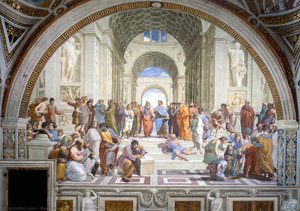
Anton Raphael Mengs zmarł w Rzymie w 1779 roku, pozostawiając po sobie dziedzictwo wykraczające daleko poza jego imponujący dorobek artystyczny. Był kimś więcej niż tylko malarzem; był kluczową postacią w procesie przejścia od jednej ery artystycznej do drugiej. Choć zakorzeniony w tradycji barokowej – co widoczne jest w dramatycznym operowaniu światłocieniem i mistrzostwie technik iluzjonistycznych – Mengs odważnie przyjął rodzące się zasady klasycyzmu, torując drogę artystom takim jak Jacques-Louis David czy Antonio Canova. Jego nacisk na ideały klasyczne, w połączeniu z techniczną wirtuozerią, uczynił go wiodącą siłą kształtującą sztukę XVIII wieku. *Szkoła Ateńska*, namalowana dla księcia Northumberland, stanowi świadectwo jego zdolności do syntezy historycznego precedensu ze współczesną wrażliwością artystyczną. Poza malarstwem i freskami, wpływ Mengsa rozciągał się na edukację; pełnił funkcję dyrektora Watykańskiej Szkoły Malarskiej, wychowując nowe pokolenie artystów przesiąkniętych zasadami klasycznymi. Był postacią złożoną – gorliwym katolikiem, który jednocześnie angażował się w myśl oświeceniową, artystą, który potrafił zrównoważyć tradycję z innowacją. Jego życie i twórczość stanowią fascynujące przecięcie umiejętności artystycznych, ciekawości intelektualnej i uwarunkowań historycznych, utwierdzając jego miejsce jako prawdziwego pioniera sztuki neoklasycznej. Jego wpływ rezonuje nawet dzisiaj, przypominając nam o trwałej mocy ideałów klasycznych w inspirowaniu i przekształcaniu ekspresji artystycznej.
Anton Raphael Mengs
1728 - 1779 , Czech Republic
Najważniejsze informacje
- Artistic Movement Or Style: Neoklasycyzm
- Artists Or Movements Influenced By This Artist:
- Jacques-Louis David
- Antonio Canova
- Artists Who Influenced This Artist:
- Raphael
- Correggio
- Date Of Birth: 12 marca 1728
- Date Of Death: 29 czerwca 1779
- Full Name: Anton Raphael Mengs
- Nationality: Niemiec
- Notable Artworks:
- Świętych Apostołów Ołtarz
- Parnassus
- Place Of Birth: Ústí nad Labem, Czech Republic
Zobacz także powiązane artykuły

Rembrandt van Rijn: 25 Najwybitniejszych Dzieł Sztuki – Reprodukcje i Inspiracje do Wnętrz
Poznaj 25 arcydzieł Rembrandta van Rijn! Odkryj fascynujące historie, techniki i wpływ holenderskiego mistrza baroku na świat sztuki. Reprodukcje obrazów najwyższej jakości – inspiracje do wnętrz na OriginalUniqueArt.com
Reflecting the Self: A History of Portraiture & Psychological Insight
Explore the fascinating history of self-portraiture from Renaissance masters like Dürer & Rembrandt to modern interpretations. Discover the psychological insights and artistic techniques behind these iconic works. Expert analysis for art enthusiasts.
Adriaen van Ostade: A Master of Dutch Genre Painting & Social Commentary
Explore the life & work of Adriaen van Ostade, a leading Dutch Golden Age painter. Discover his realistic genre scenes, social commentary, and lasting influence on art history. Learn more at OriginalUniqueArt.
Decoding Van Gogh's Turmoil: OriginalUniqueArt’s Masterful Reproductions of Emotional Depth
Discover exquisite Van Gogh reproductions from OriginalUniqueArt – expert art specialists offering museum-quality prints & custom paintings. Trust our authentic process and elevate your collection today.

10 Arcydzieł Postimpresjonizmu, Które Zdefiniowały Sztukę. Inspiracje do Dekoracji Domu.
Odkryj 10 arcydzieł postimpresjonizmu Van Gogha, Moneta i Cézanne'a! Poznaj historie artystów, techniki malarskie i inspiracje do dekoracji wnętrz. Reprodukcje obrazów najwyższej jakości na OriginalUniqueArt.com – sztuka dla Twojego domu.