Podgląd w skali 1:1
 Wyślij jako kartkę
 Udostępnij
 Szczegóły dzieła
 Przewodnik

 Pobierz obraz
 Podobne obiekty
 RTG
RTG Pokaz slajdów
 Q&A
Q&A Statystyki
Self-Portrait
 Oil On Canvas
- WallArt
- Neoclassical Painting
 1744
1744- Early Modern
 55.0 x 42.0 cm
 Gemäldegalerie Alte Meister
 Rozwiń treść
Giclée / Wydruk artystyczny
Wydruki giclée lub płótna o jakości muzealnej, szybka realizacja i szeroki wybór opcji wykończenia. ( Zamów ręcznie malowaną reprodukcję Przejdź do wersji cyfrowej)




P118B zł10

P118H zł10

P118W zł10

P438Z zł10

P508JH zł12

P508YH zł12

P805H zł10

P805Z zł10

P919BZ zł10

P919G zł10

P919XJ zł10

P959ZH zł10

P968JZ zł12

W106C zł8

W218G zł10

W218JH zł8

W218Y zł10

W307PJ zł10

W316G zł10

W316PJ zł8

W316Y zł10

W398PJ zł8

W4111J zł10

W500HY zł15

W500JH zł15

W692G zł12

W849H zł8

W940BG zł15

W953PJ zł8




Wybierz spośród naszych standardowych rozmiarów, które zachowują oryginalne proporcje dzieła sztuki.

Wpisz wymaganą szerokość i wysokość, aby dopasować grafikę do ramy lub ściany. Wydruk można jedynie przyciąć, nigdy nie powiększając go poza oryginalny obraz, dlatego format o innych proporcjach spowoduje utratę części kompozycji. Przed rozpoczęciem druku prześlemy Ci cyfrowy podgląd do zatwierdzenia. Obraz wyświetlany na tej stronie nie pokazuje rzeczywistego przycięcia — jedynie podgląd oddaje ten efekt.
Dostawa na cały świat () w ciągu 2 tygodni zamiast standardowych 4/5 tygodni. (29 Październik)

Bezpłatna ekspresowa wysyłka na cały świat

Wysokiej jakości płótno lniane

Pełne ubezpieczenie przesyłki

Gwarancja zwrotu należności celnych i podatków importowych

Gwarancja wiernego odwzorowania kolorów

100-dniowa polityka zwrotów (tylko w przypadku wad)

Gwarancja 100% zwrotu pieniędzy

Zniżka przy zakupie wielu sztuk
 Opcja ze szkłem jest dostępna wyłącznie w rozmiarach poniżej 110 cm

Self-Portrait
Giclée / Wydruk artystyczny
Wymiary reprodukcji
-


Cena całkowita
zł 308
A Glimpse into Enlightenment Self-Reflection
This captivating self-portrait by Anton Raphael Mengs transports us directly into the intellectual atmosphere of the mid-eighteenth century. The subject, portrayed with an arresting directness, meets the viewer's gaze with a profound seriousness that speaks volumes about the sitter’s inner life. Dressed simply in a white shirt and adorned with a delicate gold necklace, the focus remains intensely on her expression—a masterful study in controlled emotion. Mengs captures not merely a likeness, but a moment of considered introspection, inviting us to ponder the complexities of self-perception during an era of burgeoning Enlightenment thought.
Mastery of Classical Form and Depth
Technically, the painting showcases Mengs' profound grounding in classical ideals, evident from his formative years studying the great masters in Rome. The composition is remarkably balanced, yet it achieves a palpable sense of depth. Beyond the figure, the background unfolds into a detailed landscape featuring trees and architectural elements. This juxtaposition—the intimate portrait against the expansive world—is handled with remarkable skill, giving the entire scene an almost three-dimensional quality on the canvas. One can almost feel the crisp air emanating from that distant vista, contrasting beautifully with the immediacy of the sitter’s presence.
Historical Echoes: The Transition in Art
Painted in 1744, this work stands at a fascinating crossroads in art history. It captures the moment when the exuberant ornamentation of the Rococo style began to yield ground to a renewed commitment to classical clarity and structure. Mengs embodies this transition; his technique retains a certain grace while embracing the intellectual rigor and idealized form favored by Neoclassicism. Owning a reproduction of this piece is to possess a tangible link to that pivotal shift in aesthetic philosophy, suggesting an appreciation for enduring beauty over fleeting fashion.
Symbolism and Emotional Resonance
The direct gaze of the subject acts as the painting's emotional anchor. It suggests confidence, intelligence, and perhaps a quiet yearning for recognition. The landscape behind her is not merely decorative; it symbolizes the world—the backdrop against which personal identity is formed. For the collector or designer, this piece offers more than mere decoration; it serves as a sophisticated conversation starter, hinting at an appreciation for history, art theory, and enduring human depth. It imbues any space with an air of cultured contemplation.
Bringing Renaissance Grandeur Home
The dimensions of 55 x 42 cm make this portrait an ideal focal point for a drawing-room or study. Reproducing Mengs’ delicate brushwork and the rich tonal variations allows modern admirers to incorporate the grandeur of 18th-century European painting into contemporary décor. It is a piece that whispers tales of Roman academies, enlightened minds, and the enduring power of the self-portrait.
Pytania i odpowiedzi
Gdzie najlepiej powiesić reprodukcję „Self-Portrait” – Anton Raphael Mengs?
Format (Portrait) oraz rekomendowana przestrzeń (Living Room) to dwa parametry dotyczące rozmieszczenia dzieła „Self-Portrait” – Anton Raphael Mengs.
W jakim pomieszczeniu najlepiej wyeksponować "Self-Portrait", biorąc pod uwagę jego paletę barw?
Kolorystyka Earthy w dziele „Self-Portrait” – Anton Raphael Mengs idealnie współgra z rekomendowanym wnętrzem: Living Room.
Jaki rozmiar wydruku jest zalecany dla „Self-Portrait” – Anton Raphael Mengs?
Dla dzieła „Self-Portrait” – Anton Raphael Mengs sugerowana jest reprodukcja w formacie Medium. Rozmiar można dostosować, zachowując proporcje.
Biografia artysty
Most między światami: Życie i sztuka Anton Raphaela Mengsa
Anton Raphael Mengs pojawił się w fascynującym okresie w historii sztuki europejskiej, w czasach, gdy ozdobne finezje rokoka zaczynały ustępować miejsca odrodzonemu uwielbieniu dla ideałów klasycznych. Urodzony w 1728 roku w Ústí nad Labem w Czechach – regionie, który dziś stanowi część Republiki Czeskiej – jego artystyczna droga została głęboko ukształtowana zarówno przez jego dziedzictwo, jak i intelektualne prądy Oświecenia. Jego ojciec, Ismael Mengs, duński malarz cieszący się mecenatem na dworze w Dreźnie, wcześnie dostrzegł wyjątkowy talent młodego Antona. To uznanie doprowadziło do przełomowego wydarzenia w 1741 roku: przeprowadzki do Rzymu, gdzie rodzący się artysta zanurzył się w studiach nad antycznymi arcydziełami oraz dziełami mistrzów renesansu, takich jak Rafael. To właśnie to obcowanie z przeszłością nieodwracalnie odcisnęło piętno na jego wrażliwości estetycznej, zaszczepiając w nim głęboki szacunek do klasycznej formy, klarowności i kompozycji – cech, które stały się znakami rozpoznawczymi jego dojrzałego stylu. Wczesne lata poświęcił skrupulatnemu kopiowaniu dzieł, nie tylko jako ćwiczeniu technicznemu, ale jako głębokiemu aktowi artystycznej pielgrzymki, chłonąc esencję geniuszu Rafaela.Od Drezna do Madrytu: Kariera na europejskich dworach
Kariera Mengsa rozwijała się na kilku prestiżowych dworach Europy, a każdy z nich pozostawił swój unikalny ślad w jego rozwoju artystycznym. W 1749 roku uzyskał zaszczytną funkcję malarza dworskiego Fryderyka Augusta, elektora Saksonii – rolę, która zapewniła mu zarówno stabilność finansową, jak i swobodę utrzymywania bazy w Rzymie, będącym epicentrum jego artystycznej inspiracji. Jednak to właśnie freski przyniosły mu prawdziwą sławę. *Parnas* w Villa Albani w Rzymie, ukończony około 1761 roku, stał się natychmiastową sensacją, wychwalany za harmonijną kompozycję, eleganckie postaci oraz subtelne, a zarazem potężne przywołanie mitologii klasycznej. Dzieło to nie było jedynie dekoracyjnym akcentem; stanowiło manifest – świadomą próbę syntezy barokowego przepychu z rodzącymiymi się zasadami klasycyzmu. Następowały kolejne zlecenia, w tym oszałamiający fresk zdobiący kopułę kościoła Sant'Eusebio w Rzymie, prezentujący jego mistrzostwo w monumentalnej dekoracji i iluzji przestrzennej. Być może jego najbardziej ambitnym przedsięwzięciem było zaproszenie z dworu hiszpańskiego w 1761 roku. Podróżował do Madrytu, gdzie powierzono mu dekorację kilku królewskich pałaców, co zwieńczyło wspaniałe sklepienie Sali Bankietowej Pałacu Królewskiego – dzieło uznawane za jedno z jego najwybitniejszych osiągnięć, demonstrujące niezwykłą zdolność do łączenia włoskiej elegancji z hiszpańską wrażliwością.Relacja z Winckelmannem: Kształtowanie myśli neoklasycznej
Ewolucja artystyczna Mengsa nie wynikała wyłącznie ze studiów wizualnych; była ona głęboko spleciona z dyskursem intelektualnym. Kluczowy punkt zwrotny nastąpił wraz z jego bliską przyjaźnią i współpracą z Johannem Joachimem Winckelmannem, pionierem historii sztuki, którego pisma stały się fundamentem ruchu neoklasycznego. Winckelmann opowiadał się za powrotem do postrzeganej czystości i prostoty sztuki starożytnej Grecji, postulując estetykę opartą na rozumie, porządku i idealizowanych formach. Mengs nie tylko ilustrował teorie Winckelmanna; on aktywnie uczestniczył w ich kształtowaniu, przekładając abstrakcyjne koncepcje na namacalne wyrazy artystyczne. Wspólnie wierzyli, że prawdziwe piękno nie tkwi w powierzchownej ornamentyce, lecz w podstawowych zasadach harmonii i proporcji odnalezionych w antyku. To partnerstwo wykraczało poza dyskusje teoretyczne; objawiało się w samych malowidłach Mengsa, które coraz częściej odzwierciedlały nacisk Winckelmanna na szlachetną prostotę i powściągliwość emocji. Wpływ ten był obustronny: pisma Winckelmanna dostarczały ram filozoficznych dla artystycznych dążeń Mengsa, podczas gdy sztuka Mengsa służyła jako wizualny dowód na żywotność – i piękno – ideałów neoklasycznych.Dziedzictwo i wpływ: Pionier swoich czasów
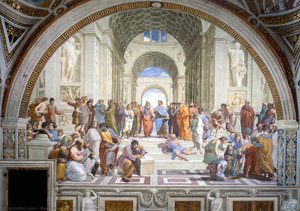
Anton Raphael Mengs zmarł w Rzymie w 1779 roku, pozostawiając po sobie dziedzictwo wykraczające daleko poza jego imponujący dorobek artystyczny. Był kimś więcej niż tylko malarzem; był kluczową postacią w procesie przejścia od jednej ery artystycznej do drugiej. Choć zakorzeniony w tradycji barokowej – co widoczne jest w dramatycznym operowaniu światłocieniem i mistrzostwie technik iluzjonistycznych – Mengs odważnie przyjął rodzące się zasady klasycyzmu, torując drogę artystom takim jak Jacques-Louis David czy Antonio Canova. Jego nacisk na ideały klasyczne, w połączeniu z techniczną wirtuozerią, uczynił go wiodącą siłą kształtującą sztukę XVIII wieku. *Szkoła Ateńska*, namalowana dla księcia Northumberland, stanowi świadectwo jego zdolności do syntezy historycznego precedensu ze współczesną wrażliwością artystyczną. Poza malarstwem i freskami, wpływ Mengsa rozciągał się na edukację; pełnił funkcję dyrektora Watykańskiej Szkoły Malarskiej, wychowując nowe pokolenie artystów przesiąkniętych zasadami klasycznymi. Był postacią złożoną – gorliwym katolikiem, który jednocześnie angażował się w myśl oświeceniową, artystą, który potrafił zrównoważyć tradycję z innowacją. Jego życie i twórczość stanowią fascynujące przecięcie umiejętności artystycznych, ciekawości intelektualnej i uwarunkowań historycznych, utwierdzając jego miejsce jako prawdziwego pioniera sztuki neoklasycznej. Jego wpływ rezonuje nawet dzisiaj, przypominając nam o trwałej mocy ideałów klasycznych w inspirowaniu i przekształcaniu ekspresji artystycznej.
Anton Raphael Mengs
1728 - 1779 , Czech Republic
Krótka nota
- Artistic Movement Or Style: Neoklasycyzm
- Artists Or Movements Influenced By This Artist:
- Jacques-Louis David
- Antonio Canova
- Artists Who Influenced This Artist:
- Raphael
- Correggio
- Date Of Birth: 12 marca 1728
- Date Of Death: 29 czerwca 1779
- Full Name: Anton Raphael Mengs
- Nationality: Niemiec
- Notable Artworks:
- Świętych Apostołów Ołtarz
- Parnassus
- Place Of Birth: Ústí nad Labem, Czech Republic
Powiązane artykuły

10 Arcydzieł Neoklasycyzmu: Sztuka, Historia i Inspiracje dla Twojego Domu
Poznaj 10 arcydzieł neoklasycyzmu! Odkryj historie Davida, Ingresa i Canovy. Inspiracje wnętrzarskie z malarstwem klasycznym i rzeźbą. Reprodukcje najwyższej jakości na OriginalUniqueArt.com – sztuka dla Twojego domu.

Odbitki Giclée: Jakość Archiwalna i Estetyczne Niuanse dla Wymagającego Kolekcjonera
Poznaj sekrety druku giclée – technologii zapewniającej najwyższą jakość reprodukcji sztuki i trwałość archiwalaną. Poradnik dla wymagających kolekcjonerów o wyborze papieru, tuszy i profilach kolorystycznych.

Rokokowy przepych: Bunt i rozkosz w sztuce XVIII wieku
Poznaj fascynujący świat rokoka – stylu pełnego wdzięku i przepychu! Odkryj historię, charakterystykę oraz wpływ tego nurtu na sztukę XVIII wieku. Ekspercka analiza i inspiracje dla miłośników historii sztuki.

Echoes of Time: Exploring the Enduring Appeal & Historical Context of Vintage Art Prints
Explore the captivating world of vintage art prints! Discover their history, collecting tips & enduring appeal. Expert insights on chromolithography and building a legacy collection with OriginalUniqueArt.

Top 10 arcydzieł epoki rokoka: artyści, historia i dekoracje wnętrz | OriginalUniqueArt.com
Odkryj 10 arcydzieł epoki rokoka! Poznaj Watteau, Boucher’a i Fragonarda – artystów, którzy zdefiniowali ten styl. Inspiracje wnętrzarskie, pastelowe kolory i reprodukcje obrazów najwyższej jakości na OriginalUniqueArt.com. Eksploruj kolekcję online!