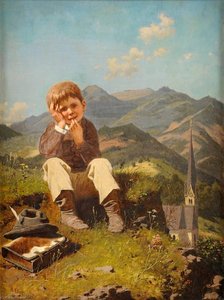
Little Favorite (Anton Windmaier)
Anton Windmaier (1840–1896) stworzył Little Favorite.

 Podgląd w skali 1:1

 Ręcznie malowany obraz olejny
 Wyślij jako kartkę
 Udostępnij
 Karta informacyjna


 Pobierz obraz
 Podobne obiekty
 RTG
 Pokaz slajdów
 Pytania i odpowiedzi

 Statystyki
Little Favorite w skrócie
- Tytuł
- Little Favorite
- Artysta
- Anton Windmaier (1840–1896)
- Miejsce urodzenia artysty
- Pfarrkirchen, Germany
Zdjęcia w wysokiej rozdzielczości dzieła Little Favorite
Domena publiczna: artysta zmarł w 1896.
Anton Windmaier, Little Favorite. Domena publiczna
Odpowiedzi na pytania dotyczące Little Favorite
Czy „Little Favorite” – Anton Windmaier znajduje się w domenie publicznej?
„Little Favorite” – Anton Windmaier znajduje się w domenie publicznej (należy do domeny publicznej – autorskie prawa majątkowe wygasły). Status ten określa zasady reprodukcji obrazu tego dzieła.
Kto jest autorem dzieła "Little Favorite"?
„Little Favorite” zostało stworzone przez Anton Windmaier. Informacje na tej stronie dotyczą oryginalnego dzieła autorstwa Anton Windmaier.
Co wyjaśnia sytuację prawną dotyczącą praw autorskich do „Little Favorite” – Anton Windmaier?
„Little Favorite” – Anton Windmaier jest należy do domeny publicznej – autorskie prawa majątkowe wygasły. Okres ochrony praw autorskich liczony jest od śmierci artysty, która nastąpiła w 1896.
O artyście: Anton Windmaier
1840–1896, Germany
Anton Windmaier
The Soul of a Nation: The Life and Art of Anton Ebert Anton Ebert stands as a pivotal figure in the development of Russian realist painting, a master whose meticulous observation and profound empathy captured the very essence of everyday life in 19th-century Russia. Born in Berlin to Polish heritage, Ebert’s artistic journey was one of remarkable migration, leading him from the bustling, structured streets of Europe to the heartland of Russia. It was here that he found his true calling, spending much of his career documenting the lives of peasants, merchants, and members of the aristocracy with a sensitivity that transcended mere portraiture. His work offers a poignant window into a rapidly changing nation, reflecting both its enduring, ancient traditions and the encroaching, transformative forces of modernity.
 Girl in Folk Costume1879
 Autumn Near Munich1874
 The Little Polka Dancer1879
 The Little Truant1885