

 Podgląd w skali
 Wyślij jako kartkę
 Udostępnij
 Szczegóły dzieła

 Pobierz
 Podobne obiekty
 RTG
RTG Pokaz slajdów
Healing the Man Born Blind
 Oil On Canvas
- WallArt
- Baroque
 1606
1606 15.0 x 36.0 cm
 Muzeum Narodowe Sztuki Katalonii
 Rozwiń treść
Giclée / Wydruk artystyczny
Druk giclée lub płótno o jakości muzealnej, szybka realizacja i szeroki wybór opcji wykończenia. ( Zamów ręcznie malowaną reprodukcję Kup obraz wysokiej rozdzielczości)




P118B $10

P118H $10

P118W $10

P438Z $10

P508JH $12

P508YH $12

P805H $10

P805Z $10

P919BZ $10

P919G $10

P919XJ $10

P959ZH $10

P968JZ $12

W106C $8

W218G $10

W218JH $8

W218Y $10

W307PJ $10

W316G $10

W316PJ $8

W316Y $10

W398PJ $8

W4111J $10

W500HY $15

W500JH $15

W692G $12

W849H $8

W940BG $15

W953PJ $8




Wybierz spośród naszych standardowych rozmiarów, które zachowują oryginalne proporcje dzieła sztuki.

Możesz wprowadzić własne wymiary, aby dopasować dzieło do konkretnej ramy lub przestrzeni. Jeśli wybrany rozmiar nie będzie odpowiadał proporcjom oryginalnego obrazu, przytniecie dzieło lub rozszerzymy obraz za pomocą odbicia lustrzanego lub jednolitego wypełnienia krawędzi. Przed rozpoczęciem produkcji prześlemy cyfrową wizualizację do Twojej akceptacji.
Prosimy pamiętać, że podgląd na ekranie nie odzwierciedla faktycznego przycinania ani rozszerzania. Tylko wizualizacja dokładnie pokaże końcową kompozycję.
Mimo dostępności niestandardowych rozmiarów, zalecamy wybór wymiaru z listy zdefiniowanej, aby zachować oryginalne proporcje.
Dostawa na cały świat () w ciągu 2 tygodni zamiast standardowych 4/5 tygodni. (21 Sierpień)

Bezpłatna ekspresowa wysyłka na cały świat

Wysokiej jakości płótno lniane

Pełne ubezpieczenie przesyłki

Gwarancja zwrotu należności celnych i podatków importowych

Gwarancja wiernego odwzorowania kolorów

Polityka 60-dniowego zwrotu (tylko w przypadku wad)

Gwarancja 100% zwrotu kosztów

Zniżka przy zamówieniu wielu produktów
 Opcja ze szkłem jest dostępna wyłącznie w rozmiarach poniżej 110 cm

Healing the Man Born Blind
Giclée / Wydruk artystyczny
Wymiary reprodukcji
-


Cena całkowita
$ 80
Opis kolekcjonerski
Annibale Carracci's 'Healing the Man Born Blind': A Testament to Faith and Renaissance Naturalism
This exquisite hand-painted reproduction captures Annibale Carracci’s seminal work, “Healing the Man Born Blind,” a pivotal piece from 1606 that embodies the artist’s revolutionary approach to religious painting. Measuring 15 x 36 cm, this intimate scale allows for a profound engagement with the scene's emotional core – a demonstration of divine grace and healing within a meticulously rendered Renaissance setting. Carracci, born in Bologna in 1560, was a key figure in the artistic revival that swept through Italy following the High Renaissance, seeking to recapture its ideals of clarity, naturalism, and humanist values.
- Subject Matter: The painting depicts a scene from the Gospel of John, specifically the miraculous healing of a man born blind. This event is not merely a physical restoration but symbolizes spiritual enlightenment and the triumph of faith over darkness.
- Style & Technique: Carracci’s style is characterized by its clarity, precision, and masterful use of perspective. He employed a technique known as *disegno*, emphasizing careful drawing and compositional planning – a direct response to the perceived looseness of Mannerism. The painting showcases his ability to create realistic figures with detailed drapery and expressive gestures.
- Historical Context: Created in 1606, this work reflects the artistic climate of Bologna during Carracci’s time at the *Accademia degli Incamminati*. This academy was a breeding ground for new ideas, challenging the prevailing stylistic trends and advocating for a return to classical principles. The inclusion of birds adds an element of symbolism often found in Renaissance art – representing hope, spiritual ascension, or divine messengers.
Symbolism and Religious Narrative
The central figures—the priest or monk administering the healing and the blind man himself—are rendered with a remarkable degree of realism. The act of laying hands upon the man’s head is not simply a physical gesture; it represents the transference of divine power, a core tenet of Christian belief. Carracci's meticulous attention to detail – from the folds of the robe to the texture of the skin – elevates the scene beyond a mere depiction of an event and transforms it into a powerful meditation on faith and redemption. The presence of the two birds, often interpreted as symbols of hope or divine guidance, further enriches the narrative’s spiritual dimension.
- The Blind Man: Represents humanity's fallen state, obscured by sin and ignorance. His kneeling posture signifies humility and receptiveness to divine grace.
- The Healer: Symbolizes Christ himself, the source of healing and salvation. The priest’s role underscores the importance of religious authority in facilitating this miracle.
- Birds: Often associated with spiritual ascension or messengers from God, their inclusion reinforces the painting's themes of hope and divine intervention.
Emotional Impact and Artistic Legacy
"Healing the Man Born Blind" is more than just a religious depiction; it’s an exploration of human vulnerability and the transformative power of faith. Carracci’s masterful use of light and shadow, combined with his precise rendering of anatomy and emotion, creates a deeply moving experience for the viewer. This work established Carracci as one of the leading artists of the Bolognese school and profoundly influenced subsequent generations of painters. Its legacy continues to resonate today, offering a timeless reminder of humanity’s enduring quest for meaning and spiritual fulfillment.
This hand-painted reproduction offers an unparalleled opportunity to own a piece of art history – a testament to Annibale Carracci's genius and the enduring power of Renaissance artistic ideals. Perfect for adorning sacred spaces, enhancing contemplative environments, or adding a touch of classical elegance to any interior design scheme.
O artyście
Early Life and the Bolognese Roots
Annibale Carracci, born on November 3, 1560, in Bologna, was a product of a family deeply intertwined with the artistic traditions of his city. His early life wasn’t marked by privilege or formal training in the conventional sense; rather, it unfolded within the nurturing environment of his father’s workshop—a modest tailor’s shop—where he absorbed the values and skills associated with craftsmanship. This grounding in practical artistry laid a crucial foundation for his later development as a painter, instilling in him an appreciation for meticulous detail, skillful execution, and a connection to the tangible world.
Bologna at the close of the 16th century was a city brimming with intellectual ferment—a vibrant crossroads where humanist ideals mingled with burgeoning artistic innovation. Yet, it also possessed a certain provincialism, a sense that it lagged behind the dominant currents flowing from Rome and Venice, centers of unparalleled artistic power. This awareness fueled within Annibale and his brother Agostino, along with their cousin Ludovico Carracci, a desire to forge their own path—to create an art that would not merely imitate the masters but also revitalize Italian painting by drawing upon the legacy of the High Renaissance while simultaneously embracing a more naturalistic approach.
The Carracci family’s artistic lineage extended beyond Annibale himself. His grandfather, Francesco Carracci, had been a painter for the Gonzaga court in Mantua, and his father, Antonio, continued this tradition, working as a tailor before transitioning to painting. This familial connection provided Annibale with an early exposure to the world of art, fostering within him a deep respect for artistic skill and a sense of belonging to a creative lineage.
The Accademia degli Incamminati: A Crucible of Innovation
In 1582, this ambition materialized in the establishment of the *Accademia degli Incamminati*, initially known as the Academy of the Desiderosi. This wasn’t simply a studio; it was a revolutionary institution—a crucible for artistic innovation, a space dedicated to rigorous life drawing, spirited debate, and a collective pursuit of artistic excellence. The academy's name itself—the “Progressives”—signified their intent: to move beyond the stylistic complexities of Mannerism and chart a new course toward a more grounded, emotionally resonant form of expression.
The Incamminati became a model for art academies across Europe, emphasizing observation from life as the cornerstone of artistic training. They rejected the prevailing reliance on memory drawings and idealized forms, advocating instead for direct engagement with the human body—a radical shift that would profoundly influence the course of Italian painting. The academy’s members—Annibale, Agostino, and Ludovico—collaborated closely, sharing ideas, critiquing each other's work, and pushing one another to strive for greater technical mastery and artistic vision.
The *Accademia degli Incamminati* wasn’t merely a place of instruction; it was also a social hub where artists engaged in lively discussions about art history, theory, and technique. They studied the works of the Old Masters—Raphael, Andrea del Sarto, Michelangelo—analyzing their compositions, color palettes, and methods of rendering form. This intellectual engagement informed their own artistic practice, allowing them to synthesize diverse influences and develop a unique style that would distinguish them from their contemporaries.
A Synthesis of Styles and Influences
Carracci’s artistic vision wasn't born in a vacuum; it was meticulously crafted through a deep engagement with the legacies of past masters. He possessed an extraordinary ability to synthesize diverse influences, creating a style that felt both deeply rooted in tradition and strikingly original. He admired the clarity of line and compositional balance found in the works of Raphael and Andrea del Sarto, seeking to emulate their grace and harmony. Yet, he also recognized the power of color and atmospheric effects championed by Venetian painters like Titian, infusing his own work with a vibrant luminosity and emotional depth.
The influence of Correggio was particularly profound, evident in Carracci’s dynamic compositions and illusionistic techniques—especially those showcased in his frescoes. He wasn't simply copying these masters; he was absorbing their strengths and forging them into something new. This eclectic blend became the hallmark of the Bolognese School, a significant branch of Baroque art that emphasized both classical ideals and naturalistic observation. Carracci’s genius lay in his ability to reconcile seemingly disparate elements, creating a harmonious whole that resonated with both intellectual rigor and emotional power.
The Roman Triumph: Palazzo Farnese and Beyond
The invitation to decorate the Palazzo Farnese in Rome marked a pivotal moment in Annibale Carracci’s career. This monumental commission—a vast fresco cycle depicting scenes from mythology—provided him with an unparalleled opportunity to showcase his artistic prowess and establish his reputation on a grand scale. The *Triumph of Bacchus and Ariadne*, arguably his masterpiece, is a breathtaking display of illusionistic technique, dynamic composition, and vibrant color. The frescoes seem to dissolve the boundaries between painting and reality, drawing the viewer into a world of mythic grandeur.
Alongside the *Triumph*, Carracci also undertook *The Loves of the Gods* at Palazzo Farnese, further exploring themes of mythology and love with a blend of classical idealism and keen observation. These works weren’t merely decorative; they were statements about the power of art to elevate the human spirit and celebrate the beauty of the natural world. His success in Rome solidified his position as one of the leading artists of his time, attracting a stream of commissions and influencing generations of painters.
Legacy and Historical Significance
Annibale Carracci’s impact on art history is immeasurable. He played a crucial role in bridging the gap between the High Renaissance and the Baroque period, moving away from the stylized complexities of Mannerism toward a more dynamic, emotionally charged aesthetic. His emphasis on naturalism—on depicting figures with anatomical accuracy and psychological depth—paved the way for artists like Caravaggio, who would further revolutionize Italian painting with their dramatic use of light and shadow.
The Accademia degli Incamminati, founded by Carracci and his associates, served as a model for art academies across Europe, promoting artistic training based on observation and classical principles. His frescoes at Palazzo Farnese remain iconic examples of Baroque illusionism and artistic grandeur, continuing to inspire awe and admiration centuries after their creation. The collective legacy of the Carracci family—Annibale, Agostino, and Ludovico—is one of profound innovation and enduring influence, establishing Bologna as a major center for artistic creativity.
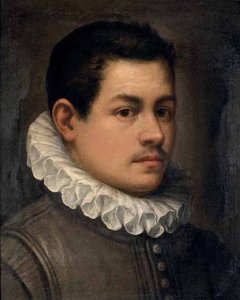
Annibale Carracci
1560 - 1609 , Włochy
Krótka nota
- Artistic Movement Or Style: Barok Boloński
- Artists Or Movements Influenced By This Artist:
- Caravaggio
- Mannerismo
- Artists Who Influenced This Artist:
- Rafaello
- Andrea del Sarto
- Tycjan
- Date Of Birth: 3 listopada 1560
- Date Of Death: 15 lipca 1609
- Full Name: Annibale Carracci
- Nationality: Włoski
- Notable Artworks:
- Triumph Bacchus
- Loves Gods
- Portret Gabrieli
- Place Of Birth: Bolonia, Italia
Powiązane artykuły
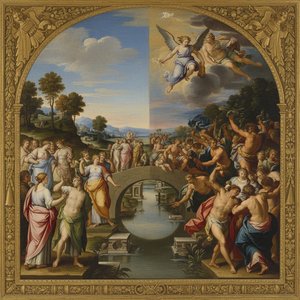
Annibale Carracci: Bridging Renaissance Ideals & Baroque Innovation
Explore the life & art of Annibale Carracci, a pivotal figure bridging Renaissance ideals with Baroque innovation. Discover his masterpieces and lasting influence on Italian painting.

Katsushika Hokusai: 25 Arcydzieł Sztuki Japońskiej dla Kolekcjonerów i Miłośników Dekoracji
Odkryj 25 arcydzieł Katsushika Hokusai, mistrza ukiyo-e! Poznaj historię Wielkiej Fali i innych ikonicznych drzeworytów. Inspiracje wnętrzarskie i reprodukcje obrazów najwyższej jakości na OriginalUniqueArt.com – sztuka japońska dla Twojego domu.

El Greco: 25 Arcydzieł Genialnego Malarza – Kolekcja dla Koneserów Sztuki i Wystroju Domu
Odkryj 25 arcydzieł El Greco – mistrza renesansu i manieryzmu. Poznaj historie, techniki i duchowość w jego obrazach. Reprodukcje najwyższej jakości na OriginalUniqueArt.com. Inspiracje do wnętrz i kolekcja sztuki online!
Leonardo da Vinci: 25 Arcydzieł Genialnego Mistrza | OriginalUniqueArt
Odkryj 25 arcydzieł Leonardo da Vinci! Poznaj historię Mona Lisy, Ostatniej Wieczerzy i innych renesansowych perełek. Reprodukcje obrazów najwyższej jakości – inspiracje do wnętrz na OriginalUniqueArt.com.
10 Legendarnych Rycin, Które Zrewolucjonizowały Sztukę | OriginalUniqueArt
Odkryj 10 legendarnych rycin Rembrandta, Dürera i Goi! Poznaj historię mistrzów grafiki, ich techniki i wpływ na sztukę. Reprodukcje najwyższej jakości – idealne do Twojego wnętrza. OriginalUniqueArt.com



