() ·

A painting made for you, by hand

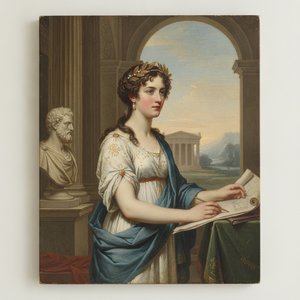
Nymph

Ręcznie malowana reprodukcja olejowa

Ręcznie malowany obraz olejny na płótnie, wykonany na zamówienie przez naszych artystów w wybranym przez Ciebie wymiarze i oprawie. ( Przełącz na wydania drukowane Przejdź do wersji cyfrowej)

Opis obiektu

Anne-Louis Girodet’s "Nymph" (1800) – a stunning neoclassical oil painting of a nude figure in a dramatic forest scene. Romantic, melancholic & richly detailed.

Biografia artysty

Anne-Louis Girodet de Roussy-Trioson – malarz łączący klasycizm i romantyzm, znany z dramatycznych portretów, ilustracji literackich i subtelnych erotycznych motywów. Jego dzieła są świadectwem przełomu w sztuce francuskiej!

from ·

Chapter 1

How large should it be?

Slide to change the size; the picture on the left shows the frame at its real width. The proportions of the original are kept.

Standardowy format
personalizowane
CM
INCH

Wybierz spośród naszych standardowych rozmiarów, które zachowują oryginalne proporcje dzieła sztuki.

szerokość
wysokość

Wpisz wymaganą szerokość i wysokość, aby obraz pasował do Twojej ramy lub ściany. Ponieważ jest to dzieło malowane ręcznie, w przypadku rozmiaru o innych proporcjach artysta może domalować nieco więcej wokół obrazu lub przyciąć jego fragmenty — wybór należy do Ciebie. Przed rozpoczęciem pracy prześlemy Ci cyfrową wizualizację do zatwierdzenia. Obraz widoczny na tej stronie nie przedstawia rzeczywistego efektu — jedynie wizualizacja oddaje realny rezultat.

Chapter 2

How should it arrive?

Choose the edges of the stretched canvas

Choose your frame

Corner sample of the WhiteWrap canvas edge finish, stretched on lite drewno bars
White zł1
Corner sample of the BlurSideWrap canvas edge finish, stretched on lite drewno bars
Blurside zł1
Corner sample of the ExtendedWrap canvas edge finish, stretched on lite drewno bars
Extended zł1
Corner sample of the P118B picture frame: polistyren formowany, 5 cm wide and 3 cm thick
P118B zł10
Corner sample of the P118H picture frame: polistyren formowany, 5 cm wide and 3 cm thick
P118H zł10
Corner sample of the P118W picture frame: polistyren formowany, 5 cm wide and 3 cm thick
P118W zł10
Corner sample of the P438Z picture frame: polistyren formowany, 5.5 cm wide and 3.5 cm thick
P438Z zł10
Corner sample of the P508JH picture frame: polistyren formowany, 7 cm wide and 3.5 cm thick
P508JH zł12
Corner sample of the P508YH picture frame: polistyren formowany, 7 cm wide and 3.5 cm thick
P508YH zł12
Corner sample of the P805H picture frame: polistyren formowany, 5 cm wide and 3.5 cm thick
P805H zł10
Corner sample of the P805Z picture frame: polistyren formowany, 5 cm wide and 3.5 cm thick
P805Z zł10
Corner sample of the P919BZ picture frame: polistyren formowany, 7 cm wide and 3.5 cm thick
P919BZ zł10
Corner sample of the P919G picture frame: polistyren formowany, 7 cm wide and 3.5 cm thick
P919G zł10
Corner sample of the P919XJ picture frame: polistyren formowany, 7 cm wide and 3.5 cm thick
P919XJ zł10
Corner sample of the P959ZH picture frame: polistyren formowany, 5 cm wide and 3 cm thick
P959ZH zł10
Corner sample of the P968JZ picture frame: polistyren formowany, 6 cm wide and 4 cm thick
P968JZ zł12
Corner sample of the W106C picture frame: lite drewno, 5 cm wide and 3 cm thick
W106C zł8
Corner sample of the W218G picture frame: lite drewno, 5 cm wide and 3 cm thick
W218G zł10
Corner sample of the W218JH picture frame: lite drewno, 5 cm wide and 3 cm thick
W218JH zł8
Corner sample of the W218Y picture frame: lite drewno, 5 cm wide and 3 cm thick
W218Y zł10
Corner sample of the W307PJ picture frame: lite drewno, 6 cm wide and 3 cm thick
W307PJ zł10
Corner sample of the W316G picture frame: lite drewno, 6 cm wide and 3 cm thick
W316G zł10
Corner sample of the W316PJ picture frame: lite drewno, 6 cm wide and 3 cm thick
W316PJ zł8
Corner sample of the W316Y picture frame: lite drewno, 6 cm wide and 3 cm thick
W316Y zł10
Corner sample of the W398PJ picture frame: lite drewno, 5 cm wide and 3 cm thick
W398PJ zł8
Corner sample of the W4111J picture frame: lite drewno, 6.5 cm wide and 3.5 cm thick
W4111J zł10
Corner sample of the W500HY picture frame: lite drewno, 7 cm wide and 5 cm thick
W500HY zł15
Corner sample of the W500JH picture frame: lite drewno, 7 cm wide and 5 cm thick
W500JH zł15
Corner sample of the W692G picture frame: lite drewno, 8 cm wide and 4 cm thick
W692G zł12
Corner sample of the W849H picture frame: lite drewno, 5 cm wide and 3 cm thick
W849H zł8
Corner sample of the W940BG picture frame: lite drewno, 7.5 cm wide and 4.5 cm thick
W940BG zł15
Corner sample of the W953PJ picture frame: lite drewno, 6 cm wide and 3.5 cm thick
W953PJ zł8
Corner sample of the H24-GOLD picture frame: rzeźbione drewno pokryte gipsem, 10 cm wide and 6 cm thick
H24-GOLD zł30
Corner sample of the H24-SILVER picture frame: rzeźbione drewno pokryte gipsem, 10 cm wide and 6 cm thick
H24-SILVER zł30
Corner sample of the H36-GOLD picture frame: rzeźbione drewno pokryte gipsem, 15 cm wide and 6.5 cm thick
H36-GOLD zł45
Corner sample of the H36-SILVER picture frame: rzeźbione drewno pokryte gipsem, 15 cm wide and 6.5 cm thick
H36-SILVER zł45

Moulding: . Overall size with the frame: .

Chapter 3

Who paints it, and should anything change?

Examples of what can be changed: Replace face with customer photo; Add pet (e.g., replace cat with dog); Include hidden message in background; Change background landscape or elements.
After order, OriginalUniqueArt.com team will email client for instructions and provide a mockup preview

Dostawa na całym świecie () w ciągu 3–4 tygodni zamiast standardowych 5 tygodni. (2 Listopad). Bez kompromisów w kwestii jakości.

Chapter 4

The finishing touches

A nameplate, as in a museum?

Szczegóły grawerowanej brązowej tabliczki

This elegant plaque features the artist's name and the title of the artwork, finely engraved for a timeless presentation.

It is made from bronze with a refined, elegant finish. The text is precisely laser-engraved for a sharp and permanent result. Measuring 9x2 cm, the plaque is compact yet easy to read. It's built to be durable and scratch-resistant, offering a professional, museum-quality look. Mounting is simple thanks to the included adhesive backing.

Szczegóły przezroczystej tabliczki akrylowej

The plaque includes essential engraved details such as the artist's name, the title of the artwork, the date it was created, the type of media used-like oil on canvas or watercolor-a brief description of the piece, and a QR code that links to the complete artwork information.

It is crafted from clear acrylic, offering a sleek, modern appearance. The text is UV-engraved in black to ensure strong visual contrast. With a size of 10x15 cm, it ensures optimal readability. It comes equipped with two metal hooks for secure wall mounting. The plaque is designed to be weather-resistant, making it suitable for various environments, and it includes interactive features that work seamlessly with smartphone scanning.

Szczegóły czarnej tabliczki akrylowej

This elegant plaque includes engraved information such as the artist's name, the title of the artwork, the date it was created, the type of media used (like oil on canvas or watercolor), a short description of the artwork, and a QR code for quick access to more information.

The plaque itself is made from refined black acrylic with a premium finish. The text is laser-engraved in white for high contrast and readability. Its size is 10x15 cm, designed to be easy to read. It comes with two metal hooks for professional mounting. The design is sleek and fits any interior style. It is also weather-resistant and durable, with built-in digital integration for mobile compatibility.

A protective varnish?

When do you need it?

Chapter 5

Your painting, as you ordered it

Nymph

Technika reprodukcji

Wymiary reprodukcji

-

Wybitny mistrz artystyczny

Większa szczegółowość, finezja i dodatkowy czas na realizację

-

Opcje oprawy reprodukcji

-

-

W przypadku dzieł sztuki lub reprodukcji, których którykolwiek z boków przekracza 105 cm (około 41 cali), rama zostanie wysłana w formie zestawu do samodzielnego montażu. Metoda ta zapewnia bezpieczną dostawę i zapobiega uszkodzeniom podczas transportu.

Wymagany profesjonalny montaż – nie jest to produkt typu DIY.
Zestaw musi zostać złożony, a płótno naciągnięte przez doświadczonego profesjonalnego ramiarza, przy użyciu kleju do drewna (brak w zestawie), kleszczy do naciągania płótna oraz ścisków, które utrzymają krosna w równej pozycji podczas schnięcia kleju. Nieprawidłowy montaż lub nierównomierne napięcie płótna może trwale uszkodzić dzieło sztuki i nie podlega naszej gwarancji.

  • W zestawie znajdują się wszystkie listwy z litego drewna, precyzyjnie docięte do wymiarów.

  • Montaż odbywa się przy użyciu dołączonych wkrętów oraz kleju do drewna do łączenia narożników, którego zestaw nie zawiera i który musi zostać dostarczony przez ramiarza.

  • Wymagane są profesjonalne narzędzia, których nie ma w zestawie: kleszcze do naciągania płótna (napinacz) oraz zaciski, które pozwolą utrzymać listwy w równej pozycji podczas schnięcia kleju.

Ważne:
Do połączenia narożników niezbędny jest klej do drewna, listwy należy unieruchomić za pomocą ścisków do momentu całkowitego wyschnięcia kleju, a naciągnięcie płótna na złożoną ramę wymaga użycia kleszczy do naciągania płótna. Żaden z tych elementów nie jest dołączony do zestawu. Przed zamówieniem tego rozmiaru zalecamy konsultację z doświadczonym ramiarzem.

Etykieta obiektu

-

-

Lakier ochronny

Lakier z połyskiem (pogłębia kolory, chroni przed światłem i wilgocią)

-

Personalizacja dzieła

Przykłady możliwości personalizacji: zastąp twarz zdjęciem klienta; dodaj zwierzę domowe (np. zamień kota na psa); umieść ukrytą wiadomość w tle; zmień krajobraz lub elementy tła.

-

Ekspresowa

Dostawa na cały świat () w ciągu 3–4 tygodni zamiast standardowych 5 tygodni. (2 Listopad). Bez kompromisów w kwestii jakości.

-

Przesyłka ekspresowa

Dostawa na cały świat () w ciągu 5 tygodni. (9 Listopad).

W cenie

Cena całkowita

zł 1168

Suma całkowita zł 1168

Opcja ze szkłem jest dostępna wyłącznie w rozmiarach poniżej 110 cm

Included with every order

  • Bezpłatna ekspresowa wysyłka na cały świat
  • Wysokiej jakości płótno lniane
  • Pełne ubezpieczenie przesyłki
  • Gwarancja zwrotu należności celnych i podatków importowych
  • Gwarancja wiernego odwzorowania kolorów
  • 100-dniowa polityka zwrotów (tylko w przypadku wad)
  • Gwarancja 100% zwrotu pieniędzy
  • Zniżka przy zakupie wielu sztuk

A Vision of Romantic Mystery: Anne-Louis Girodet’s “Nymph”

Anne-Louis Girodet de Roussy-Trioson's "Nymph," painted in 1800, isn’t merely a depiction of a beautiful woman; it’s a carefully constructed tableau brimming with the anxieties and aspirations of early Romanticism. Born into a world shaped by loss – orphaned at a young age and raised under the watchful eye of his physician guardian – Girodet's artistic journey was marked by a profound sensitivity to emotion, a trait he would later fuse with the rigorous training instilled in him by Jacques-Louis David. This painting, housed within the Louvre’s collection, stands as a pivotal bridge between the formality of Neoclassicism and the burgeoning emotionalism that defined the Romantic era, offering a glimpse into a world where nature, beauty, and melancholy intertwine.

The subject herself is presented with an arresting blend of vulnerability and power. A nude female figure, identified as a Nymph – a creature deeply rooted in Greek mythology, associated with springs, rivers, and the wildness of nature – occupies the central space of the composition. She’s positioned slightly off-center, lending a sense of quiet contemplation to her posture. Her gaze is directed downwards, almost lost in the shadowed depths of the forest, inviting the viewer into an intimate, introspective experience. The lighting, dramatically employed by Girodet, sculpts her form with stark contrasts – pools of light illuminating her skin while leaving much of the background shrouded in darkness. This masterful use of chiaroscuro not only emphasizes the figure’s physicality but also contributes to the painting's overall mood of mystery and longing.

The Language of the Forest: Technique and Composition

Girodet’s technical skill is immediately apparent in the meticulous detail with which he renders both the human form and the surrounding landscape. The oil paint technique, executed with a rich layering of glazes and scumbling, creates an astonishingly tactile surface – one that invites close inspection. The brushstrokes themselves are visible, contributing to a sense of volume and realism, yet never sacrificing the painting’s ethereal quality. Notice particularly the careful rendering of the drapery; it flows organically around the figure, suggesting both movement and restraint. The composition is carefully balanced, utilizing atmospheric perspective – the gradual fading of detail in the distance – to create an illusion of depth that pulls the viewer into the heart of the forest.

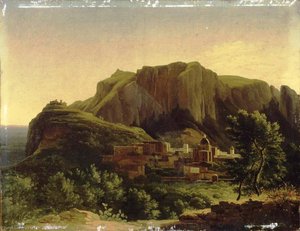
The background isn’t simply a backdrop; it's an active participant in the narrative. Dense foliage, rendered with remarkable precision, dominates the scene, creating a sense of enclosure and isolation. The trees themselves seem to lean inwards, almost as if guarding the Nymph within her secluded realm. This deliberate use of landscape reinforces the painting’s themes of nature, solitude, and perhaps even vulnerability – suggesting that she is both embraced by and threatened by the wildness surrounding her.

Symbolism and Romantic Ideals

“Nymph” resonates deeply with the core tenets of Romanticism. The nude figure itself represents a rejection of the rigid moral constraints of Neoclassicism, embracing instead an idealized vision of beauty and sensuality. The forest, often associated with the subconscious and the untamed spirit, symbolizes freedom, mystery, and the power of nature. The Nymph’s downward gaze speaks to introspection and perhaps even melancholy – a common theme in Romantic art, reflecting a heightened awareness of human emotion and the complexities of the inner world.

Furthermore, the painting can be interpreted as an exploration of the relationship between humanity and nature. The Nymph is not simply a beautiful woman; she’s a manifestation of the natural world itself – a symbol of its beauty, its power, and its inherent mystery. Girodet's work reflects a shift away from the rationalism of the Enlightenment towards a more intuitive and emotional understanding of the human experience.

A Timeless Masterpiece: Reproduction and Legacy

“Nymph” remains a captivating artwork, offering viewers a glimpse into the artistic sensibilities of early 19th-century France. Its evocative imagery, masterful technique, and profound symbolism continue to resonate today. OriginalUniqueArt offers high-quality reproductions that faithfully capture the painting’s rich textures, dramatic lighting, and emotional depth, allowing you to bring this timeless masterpiece into your home or office. Whether you are an art collector, a design enthusiast, or simply someone seeking inspiration, “Nymph” is a testament to the enduring power of Romantic art.

Pytania i odpowiedzi

Do jakiego etapu kariery Anne-Louis Girodet odpowiada data powstania dzieła „Nymph” (1800)?

Biorąc pod uwagę datę powstania (1800), dzieło „Nymph” wpisuje się w Mature Period twórczości Anne-Louis Girodet.

Czy „Nymph” – Anne-Louis Girodet to jasne czy ciemne dzieło?

Postrzegana jasność dzieła „Nymph” – Anne-Louis Girodet wynosi deep_shadow. Można ją dopasować do oświetlenia w docelowym pomieszczeniu.

Co przedstawia „Nymph” – Anne-Louis Girodet i jaki ma nastrój?

„Nymph” – Anne-Louis Girodet przedstawia nude figure, forest scene, romanticism, classical beauty, melancholy mood, dark atmosphere, female nymph, 19th century art, wprowadzając Romantic nastrój. Tematyka i atmosfera wspólnie definiują to dzieło.

More about this painting

Podgląd w skali 1:1 Podgląd AR Przełącz na wydania drukowane Przejdź do wersji cyfrowej Wyślij jako kartkę
Szczegóły dzieła Przewodnik Dodaj do ulubionych Pobierz obraz Podobne obiekty RTG Pokaz slajdów Q&A Statystyki

In numbers

  • 1800the year it was painted
  • 29frames to choose from
  • standard sizes, in its own proportions
  • 5weeks to paint and deliver it
Anne-Louis Girodet

Anne-Louis Girodet

1767 - 1824, Francja

Quick facts about Anne-Louis Girodet

  • Artistic Movement Or Style: Neoklasycyzm i Romantyzm
  • Artists Or Movements Influenced By This Artist: ['Wczesny Romantyzm']
  • Artists Who Influenced This Artist: ['Jacques-Louis David']
  • Date Of Birth: 1767
  • Date Of Death: 1824
  • Full Name: Anne-Louis Girodet de Roussy-Trioson
  • Nationality: Francuz
  • Notable Artworks:
    • Scena z Delugu
    • Atala w grobie
    • Pygmalion i Galatea
  • Place Of Birth: Montargis, Francja

Biografia artysty

A Bridge Between Worlds: The Life and Art of Anne-Louis Girodet

Anne-Louis Girodet de Roussy-Trioson, a name perhaps less instantly recognizable than his teacher Jacques-Louis David, nevertheless occupies a pivotal position in the transition from Neoclassicism to Romanticism. Born in Montargis, France, in 1767, Girodet’s artistic journey was one of both rigorous academic training and burgeoning emotional expression—a delicate balance that defined his unique style and secured his place as a significant figure in French art. His early life was marked by loss; the untimely deaths of both parents left him under the care of Benoît-François Trioson, a physician who would later become his adoptive father and whose influence remained constant throughout Girodet’s career. This familial connection ultimately led to the artist adopting “Trioson” as part of his name in 1806, signifying a deep personal bond alongside his artistic identity. Initially drawn to architecture, Girodet soon found himself captivated by painting, entering David's studio and immersing himself in the prevailing Neoclassical aesthetic—an emphasis on clarity, precision, and moral gravitas. This foundation proved crucial, instilling within him a mastery of form and composition that would remain evident even as his work began to diverge from strict classical principles. His triumph at the Prix de Rome with a depiction of the story of Joseph and his brethren at the young age of 22 signaled a promising future, and his subsequent years in Italy (1789-1793) were formative, resulting in acclaimed works like *Hippocrate refusant les presents d'Artaxerxes* and *Endymion-dormant*.

From Neoclassical Rigor to Romantic Sensibility

Girodet’s artistic evolution wasn’t a sudden break from the past, but rather a gradual infusion of new sensibilities into the established framework of Neoclassicism. While he retained the clarity and precision characteristic of David's school, his work increasingly embraced emotional intensity and explored themes previously considered unconventional. This shift is particularly evident in pieces like *Scène de déluge* (The Deluge), a monumental canvas showcasing dramatic action and raw emotion, and *Atala au tombeau*, a poignant portrayal of tragic beauty that resonated deeply with the growing Romantic fascination with pathos and exoticism. However, it was perhaps *Pygmalion et Galatée*, an ambitious project consuming eight years of his life, that most fully exemplifies Girodet’s artistic vision. Now housed in the Louvre, this work demonstrates not only meticulous attention to detail but also a willingness to delve into mythological themes with a heightened sense of psychological complexity and sensuality. His talent extended beyond mythological and literary subjects; he was sought after for portraits, including those of members of the Bonaparte family, where he skillfully balanced Neoclassical formality with an attempt to capture individual character. *La révolte du Caire*, depicting a historical event, further showcased his ability to convey dynamic action and emotional depth.

A Pioneer of Erotic Undertones and Literary Inspirations

What truly set Girodet apart from many of his contemporaries was his willingness to incorporate elements of eroticism into his paintings—a daring move that challenged artistic norms and paved the way for later artists to explore similar themes with greater freedom. This wasn’t mere sensationalism; rather, it reflected a broader Romantic interest in passion, desire, and the complexities of human experience. His fascination with literature also profoundly influenced his art. He didn't simply illustrate stories; he sought to capture their emotional core, often choosing subjects that allowed for dramatic expression and psychological exploration. The influence of writers like Chateaubriand is particularly noticeable, as seen in portraits and scenes inspired by the author’s works. *Ossian and the French Generals*, a unique composition blending imagery drawn from Macpherson’s Ossianic poems with portraits of fallen heroes, stands as a testament to this fusion of literature and art—a work that captured the spirit of its time. This willingness to explore unconventional subjects and emotional depths distinguished him from artists solely focused on historical or mythological narratives, adding another layer of intellectual depth to his creations.

The Influence of Benoît-François Trioson and Personal Transformation

The profound impact of his adoptive father, Benoît-François Trioson, extended far beyond a simple paternal relationship. Trioson’s medical expertise and philosophical insights shaped Girodet's artistic approach, encouraging him to consider the human condition with both scientific rigor and emotional sensitivity. The adoption in 1806, culminating in the assumption of the name “Girodet-Trioson,” symbolized this enduring bond—a recognition of Trioson’s crucial role as a mentor and guide throughout Girodet's career. Following Trioson’s death, Girodet inherited a considerable fortune in 1815, which he largely withdrew from artistic pursuits, dedicating himself to writing poetry and philosophical essays – works that were unfortunately deemed unreadable by critics. This period of seclusion reflects a complex interplay between his artistic ambitions and the influence of his family legacy.

Major Achievements and Legacy

Despite sometimes being overshadowed by more politically prominent contemporaries like David, Anne-Louis Girodet left an undeniable mark on the art world. His contributions to the early Romantic movement are significant; he helped bridge the gap between the rational order of Neoclassicism and the emotional intensity of Romanticism. He was a respected member of both the Académie de peinture and the Institut de France, receiving honors including the Légion d'honneur—acknowledgements of his artistic merit and societal standing. His works continue to be admired for their technical brilliance, dramatic power, and psychological insight. They can be found in prestigious museums such as the Musée Girodet in Montargis, dedicated to his life and work, and the Louvre in Paris, ensuring that his legacy endures for generations to come. Girodet’s willingness to challenge conventions and explore new artistic territories makes him a compelling figure—a true pioneer who helped shape the course of French painting.

Najważniejsze informacje

  • Artist: Anne-Louis Girodet
  • Subject or theme: Nude female figure
  • Medium: Oil on canvas
  • Notable elements: Dramatic lighting
  • Movement: Romanticism
  • Year: 1800

Quiz o sztuce

Do każdego pytania dotyczy tylko jedna poprawna odpowiedź.

Pytanie 1:
What artistic movement is most closely associated with Anne-Louis Girodet’s ‘Nymph’?
Pytanie 2:
The description highlights a 'dramatic lighting' effect. What is the primary purpose of this dramatic lighting in the painting?
Pytanie 3:
According to the provided text, what is a key characteristic of Anne-Louis Girodet's style?
Pytanie 4:
What year was Anne-Louis Girodet’s ‘Nymph’ painted?
Pytanie 5:
The description mentions the use of 'glazing and scumbling' techniques. What is the primary effect of these techniques?