Zobacz w skali 1:1
 Wyślij
 Udostępnij
 Szczegóły
 Przewodnik

 Pobierz plik obrazu
 Podobne obiekty
 RTG
RTG Pokaz slajdów
 Statystyki
Le Barde


 Czytaj więcej
Ręcznie malowana reprodukcja olejowa
Ręcznie malowany obraz olejny na płótnie, wykonany na zamówienie przez naszych artystów w wybranym przez Ciebie wymiarze i oprawie. ( Przełącz na wersję drukowaną Przełącz na wersję cyfrową)




P118B zł10

P118H zł10

P118W zł10

P438Z zł10

P508JH zł12

P508YH zł12

P805H zł10

P805Z zł10

P919BZ zł10

P919G zł10

P919XJ zł10

P959ZH zł10

P968JZ zł12

W106C zł8

W218G zł10

W218JH zł8

W218Y zł10

W307PJ zł10

W316G zł10

W316PJ zł8

W316Y zł10

W398PJ zł8

W4111J zł10

W500HY zł15

W500JH zł15

W692G zł12

W849H zł8

W940BG zł15

W953PJ zł8




Wybierz spośród naszych standardowych rozmiarów, które zachowują oryginalne proporcje dzieła sztuki.

Wpisz wymaganą szerokość i wysokość, aby obraz pasował do Twojej ramy lub ściany. Ponieważ jest to dzieło malowane ręcznie, w przypadku rozmiaru o innym proporcji artysta może domalować nieco więcej wokół obrazu lub przyciąć fragmenty — wybór należy do Ciebie. Przed rozpoczęciem pracy prześlemy Ci cyfrową wizualizację do zatwierdzenia. Obraz widoczny na tej stronie nie przedstawia rzeczywistego efektu — jedynie wizualizacja oddaje realny rezultat.
Po złożeniu zamówienia zespół OriginalUniqueArt.com skontaktuje się z klientem drogą mailową w celu uzyskania instrukcji i prześle wizualizację projektu
Dostawa na całym świecie () w ciągu 3–4 tygodni zamiast standardowych 5 tygodni. (25 Październik). Bez kompromisów w kwestii jakości.

Bezpłatna ekspresowa wysyłka na cały świat

Wysokiej jakości płótno lniane

Pełne ubezpieczenie transportowe

Gwarancja zwrotu należności celnych i podatków importowych

Gwarancja idealnego odwzorowania barw

100-dniowy okres na zwrot dzieła w przypadku wykrycia wad produkcyjnych

Gwarancja 100% zwrotu pieniędzy

Oferta przy zakupie wielu sztuk
 Opcja ze szkłem jest dostępna wyłącznie w rozmiarach poniżej 110 cm

Le Barde
Technika wykonania
Rozmiar reprodukcji
-


Suma do zapłaty
zł 1151
A Vision of Myth and Melancholy: Unveiling Girodet’s “Le Barde”
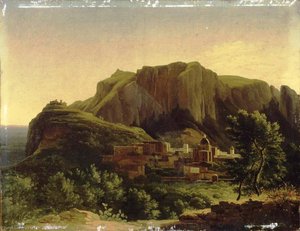
Anne-Louis Girodet de Roussy-Trioson's "Le Barde" (The Bard), painted in 1806, isn’t merely a portrait; it’s a carefully constructed tableau vivant—a frozen moment of dramatic narrative and profound emotional resonance. This captivating work, now housed at the California Palace of the Legion of Honor, stands as a pivotal bridge between the rigid formality of Neoclassicism and the burgeoning, intensely personal expression of Romanticism. Girodet, a student deeply influenced by Jacques-Louis David yet yearning to break free from his teacher’s constraints, masterfully employs light, color, and gesture to evoke a scene brimming with both beauty and underlying sorrow.
The composition immediately draws the eye to a central female figure, seemingly poised on a rocky precipice. Her long hair cascades around her face, partially veiled by a delicate white veil—a subtle nod to angelic figures yet imbued with an undeniable earthly vulnerability. She’s clearly engaged in song or perhaps playing a musical instrument, though the details are deliberately obscured, inviting speculation and fueling the painting's inherent mystery. Around her gather a diverse group of onlookers: some appear captivated by her performance, others seem lost in contemplation, while a few stand with expressions of quiet concern. The figures aren’t sharply defined; instead, they blend into the background, contributing to the overall atmosphere of dreamlike ambiguity.
The Language of Light and Shadow – Girodet's Technique
Girodet’s technical prowess is immediately apparent in his masterful manipulation of light. He employs a dramatic chiaroscuro—a stark contrast between light and shadow—to sculpt the forms and heighten the emotional impact. The central figure is bathed in a soft, diffused glow, while the surrounding figures are rendered in cooler tones, creating a sense of depth and emphasizing her isolation. His brushwork is remarkably smooth and precise, particularly noticeable in the rendering of fabrics and textures – the folds of the woman’s dress, the rough surface of the rocks beneath her feet. Yet, there's also an underlying fluidity to his application of paint, hinting at the emotional turbulence simmering beneath the surface of the scene.
The color palette is restrained but evocative—primarily consisting of muted browns, grays, and blues, punctuated by flashes of white and gold. This subdued range contributes to the painting’s melancholic mood, suggesting a sense of loss or regret. Girodet's meticulous attention to detail extends beyond mere representation; he uses color to subtly convey atmosphere and psychological states.
A Romantic Echo – Symbolism and Narrative
“Le Barde” is rich in symbolic meaning, reflecting the core tenets of Romanticism—a movement that prioritized emotion, imagination, and individualism. The veiled figure can be interpreted as a representation of lost innocence or forgotten beauty, while the gathering onlookers symbolize the fleeting nature of human connection and the inevitability of time’s passage. The rocky setting itself evokes themes of isolation, vulnerability, and the precariousness of existence. There's an undeniable air of tragedy woven into the scene—a sense that something precious is being lost or has already been lost.
Furthermore, the painting subtly references classical mythology. The figure’s posture and expression evoke images of ancient bards and storytellers, suggesting a connection to timeless narratives and universal human experiences. The inclusion of diverse figures—representing various social classes and emotional states—adds another layer of complexity to the scene, inviting viewers to contemplate the multifaceted nature of human life.
A Legacy of Emotion – Girodet’s Place in Art History
Anne-Louis Girodet de Roussy-Trioson's “Le Barde” stands as a testament to his unique artistic vision—a synthesis of Neoclassical precision and Romantic emotionalism. He wasn’t simply replicating the world; he was interpreting it through the lens of his own deeply felt experiences. This painting, along with many others, demonstrates his ability to capture not just appearances but also the intangible essence of human emotion. It's a poignant reminder that art can be both beautiful and profoundly moving—a window into the complexities of the human heart.
Pytania i odpowiedzi
Jaki klimat wnosi „Le Barde” autorstwa Anne-Louis Girodet do wnętrza?
Romantic atmosfera dzieła „Le Barde” autorstwa Anne-Louis Girodet idealnie współgra z polecaną przestrzenią: jest nią Living Room.
W jakim pomieszczeniu najlepiej wyeksponować "Le Barde", biorąc pod uwagę jego paletę barw?
Kolorystyka Earthy w dziele „Le Barde” autorstwa Anne-Louis Girodet idealnie współgra z rekomendowanym wnętrzem: Living Room.
Jaki dominujący odcień przenika „Le Barde” autorstwa Anne-Louis Girodet?
„Le Barde” skłania się ku Golden Yellow Range tonacji.
Biografia artysty
A Bridge Between Worlds: The Life and Art of Anne-Louis Girodet
Anne-Louis Girodet de Roussy-Trioson, a name perhaps less instantly recognizable than his teacher Jacques-Louis David, nevertheless occupies a pivotal position in the transition from Neoclassicism to Romanticism. Born in Montargis, France, in 1767, Girodet’s artistic journey was one of both rigorous academic training and burgeoning emotional expression—a delicate balance that defined his unique style and secured his place as a significant figure in French art. His early life was marked by loss; the untimely deaths of both parents left him under the care of Benoît-François Trioson, a physician who would later become his adoptive father and whose influence remained constant throughout Girodet’s career. This familial connection ultimately led to the artist adopting “Trioson” as part of his name in 1806, signifying a deep personal bond alongside his artistic identity. Initially drawn to architecture, Girodet soon found himself captivated by painting, entering David's studio and immersing himself in the prevailing Neoclassical aesthetic—an emphasis on clarity, precision, and moral gravitas. This foundation proved crucial, instilling within him a mastery of form and composition that would remain evident even as his work began to diverge from strict classical principles. His triumph at the Prix de Rome with a depiction of the story of Joseph and his brethren at the young age of 22 signaled a promising future, and his subsequent years in Italy (1789-1793) were formative, resulting in acclaimed works like *Hippocrate refusant les presents d'Artaxerxes* and *Endymion-dormant*.From Neoclassical Rigor to Romantic Sensibility
Girodet’s artistic evolution wasn’t a sudden break from the past, but rather a gradual infusion of new sensibilities into the established framework of Neoclassicism. While he retained the clarity and precision characteristic of David's school, his work increasingly embraced emotional intensity and explored themes previously considered unconventional. This shift is particularly evident in pieces like *Scène de déluge* (The Deluge), a monumental canvas showcasing dramatic action and raw emotion, and *Atala au tombeau*, a poignant portrayal of tragic beauty that resonated deeply with the growing Romantic fascination with pathos and exoticism. However, it was perhaps *Pygmalion et Galatée*, an ambitious project consuming eight years of his life, that most fully exemplifies Girodet’s artistic vision. Now housed in the Louvre, this work demonstrates not only meticulous attention to detail but also a willingness to delve into mythological themes with a heightened sense of psychological complexity and sensuality. His talent extended beyond mythological and literary subjects; he was sought after for portraits, including those of members of the Bonaparte family, where he skillfully balanced Neoclassical formality with an attempt to capture individual character. *La révolte du Caire*, depicting a historical event, further showcased his ability to convey dynamic action and emotional depth.A Pioneer of Erotic Undertones and Literary Inspirations
What truly set Girodet apart from many of his contemporaries was his willingness to incorporate elements of eroticism into his paintings—a daring move that challenged artistic norms and paved the way for later artists to explore similar themes with greater freedom. This wasn’t mere sensationalism; rather, it reflected a broader Romantic interest in passion, desire, and the complexities of human experience. His fascination with literature also profoundly influenced his art. He didn't simply illustrate stories; he sought to capture their emotional core, often choosing subjects that allowed for dramatic expression and psychological exploration. The influence of writers like Chateaubriand is particularly noticeable, as seen in portraits and scenes inspired by the author’s works. *Ossian and the French Generals*, a unique composition blending imagery drawn from Macpherson’s Ossianic poems with portraits of fallen heroes, stands as a testament to this fusion of literature and art—a work that captured the spirit of its time. This willingness to explore unconventional subjects and emotional depths distinguished him from artists solely focused on historical or mythological narratives, adding another layer of intellectual depth to his creations.The Influence of Benoît-François Trioson and Personal Transformation
The profound impact of his adoptive father, Benoît-François Trioson, extended far beyond a simple paternal relationship. Trioson’s medical expertise and philosophical insights shaped Girodet's artistic approach, encouraging him to consider the human condition with both scientific rigor and emotional sensitivity. The adoption in 1806, culminating in the assumption of the name “Girodet-Trioson,” symbolized this enduring bond—a recognition of Trioson’s crucial role as a mentor and guide throughout Girodet's career. Following Trioson’s death, Girodet inherited a considerable fortune in 1815, which he largely withdrew from artistic pursuits, dedicating himself to writing poetry and philosophical essays – works that were unfortunately deemed unreadable by critics. This period of seclusion reflects a complex interplay between his artistic ambitions and the influence of his family legacy.Major Achievements and Legacy
Despite sometimes being overshadowed by more politically prominent contemporaries like David, Anne-Louis Girodet left an undeniable mark on the art world. His contributions to the early Romantic movement are significant; he helped bridge the gap between the rational order of Neoclassicism and the emotional intensity of Romanticism. He was a respected member of both the Académie de peinture and the Institut de France, receiving honors including the Légion d'honneur—acknowledgements of his artistic merit and societal standing. His works continue to be admired for their technical brilliance, dramatic power, and psychological insight. They can be found in prestigious museums such as the Musée Girodet in Montargis, dedicated to his life and work, and the Louvre in Paris, ensuring that his legacy endures for generations to come. Girodet’s willingness to challenge conventions and explore new artistic territories makes him a compelling figure—a true pioneer who helped shape the course of French painting.
Anne-Louis Girodet
1767 - 1824 , Francja
Najważniejsze informacje
- Artistic Movement Or Style: Neoklasycyzm i Romantyzm
- Artists Or Movements Influenced By This Artist: ['Wczesny Romantyzm']
- Artists Who Influenced This Artist: ['Jacques-Louis David']
- Date Of Birth: 1767
- Date Of Death: 1824
- Full Name: Anne-Louis Girodet de Roussy-Trioson
- Nationality: Francuz
- Notable Artworks:
- Scena z Delugu
- Atala w grobie
- Pygmalion i Galatea
- Place Of Birth: Montargis, Francja
Zobacz także powiązane artykuły
Harmonies on Canvas: Exploring the Visual Representation of Music in Art History
Explore the fascinating history of music's visual representation in art! From ancient symbolism to modern abstraction, discover how artists have captured sound and emotion on canvas. Expert insights & stunning examples.

James Bard: Navigating Light & Landscape in American Impressionism
Explore the captivating world of James Bard (1815-1897), a meticulous chronicler of 19th-century American maritime life. Discover his detailed steamboat paintings and lasting legacy within the American Impressionism movement.
10 Arcydzieł Romantyzmu, które Zdefiniowały Epokę | OriginalUniqueArt.pl
Odkryj 10 arcydzieł romantyzmu! Poznaj historie Delacroixa, Friedricha i Goyi. Malarstwo pełne emocji, pejzaże i portrety definiujące epokę. Reprodukcje obrazów najwyższej jakości na OriginalUniqueArt.com – inspiracje do wnętrz i sztuka dla Ciebie.

Anne-Louis Girodet: Bridging Neoclassicism & Romanticism with Emotional Truth
Explore the captivating world of Anne-Louis Girodet, a pivotal figure bridging Neoclassicism & Romanticism. Discover his masterpieces and unique artistic vision with OriginalUniqueArt.

The Symphony of Canvas: Capturing the Timeless Resonance of Musical Instruments in Fine Art Masterpieces
Explore the profound connection between music and fine art. From ancient iconography to Impressionist masterpieces, discover how legendary instruments are captured on canvas with unparalleled artistry and historical depth for the discerning collector.