
 Wyślij jako kartkę
 Udostępnij
 Szczegóły dzieła
 Przewodnik

 Pobierz obraz
 Podobne obiekty
 Pokaz slajdów
 Pytania i odpowiedzi
 Statystyki
St Mark


 Rozwiń treść
Giclée / Wydruk artystyczny
Wydruki giclée lub płótna o jakości muzealnej, szybka realizacja i szeroki wybór opcji wykończenia. ( Zamów ręcznie malowaną reprodukcję Przejdź do wersji cyfrowej)




































Wybierz spośród naszych standardowych rozmiarów, które zachowują oryginalne proporcje dzieła sztuki.

Wpisz wymaganą szerokość i wysokość, aby dopasować grafikę do ramy lub ściany. Wydruk można jedynie przyciąć, nigdy nie powiększając go poza oryginalny obraz, dlatego format o innych proporcjach spowoduje utratę części kompozycji. Przed rozpoczęciem druku prześlemy Ci cyfrowy podgląd do zatwierdzenia. Obraz wyświetlany na tej stronie nie pokazuje rzeczywistego przycięcia — jedynie podgląd oddaje ten efekt.
Dostawa na cały świat () w ciągu 2 tygodni zamiast standardowych 4/5 tygodni. (7 Listopad)

Bezpłatna ekspresowa wysyłka na cały świat

Wysokiej jakości płótno lniane

Pełne ubezpieczenie przesyłki

Gwarancja zwrotu należności celnych i podatków importowych

Gwarancja wiernego odwzorowania kolorów

100-dniowa polityka zwrotów (tylko w przypadku wad)

Gwarancja 100% zwrotu pieniędzy

Zniżka przy zakupie wielu sztuk
 Opcja ze szkłem jest dostępna wyłącznie w rozmiarach poniżej 110 cm

St Mark
Giclée / Wydruk artystyczny
Wymiary reprodukcji
-


Cena całkowita
zł 317
A Vision of Venetian Faith: The Divine Presence in St Mark
In the heart of the Early Renaissance, amidst the salt-misted air of Venice, Andrea del Castagno breathed life into a vision of spiritual fortitude that continues to captivate the modern soul. His 1442 fresco, St Mark, is far more than a mere religious depiction; it is a profound meditation on the human journey toward the divine. As the patron saint of Venice, Mark is presented not as a distant icon, but as a palpable, commanding presence seated upon a boat, his gaze directed upward in a moment of celestial connection. The scene unfolds with a sense of movement and purpose, as pilgrims navigate the waters, their very existence a metaphor for the Christian quest for salvation and the arduous pilgrimage toward Jerusalem.
To behold this work is to witness the transformative power of naturalism. Heavily influenced by the revolutionary techniques of Masaccio, Castagno moved away from the ethereal, flattened aesthetics of the Gothic era to embrace a rugged, anatomical realism. Every muscle, every fold of fabric, and every gesture is rendered with an unprecedented precision that lends the figures a sculptural weight. This mastery of form is paired with an innovative use of perspective, creating a spatial depth that draws the viewer into the boat alongside the saint. The artist’s command over the fresco technique—applying pigment to wet plaster—has preserved a luminous vibrancy in the blues and reds, ensuring that the emotional intensity of the scene remains as striking today as it was in the fifteenth century.
Symbolism and the Renaissance Spirit
Every element within Castagno’s composition serves a higher narrative purpose, weaving a complex tapestry of meaning for the observant viewer. The book held aloft by Saint Mark is not merely an object of study but a potent symbol of divine revelation and the enduring power of sacred knowledge. As the figures surround him, their presence underscores the communal nature of faith, suggesting that the path to holiness is one traveled by many. This interplay between the individual saint and the collective group of pilgrims creates a rhythmic tension between solitude and community, much like the historical tensions Venice faced regarding papal authority and humanist progress.
For the collector or the interior designer, a reproduction of St Mark offers more than just aesthetic beauty; it brings a sense of historical gravity and intellectual depth to a space. The painting’s ability to evoke solemn reverence through its masterful use of light and shadow makes it an ideal centerpiece for environments that value contemplation and classical elegance. It is a piece that invites conversation, bridging the gap between the turbulent politics of the 1440s and the contemporary desire for art that possesses both physical presence and spiritual resonance. To display this work is to invite a fragment of the Renaissance spirit—a testament to resilience, faith, and the eternal human search for meaning—into the modern home.
Pytania i odpowiedzi
Czy Andrea del Castagno, twórca "St Mark", jest znany pod innymi nazwiskami?
Andrea del Castagno jest znany/a również pod pseudonimami: Andrea di Bartolo di Simone.
Kto stworzył "St Mark" i kiedy?
Andrea del Castagno, "St Mark", 1442 rok
Do czego sugerowane jest wykorzystanie „St Mark” – Andrea del Castagno?
Zalecanym zastosowaniem wydruku "St Mark" jest Accent.
Biografia artysty
Andrea del Castagno: A Florentine Visionary
Andrea del Castagno, a figure whose name resonates powerfully within the annals of Early Renaissance art, emerged from the heart of Tuscany around 1419 to forge a distinctive and profoundly influential artistic path. His life, intertwined with political turmoil and marked by both acclaim and controversy, ultimately shaped a body of work that continues to captivate viewers centuries later. Born in Castagnoli, a small village near Monte Falterona, his early years were steeped in the realities of war – his family’s residence in Corella during periods of conflict between Florence and Milan—a backdrop that undoubtedly informed his keen observation of human drama and resilience. It was through the patronage of Bernardo de' Medici in 1440 that Castagno entered the bustling artistic world of Florence, a pivotal moment marked by an unsettling commission: the task of painting portraits of citizens executed after the Battle of Anghiari on the facade of the Palazzo del Podestà. This grim assignment earned him the chilling moniker “Andrea degli Impiccati” (Andrea of the Hanged), a haunting reminder of the era’s brutality and a shadow that would linger over his career, yet paradoxically fueled his artistic intensity. Despite the darkness surrounding his early life, Castagno's formal training remains somewhat shrouded in mystery, though it is widely believed he studied under both Fra Filippo Lippi and Paolo Uccello, absorbing their techniques while simultaneously developing a unique style—a synthesis of observation, emotion, and innovative perspective.Early Works and Influences
Castagno’s early artistic endeavors showcased an immediate engagement with the burgeoning naturalism championed by Masaccio. His fresco depicting the Crucifixion and Saints in the Ospedale di Santa Maria Nuova (1440-1441) stands as a testament to this influence, demonstrating a remarkable ability to convey both the physical agony of Christ and the emotional responses of the surrounding figures. The composition is remarkably dynamic, eschewing the static formality of earlier styles in favor of a more immediate and engaging presentation. This work also reveals an early interest in perspective—a crucial element that would become central to his later innovations. A year later, he produced a poignant “Death of the Virgin” for the same hospital, a deeply moving depiction of grief and loss rendered with startling realism and psychological depth. These initial pieces demonstrate Castagno’s rapid development as an artist, absorbing the lessons of his predecessors while forging his own distinctive voice. The influence of Giotto di Bondone is particularly evident in his use of expressive figures and dramatic lighting—a technique that would become a hallmark of his style. Furthermore, Paolo Uccello's interest in perspective and spatial illusionism undoubtedly played a role in shaping Castagno’s approach to composition.The Zenith: Venice and Florence
Castagno’s artistic trajectory reached its zenith during his time in both Venice (1442) and Florence (1443-1445). In Venice, he contributed to the decoration of the chapel of San Tarasio, a vibrant fresco cycle that showcased his growing mastery of color and composition. The frescoes from the refectory of the former Convent of Sant’Apollonia in Florence—the “Last Supper,” “Crucifixion,” “Resurrection,” and “Złożenie” (Deposition)—represent the pinnacle of his artistic achievement. These monumental works are characterized by their exceptional detail, dramatic lighting, and innovative use of perspective—a technique that pushed the boundaries of what was possible in painting at the time. The *Last Supper*, in particular, is considered a watershed moment in Renaissance art; its depiction of the apostles’ reactions to Christ's announcement of betrayal is profoundly moving and psychologically astute. The frescoes from Villa Carducci (c. 1449-1450), featuring portraits of prominent Florentine figures—including Pippo Spano, Farinata degli Uberti, Dante Alighieri, and Francesco Petrarca—demonstrate Castagno’s ability to capture not only physical likeness but also the intellectual and emotional essence of his subjects. These portraits are imbued with a sense of dignity and gravitas that elevates them beyond mere representations.A Controversial Legacy
Despite his undeniable artistic brilliance, Andrea del Castagno's life was shadowed by controversy. The renowned artist and biographer Giorgio Vasari famously alleged that Castagno murdered Domenico Veneziano—a claim fueled by professional rivalry and speculation. While the veracity of this accusation remains debated among scholars, it undoubtedly contributed to a complex and somewhat troubled legacy. Regardless of the truth behind this rumor, Andrea del Castagno’s influence on subsequent generations of artists is undeniable. His innovative use of perspective, his dramatic realism, and his profound understanding of human emotion paved the way for later developments in painting—particularly those of Leonardo da Vinci and other High Renaissance masters. He represents a crucial transitional figure—a bridge between the stylistic conventions of the Gothic era and the groundbreaking innovations of the Renaissance.Castagno’s Enduring Impact
Andrea del Castagno's artistic legacy extends far beyond his individual works. His techniques and approaches profoundly influenced artists throughout Italy, particularly in the Ferrarese school. Cosme Tura, Francesco del Cossa, and Ercole de’ Roberti all demonstrate a clear debt to Castagno’s innovations—carrying forward his emphasis on naturalistic representation and psychological depth. Today, reproductions of Castagno's frescoes and paintings are widely available, allowing art enthusiasts worldwide to appreciate the power and beauty of his work. From the dramatic intensity of the *Last Supper* to the dignified portraits at Villa Carducci, these recreations offer a direct connection to this remarkable Florentine visionary—a testament to his enduring influence on the history of art. His story serves as a reminder that even amidst political turmoil and personal controversies, artistic genius can flourish, leaving an indelible mark on the world.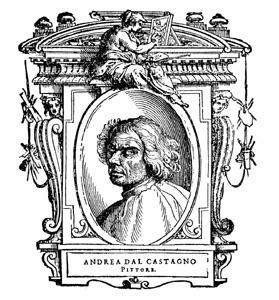
Andrea del Castagno
1419 - 1457 , Włochy
Krótka nota
- Artistic Movement Or Style: Early Renaissance
- Artists Who Influenced This Artist:
- Masaccio
- Giotto
- Fra Filippo Lippi
- Paolo Uccello
- Date Of Birth: c. 1419
- Date Of Death: 19 August 1457
- Full Name: Andrea del Castagno
- Nationality: Italian
- Notable Artworks:
- Last Supper
- Crucifixion
- Resurrection
- Place Of Birth: Castagnoli, Italy
Powiązane artykuły

Fresk jako Rodzinna Spuścizna: Utrwalenie Dziedzictwa na Ścianach
Odkryj sztukę fresku! Poznaj historię, technikę i inspiracje. Zamów spersonalizowany fresk rodzinny – trwałe dzieło sztuki dla przyszłych pokoleń. Profesjonalna konserwacja i ochrona.

Mark Rothko: 25 Arcydzieł Koloru i Emocji | Reprodukcje Obrazów | OriginalUniqueArt.com
Odkryj 25 arcydzieł Marka Rothko – mistrza abstrakcji i koloru. Poznaj historie, techniki i emocje kryjące się za jego płótnami. Reprodukcje obrazów najwyższej jakości na OriginalUniqueArt.com. Eksploruj kolekcję online!

Jacopo Tintoretto: 25 Arcydzieł Pełnych Dramatyzmu i Światła | OriginalUniqueArt.com
Odkryj 25 arcydzieł Jacopo Tintoretto – weneckiego mistrza dramatyzmu i światła! Poznaj historie, techniki i inspiracje za jego najsłynniejszymi obrazami. Reprodukcje najwyższej jakości na OriginalUniqueArt.com. Eksploruj kolekcję online!

The Enduring Legacy of Fresco Painting: Techniques, History & Contemporary Relevance
Explore the rich history & enduring artistry of fresco painting – from Giotto to Michelangelo! Discover techniques, conservation efforts, & modern applications. Learn how OriginalUniqueArt brings this timeless art form to your home.

Trwała Spuścizna Fresku: Technika, Historia i Wyraz Artystyczny w Różnych Kulturach
Odkryj fascynujący świat fresków! Poznaj historię, technikę tworzenia i wybitnych artystów. Ekspercka analiza konserwacji i współczesne zastosowania malowideł ściennych. Inspiracje dla wnętrz i pasjonatów sztuki.

