

 Podgląd w skali
 Wyślij jako kartkę
 Udostępnij
 Szczegóły dzieła

 Pobierz
 Podobne obiekty
 RTG
RTG Pokaz slajdów
queen esther
 Rozwiń treść
Kup wysokiej rozdzielczości, ulepszony obraz cyfrowy o znacznie wyższej jakości niż podgląd online.
Każdy plik jest starannie przygotowywany przez naszych specjalistów przy użyciu zaawansowanych narzędzi oraz profesjonalnej, ręcznej retuszy. Dbamy o to, aby każdy obraz cechował się wyjątkową ostrością, precyzyjnym odwzorowaniem kolorów i subtelnymi detalami.
Ostateczny plik dostarczany jest drogą mailową w ciągu 72 godzin, zoptymalizowany do natychmiastowego wykorzystania w profesjonalnych zastosowaniach redakcyjnych i poligraficznych. To ta sama jakość, której ufają czołowe studia projektowe, wydawnictwa oraz galerie sztuki.
Obraz cyfrowy
Pobierz plik o wysokiej rozdzielczości do osobistego wyświetlania, druku oraz projektów kreatywnych. ( Zamów wydruk Zamów ręcznie malowaną reprodukcję)
W każdym zamówieniu na obraz cyfrowy znajduje się
Profesjonalna dostawa cyfrowa z gwarancją
Wybierając OriginalUniqueArt.com, nie otrzymujesz jedynie obrazu – otrzymujesz profesjonalnie udoskonalone cyfrowe dzieło sztuki, stworzone z najwyższą precyzją i objęte gwarancją satysfakcji. Oto wszystko, co automatycznie dołączane jest do Twojego zamówienia:

Błyskawiczna wysyłka e-mailowa
Plik z obrazem cyfrowym w wysokiej rozdzielczości zostanie przesłany na Twój adres e-mail w ciągu 72 godzin od złożenia zamówienia – gotowy do natychmiastowego użycia.

Plik cyfrowy wzbogacony przez AI
Twoja grafika została profesjonalnie zoptymalizowana przy użyciu zaawansowanych narzędzi AI oraz ręcznej edycji, co zapewnia maksymalną szczegółowość, klarowność i wierność kolorów.

Dożywotnia darmowa ponowna dostawa
Przypadkowo usunąłeś lub zgubiłeś swój plik? Bez obaw – prześlemy go Tobie ponownie w dowolnym momencie, bez żadnych opłat.

Bez opłat importowych – zawsze
Ciesz się swoją sztuką natychmiast, bez żadnych opłat celnych, należności ani kosztów dostawy – pliki cyfrowe są zawsze wolne od podatku.

Gwarancja wierności kolorów
Dzięki zastosowaniu profesjonalnych narzędzi i procesów zarządzania barwą zapewniamy, że Twoje cyfrowe zdjęcie odzwierciedla oryginalne kolory tak wiernie, jak to tylko możliwe.

60-dniowa gwarancja satysfakcji
Jeśli nie będziesz zadowolony ze swojego cyfrowego obrazu, dokonamy jego poprawki lub zwrócimy 100% kosztów w ciągu 60 dni – bez żadnych pytań.

100% Gwarancja zwrotu pieniędzy
Nie jesteś zadowolony? Otrzymaj pełny zwrot kosztów w ciągu 60 dni od otrzymania pliku cyfrowego – bez zbędnych pytań.

Rabaty przy zamówieniach hurtowych
Kup 3 obrazy, oszczędź 10% - Kup 5, oszczędź 15% - Kup 10+, oszczędź 20%. Idealne do projektów kreatywnych, galerii i agencji.
Biografia artysty
Andrea del Castagno: A Florentine Visionary
Andrea del Castagno, a figure whose name resonates powerfully within the annals of Early Renaissance art, emerged from the heart of Tuscany around 1419 to forge a distinctive and profoundly influential artistic path. His life, intertwined with political turmoil and marked by both acclaim and controversy, ultimately shaped a body of work that continues to captivate viewers centuries later. Born in Castagnoli, a small village near Monte Falterona, his early years were steeped in the realities of war – his family’s residence in Corella during periods of conflict between Florence and Milan—a backdrop that undoubtedly informed his keen observation of human drama and resilience. It was through the patronage of Bernardo de' Medici in 1440 that Castagno entered the bustling artistic world of Florence, a pivotal moment marked by an unsettling commission: the task of painting portraits of citizens executed after the Battle of Anghiari on the facade of the Palazzo del Podestà. This grim assignment earned him the chilling moniker “Andrea degli Impiccati” (Andrea of the Hanged), a haunting reminder of the era’s brutality and a shadow that would linger over his career, yet paradoxically fueled his artistic intensity. Despite the darkness surrounding his early life, Castagno's formal training remains somewhat shrouded in mystery, though it is widely believed he studied under both Fra Filippo Lippi and Paolo Uccello, absorbing their techniques while simultaneously developing a unique style—a synthesis of observation, emotion, and innovative perspective.Early Works and Influences
Castagno’s early artistic endeavors showcased an immediate engagement with the burgeoning naturalism championed by Masaccio. His fresco depicting the Crucifixion and Saints in the Ospedale di Santa Maria Nuova (1440-1441) stands as a testament to this influence, demonstrating a remarkable ability to convey both the physical agony of Christ and the emotional responses of the surrounding figures. The composition is remarkably dynamic, eschewing the static formality of earlier styles in favor of a more immediate and engaging presentation. This work also reveals an early interest in perspective—a crucial element that would become central to his later innovations. A year later, he produced a poignant “Death of the Virgin” for the same hospital, a deeply moving depiction of grief and loss rendered with startling realism and psychological depth. These initial pieces demonstrate Castagno’s rapid development as an artist, absorbing the lessons of his predecessors while forging his own distinctive voice. The influence of Giotto di Bondone is particularly evident in his use of expressive figures and dramatic lighting—a technique that would become a hallmark of his style. Furthermore, Paolo Uccello's interest in perspective and spatial illusionism undoubtedly played a role in shaping Castagno’s approach to composition.The Zenith: Venice and Florence
Castagno’s artistic trajectory reached its zenith during his time in both Venice (1442) and Florence (1443-1445). In Venice, he contributed to the decoration of the chapel of San Tarasio, a vibrant fresco cycle that showcased his growing mastery of color and composition. The frescoes from the refectory of the former Convent of Sant’Apollonia in Florence—the “Last Supper,” “Crucifixion,” “Resurrection,” and “Złożenie” (Deposition)—represent the pinnacle of his artistic achievement. These monumental works are characterized by their exceptional detail, dramatic lighting, and innovative use of perspective—a technique that pushed the boundaries of what was possible in painting at the time. The *Last Supper*, in particular, is considered a watershed moment in Renaissance art; its depiction of the apostles’ reactions to Christ's announcement of betrayal is profoundly moving and psychologically astute. The frescoes from Villa Carducci (c. 1449-1450), featuring portraits of prominent Florentine figures—including Pippo Spano, Farinata degli Uberti, Dante Alighieri, and Francesco Petrarca—demonstrate Castagno’s ability to capture not only physical likeness but also the intellectual and emotional essence of his subjects. These portraits are imbued with a sense of dignity and gravitas that elevates them beyond mere representations.A Controversial Legacy
Despite his undeniable artistic brilliance, Andrea del Castagno's life was shadowed by controversy. The renowned artist and biographer Giorgio Vasari famously alleged that Castagno murdered Domenico Veneziano—a claim fueled by professional rivalry and speculation. While the veracity of this accusation remains debated among scholars, it undoubtedly contributed to a complex and somewhat troubled legacy. Regardless of the truth behind this rumor, Andrea del Castagno’s influence on subsequent generations of artists is undeniable. His innovative use of perspective, his dramatic realism, and his profound understanding of human emotion paved the way for later developments in painting—particularly those of Leonardo da Vinci and other High Renaissance masters. He represents a crucial transitional figure—a bridge between the stylistic conventions of the Gothic era and the groundbreaking innovations of the Renaissance.Castagno’s Enduring Impact
Andrea del Castagno's artistic legacy extends far beyond his individual works. His techniques and approaches profoundly influenced artists throughout Italy, particularly in the Ferrarese school. Cosme Tura, Francesco del Cossa, and Ercole de’ Roberti all demonstrate a clear debt to Castagno’s innovations—carrying forward his emphasis on naturalistic representation and psychological depth. Today, reproductions of Castagno's frescoes and paintings are widely available, allowing art enthusiasts worldwide to appreciate the power and beauty of his work. From the dramatic intensity of the *Last Supper* to the dignified portraits at Villa Carducci, these recreations offer a direct connection to this remarkable Florentine visionary—a testament to his enduring influence on the history of art. His story serves as a reminder that even amidst political turmoil and personal controversies, artistic genius can flourish, leaving an indelible mark on the world.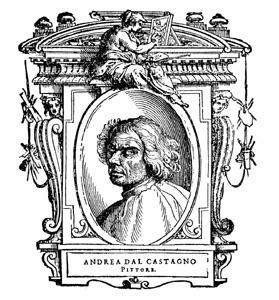
Andrea del Castagno
1419 - 1457 , Włochy
Krótka nota
- Artistic Movement Or Style: Early Renaissance
- Artists Who Influenced This Artist:
- Masaccio
- Giotto
- Fra Filippo Lippi
- Paolo Uccello
- Date Of Birth: c. 1419
- Date Of Death: 19 August 1457
- Full Name: Andrea del Castagno
- Nationality: Italian
- Notable Artworks:
- Last Supper
- Crucifixion
- Resurrection
- Place Of Birth: Castagnoli, Italy

