Menu
BEZPŁATNA KONSULTACJA ARTYSTYCZNA
Zamów wydruk Zamów wydrukKup cyfrowy obraz Kup cyfrowy obraz UdostępnijUdostępnij
Szczegóły dziełaSzczegóły dzieła Dodaj do ulubionych Dodaj do ulubionych PobierzPobierz Podobne obiektyPodobne obiekty RTGRTG Pokaz slajdówPokaz slajdów

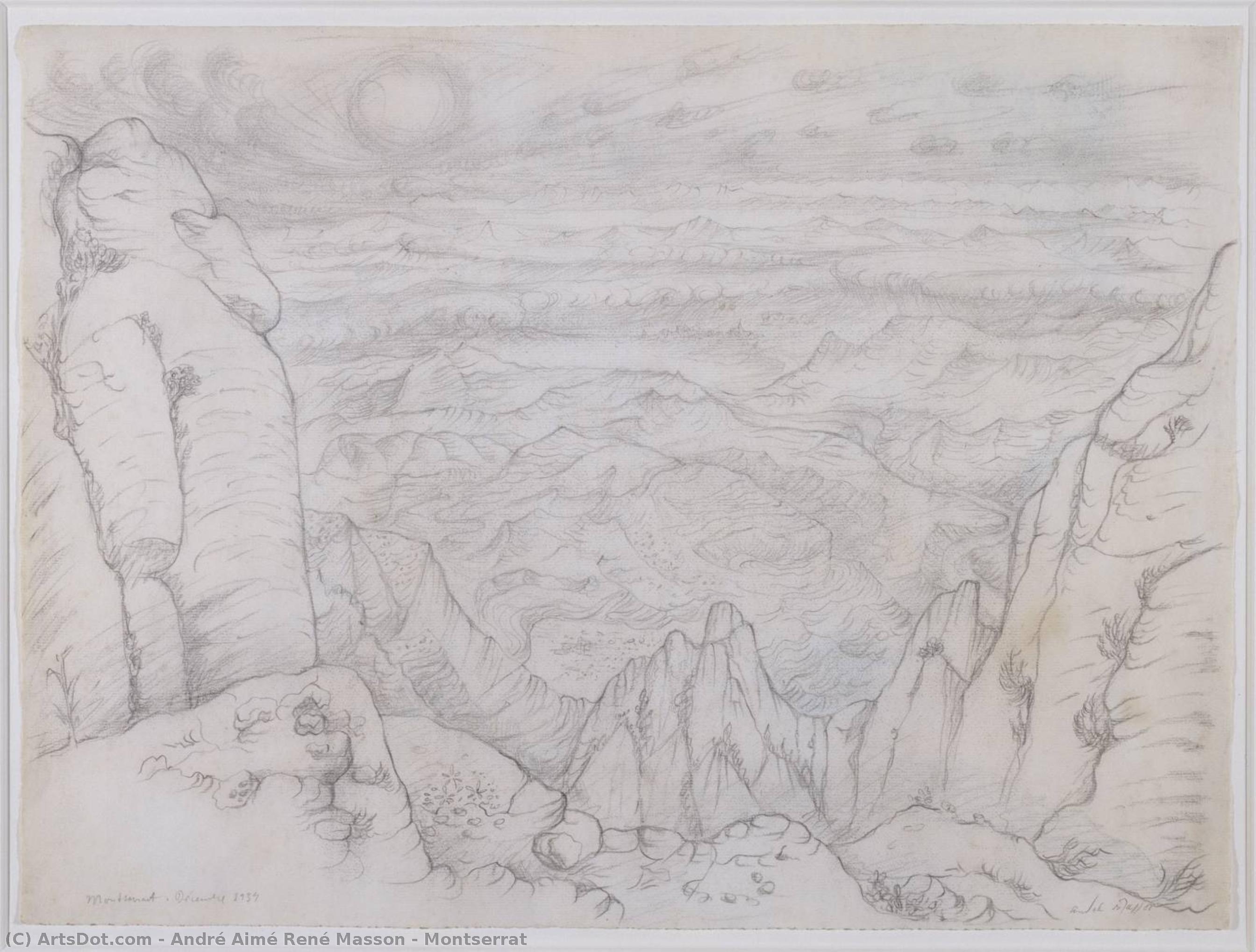
Montserrat

André Masson's 'Montserrat' (1934) is a captivating graphite landscape drawing showcasing surreal mountain forms & dynamic lines. Explore its dreamlike quality & the artist’s Surrealist style.

"Meta Description": "André Masson – francuski malarz surrealisty i pionier rysunku automatycznego. Znany z ekspresyjnych obrazów, sand painting oraz wpływu na sztukę abstrakcyjną. Odkryj jego twórczość!"

Ręcznie malowana reprodukcja olejowa

Ręcznie malowany olej na płótnie w Twoim wymiarze i ramie, tworzony na zamówienie przez naszych artystów.

Standard
custom
CM
INCH

Wybierz spośród naszych predefiniowanych rozmiarów, które zachowują oryginalne proporcje dzieła sztuki.

szerokość
wysokość

Możesz wprowadzić własne wymiary, aby dopasować obraz do konkretnej ramy lub przestrzeni. Jeśli wybrany rozmiar nie będzie odpowiadał proporcjom oryginału, przytniecie dzieło sztuki lub rozszerzymy je o dodatkowe elementy, ręcznie domalowane przez artystę. Przed rozpoczęciem produkcji wyślemy projekt cyfrowy do Twojej akceptacji.
Należy pamiętać, że podgląd na ekranie nie odzwierciedla rzeczywistego przycinania ani rozszerzania obrazu. Tylko projekt dokładnie pokaże ostateczną kompozycję.
Choć oferujemy możliwość zamówienia niestandardowych rozmiarów, zalecamy wybór wymiaru z gotowej listy, aby zachować oryginalne proporcje dzieła.

Przykłady możliwych zmian: Zamień twarz na zdjęcie klienta; Dodaj zwierzę domowe (np. zamień kota na psa); Ukryj wiadomość w tle; Zmień krajobraz lub elementy tła.
Po złożeniu zamówienia zespół OriginalUniqueArt.com skontaktuje się z klientem drogą mailową w celu uzyskania instrukcji i prześle wizualizację projektu

Dostawa na całym świecie () w ciągu 3/4 tygodni zamiast standardowych 5 tygodni. (21 Lipiec). Bez kompromisów w kwestii jakości.

why_choose_icon
Bezpłatna ekspresowa wysyłka na cały świat
why_choose_icon
Wysokiej jakości płótno lniane
why_choose_icon
Pełne ubezpieczenie przesyłki
why_choose_icon
Gwarancja zwrotu należności celnych
why_choose_icon
Gwarancja pełnego zgodności kolorystycznej
why_choose_icon
Polityka 60-dniowego zwrotu (tylko w przypadku wad)
why_choose_icon
Gwarancja 100% zwrotu pieniędzy
why_choose_icon
Zniżka przy większych zamówieniach

Suma całkowita

-

reproduction

Montserrat

Technika reprodukcji

Wymiary reprodukcji

-

Cena całkowita

-

Szybkie fakty

  • Artist: André Masson
  • Artistic style: Dreamlike landscape
  • Movement: Surrealism
  • Title: Montserrat
  • Year: 1934
  • Notable elements: Loose lines, sun focal
  • Subject or theme: Mountain range

Quiz o sztuce

Na każde pytanie istnieje tylko jedna poprawna odpowiedź.

Pytanie 1:
What artistic movement is André Masson most closely associated with?
Pytanie 2:
The artwork 'Montserrat' primarily utilizes which technique to create its textured appearance?
Pytanie 3:
In the artwork, what does the central sun likely symbolize?
Pytanie 4:
What year was 'Montserrat' created by André Masson?
Pytanie 5:
According to the description, what is a key characteristic of Masson's approach to drawing?

Opis dzieła

André Masson’s “Montserrat”: A Journey Into the Subconscious

André Masson's "Montserrat," painted in 1934, isn’t merely a landscape; it’s an invitation into the heart of the Surrealist mind. This graphite and chalk drawing on paper captures a rugged, almost violently sculpted mountain range under a dramatic, circular sun – a scene that feels both familiar and profoundly unsettling. Masson, a key figure in the Surrealist movement, employed his signature technique of automatic drawing to create an image brimming with raw emotion and symbolic depth, reflecting a fascination with the subconscious and primal forces.

The genesis of “Montserrat” lies within Masson’s exploration of automatism – a method he embraced wholeheartedly, believing it bypassed conscious control and allowed the unconscious to dictate the artistic process. He often began by throwing sand and glue onto a canvas, then meticulously building upon the resulting shapes, allowing them to organically inform the composition. This technique is vividly apparent in “Montserrat,” where jagged peaks emerge from seemingly random lines, suggesting a landscape born not of observation but of internal feeling. The drawing’s loose, expressive lines eschew traditional perspective, instead prioritizing the immediate impact and emotional resonance of the scene.

Deconstructing the Landscape: Form, Color, and Technique

The color palette is deliberately restrained – primarily shades of grey, white, and beige against a creamy background. This monochromatic approach amplifies the drawing’s textural qualities, emphasizing the rough surfaces of the mountains and the dynamic interplay between light and shadow. Masson masterfully utilizes hatching and cross-hatching to build up volume and create a sense of depth, mimicking the appearance of rock formations and atmospheric conditions. The composition itself is asymmetrical, with peaks arranged in a way that feels both precarious and powerful – mirroring perhaps the inherent instability of the subconscious mind.

Notice the deliberate lack of detail; Masson isn’t striving for photographic realism. Instead, he focuses on capturing the *essence* of the mountain range, reducing it to its most fundamental forms. The lines are not precise but rather suggestive, creating a dreamlike quality that aligns perfectly with the Surrealist aesthetic. The circular sun, dominating the upper center, acts as a potent symbol – representing enlightenment, clarity, or perhaps even the overwhelming force of the unconscious itself.

Symbolism and Emotional Resonance

“Montserrat” is rich in symbolic potential. The jagged peaks can be interpreted as challenges, obstacles, or even the fragmented nature of memory. The vastness of the landscape evokes feelings of solitude and isolation, while the dramatic lighting creates a sense of drama and tension. Considering Masson’s interest in primal expression, one might also read the drawing as an attempt to tap into something deeper – a connection with the earth, with instinct, or even with the darker aspects of human experience.

The painting's emotional impact is undeniably powerful. It doesn’t simply depict a mountain range; it invites us to contemplate our own internal landscapes, to confront the uncertainties and anxieties that lie beneath the surface of consciousness. “Montserrat” stands as a testament to Masson’s ability to translate complex psychological states into a visually arresting and deeply evocative work of art – a timeless exploration of the human spirit.

André Masson: Context and Legacy

Born in Balagny-sur-Thérain, France, in 1896, André Masson’s artistic journey was shaped by early exposure to Cubism and a later embrace of Surrealism. He collaborated extensively with other prominent figures of the movement, including Antonin Artaud and Joan Miró, fostering a vibrant artistic community centered around automatic drawing. His work has been exhibited widely throughout Europe and America, influencing generations of artists. Masson’s legacy extends beyond his own paintings; he played a crucial role in shaping the direction of Surrealist art, leaving an indelible mark on 20th-century visual culture.


Biografia artysty

André Masson: A Life Dedicated to the Unconscious

André Masson, a name synonymous with Surrealism and groundbreaking artistic techniques, was born on January 4th, 1896, in Balagny-sur-Thérain, a small town just north of Paris. From his earliest years, he exhibited an intense connection to nature, spending much of his youth immersed in the landscapes surrounding his home – a formative experience that would profoundly influence his later work. His artistic journey began at the age of eleven when he enrolled at the Académie Royale des Beaux-Arts in Brussels, where he received a foundational training under Constant Montald, laying the groundwork for his future explorations of various styles and movements. Early works hinted at an interest in Cubism, demonstrating an immediate engagement with the radical innovations shaping the art world of the early 20th century.

The Surrealist Embrace: Automatic Drawing and Collaborative Visions

Masson’s life took a dramatic turn when he became deeply involved in the burgeoning Surrealist movement in the mid-1920s. He wholeheartedly embraced automatic drawing – a technique that prioritized spontaneity and intuition, rejecting conscious control in favor of allowing the subconscious to guide the hand. This process involved creating artwork without deliberate thought, trusting the unconscious mind to manifest itself on paper. This approach wasn’t practiced in isolation; Masson actively collaborated with other leading figures within the Surrealist circle, including Antonin Artaud, Michel Leiris, Joan Miró, Georges Bataille, Jean Dubuffet, and Georges Malkine. These collaborations fostered a vibrant artistic community, characterized by experimentation, shared ideas, and a relentless pursuit of new forms of expression. Masson’s work during this period frequently delved into unsettling themes – violence, eroticism, and the raw, visceral experience of metamorphosis – deliberately challenging conventional notions of beauty and representation.

Revolutionary Techniques: Sand and Glue on Canvas

Perhaps Masson's most distinctive contribution to the art world lies in his innovative technique of applying sand and glue directly onto canvas. This process involved throwing handfuls of dry sand and adhesive onto a prepared surface, creating an unpredictable and chaotic pattern. The resulting textured surface was then painted over with oil paints, transforming the random shapes into evocative landscapes and dynamic compositions. This method, born out of a desire to capture the fluidity and dynamism of the unconscious mind, resulted in paintings that possessed a unique energy and depth. Alongside automatic drawing, this technique became synonymous with Masson’s artistic identity, establishing him as a pioneer of unconventional materials and processes.

A Shift Towards Landscape: War, Exile, and Artistic Rebirth

By the late 1920s, Masson began to move away from the strict confines of Surrealism, developing a more structured style influenced by artists like André Derain. This shift is particularly evident in his landscape paintings, which showcased a newfound interest in capturing the beauty and power of nature. The Second World War brought immense upheaval to Masson’s life. His work was condemned as “degenerate” by the Nazi regime, forcing him to flee France with the assistance of Varian Fry. He found refuge in the United States, where his presence significantly impacted American Abstract Expressionists like Jackson Pollock, who were deeply influenced by his techniques and approach to spontaneous creation. After returning to France following the war, Masson settled in Aix-en-Provence, dedicating himself to landscape painting – a return to his roots, but now imbued with a new sense of maturity and perspective.

Legacy and Enduring Influence

André Masson’s legacy extends far beyond his own lifetime. His pioneering work in Surrealism, coupled with his revolutionary techniques, fundamentally altered the course of modern art. He demonstrated that art could be a direct expression of the unconscious mind, bypassing rational thought and embracing spontaneity. His influence can be seen across numerous artistic movements, from Cubism to Abstract Expressionism, solidifying his position as a pivotal figure in 20th-century art history. Masson’s exploration of subconscious imagery and innovative processes continues to inspire artists today, reminding us of the boundless potential of creative expression. He died on October 28th, 1987, leaving behind a body of work that remains both challenging and profoundly rewarding for those willing to delve into its depths.
André Masson

André Masson

1896 - 1987 , Francja

Kluczowe informacje

  • Artistic Movement Or Style:
    • Surrealizm
    • Kubizm
  • Artists Or Movements Influenced By This Artist:
    • Jackson Pollock
    • Abstr. Ekspresjonizm
  • Artists Who Influenced This Artist: ['André Derain']
  • Date Of Birth: 4 stycznia 1896
  • Date Of Death: 28 października 1987
  • Full Name: André Aimé René Masson
  • Nationality: Francuz
  • Notable Artworks:
    • Les Quatre éléments
    • Krajobraz z kamieniami
    • Przemiana kochanków
    • Pygmalion
  • Place Of Birth: Balagny-sur-Thérain, Francja
Odkryj dzieła sztuki uporządkowane według tematów, stylów i cech charakterystycznych.