

 Zobacz w skali 1:1
 Wyślij
 Udostępnij
 Szczegóły
 Przewodnik

 Pobierz plik obrazu
 Podobne obiekty
 RTG
RTG Pokaz slajdów
 Statystyki
Landscape near Chatou
 Oil On Canvas
- WallArt
- Fauvism
 1904
1904 54.0 x 65.0 cm
 Czytaj więcej
Ręcznie malowana reprodukcja olejowa
Ręcznie malowany obraz olejny na płótnie, wykonany na zamówienie przez naszych artystów w wybranym przez Ciebie wymiarze i oprawie. ( Przełącz na wersję drukowaną Przełącz na wersję cyfrową)




P118B zł10

P118H zł10

P118W zł10

P438Z zł10

P508JH zł12

P508YH zł12

P805H zł10

P805Z zł10

P919BZ zł10

P919G zł10

P919XJ zł10

P959ZH zł10

P968JZ zł12

W106C zł8

W218G zł10

W218JH zł8

W218Y zł10

W307PJ zł10

W316G zł10

W316PJ zł8

W316Y zł10

W398PJ zł8

W4111J zł10

W500HY zł15

W500JH zł15

W692G zł12

W849H zł8

W940BG zł15

W953PJ zł8




Wybierz spośród naszych standardowych rozmiarów, które zachowują oryginalne proporcje dzieła sztuki.

Wpisz wymaganą szerokość i wysokość, aby obraz pasował do Twojej ramy lub ściany. Ponieważ jest to dzieło malowane ręcznie, w przypadku rozmiaru o innym proporcji artysta może domalować nieco więcej wokół obrazu lub przyciąć fragmenty — wybór należy do Ciebie. Przed rozpoczęciem pracy prześlemy Ci cyfrową wizualizację do zatwierdzenia. Obraz widoczny na tej stronie nie przedstawia rzeczywistego efektu — jedynie wizualizacja oddaje realny rezultat.
Po złożeniu zamówienia zespół OriginalUniqueArt.com skontaktuje się z klientem drogą mailową w celu uzyskania instrukcji i prześle wizualizację projektu
Dostawa na całym świecie () w ciągu 3–4 tygodni zamiast standardowych 5 tygodni. (21 Październik). Bez kompromisów w kwestii jakości.

Bezpłatna ekspresowa wysyłka na cały świat

Wysokiej jakości płótno lniane

Pełne ubezpieczenie transportowe

Gwarancja zwrotu należności celnych i podatków importowych

Gwarancja idealnego odwzorowania barw

100-dniowy okres na zwrot dzieła w przypadku wykrycia wad produkcyjnych

Gwarancja 100% zwrotu pieniędzy

Oferta przy zakupie wielu sztuk
 Opcja ze szkłem jest dostępna wyłącznie w rozmiarach poniżej 110 cm

Landscape near Chatou
Technika wykonania
Rozmiar reprodukcji
-


Suma do zapłaty
zł 1139
The Artistic Movement: Fauvism
Fauvism was an early 20th-century modern art movement that emphasized painterly qualities and strong colors over realistic values. The leaders of this movement were André Derain and Henri Matisse. As seen in the painting Landscape near Chatou, Fauvism is characterized by the use of bold, vibrant colors and energetic brushstrokes. For more information on Fauvism, visit Fauvism Art Movement.The Painting
The painting Landscape near Chatou features a serene landscape scene with trees, a house in the background, and a blue sky above. The use of bold colors and brushstrokes creates a sense of energy and movement in the painting. The artist's emphasis on capturing the emotional and expressive qualities of the scene rather than its realistic representation is a hallmark of Fauvism.- The painting is characterized by its use of vibrant colors and bold brushstrokes.
- The artist's emphasis on capturing the emotional and expressive qualities of the scene rather than its realistic representation is a hallmark of Fauvism.
- The painting is housed in a private collection, but similar works by André Derain can be found at the Musee d'art Moderne de la Ville de Paris and the Metropolitan Museum of Art.
The Fauvist movement also included other notable artists such as Maurice De Vlaminck, who can be found on OriginalUniqueArt.com.
Pytania i odpowiedzi
Czy mogę zamówić olejną reprodukcję "Landscape near Chatou"?
Ręcznie malowane kopie dzieła „Landscape near Chatou” autorstwa André Derain można nabyć na stronie ta strona: ręcznie malowana reprodukcja olejowa na płótnie lnianym, zamawiając je bezpośrednio przez zakładkę Ręcznie malowana reprodukcja.
Jaki nastrój oddaje „Landscape near Chatou” autorstwa André Derain w ramach nurtu Fauvism?
W ramach nurtu Fauvism, dzieło „Landscape near Chatou” zostało utrwalone w Tranquil tonie.
Jak harmonijna jest kolorystyka dzieła „Landscape near Chatou” autorstwa André Derain?
Harmonia kolorystyczna dzieła "Landscape near Chatou" została określona jako Discordant Palette.
Biografia artysty
Early Life and the Seeds of Fauvism
André Derain, born in 1880 in the charming village of Chatou near Paris, wasn’t initially destined for a life steeped in paint and canvas. Contrary to some narratives suggesting an immediate artistic awakening through encounters with fellow painters like Vlaminck or Matisse, Derain embarked on his artistic journey independently around 1895. These early explorations were often undertaken alongside Father Jacomin and his sons during countryside excursions—a formative experience that instilled a deep appreciation for the natural world. He briefly pursued engineering at the Académie Camillo in 1898, where fatefully, he crossed paths with Henri Matisse, initiating a pivotal artistic partnership. Further studies under Eugène Carrière honed his foundational skills, but it was military service from 1901 to 1904 that temporarily interrupted his burgeoning career. Upon his return, persuaded by the unwavering belief of Matisse, Derain decisively abandoned engineering and fully committed himself to painting, continuing his education at the Académie Julian. This commitment marked a turning point, setting him on a path toward becoming a central figure in one of modern art’s most revolutionary movements.The Explosive Birth of Color: Fauvism
The summer of 1905 proved to be an explosive moment for Derain and Matisse as they collaborated in the sun-drenched coastal village of Collioure. This period birthed works like “Mountains at Collioure,” characterized by a radical departure from representational color. The landscapes weren’t merely depictions of places; they were expressions of feeling, rendered through intensely vibrant, non-naturalistic hues. When their work was exhibited at the Salon d'Automne that same year, it provoked outrage and astonishment. Critic Louis Vauxcelles famously dubbed them “Les Fauves”—the wild beasts—a name initially intended as derisive but ultimately embraced by the artists themselves. Derain’s contribution to this movement wasn’t merely stylistic; he possessed a unique ability to translate emotional intensity into pure color. In 1906, Ambroise Vollard commissioned him to paint London, resulting in a series of striking canvases depicting the Thames and Tower Bridge. These weren't conventional cityscapes; they were bold interpretations, capturing the energy and atmosphere of London through an unconventional lens—a testament to Derain’s innovative vision. Influenced by artists like Van Gogh and Cézanne, he pushed the boundaries of color and form, laying the groundwork for future generations of expressionist painters.Beyond Fauvism: A Shifting Aesthetic
The initial fervor of Fauvism didn't define Derain’s entire artistic trajectory. Around 1907, his style began a significant evolution, moving away from the unrestrained chromatic exuberance toward more subdued tones and an increased emphasis on form. This period, often referred to as his “gothic” phase (1911-1914), reflected a growing interest in structure and composition. He immersed himself in the study of Old Masters, incorporating elements of Cubism while simultaneously seeking inspiration from classical forms. This wasn’t a rejection of his earlier work but rather an expansion of his artistic vocabulary. Derain's versatility extended beyond painting; in 1919, he designed the ballet “La Boutique Fantasque” for Sergei Diaghilev’s Ballets Russes, demonstrating his aptitude for theatrical design and further showcasing his diverse talents. Key works from this era, such as "Harlequin and Pierrot" and the monumental mural "Return of Ulysses," exemplify this stylistic shift—a move toward a more controlled and intellectually rigorous approach to artmaking.Major Achievements and Legacy
André Derain’s legacy is firmly rooted in his pivotal role in establishing Fauvism and his subsequent exploration of diverse artistic styles. His early London paintings, characterized by their bold color palettes and dynamic compositions, remain iconic examples of the movement's revolutionary spirit. Beyond this, he made significant contributions to Cubist development alongside Picasso and Braque, demonstrating a remarkable ability to adapt and synthesize various influences. His work as a set designer for the Ballets Russes showcased his versatility and artistic vision beyond the canvas. Despite facing controversy later in life due to his association with Nazi Germany during World War II, Derain’s impact on 20th-century art is undeniable. His paintings are held in major museums worldwide, including the Musée d'Orsay in Paris, the Metropolitan Museum of Art in New York, and the Tate Gallery in London—testaments to his enduring artistic significance.Key Works
Here are some of André Derain’s most celebrated works:- Mountains at Collioure (1905-06)
- Harlequin and Pierrot (1906)
- The Cup of Tea (1907)
- London Paintings (series, 1906-07) – including "Big Ben" and “Most London”
- Return of Ulysses (1914)
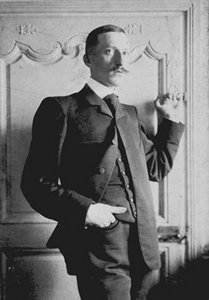
André Derain
1880 - 1954 , Francja
Najważniejsze informacje
- Artistic Movement Or Style: Fauvizm, Kubizm
- Artists Or Movements Influenced By This Artist:
- Matisse
- Kubizm
- Artists Who Influenced This Artist:
- Van Gogh
- Cézanne
- Date Of Birth: 10 czerwca 1880
- Date Of Death: 8 września 1954
- Full Name: André Derain
- Nationality: Francuz
- Notable Artworks:
- Góry w Collioure
- Harlequin i Pierrot
- Most londyński
- Place Of Birth: Chatou, Francja
Zobacz także powiązane artykuły
Fauwiści: 10 arcydzieł, które zrewolucjonizowały malarstwo | OriginalUniqueArt.com
Poznaj 10 arcydzieł Fauwyzmu! Odkryj historię Matisse'a, Deraina i innych artystów tego rewolucyjnego ruchu. Żywe kolory, ekspresja i inspiracje wnętrzarskie czekają. Reprodukcje obrazów najwyższej jakości na OriginalUniqueArt.com
Top 10 arcydzieł Fauwizmu: Kolor i ekspresja w Twoim wnętrzu | OriginalUniqueArt.com
Odkryj 10 arcydzieł Fauwizmu! Poznaj historię Matisse'a, Deraina i innych artystów tego rewolucyjnego ruchu. Ekspresjonizm kolorystyczny w Twoim wnętrzu – reprodukcje najwyższej jakości na OriginalUniqueArt.com. Eksploruj kolekcję online!

Romantyczny Krajobraz w Malarstwie: 10 Arcydzieł, Które Zdefiniowały Epokę | OriginalUniqueArt.com
Odkryj 10 arcydzieł romantyzmu w malarstwie! Poznaj historie Caspara Davida Friedricha, Turnera i innych mistrzów. Inspiracje wnętrzarskie & reprodukcje obrazów najwyższej jakości na OriginalUniqueArt.com. Eksploruj kolekcję online!

Evocations of Place: A Historical Journey Through Landscape Art
Explore the rich history of landscape art with OriginalUniqueArt. Discover renowned artists, movements like Impressionism & Romanticism, and expert guidance for collecting timeless pieces. Find your perfect serene escape today!
André Derain: Fauvism's Bold Visionary & the Evolution of Modern Color
Explore the revolutionary art of André Derain, co-founder of Fauvism. Discover his bold use of color, evolution from radical expressionism to classicism, and lasting influence on modern art history. Learn more at OriginalUniqueArt.


