

 Zobacz w skali 1:1
 Wyślij
 Udostępnij
 Szczegóły
 Przewodnik

 Pobierz plik obrazu
 Podobne obiekty
 RTG
RTG Pokaz slajdów
 Statystyki
Classic composition
 Oil
Oil- WallArt
- Post-Impressionist
 1907
1907- Modern
 22.0 x 27.0 cm
 Oklahoma City Museum of Art
 Czytaj więcej
Giclée / Wydruk artystyczny
Wydruki giclée lub płótna o jakości muzealnej, szybka realizacja i szeroki wybór opcji wykończenia. ( Kup ręcznie malowany obraz Przełącz na wersję cyfrową)




P118B zł10

P118H zł10

P118W zł10

P438Z zł10

P508JH zł12

P508YH zł12

P805H zł10

P805Z zł10

P919BZ zł10

P919G zł10

P919XJ zł10

P959ZH zł10

P968JZ zł12

W106C zł8

W218G zł10

W218JH zł8

W218Y zł10

W307PJ zł10

W316G zł10

W316PJ zł8

W316Y zł10

W398PJ zł8

W4111J zł10

W500HY zł15

W500JH zł15

W692G zł12

W849H zł8

W940BG zł15

W953PJ zł8




Wybierz spośród naszych standardowych rozmiarów, które zachowują oryginalne proporcje dzieła sztuki.

Wpisz wymaganą szerokość i wysokość, aby dopasować grafikę do ramy lub ściany. Wydruk można jedynie przyciąć, nigdy nie powiększając go poza oryginalny obraz, dlatego format o innym proporcji spowoduje utratę części kompozycji. Przed rozpoczęciem druku prześlemy Ci cyfrowy podgląd do zatwierdzenia. Obraz wyświetlany na tej stronie nie pokazuje rzeczywistego przycięcia — jedynie podgląd oddaje ten efekt.
Dostawa na cały świat () w ciągu 2 tygodni zamiast standardowych 4/5 tygodni. (20 Październik)

Bezpłatna ekspresowa wysyłka na cały świat

Wysokiej jakości płótno lniane

Pełne ubezpieczenie transportowe

Gwarancja zwrotu należności celnych i podatków importowych

Gwarancja idealnego odwzorowania barw

100-dniowy okres na zwrot dzieła w przypadku wykrycia wad produkcyjnych

Gwarancja 100% zwrotu pieniędzy

Oferta przy zakupie wielu sztuk
 Opcja ze szkłem jest dostępna wyłącznie w rozmiarach poniżej 110 cm

Classic composition
Giclée / Wydruk artystyczny
Rozmiar reprodukcji
-


Suma do zapłaty
zł 303
A Symphony of Color and Form
In his 1907 masterpiece, "Classic Composition," André Derain invites the viewer into a mythic landscape where the boundaries between reality and emotion dissolve into a vibrant tapestry of color. This work stands as a profound testament to the transition from the wild, expressive energy of Fauvism toward a more structured, classical sensibility. At first glance, the scene presents a deceptively tranquil pastoral setting: five nude figures are nestled within an undulating expanse of verdant hills, bordered by a river that mirrors the serene azure of the sky. Yet, beneath this surface of calm lies a deliberate and powerful exploration of form. Derain does not merely seek to replicate nature; he seeks to reconstruct it through a lens of emotional truth, drawing deep inspiration from the geometric foundations laid by Paul Cézanne.
The painting’s power resides in its rhythmic composition and the way it directs the eye across the canvas. The landscape is divided into sloping planes of emerald and forest green, creating a sense of depth that feels both grounded and dreamlike. These verdant slopes are punctuated by sudden, brilliant splashes of citrus-colored pigments—lemon yellows and warm oranges—that act as visual sparks, breathing life into the earth. The figures themselves are strategically placed to create a compelling dialogue between observation and representation; one woman turns her gaze toward the viewer, momentarily breaking the fourth wall and drawing us into this private, sun-drenched sanctuary. Even the small detail of a bowl in the lower right corner serves as an anchor, adding a touch of domestic intimacy to the vast, mythic expanse.
The Fauvist Legacy and Technical Mastery
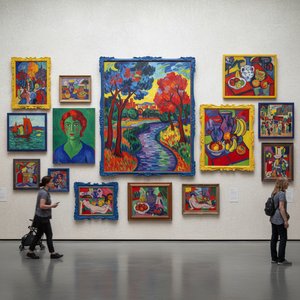
To understand "Classic Composition," one must appreciate the revolutionary spirit of the Fauves, or "wild beasts," of which Derain was a founding architect. Moving away from the Impressionist obsession with capturing fleeting light, Derain utilized color as an independent, expressive force. The technique is characterized by thick, impasto-like applications of paint and loose, energetic brushstrokes that lend the canvas a palpable texture. This tactile quality allows the light to dance across the surface, making the landscape feel as though it is breathing. The juxtaposition of intense, sometimes jarring hues—crimson reds against deep greens—is a calculated move designed to stimulate the senses and evoke an immediate, visceral response from the spectator.
For the discerning collector or interior designer, this piece offers more than just aesthetic beauty; it provides a focal point of intellectual and emotional depth. The painting embodies a "Return to Order," a movement that sought to find stability and classical grace following the radical experiments of early modernism. Its balance of bold, avant-garde color with a structured, harmonious composition makes it an incredibly versatile acquisition. Whether placed in a contemporary gallery setting or used to add a sophisticated, historical soul to a modern living space, "Classic Composition" radiates a timeless elegance. It is a work that does not merely decorate a room but transforms it, offering a window into a world where nature and human emotion exist in perfect, colorful equilibrium.
Pytania i odpowiedzi
Jaki klimat wnosi „Classic composition” autorstwa André Derain do wnętrza?
Elegant atmosfera dzieła „Classic composition” autorstwa André Derain idealnie współgra z polecaną przestrzenią: jest nią Living Room.
Jakie zastosowanie i przestrzeń są zalecane dla „Classic composition” autorstwa André Derain?
Zastosowanie (Accent) oraz przestrzeń (Living Room) to dwie rekomendacje wskazane dla „Classic composition” autorstwa André Derain.
Gdzie mogę pobrać „Classic composition” autorstwa André Derain?
Możliwość pobrania dzieła „Classic composition”: strona Pobierz oferuje wysokiej rozdzielczości cyfrowe zdjęcie do pobrania.
Biografia artysty
Early Life and the Seeds of Fauvism
André Derain, born in 1880 in the charming village of Chatou near Paris, wasn’t initially destined for a life steeped in paint and canvas. Contrary to some narratives suggesting an immediate artistic awakening through encounters with fellow painters like Vlaminck or Matisse, Derain embarked on his artistic journey independently around 1895. These early explorations were often undertaken alongside Father Jacomin and his sons during countryside excursions—a formative experience that instilled a deep appreciation for the natural world. He briefly pursued engineering at the Académie Camillo in 1898, where fatefully, he crossed paths with Henri Matisse, initiating a pivotal artistic partnership. Further studies under Eugène Carrière honed his foundational skills, but it was military service from 1901 to 1904 that temporarily interrupted his burgeoning career. Upon his return, persuaded by the unwavering belief of Matisse, Derain decisively abandoned engineering and fully committed himself to painting, continuing his education at the Académie Julian. This commitment marked a turning point, setting him on a path toward becoming a central figure in one of modern art’s most revolutionary movements.The Explosive Birth of Color: Fauvism
The summer of 1905 proved to be an explosive moment for Derain and Matisse as they collaborated in the sun-drenched coastal village of Collioure. This period birthed works like “Mountains at Collioure,” characterized by a radical departure from representational color. The landscapes weren’t merely depictions of places; they were expressions of feeling, rendered through intensely vibrant, non-naturalistic hues. When their work was exhibited at the Salon d'Automne that same year, it provoked outrage and astonishment. Critic Louis Vauxcelles famously dubbed them “Les Fauves”—the wild beasts—a name initially intended as derisive but ultimately embraced by the artists themselves. Derain’s contribution to this movement wasn’t merely stylistic; he possessed a unique ability to translate emotional intensity into pure color. In 1906, Ambroise Vollard commissioned him to paint London, resulting in a series of striking canvases depicting the Thames and Tower Bridge. These weren't conventional cityscapes; they were bold interpretations, capturing the energy and atmosphere of London through an unconventional lens—a testament to Derain’s innovative vision. Influenced by artists like Van Gogh and Cézanne, he pushed the boundaries of color and form, laying the groundwork for future generations of expressionist painters.Beyond Fauvism: A Shifting Aesthetic
The initial fervor of Fauvism didn't define Derain’s entire artistic trajectory. Around 1907, his style began a significant evolution, moving away from the unrestrained chromatic exuberance toward more subdued tones and an increased emphasis on form. This period, often referred to as his “gothic” phase (1911-1914), reflected a growing interest in structure and composition. He immersed himself in the study of Old Masters, incorporating elements of Cubism while simultaneously seeking inspiration from classical forms. This wasn’t a rejection of his earlier work but rather an expansion of his artistic vocabulary. Derain's versatility extended beyond painting; in 1919, he designed the ballet “La Boutique Fantasque” for Sergei Diaghilev’s Ballets Russes, demonstrating his aptitude for theatrical design and further showcasing his diverse talents. Key works from this era, such as "Harlequin and Pierrot" and the monumental mural "Return of Ulysses," exemplify this stylistic shift—a move toward a more controlled and intellectually rigorous approach to artmaking.Major Achievements and Legacy
André Derain’s legacy is firmly rooted in his pivotal role in establishing Fauvism and his subsequent exploration of diverse artistic styles. His early London paintings, characterized by their bold color palettes and dynamic compositions, remain iconic examples of the movement's revolutionary spirit. Beyond this, he made significant contributions to Cubist development alongside Picasso and Braque, demonstrating a remarkable ability to adapt and synthesize various influences. His work as a set designer for the Ballets Russes showcased his versatility and artistic vision beyond the canvas. Despite facing controversy later in life due to his association with Nazi Germany during World War II, Derain’s impact on 20th-century art is undeniable. His paintings are held in major museums worldwide, including the Musée d'Orsay in Paris, the Metropolitan Museum of Art in New York, and the Tate Gallery in London—testaments to his enduring artistic significance.Key Works
Here are some of André Derain’s most celebrated works:- Mountains at Collioure (1905-06)
- Harlequin and Pierrot (1906)
- The Cup of Tea (1907)
- London Paintings (series, 1906-07) – including "Big Ben" and “Most London”
- Return of Ulysses (1914)
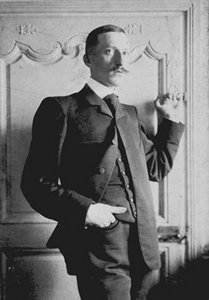
André Derain
1880 - 1954 , Francja
Najważniejsze informacje
- Artistic Movement Or Style: Fauvizm, Kubizm
- Artists Or Movements Influenced By This Artist:
- Matisse
- Kubizm
- Artists Who Influenced This Artist:
- Van Gogh
- Cézanne
- Date Of Birth: 10 czerwca 1880
- Date Of Death: 8 września 1954
- Full Name: André Derain
- Nationality: Francuz
- Notable Artworks:
- Góry w Collioure
- Harlequin i Pierrot
- Most londyński
- Place Of Birth: Chatou, Francja
Zobacz także powiązane artykuły
Wild Colors & Raw Emotion: A Definitive Guide to the Fauvist Art Movement
Explore the vibrant world of Fauvism. Discover how masters like Matisse and Derain revolutionized art through bold colors and raw emotion in this expert guide to the 'Wild Beasts' movement.
Top 10 arcydzieł Fauwizmu: Kolor i ekspresja w Twoim wnętrzu | OriginalUniqueArt.com
Odkryj 10 arcydzieł Fauwizmu! Poznaj historię Matisse'a, Deraina i innych artystów tego rewolucyjnego ruchu. Ekspresjonizm kolorystyczny w Twoim wnętrzu – reprodukcje najwyższej jakości na OriginalUniqueArt.com. Eksploruj kolekcję online!
André Derain: Fauvism's Bold Visionary & the Evolution of Modern Color
Explore the revolutionary art of André Derain, co-founder of Fauvism. Discover his bold use of color, evolution from radical expressionism to classicism, and lasting influence on modern art history. Learn more at OriginalUniqueArt.

Urok Nagiego Ciała w Sztuce: Historyczna i Artystyczna Eksploracja Aktu
Poznaj fascynującą historię aktu w sztuce – od starożytnych korzeni po współczesne interpretacje. Analiza technik, wybitnych artystów i wpływu anatomii na przedstawianie ludzkiego ciała. Ekskluzywne artykuły dla miłośników sztuki.
Fauwiści: 10 arcydzieł, które zrewolucjonizowały malarstwo | OriginalUniqueArt.com
Poznaj 10 arcydzieł Fauwyzmu! Odkryj historię Matisse'a, Deraina i innych artystów tego rewolucyjnego ruchu. Żywe kolory, ekspresja i inspiracje wnętrzarskie czekają. Reprodukcje obrazów najwyższej jakości na OriginalUniqueArt.com


