

 Zobacz w skali 1:1
 Wyślij
 Udostępnij
 Szczegóły
 Przewodnik

 Pobierz plik obrazu
 Podobne obiekty
 RTG
RTG Pokaz slajdów
 Statystyki
Autumn Flowers


 Czytaj więcej
Giclée / Wydruk artystyczny
Wydruki giclée lub płótna o jakości muzealnej, szybka realizacja i szeroki wybór opcji wykończenia. ( Kup ręcznie malowany obraz Przełącz na wersję cyfrową)




P118B zł10

P118H zł10

P118W zł10

P438Z zł10

P508JH zł12

P508YH zł12

P805H zł10

P805Z zł10

P919BZ zł10

P919G zł10

P919XJ zł10

P959ZH zł10

P968JZ zł12

W106C zł8

W218G zł10

W218JH zł8

W218Y zł10

W307PJ zł10

W316G zł10

W316PJ zł8

W316Y zł10

W398PJ zł8

W4111J zł10

W500HY zł15

W500JH zł15

W692G zł12

W849H zł8

W940BG zł15

W953PJ zł8




Wybierz spośród naszych standardowych rozmiarów, które zachowują oryginalne proporcje dzieła sztuki.

Możesz wprowadzić własne wymiary, aby dopasować dzieło do konkretnej ramy lub przestrzeni. Jeśli wybrany rozmiar nie będzie odpowiadał proporcjom oryginalnego obrazu, przytniecie dzieło lub rozszerzymy obraz za pomocą odbicia lustrzanego lub jednolitego wypełnienia krawędzi. Przed rozpoczęciem produkcji prześlemy cyfrową wizualizację do Twojej akceptacji.
Prosimy pamiętać, że podgląd na ekranie nie odzwierciedla faktycznego przycinania ani rozszerzania. Tylko wizualizacja dokładnie pokaże końcową kompozycję.
Mimo dostępności niestandardowych rozmiarów, zalecamy wybór wymiaru z listy zdefiniowanej, aby zachować oryginalne proporcje.
Dostawa na cały świat () w ciągu 2 tygodni zamiast standardowych 4/5 tygodni. (5 Październik)

Bezpłatna ekspresowa wysyłka na cały świat

Wysokiej jakości płótno lniane

Pełne ubezpieczenie transportowe

Gwarancja zwrotu należności celnych i podatków importowych

Gwarancja idealnego odwzorowania barw

100-dniowy okres na zwrot dzieła w przypadku wykrycia wad produkcyjnych

Gwarancja 100% zwrotu pieniędzy

Oferta przy zakupie wielu sztuk
 Opcja ze szkłem jest dostępna wyłącznie w rozmiarach poniżej 110 cm

Autumn Flowers
Giclée / Wydruk artystyczny
Rozmiar reprodukcji
-


Suma do zapłaty
zł 297
A Portrait of a Moment: The Enigmatic Beauty of *Autumn Flowers*
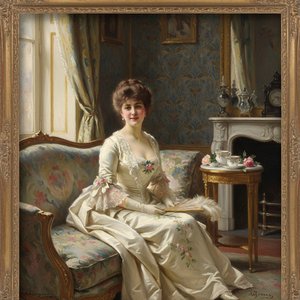
Alfred Stevens’s *Autumn Flowers*, painted in 1867, isn't merely a depiction of a woman amidst flowers; it’s an exquisitely crafted meditation on stillness, light, and the subtle poetry of everyday life. At first glance, the painting presents a seemingly simple arrangement: a seated lady, her posture suggesting quiet contemplation, surrounded by a still-life tableau of fabrics, blossoms, and a delicately rendered table. Yet, beneath this surface lies a profound exploration of form, color, and the very essence of observation – a hallmark of Stevens’s unique artistic vision.
Stevens, a pivotal figure in 19th-century Belgian art, deliberately eschewed the prevailing trends of his time. Rejecting the fleeting effects of Impressionism's vibrant light and atmosphere, he instead focused on capturing an immutable quality – the frozen gesture, the fixed expression, the enduring presence of the subject. This deliberate choice is powerfully evident in *Autumn Flowers*. The woman’s hand, poised as if about to touch a flower, isn’t caught in motion; it's suspended, imbued with a sense of timelessness. Her gaze, directed slightly off-canvas, invites us into her private world, suggesting an inner life beyond the immediate scene.
The Language of Color and Texture: Stevens’s Masterful Technique
What immediately draws the eye is Stevens's extraordinary command of color and texture. He employs a remarkably restrained palette – primarily shades of grey, black, and muted browns – punctuated by flashes of pastel pink, chestnut brown, and the glossy sheen of the table cover. This deliberate limitation isn’t a sign of restraint but rather a strategic choice to emphasize form and light. The artist masterfully utilizes chiaroscuro, creating dramatic contrasts between light and shadow that sculpt the figures and objects with remarkable precision. Notice how the highlights on the woman's chignon and the delicate folds of her dress draw our attention while simultaneously deepening the shadows around her face, lending a sense of mystery and depth.
Stevens’s technique is equally noteworthy for its meticulous detail. He employs a smooth, almost polished surface – reminiscent of 17th-century Dutch masters like Rembrandt and Vermeer – achieved through careful layering of paint and the use of a knife to blend colors seamlessly. This creates an illusion of tactile reality, inviting us to reach out and touch the fabrics, feel the texture of the flowers, and appreciate the subtle variations in color and tone. The artist’s attention to detail extends beyond mere representation; it's a deliberate attempt to capture the *essence* of each element within the composition.
Symbolism and the Portrait of Modernity
Beyond its technical brilliance, *Autumn Flowers* is rich in symbolic meaning. The woman herself represents a type of modern femininity – poised, elegant, and seemingly detached from the bustle of Parisian life. Her attire, with its jet frills and flounces, speaks to the fashionable trends of the era while simultaneously conveying a sense of quiet dignity. The surrounding still-life elements—the fabrics, flowers, and table—are not merely decorative; they function as a carefully constructed visual language, hinting at themes of luxury, domesticity, and the fleeting beauty of life.
Stevens’s comparison to Gustave Vanzype – that the painting is a still life composed of the fabrics in which she is dressed and the things around her – reveals a deeper intention. He wasn't simply depicting a woman; he was creating a miniature world, a carefully orchestrated tableau that captures a specific moment in time and reflects the values and aesthetics of his era. The reference to Whistler’s ambition to “use colours to compete with the musician who uses sounds” underscores Stevens’s own desire to elevate color from mere decoration to an expressive element within the painting.
A Legacy of Stillness: Stevens's Enduring Appeal
*Autumn Flowers* stands as a testament to Alfred Stevens’s singular artistic vision. It is a painting that rewards careful observation, inviting us to linger and contemplate its subtle nuances. Its enduring appeal lies not in dramatic gestures or fleeting effects but in its quiet beauty, its masterful technique, and its profound exploration of the human condition. Reproductions of this captivating work offer a window into a bygone era, capturing the elegance and sophistication of 19th-century Parisian life while simultaneously reminding us of the timeless power of stillness and observation.
Pytania i odpowiedzi
Czy mogę zobaczyć „Autumn Flowers” autorstwa Alfred Stevens na własnej ścianie przed zakupem?
Dzieło „Autumn Flowers” posiada podgląd w rozszerzonej rzeczywistości: strona Podgląd AR dzieła pozwala zobaczyć je w Twojej własnej przestrzeni na kompatybilnym urządzeniu.
Ile lat miał(a) Alfred Stevens, tworząc "Autumn Flowers" w 1867 roku?
Alfred Stevens miał 44 lat, tworząc „Autumn Flowers” w 1867. Wiek ten został obliczony na podstawie roku urodzenia artysty, 1823.
W jaki sposób "Autumn Flowers" balansuje światło i cień?
Jasność dzieła „Autumn Flowers” autorstwa Alfred Stevens wynosi deep_shadow, przy luminancji na poziomie Dark.
Kto jest autorem dzieła "Autumn Flowers"?
Autorem dzieła „Autumn Flowers” jest Alfred Stevens. Praca ta figuruje w katalogu pod nazwiskiem Alfred Stevens.
W którym roku powstało „Autumn Flowers” autorstwa Alfred Stevens?
Dzieło „Autumn Flowers” autorstwa Alfred Stevens powstało w 1867.
Czy „Autumn Flowers” autorstwa Alfred Stevens to portret, pejzaż czy kompozycja kwadratowa?
„Autumn Flowers” autorstwa Alfred Stevens to kompozycja w formacie Portrait. Warto sprawdzić proporcje przed wyborem rozmiaru wydruku.
Czy istnieją dzieła podobne do „Autumn Flowers”?
Dzieła podobne do „Autumn Flowers” znajdują się na stronie Podobne dzieła danego dzieła.
Biografia artysty
wczesne lata i edukacja
alfred émile léopold stevens, znamienity belgijski malarz, przyszedł na świat 11 maja 1823 roku w brusselach. jego rodzina była głęboko zakorzeniona w świecie sztuk wizualnych – jego starszy brat joseph (1816–1892) oraz syn léopold (1866–1935) byli malarzami, podczas gdy inny brat, arthur (1825–99), zajmował się handlem dziełami sztuki i krytyką artystyczną.kariera artystyczna
stevens rozpoczął swoją artystyczną podróż w académie royale des beaux-arts w brusselach, gdzie kształcił się pod okiem françois navez, malarza neoklasycystycznego. w 1843 roku przeniósł się do paryża, by dołączyć do swojego brata josepha, i został przyjęty do école des beaux-arts. choć do dziś trwa spór, czy był uczniem jean auguste dominique ingres, wczesne dzieła stevensa, takie jak odpuszczenie lub absolucja (hermitage, św. petersburg), podpisane i datowane na 1849 rok, ukazują jego mistrzostwo w konwencjonallnym stylu naturalistycznym, silnie inspirowanym siedemnastowiecznym holenderskim malarstwem rodzajowym.wzlot do sławy
prace stevensa po raz pierwszy zostały publicznie zaprezentowane w 1851 roku na salonie w brusselach, co przyniosło mu medal trzeciej klasy na salonie paryskim w 1853 roku oraz medal drugiej klasy na wystawie powszechnej w paryżu w 1855 roku. jego obraz ce qu'on appelle le vagabondage (musée d'orsay, paryż) przyciągnął uwagę napoleona iii, co przyczyniło się do znaczącej zmiany w sposobie traktowania ubogich.wybitne dzieła i dziedzictwo
- la dame en rose, czyli kobieta w różu (musées royaux des beaux-arts de belgique, brussels), namalowany w 1866 roku, stanowi doskonały przykład twórczości stevensa z tego okresu, łącząc postać modnie ubranej kobiety z drobiazgową analizą przedmiotów japońskich.
- stevens został odznaczony krzyżem kawalerskim legii honorowej przez rząd francuski w 1863 roku, a w 1867 roku awansował do stopnia oficera legii honorowej.

Alfred Stevens
1823 - 1906 , Belgia
Najważniejsze informacje
- Artistic Movement Or Style: Realizm akademicki
- Artists Who Influenced This Artist:
- Jean Auguste Dominique Ingres
- Mistrzowie holenderscy
- Date Of Birth: 11 maja 1823
- Date Of Death: 1906
- Full Name: Alfred Émile Léopold Stevens
- Nationality: Belgijska
- Notable Artworks:
- La Dame en Rose
- Wizyta w pracowni
- Rysunek przygotowawczy do 'Panoramy stulecia', 'Cesarzowa Józefina i jej dwór'
- Place Of Birth: Bruksela, Belgia
Zobacz także powiązane artykuły

Sir Alfred James Munnings: 25 Arcydzieł Malarstwa Koni i Angielskiej Wsi | OriginalUniqueArt.com
Odkryj 25 arcydzieł Sir Alfreda Jamesa Munningsa – mistrza malarstwa koni i angielskiego krajobrazu. Poznaj historię, technikę i piękno jego obrazów. Reprodukcje najwyższej jakości na OriginalUniqueArt.com! Eksploruj pełną kolekcję online.

Alfred Stevens: Capturing Parisian Life with Intimate Realism & Symbolist Flair
Explore the captivating world of Alfred Stevens, a pioneer of intimate realism & Symbolist painting. Discover his elegant portraits of Parisian women and learn about his Dutch influences & lasting legacy. Art history insights at OriginalUniqueArt.
Alfred Stevens: Capturing Parisian Elegance & Fin-de-Siècle Intimacy
Discover the captivating world of Alfred Stevens, master of Parisian elegance & intimate portraiture. Explore his techniques, influences, and legacy – a prized collection for discerning art enthusiasts.

Romantic Realism's Finest: 10 Masterpieces for Your Home | OriginalUniqueArt
Explore 10 defining masterpieces of Romantic Realism! Discover Courbet, Millet & Daumier's powerful paintings—capturing emotion and social realities. Find museum-quality reproductions for your home at OriginalUniqueArt.com.
Realizm w sztuce: 10 arcydzieł, które zmieniają sposób patrzenia na świat | OriginalUniqueArt.com
Odkryj 10 arcydzieł realizmu! Poznaj historie Courbeta, Millet’a i innych mistrzów malarstwa. Reprodukcje obrazów najwyższej jakości do Twojego wnętrza. OriginalUniqueArt.com – inspiracje i sztuka online.