Podgląd w skali
 Wyślij jako kartkę
 Udostępnij
 Szczegóły dzieła

 Pobierz
 Podobne obiekty
 RTG
RTG Pokaz slajdów
Wild Heath -


 Rozwiń treść
Ręcznie malowana reprodukcja olejowa
Ręcznie malowany obraz olejny na płótnie, wykonany na zamówienie przez naszych artystów w wybranym przez Ciebie wymiarze i oprawie. ( Zamów wydruk Kup obraz wysokiej rozdzielczości)




P118B $10

P118H $10

P118W $10

P438Z $10

P508JH $12

P508YH $12

P805H $10

P805Z $10

P919BZ $10

P919G $10

P919XJ $10

P959ZH $10

P968JZ $12

W106C $8

W218G $10

W218JH $8

W218Y $10

W307PJ $10

W316G $10

W316PJ $8

W316Y $10

W398PJ $8

W4111J $10

W500HY $15

W500JH $15

W692G $12

W849H $8

W940BG $15

W953PJ $8




Wybierz spośród naszych standardowych rozmiarów, które zachowują oryginalne proporcje dzieła sztuki.

Możesz wprowadzić własne wymiary, aby dopasować obraz do konkretnej ramy lub przestrzeni. Jeśli wybrany rozmiar nie będzie odpowiadał proporcjom oryginału, przytniecie dzieło sztuki lub rozszerzymy je o dodatkowe elementy, ręcznie domalowane przez artystę. Przed rozpoczęciem produkcji wyślemy projekt cyfrowy do Twojej akceptacji.
Należy pamiętać, że podgląd na ekranie nie odzwierciedla rzeczywistego przycinania ani rozszerzania obrazu. Tylko projekt dokładnie pokaże ostateczną kompozycję.
Choć oferujemy możliwość zamówienia niestandardowych rozmiarów, zalecamy wybór wymiaru z gotowej listy, aby zachować oryginalne proporcje dzieła.
Po złożeniu zamówienia zespół OriginalUniqueArt.com skontaktuje się z klientem drogą mailową w celu uzyskania instrukcji i prześle wizualizację projektu
Dostawa na całym świecie () w ciągu 3–4 tygodni zamiast standardowych 5 tygodni. (25 Sierpień). Bez kompromisów w kwestii jakości.

Bezpłatna ekspresowa wysyłka na cały świat

Wysokiej jakości płótno lniane

Pełne ubezpieczenie przesyłki

Gwarancja zwrotu należności celnych i podatków importowych

Gwarancja wiernego odwzorowania kolorów

Polityka 60-dniowego zwrotu (tylko w przypadku wad)

Gwarancja 100% zwrotu kosztów

Zniżka przy zamówieniu wielu produktów
 Opcja ze szkłem jest dostępna wyłącznie w rozmiarach poniżej 110 cm

Wild Heath -
Technika reprodukcji
Wymiary reprodukcji
-


Cena całkowita
$ 300
Opis dzieła
A Symphony of Spring: "Wild Heath" by Albert Dürer Lucas
“Wild Heath,” a captivating still life painting recently brought back to vibrant life through meticulous hand-painting, offers a poignant glimpse into the heart of 19th or early 20th-century artistic sensibilities. The artwork’s immediate impact lies in its abundant floral arrangement – a riot of color and texture that speaks directly to the viewer's appreciation for nature's fleeting beauty. At its core are clusters of delicate purple blooms, likely lilacs or similar varieties, their velvety petals hinting at the romanticism prevalent in artistic circles of the time. These blossoms are juxtaposed with larger white flowers reminiscent of cherry or apple blossoms, creating a dynamic interplay between fragility and strength. The artist’s keen eye for detail is evident in the rendering of each individual flower, capturing not just their outward appearance but also the subtle nuances of their form – the rounded shapes, the delicate textures, and the variations in color that contribute to the overall sense of realism.
- Botanical Symbolism: The selection of flowers within “Wild Heath” is rich with symbolic meaning. Lilacs, often associated with love and remembrance, intertwine with the blossoms representing new beginnings and springtime renewal.
- Dürer’s Influence: The signature "Albert Durer Lucas" suggests a deliberate homage to Albrecht Dürer, a titan of the German Renaissance. While no direct lineage exists, this nod acknowledges Dürer's profound impact on artistic technique and subject matter – his mastery of detail, his exploration of perspective, and his ability to imbue everyday scenes with profound emotional resonance.
Technique and Artistic Vision
The painting’s style is characterized by a meticulous realism that borders on the idealized. The artist employs a smooth, almost glazed technique, layering thin washes of color to build up depth and luminosity. This approach, reminiscent of Northern Renaissance masters, allows for a remarkable level of detail – from the intricate veins in the leaves to the subtle gradations of color within each flower petal. The muted background serves not as a distraction but rather as a carefully considered element that amplifies the vibrancy of the floral composition. The soft shadows cast by the lighting further enhance the three-dimensional effect, creating an illusion of depth and inviting the viewer into the scene.
Historical Context: A Romantic Revival
“Wild Heath” reflects a broader artistic trend – the Romantic revival that swept through Europe during the 19th century. This movement emphasized emotion, imagination, and the beauty of nature as a counterpoint to the rationalism of the Enlightenment. Artists sought to capture not just what they saw but also how they *felt* about it, imbuing their works with a sense of awe and wonder. The painting’s depiction of wildflowers, bathed in soft light, embodies this spirit perfectly – a celebration of nature's transient beauty and its power to evoke profound emotion.
Collecting “Wild Heath”: A Timeless Masterpiece
This hand-painted reproduction captures the essence of "Wild Heath," offering an exceptional opportunity to bring a touch of timeless artistry into your home or office. Whether you are an art collector, interior designer, or simply someone who appreciates beauty, this artwork is sure to be a captivating focal point. OriginalUniqueArt’s meticulous craftsmanship ensures that every detail – from the delicate petals to the subtle shadows – is faithfully reproduced, creating a stunning piece of art that will endure for generations to come.
O artyście
A Life Forged in Nuremberg: The Early Years and Apprenticeship
Albrecht Dürer, a name synonymous with the German Renaissance, emerged from the bustling artisan city of Nuremberg in 1471. His father, Albrecht Dürer the Elder, was a successful goldsmith who had immigrated from Hungary, bringing with him a lineage steeped in craftsmanship. It was within this environment—the scent of metal and the meticulous precision of handiwork—that young Albrecht’s artistic inclinations first took root. Though his father envisioned a similar path for him, apprenticing him initially in the family trade, it soon became undeniable that Albrecht possessed an exceptional gift for drawing. At thirteen, he transitioned to the workshop of Michael Wolgemut, Nuremberg's leading artist at the time. This was no mere technical training; it was immersion into a world of illuminated manuscripts, painted panels, and—crucially—the burgeoning art of woodcut illustration. The sheer volume of work produced by Wolgemut’s workshop, including the extensive illustrations for the *Nuremberg Chronicle*, provided Dürer with an unparalleled foundation in design, composition, and the mechanics of image-making. A remarkable silverpoint self-portrait from 1484, created when he was barely a teenager, stands as astonishing evidence of his precocious talent—a testament to a burgeoning artistic identity already taking shape. This early work demonstrated a keen eye for detail, an understanding of perspective, and a nascent ability to capture the likeness of individuals with remarkable accuracy.The Italian Influence and Artistic Maturation
Dürer’s ambition extended far beyond the confines of Nuremberg. Driven by an insatiable curiosity and a desire to master the art of painting, he embarked on his first journey to Italy in 1494. This was not simply a sightseeing trip; it was a pilgrimage to the heart of the Renaissance. He encountered the works of masters like Raphael, Giovanni Bellini, and Leonardo da Vinci—artists who were redefining the possibilities of form, perspective, and human expression. The impact of this exposure was profound. Dürer absorbed the classical motifs, harmonious compositions, and subtle sfumato techniques that characterized Italian art, yet he never abandoned his Northern European sensibility for meticulous detail and symbolic depth. He studied the grandeur of Rome, marveling at ancient ruins and absorbing the legacy of antiquity. This journey ignited a desire to integrate classical ideals into his own artistic practice, leading him to incorporate elements of Greek and Roman mythology and philosophy into his later works. A second sojourn to Italy between 1505 and 1507 further solidified these influences, allowing him to study ancient Roman ruins and refine his understanding of anatomy and proportion. This synthesis of Northern precision and Italian grace became the hallmark of Dürer’s unique artistic style.Mastering the Mediums: Painting, Engraving, and Woodcut
Dürer was a master of multiple mediums, each offering him distinct avenues for creative expression. His paintings, though fewer in number than his prints, demonstrate a remarkable command of oil paint and an ability to capture both physical likeness and psychological depth. Works like the *Feast of the Rose Garlands* (1507) reveal a vibrant palette influenced by Venetian colorism—bold hues and shimmering effects that create a sense of opulence and celebration. However, it was in the realm of printmaking—particularly engraving and woodcut—that Dürer truly revolutionized artistic practice. He elevated these techniques from mere reproductive methods to independent art forms, capable of conveying complex narratives and profound emotions. The *Apocalypse* series (1498), a collection of fourteen woodcuts illustrating the Book of Revelation, showcased his mastery of this medium despite its inherent limitations—the grainy texture of the woodcut demanded careful planning and execution. Later engravings like *Melencolia I* (1514) and *Saint Jerome in His Study* (1514) are testaments to his unparalleled skill—intricate compositions filled with symbolic meaning and executed with breathtaking precision. He didn’t just depict reality; he imbued it with layers of intellectual and spiritual significance, often incorporating complex allegories and moral lessons into his prints.A Theorist and Innovator: The Legacy of Albrecht Dürer
Dürer was not merely an artist; he was a scholar, a theorist, and an innovator who sought to understand the underlying principles governing artistic creation. He believed in the mathematical foundations of art and dedicated himself to establishing a scientific approach to representation. His treatises on geometry, proportion, and human anatomy—most notably *Four Books of Human Proportion* (1528)—were groundbreaking for their time, demonstrating his commitment to rigorous observation and rational analysis. These writings were not simply academic exercises; they were intended to elevate the status of artists from mere craftsmen to intellectual practitioners. Dürer’s work on perspective, in particular, laid the groundwork for future generations of artists and architects. He meticulously documented his experiments with linear perspective, developing a system that allowed him to create realistic depictions of three-dimensional space on a two-dimensional surface. His theoretical writings were accompanied by numerous drawings and engravings that illustrated his concepts—a testament to his belief in the importance of visual demonstration. Dürer’s legacy extends far beyond his individual artworks. He bridged the gap between Northern European traditions and Italian Renaissance ideals, introducing classical motifs into Northern art while maintaining its distinctive character. His theoretical contributions helped establish a new framework for artistic practice, inspiring generations of artists with his technical skill, innovative spirit, and profound vision. He remains, to this day, one of the most important figures in the history of Western art.Influences and Enduring Impact
- Michael Wolgemut: Dürer’s initial mentor, providing foundational skills in drawing, painting, and woodcut techniques.
- Leonardo da Vinci: Inspired Dürer's exploration of anatomy, perspective, and sfumato—the subtle blending of tones.
- Raphael: Influenced Dürer’s compositional harmony and idealized forms.
- Giovanni Bellini: Contributed to Dürer's understanding of color and Venetian painting traditions.
Dürer’s influence reverberates through centuries of art history. His meticulous realism, his innovative use of printmaking, and his theoretical writings continue to inspire artists and scholars alike. He demonstrated that art could be both technically masterful and intellectually rigorous—a legacy that continues to shape the artistic landscape today. His work stands as a testament to the power of observation, the pursuit of knowledge, and the enduring human desire to create beauty and meaning.
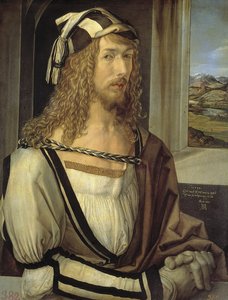
Albrecht Dürer
1471 - 1528 , Niemcy
Krótka nota
- Artistic Movement Or Style: Renesans północny
- Artists Or Movements Influenced By This Artist:
- Renesans włoski
- Gothic
- Artists Who Influenced This Artist:
- Leonardo da Vinci
- Michał Wolgemut
- Rafael
- Date Of Birth: 21 maja 1471
- Date Of Death: 6 kwietnia 1528
- Full Name: Albrecht Dürer
- Nationality: Niemiec
- Notable Artworks:
- Apokalipsa
- Melencolia I
- Jeremia w jego studiu
- Place Of Birth: Nuremberg, Niemcy
Powiązane artykuły
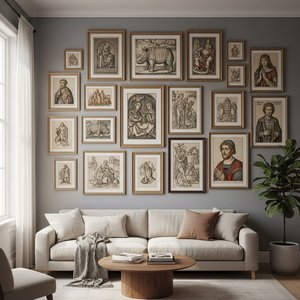
Albrecht Dürer: 25 Arcydzieł Mistrza Renesansu – Obrazy i Grafiki do Twojego Domu
Odkryj 25 arcydzieł Albrechta Dürera – mistrza renesansu! Poznaj historie, techniki i symbolikę jego najsłynniejszych obrazów i grafik. Reprodukcje najwyższej jakości do Twojego wnętrza na OriginalUniqueArt.com
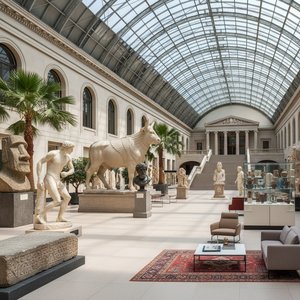
25 Arcydzieł Brytyjskiego Muzeum: Historia Sztuki w Twoim Domu | OriginalUniqueArt
Odkryj 25 arcydzieł Brytyjskiego Muzeum! Poznaj historie słynnych obrazów, rzeźb i artefaktów od antyku po współczesność. Reprodukcje najwyższej jakości na OriginalUniqueArt.com – inspiracje dla Twojego wnętrza. Eksploruj pełną kolekcję online!

Silent Narratives: Exploring the Enduring Appeal of Still Life Painting Across Centuries
Explore the rich history of still life painting with OriginalUniqueArt. Discover Dutch Masters, decode vanitas symbolism & learn about collecting timeless art. Expert insights and museum-quality reproductions.
Martwa natura w sztuce: od starożytności do współczesności – historia, symbolika i trwały urok
Odkryj fascynującą historię martwej natury w sztuce – od antycznych początków po współczesne reinterpretacje. Poznaj mistrzów, symbolikę i techniki malarskie. Ekskluzywne artykuły na OriginalUniqueArt.com!

Albrecht Dürer: A Renaissance Master's Legacy of Innovation and Self-Portraiture
Explore the life & art of Albrecht Dürer, a pivotal German Renaissance master. Discover his groundbreaking printmaking techniques, iconic self-portraits, and lasting influence on Western art history. A deep dive into innovation & symbolism.