
 Podgląd w skali 1:1
 Wyślij jako kartkę
 Udostępnij
 Szczegóły dzieła
 Przewodnik

 Pobierz obraz
 Podobne obiekty
 RTG
RTG Pokaz slajdów
 Pytania i odpowiedzi
 Statystyki
The Lamentation

- 293.0 x 416.0 cm


 Rozwiń treść
Otrzymaj plik gotowy do druku, którego jakość znacznie przewyższa podgląd internetowy. Każdy sprzedawany przez nas obraz cyfrowy pochodzi z wysokorozdzielczego pliku wzorcowego w naszej bazie — zazwyczaj o szerokości od 5 000 do 15 000 pikseli — dzięki czemu możesz drukować w dużym formacie, mocno kadrować lub z pełnym przekonaniem odwzorowywać najdrobniejsze detale.
Żaden plik nie opuszcza naszego studia bez odpowiedniej obróbki. Ekspert ds. cyfrowej edycji sprawdza zgodność kolorów z oryginałem i w razie potrzeby je koryguje, a następnie za pomocą profesjonalnych narzędzi do retuszu poprawia ostrość oraz szczegółowość — zawsze zachowując wierność pociągnięciom pędzla i stylowi artysty. Rezultatem jest obraz, który wygląda jak prawdziwe dzieło, a nie jak przefiltrowany skan.
Zatwierdzasz przed finalizacją zamówienia: nasz ekspert prześle obraz drogą mailową w ciągu 72 godzin do Twojego wglądu. Nie jesteś zadowolony? Poproś o poprawki lub korektę, bądź o zwrot kosztów, jeśli jakość nie spełnia oczekiwań.
To jakość, na której polegają wydawcy, studia projektowe, galerie oraz drukarnie.
Obraz cyfrowy
Pobierz plik o wysokiej rozdzielczości do osobistego użytku, druku oraz projektów kreatywnych. ( Przełącz na wydania drukowane Zamów ręcznie malowaną reprodukcję)
W każdym zamówieniu na obraz cyfrowy znajduje się
Profesjonalna dostawa cyfrowa z gwarancją
Wybierając OriginalUniqueArt.com, nie otrzymujesz jedynie obrazu – otrzymujesz profesjonalnie udoskonalone cyfrowe dzieło sztuki, stworzone z najwyższą precyzją i objęte gwarancją satysfakcji. Oto wszystko, co automatycznie dołączane jest do Twojego zamówienia:

Błyskawiczna wysyłka e-mailowa
Plik z obrazem cyfrowym w wysokiej rozdzielczości zostanie przesłany na Twój adres e-mail w ciągu 72 godzin od złożenia zamówienia – gotowy do natychmiastowego użycia.

Plik cyfrowy wzbogacony przez AI
Twoja grafika została profesjonalnie zoptymalizowana przy użyciu zaawansowanych narzędzi AI oraz ręcznej edycji, co zapewnia maksymalną szczegółowość, klarowność i wierność kolorów.

Darmowe ponowne przesyłki dożywotnio
Przypadkowo usunąłeś lub zgubiłeś swój plik? Bez obaw – prześlemy go Tobie ponownie w dowolnym momencie, bez żadnych opłat.

Bez opłat importowych – zawsze
Ciesz się swoją sztuką natychmiast, bez żadnych opłat celnych, należności ani kosztów dostawy – pliki cyfrowe są zawsze wolne od podatku.

Gwarancja wierności kolorów
Dzięki zastosowaniu profesjonalnych narzędzi i procesów zarządzania barwą zapewniamy, że Twoje cyfrowe zdjęcie odzwierciedla oryginalne kolory tak wiernie, jak to tylko możliwe.

Gwarancja satysfakcji przez 100 dni
Jeśli nie będziesz zadowolony ze swojego cyfrowego obrazu, dokonamy jego poprawki lub zwrócimy 100% kosztów w ciągu 100 dni – bez zbędnych pytań.

100% Gwarancja zwrotu pieniędzy
Nie jesteś zadowolony? Otrzymaj pełny zwrot kosztów w ciągu 100 dni od otrzymania pliku cyfrowego – bez zbędnych pytań.

Rabaty przy zamówieniach hurtowych
Kup 3 obrazy, oszczędź 10% - Kup 5, oszczędź 15% - Kup 10+, oszczędź 20%. Idealne do projektów kreatywnych, galerii i agencji.
A Symphony of Sorrow: The Soul of Dürer’s Lamentation
In the quiet, silvered lines of Albrecht Dürer’s The Lamentation, one finds more than a mere religious scene; one encounters a profound meditation on the human condition. Created during the height of the Northern Renaissance, this masterpiece captures the heavy, breathless moment following the Crucifixion. The composition is anchored by the weight of Christ’s lifeless body, draped across the lap of Mary Magdalene, creating a focal point that pulls the viewer into a tight, intimate circle of mourning. As your eyes move through the piece, you encounter a constellation of grief—the Virgin Mary lifting Christ’s head, the solemn presence of John the Evangelist, and the weary shadows of Nicodemus and Joseph of Arimathea. It is a scene where every gesture, from a bowed head to a slumped shoulder, speaks of an unbearable loss that transcends time.
The technical brilliance of this work lies in Dürer’s mastery of the silverpoint technique, a method that demands absolute precision and leaves no room for error. Unlike the fluid freedom of charcoal, silverpoint requires a steady hand to etch fine, delicate lines onto a specially prepared surface. This painstaking process allows for an extraordinary level of detail, where the subtle hatching and cross-hatching create a sense of three-dimensional volume and atmospheric depth. The resulting textures—the heavy folds of mourning drapery, the weathered skin of the elders, and the soft, tragic contours of Christ’s form—are rendered with a breathtaking realism that feels almost tactile. For the collector, this level of detail offers a mesmerizing visual experience that rewards prolonged contemplation.
Symbolism and the Landscape of Loss
Beyond its anatomical perfection, The Lamentation is rich with the symbolic language characteristic of the German Renaissance. Dürer utilizes a pyramidal composition to establish a spiritual hierarchy, guiding the viewer’s gaze upward from the earthly tragedy at the base toward the heavens. Even the landscape serves as a silent participant in this drama; the presence of a barren tree, bearing only withered fruit, acts as a poignant emblem of mortality and the spiritual emptiness left in the wake of death. The interplay of light and shadow—achieved through meticulous tonal gradations—does not merely illuminate the figures but emphasizes their vulnerability, casting a somber glow upon the faces of those left to navigate a world transformed by grief.
For interior designers and connoisseurs of fine art, a high-quality reproduction of this work offers an unparalleled opportunity to introduce a sense of historical gravity and intellectual depth into a space. Whether placed in a quiet study, a formal gallery, or a sophisticated living area, the monochromatic elegance of Dürer’s silverpoint style provides a timeless aesthetic that complements both classical and contemporary decor. It is not simply a decoration; it is an invitation to reflect, a piece of history that brings the profound emotional resonance of the 16th century into the modern home, serving as a constant reminder of the enduring power of faith, memory, and the beauty found within sorrow.
Pytania i odpowiedzi
Co przedstawia „The Lamentation” – Albrecht Dürer?
„The Lamentation” – Albrecht Dürer przedstawia: mourning, grief, religious devotion, composition, detail, silverpoint drawing, renaissance.
Czy mogę przyjrzeć się bliżej dziełu "The Lamentation"?
Strona Analiza rentgenowska dzieła „The Lamentation” – Albrecht Dürer to interaktywny podgląd, który pozwala na przeglądanie jedenastu warstw optycznych obrazu, w tym widoku w stylu rentgenowskim.
Jak nasycone są kolory w „The Lamentation” – Albrecht Dürer?
Kolory w „The Lamentation” – Albrecht Dürer charakteryzują się Monochromatic intensywnością.
Biografia artysty
A Life Forged in Nuremberg: The Early Years and Apprenticeship
Albrecht Dürer, a name synonymous with the German Renaissance, emerged from the bustling artisan city of Nuremberg in 1471. His father, Albrecht Dürer the Elder, was a successful goldsmith who had immigrated from Hungary, bringing with him a lineage steeped in craftsmanship. It was within this environment—the scent of metal and the meticulous precision of handiwork—that young Albrecht’s artistic inclinations first took root. Though his father envisioned a similar path for him, apprenticing him initially in the family trade, it soon became undeniable that Albrecht possessed an exceptional gift for drawing. At thirteen, he transitioned to the workshop of Michael Wolgemut, Nuremberg's leading artist at the time. This was no mere technical training; it was immersion into a world of illuminated manuscripts, painted panels, and—crucially—the burgeoning art of woodcut illustration. The sheer volume of work produced by Wolgemut’s workshop, including the extensive illustrations for the *Nuremberg Chronicle*, provided Dürer with an unparalleled foundation in design, composition, and the mechanics of image-making. A remarkable silverpoint self-portrait from 1484, created when he was barely a teenager, stands as astonishing evidence of his precocious talent—a testament to a burgeoning artistic identity already taking shape. This early work demonstrated a keen eye for detail, an understanding of perspective, and a nascent ability to capture the likeness of individuals with remarkable accuracy.The Italian Influence and Artistic Maturation
Dürer’s ambition extended far beyond the confines of Nuremberg. Driven by an insatiable curiosity and a desire to master the art of painting, he embarked on his first journey to Italy in 1494. This was not simply a sightseeing trip; it was a pilgrimage to the heart of the Renaissance. He encountered the works of masters like Raphael, Giovanni Bellini, and Leonardo da Vinci—artists who were redefining the possibilities of form, perspective, and human expression. The impact of this exposure was profound. Dürer absorbed the classical motifs, harmonious compositions, and subtle sfumato techniques that characterized Italian art, yet he never abandoned his Northern European sensibility for meticulous detail and symbolic depth. He studied the grandeur of Rome, marveling at ancient ruins and absorbing the legacy of antiquity. This journey ignited a desire to integrate classical ideals into his own artistic practice, leading him to incorporate elements of Greek and Roman mythology and philosophy into his later works. A second sojourn to Italy between 1505 and 1507 further solidified these influences, allowing him to study ancient Roman ruins and refine his understanding of anatomy and proportion. This synthesis of Northern precision and Italian grace became the hallmark of Dürer’s unique artistic style.Mastering the Mediums: Painting, Engraving, and Woodcut
Dürer was a master of multiple mediums, each offering him distinct avenues for creative expression. His paintings, though fewer in number than his prints, demonstrate a remarkable command of oil paint and an ability to capture both physical likeness and psychological depth. Works like the *Feast of the Rose Garlands* (1507) reveal a vibrant palette influenced by Venetian colorism—bold hues and shimmering effects that create a sense of opulence and celebration. However, it was in the realm of printmaking—particularly engraving and woodcut—that Dürer truly revolutionized artistic practice. He elevated these techniques from mere reproductive methods to independent art forms, capable of conveying complex narratives and profound emotions. The *Apocalypse* series (1498), a collection of fourteen woodcuts illustrating the Book of Revelation, showcased his mastery of this medium despite its inherent limitations—the grainy texture of the woodcut demanded careful planning and execution. Later engravings like *Melencolia I* (1514) and *Saint Jerome in His Study* (1514) are testaments to his unparalleled skill—intricate compositions filled with symbolic meaning and executed with breathtaking precision. He didn’t just depict reality; he imbued it with layers of intellectual and spiritual significance, often incorporating complex allegories and moral lessons into his prints.A Theorist and Innovator: The Legacy of Albrecht Dürer
Dürer was not merely an artist; he was a scholar, a theorist, and an innovator who sought to understand the underlying principles governing artistic creation. He believed in the mathematical foundations of art and dedicated himself to establishing a scientific approach to representation. His treatises on geometry, proportion, and human anatomy—most notably *Four Books of Human Proportion* (1528)—were groundbreaking for their time, demonstrating his commitment to rigorous observation and rational analysis. These writings were not simply academic exercises; they were intended to elevate the status of artists from mere craftsmen to intellectual practitioners. Dürer’s work on perspective, in particular, laid the groundwork for future generations of artists and architects. He meticulously documented his experiments with linear perspective, developing a system that allowed him to create realistic depictions of three-dimensional space on a two-dimensional surface. His theoretical writings were accompanied by numerous drawings and engravings that illustrated his concepts—a testament to his belief in the importance of visual demonstration. Dürer’s legacy extends far beyond his individual artworks. He bridged the gap between Northern European traditions and Italian Renaissance ideals, introducing classical motifs into Northern art while maintaining its distinctive character. His theoretical contributions helped establish a new framework for artistic practice, inspiring generations of artists with his technical skill, innovative spirit, and profound vision. He remains, to this day, one of the most important figures in the history of Western art.Influences and Enduring Impact
- Michael Wolgemut: Dürer’s initial mentor, providing foundational skills in drawing, painting, and woodcut techniques.
- Leonardo da Vinci: Inspired Dürer's exploration of anatomy, perspective, and sfumato—the subtle blending of tones.
- Raphael: Influenced Dürer’s compositional harmony and idealized forms.
- Giovanni Bellini: Contributed to Dürer's understanding of color and Venetian painting traditions.
Dürer’s influence reverberates through centuries of art history. His meticulous realism, his innovative use of printmaking, and his theoretical writings continue to inspire artists and scholars alike. He demonstrated that art could be both technically masterful and intellectually rigorous—a legacy that continues to shape the artistic landscape today. His work stands as a testament to the power of observation, the pursuit of knowledge, and the enduring human desire to create beauty and meaning.
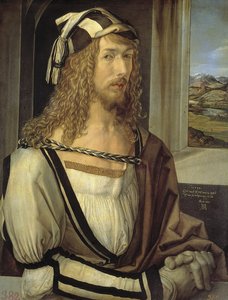
Albrecht Dürer
1471 - 1528 , Niemcy
Krótka nota
- Artistic Movement Or Style: Renesans północny
- Artists Or Movements Influenced By This Artist:
- Renesans włoski
- Gothic
- Artists Who Influenced This Artist:
- Leonardo da Vinci
- Michał Wolgemut
- Rafael
- Date Of Birth: 21 maja 1471
- Date Of Death: 6 kwietnia 1528
- Full Name: Albrecht Dürer
- Nationality: Niemiec
- Notable Artworks:
- Apokalipsa
- Melencolia I
- Jeremia w jego studiu
- Place Of Birth: Nuremberg, Niemcy