Podgląd w skali 1:1
 Wyślij jako kartkę
 Udostępnij
 Szczegóły dzieła
 Przewodnik

 Pobierz obraz
 Podobne obiekty
 RTG
RTG Pokaz slajdów
 Q&A
Q&A Statystyki
Dom nad stawem

- 21.0 x 23.0 cm


 Rozwiń treść
Giclée / Wydruk artystyczny
Wydruki giclée lub płótna o jakości muzealnej, szybka realizacja i szeroki wybór opcji wykończenia. ( Zamów ręcznie malowaną reprodukcję Przejdź do wersji cyfrowej)




P118B zł10

P118H zł10

P118W zł10

P438Z zł10

P508JH zł12

P508YH zł12

P805H zł10

P805Z zł10

P919BZ zł10

P919G zł10

P919XJ zł10

P959ZH zł10

P968JZ zł12

W106C zł8

W218G zł10

W218JH zł8

W218Y zł10

W307PJ zł10

W316G zł10

W316PJ zł8

W316Y zł10

W398PJ zł8

W4111J zł10

W500HY zł15

W500JH zł15

W692G zł12

W849H zł8

W940BG zł15

W953PJ zł8




Wybierz spośród naszych standardowych rozmiarów, które zachowują oryginalne proporcje dzieła sztuki.

Wpisz wymaganą szerokość i wysokość, aby dopasować grafikę do ramy lub ściany. Wydruk można jedynie przyciąć, nigdy nie powiększając go poza oryginalny obraz, dlatego format o innych proporcjach spowoduje utratę części kompozycji. Przed rozpoczęciem druku prześlemy Ci cyfrowy podgląd do zatwierdzenia. Obraz wyświetlany na tej stronie nie pokazuje rzeczywistego przycięcia — jedynie podgląd oddaje ten efekt.
Dostawa na cały świat () w ciągu 2 tygodni zamiast standardowych 4/5 tygodni. (2 Listopad)

Bezpłatna ekspresowa wysyłka na cały świat

Wysokiej jakości płótno lniane

Pełne ubezpieczenie przesyłki

Gwarancja zwrotu należności celnych i podatków importowych

Gwarancja wiernego odwzorowania kolorów

100-dniowa polityka zwrotów (tylko w przypadku wad)

Gwarancja 100% zwrotu pieniędzy

Zniżka przy zakupie wielu sztuk
 Opcja ze szkłem jest dostępna wyłącznie w rozmiarach poniżej 110 cm

Dom nad stawem
Giclée / Wydruk artystyczny
Wymiary reprodukcji
-


Cena całkowita
zł 311
Spokojne odbicie renesansowych ideałów
„Dom nad stawem” Albrechta Dürera, namalowany około 1496 roku, stanowi kwintesencję malarstwa pejzażowego północnego renesansu – gatunku głęboko zakorzenionego w myśli humanistycznej i niezachwianej fascynacji światem natury. Ten akwarelowy obraz to coś więcej niż tylko przedstawienie krajobrazu; uchwycił on głębokie poczucie ciszy i harmonii, odzwierciedlając wrażliwość artystyczną dominującą w formacyjnych latach Dürera.
- Tematyka: Dzieło prezentuje malowniczą panoramę z łagodnym stawem otoczonym bujną zielenią – głównie trzcinami i drzewami – oraz samotną wieżą wznoszącą się z wyspy, która dominuje nad całością. Ta starannie przemyślana kompozycja ma na celu wywołanie kontemplacji i podziwu dla piękna natury.
- Styl i kontekst: Twórczość Dürera ściśle wpisuje się w nurty artystyczne krążące wówczas w Norymberdze, odzwierciedlając wpływ humanistów, którzy promowali obserwację i racjonalną analizę jako drogi do zrozumienia Bożego stworzenia. Obraz ten stanowi echo szerszej renesansowej dbałości o idealizowane przedstawienia świata przyrody – będąc świadomym odejściem od średniowiecznego symbolizmu na rzecz klarowności i realizmu.
Technika: Mistrzostwo akwareli – technika „mokre na mokre”
Mistrzowska egzekucja Dürera została osiągnięta przede wszystkim dzięki zastosowaniu pigmentów akwarelowych na papierze, przy użyciu techniki znanej jako wet-on-wet (mokre na mokre). Metoda ta pozwala na uzyskanie subtelnych gradacji koloru oraz perspektywy powietrznej, tworząc iluzję głębi, która wciąga widza w głąb sceny. Można dostrzec, jak miękkie krawędzie płynnie się przenikają, oddając delikatny ruch wody i rozproszone światło przesuwające się nad krajobrazem.
- Pociągnięcia pędzla: Widoczne ślady pędzla przyczyniają się do teksturalnej bogatości dzieła, dodając mu namacalnego poczucia bezpośredniości i demonstrując niezwykłą dbałość Dürera o szczegół. Te znaki nie są przypadkowe; zostały celowo użyte, aby wzmocnić siłę wizualną i ukazać rękę artysty – co stanowi znak rozpoznawczy malarstwa rewanesansowego.
- Paleta barw: Paleta kolorystyczna jest powściągliwa, a jednak niezwykle sugestywna, zdominowana przez przygaszone brązy i ochry – tony, które nadają dziełu patynę czasu oraz subtelnie melancholijny nastrój. Ten świadomy wybór podkreśla kontemplacyjny charakter obrazu i współgra z humanistycznym pragnieniem piękna przepełnionego mądrością.
Symbolika i emocjonalny rezonans
Poza swoimi walorami estetycznymi, „Dom nad stawem” niesie ze sobą ciężar symboliczny. Wieża reprezentuje aspiracje – dążenie ku boskim ideałom – podczas gdy staw symbolizuje spokój i duchową kontemplację. Odbicie wieży w lustrze wody powiela scenę z przeciwległego brzegu, tworząc wizualną metaforę równowagi i harmonii – koncepcji centralnych dla filozofii renesansu.
- Perspektywa powietrzna: Dürer po mistrzowsku wykorzystuje perspektywę powietrzną – zmniejszając nasycenie barw i detale obiektów znajdujących się w oddali – aby oddać głębię i realizm. Technika ta wzmacnia imersyjną jakość dzieła, zapraszając widzów do zatracenia się w pięknie krajobrazu.
- Ogólne wrażenie: Ostatecznie „Dom nad stawem” wykracza poza zwykłą reprezentację; komunikuje on odpowiedź emocjonalną – tęsknotę za spokojem i więzią ze światem natury – uczucie, które do dziś potężnie rezonuje z odbiorcami.
Pytania i odpowiedzi
Jaki poziom kontrastu prezentuje „Dom nad stawem” – Albrecht Dürer?
Kontrast jasności w dziele "Dom nad stawem" wynosi Delikatny. Kontrast określa stopień zróżnicowania między obszarami jasnymi a ciemnymi.
Kiedy powstało dzieło "Dom nad stawem" i do jakiego nurtu należy?
„Dom nad stawem” – Albrecht Dürer datowane jest na 1496 rok i reprezentuje nurt Renesans Północny.
Czy „Dom nad stawem” – Albrecht Dürer to obraz, rysunek czy grafika?
"Dom nad stawem" to Sztuka ścienna.
Biografia artysty
A Life Forged in Nuremberg: The Early Years and Apprenticeship
Albrecht Dürer, a name synonymous with the German Renaissance, emerged from the bustling artisan city of Nuremberg in 1471. His father, Albrecht Dürer the Elder, was a successful goldsmith who had immigrated from Hungary, bringing with him a lineage steeped in craftsmanship. It was within this environment—the scent of metal and the meticulous precision of handiwork—that young Albrecht’s artistic inclinations first took root. Though his father envisioned a similar path for him, apprenticing him initially in the family trade, it soon became undeniable that Albrecht possessed an exceptional gift for drawing. At thirteen, he transitioned to the workshop of Michael Wolgemut, Nuremberg's leading artist at the time. This was no mere technical training; it was immersion into a world of illuminated manuscripts, painted panels, and—crucially—the burgeoning art of woodcut illustration. The sheer volume of work produced by Wolgemut’s workshop, including the extensive illustrations for the *Nuremberg Chronicle*, provided Dürer with an unparalleled foundation in design, composition, and the mechanics of image-making. A remarkable silverpoint self-portrait from 1484, created when he was barely a teenager, stands as astonishing evidence of his precocious talent—a testament to a burgeoning artistic identity already taking shape. This early work demonstrated a keen eye for detail, an understanding of perspective, and a nascent ability to capture the likeness of individuals with remarkable accuracy.The Italian Influence and Artistic Maturation
Dürer’s ambition extended far beyond the confines of Nuremberg. Driven by an insatiable curiosity and a desire to master the art of painting, he embarked on his first journey to Italy in 1494. This was not simply a sightseeing trip; it was a pilgrimage to the heart of the Renaissance. He encountered the works of masters like Raphael, Giovanni Bellini, and Leonardo da Vinci—artists who were redefining the possibilities of form, perspective, and human expression. The impact of this exposure was profound. Dürer absorbed the classical motifs, harmonious compositions, and subtle sfumato techniques that characterized Italian art, yet he never abandoned his Northern European sensibility for meticulous detail and symbolic depth. He studied the grandeur of Rome, marveling at ancient ruins and absorbing the legacy of antiquity. This journey ignited a desire to integrate classical ideals into his own artistic practice, leading him to incorporate elements of Greek and Roman mythology and philosophy into his later works. A second sojourn to Italy between 1505 and 1507 further solidified these influences, allowing him to study ancient Roman ruins and refine his understanding of anatomy and proportion. This synthesis of Northern precision and Italian grace became the hallmark of Dürer’s unique artistic style.Mastering the Mediums: Painting, Engraving, and Woodcut
Dürer was a master of multiple mediums, each offering him distinct avenues for creative expression. His paintings, though fewer in number than his prints, demonstrate a remarkable command of oil paint and an ability to capture both physical likeness and psychological depth. Works like the *Feast of the Rose Garlands* (1507) reveal a vibrant palette influenced by Venetian colorism—bold hues and shimmering effects that create a sense of opulence and celebration. However, it was in the realm of printmaking—particularly engraving and woodcut—that Dürer truly revolutionized artistic practice. He elevated these techniques from mere reproductive methods to independent art forms, capable of conveying complex narratives and profound emotions. The *Apocalypse* series (1498), a collection of fourteen woodcuts illustrating the Book of Revelation, showcased his mastery of this medium despite its inherent limitations—the grainy texture of the woodcut demanded careful planning and execution. Later engravings like *Melencolia I* (1514) and *Saint Jerome in His Study* (1514) are testaments to his unparalleled skill—intricate compositions filled with symbolic meaning and executed with breathtaking precision. He didn’t just depict reality; he imbued it with layers of intellectual and spiritual significance, often incorporating complex allegories and moral lessons into his prints.A Theorist and Innovator: The Legacy of Albrecht Dürer
Dürer was not merely an artist; he was a scholar, a theorist, and an innovator who sought to understand the underlying principles governing artistic creation. He believed in the mathematical foundations of art and dedicated himself to establishing a scientific approach to representation. His treatises on geometry, proportion, and human anatomy—most notably *Four Books of Human Proportion* (1528)—were groundbreaking for their time, demonstrating his commitment to rigorous observation and rational analysis. These writings were not simply academic exercises; they were intended to elevate the status of artists from mere craftsmen to intellectual practitioners. Dürer’s work on perspective, in particular, laid the groundwork for future generations of artists and architects. He meticulously documented his experiments with linear perspective, developing a system that allowed him to create realistic depictions of three-dimensional space on a two-dimensional surface. His theoretical writings were accompanied by numerous drawings and engravings that illustrated his concepts—a testament to his belief in the importance of visual demonstration. Dürer’s legacy extends far beyond his individual artworks. He bridged the gap between Northern European traditions and Italian Renaissance ideals, introducing classical motifs into Northern art while maintaining its distinctive character. His theoretical contributions helped establish a new framework for artistic practice, inspiring generations of artists with his technical skill, innovative spirit, and profound vision. He remains, to this day, one of the most important figures in the history of Western art.Influences and Enduring Impact
- Michael Wolgemut: Dürer’s initial mentor, providing foundational skills in drawing, painting, and woodcut techniques.
- Leonardo da Vinci: Inspired Dürer's exploration of anatomy, perspective, and sfumato—the subtle blending of tones.
- Raphael: Influenced Dürer’s compositional harmony and idealized forms.
- Giovanni Bellini: Contributed to Dürer's understanding of color and Venetian painting traditions.
Dürer’s influence reverberates through centuries of art history. His meticulous realism, his innovative use of printmaking, and his theoretical writings continue to inspire artists and scholars alike. He demonstrated that art could be both technically masterful and intellectually rigorous—a legacy that continues to shape the artistic landscape today. His work stands as a testament to the power of observation, the pursuit of knowledge, and the enduring human desire to create beauty and meaning.
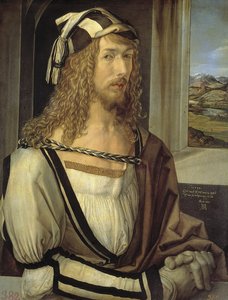
Albrecht Dürer
1471 - 1528 , Niemcy
Krótka nota
- Artistic Movement Or Style: Renesans północny
- Artists Or Movements Influenced By This Artist:
- Renesans włoski
- Gothic
- Artists Who Influenced This Artist:
- Leonardo da Vinci
- Michał Wolgemut
- Rafael
- Date Of Birth: 21 maja 1471
- Date Of Death: 6 kwietnia 1528
- Full Name: Albrecht Dürer
- Nationality: Niemiec
- Notable Artworks:
- Apokalipsa
- Melencolia I
- Jeremia w jego studiu
- Place Of Birth: Nuremberg, Niemcy
Powiązane artykuły

25 Arcydzieł Brytyjskiego Muzeum: Historia Sztuki w Twoim Domu | OriginalUniqueArt
Odkryj 25 arcydzieł Brytyjskiego Muzeum! Poznaj historie słynnych obrazów, rzeźb i artefaktów od antyku po współczesność. Reprodukcje najwyższej jakości na OriginalUniqueArt.com – inspiracje dla Twojego wnętrza. Eksploruj pełną kolekcję online!

10 Legendarnych Akwareli, Które Zmieniły Sztukę. Inspiracje do Dekoracji Domu.
Odkryj 10 legendarnych akwareli Turner'a, Monet'a i innych mistrzów! Poznaj historie, techniki i inspiracje tych ponadczasowych dzieł. Reprodukcje obrazów najwyższej jakości na OriginalUniqueArt.com – idealne do dekoracji wnętrz.

Efemeryczne Wizje: Historia i Emocjonalny Rezonans Malarstwa Akwarelowego
Odkryj fascynującą historię malarstwa akwarelowego! Poznaj techniki mistrzów, romantyczny nurt i współczesne trendy. Inspiracje do dekoracji wnętrz oraz możliwość personalizacji obrazów na OriginalUniqueArt.com.
Albrecht Dürer: 25 Arcydzieł Mistrza Renesansu – Obrazy i Grafiki do Twojego Domu
Odkryj 25 arcydzieł Albrechta Dürera – mistrza renesansu! Poznaj historie, techniki i symbolikę jego najsłynniejszych obrazów i grafik. Reprodukcje najwyższej jakości do Twojego wnętrza na OriginalUniqueArt.com

Efemeryczne Wizje: Historia i Współczesna Praktyka Malarstwa Akwarelowego
Poznaj historię i techniki malarstwa akwarelowego! Odkryj inspiracje mistrzów, współczesne trendy oraz praktyczne porady dotyczące materiałów. Rozwiń swoją pasję z naszym przewodnikiem.