() ·

A painting made for you, by hand

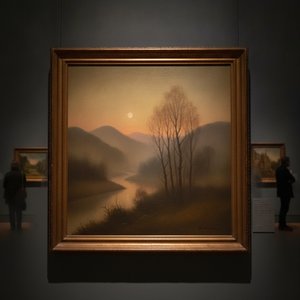
The Lone Scout

Ręcznie malowana reprodukcja olejowa

Ręcznie malowany obraz olejny na płótnie, wykonany na zamówienie przez naszych artystów w wybranym przez Ciebie wymiarze i oprawie. ( Przełącz na wydania drukowane Przejdź do wersji cyfrowej)

Opis obiektu

Discover "The Lone Scout" by Albert Pinkham Ryder – a captivating American Symbolist painting of a solitary figure on horseback, brimming with mystery and evocative landscapes.

Biografia artysty

Podziwiający obraz Alberta Pinkhama Rydera „Ścieżka wyścigowa”, arcydzieło Symbolizmu i Ekspresjonizmu, przedstawiające melancholijną krajobrazową scenę z samotnym jeźdźcem na koniu przeciwko ponuremu niebu. Znajdziesz tu głębokie emocje i bogatą kolorystykę.

from ·

Chapter 1

How large should it be?

Slide to change the size; the picture on the left shows the frame at its real width. The proportions of the original are kept.

Standardowy format
personalizowane
CM
INCH

Wybierz spośród naszych standardowych rozmiarów, które zachowują oryginalne proporcje dzieła sztuki.

szerokość
wysokość

Wpisz wymaganą szerokość i wysokość, aby obraz pasował do Twojej ramy lub ściany. Ponieważ jest to dzieło malowane ręcznie, w przypadku rozmiaru o innych proporcjach artysta może domalować nieco więcej wokół obrazu lub przyciąć jego fragmenty — wybór należy do Ciebie. Przed rozpoczęciem pracy prześlemy Ci cyfrową wizualizację do zatwierdzenia. Obraz widoczny na tej stronie nie przedstawia rzeczywistego efektu — jedynie wizualizacja oddaje realny rezultat.

Chapter 2

How should it arrive?

Choose the edges of the stretched canvas

Choose your frame

Corner sample of the WhiteWrap canvas edge finish, stretched on lite drewno bars
White zł1
Corner sample of the BlurSideWrap canvas edge finish, stretched on lite drewno bars
Blurside zł1
Corner sample of the ExtendedWrap canvas edge finish, stretched on lite drewno bars
Extended zł1
Corner sample of the P118B picture frame: polistyren formowany, 5 cm wide and 3 cm thick
P118B zł10
Corner sample of the P118H picture frame: polistyren formowany, 5 cm wide and 3 cm thick
P118H zł10
Corner sample of the P118W picture frame: polistyren formowany, 5 cm wide and 3 cm thick
P118W zł10
Corner sample of the P438Z picture frame: polistyren formowany, 5.5 cm wide and 3.5 cm thick
P438Z zł10
Corner sample of the P508JH picture frame: polistyren formowany, 7 cm wide and 3.5 cm thick
P508JH zł12
Corner sample of the P508YH picture frame: polistyren formowany, 7 cm wide and 3.5 cm thick
P508YH zł12
Corner sample of the P805H picture frame: polistyren formowany, 5 cm wide and 3.5 cm thick
P805H zł10
Corner sample of the P805Z picture frame: polistyren formowany, 5 cm wide and 3.5 cm thick
P805Z zł10
Corner sample of the P919BZ picture frame: polistyren formowany, 7 cm wide and 3.5 cm thick
P919BZ zł10
Corner sample of the P919G picture frame: polistyren formowany, 7 cm wide and 3.5 cm thick
P919G zł10
Corner sample of the P919XJ picture frame: polistyren formowany, 7 cm wide and 3.5 cm thick
P919XJ zł10
Corner sample of the P959ZH picture frame: polistyren formowany, 5 cm wide and 3 cm thick
P959ZH zł10
Corner sample of the P968JZ picture frame: polistyren formowany, 6 cm wide and 4 cm thick
P968JZ zł12
Corner sample of the W106C picture frame: lite drewno, 5 cm wide and 3 cm thick
W106C zł8
Corner sample of the W218G picture frame: lite drewno, 5 cm wide and 3 cm thick
W218G zł10
Corner sample of the W218JH picture frame: lite drewno, 5 cm wide and 3 cm thick
W218JH zł8
Corner sample of the W218Y picture frame: lite drewno, 5 cm wide and 3 cm thick
W218Y zł10
Corner sample of the W307PJ picture frame: lite drewno, 6 cm wide and 3 cm thick
W307PJ zł10
Corner sample of the W316G picture frame: lite drewno, 6 cm wide and 3 cm thick
W316G zł10
Corner sample of the W316PJ picture frame: lite drewno, 6 cm wide and 3 cm thick
W316PJ zł8
Corner sample of the W316Y picture frame: lite drewno, 6 cm wide and 3 cm thick
W316Y zł10
Corner sample of the W398PJ picture frame: lite drewno, 5 cm wide and 3 cm thick
W398PJ zł8
Corner sample of the W4111J picture frame: lite drewno, 6.5 cm wide and 3.5 cm thick
W4111J zł10
Corner sample of the W500HY picture frame: lite drewno, 7 cm wide and 5 cm thick
W500HY zł15
Corner sample of the W500JH picture frame: lite drewno, 7 cm wide and 5 cm thick
W500JH zł15
Corner sample of the W692G picture frame: lite drewno, 8 cm wide and 4 cm thick
W692G zł12
Corner sample of the W849H picture frame: lite drewno, 5 cm wide and 3 cm thick
W849H zł8
Corner sample of the W940BG picture frame: lite drewno, 7.5 cm wide and 4.5 cm thick
W940BG zł15
Corner sample of the W953PJ picture frame: lite drewno, 6 cm wide and 3.5 cm thick
W953PJ zł8
Corner sample of the H24-GOLD picture frame: rzeźbione drewno pokryte gipsem, 10 cm wide and 6 cm thick
H24-GOLD zł30
Corner sample of the H24-SILVER picture frame: rzeźbione drewno pokryte gipsem, 10 cm wide and 6 cm thick
H24-SILVER zł30
Corner sample of the H36-GOLD picture frame: rzeźbione drewno pokryte gipsem, 15 cm wide and 6.5 cm thick
H36-GOLD zł45
Corner sample of the H36-SILVER picture frame: rzeźbione drewno pokryte gipsem, 15 cm wide and 6.5 cm thick
H36-SILVER zł45

Moulding: . Overall size with the frame: .

Chapter 3

Who paints it, and should anything change?

Examples of what can be changed: Replace face with customer photo; Add pet (e.g., replace cat with dog); Include hidden message in background; Change background landscape or elements.
After order, OriginalUniqueArt.com team will email client for instructions and provide a mockup preview

Dostawa na całym świecie () w ciągu 3–4 tygodni zamiast standardowych 5 tygodni. (1 Listopad). Bez kompromisów w kwestii jakości.

Chapter 4

The finishing touches

A nameplate, as in a museum?

Szczegóły grawerowanej brązowej tabliczki

This elegant plaque features the artist's name and the title of the artwork, finely engraved for a timeless presentation.

It is made from bronze with a refined, elegant finish. The text is precisely laser-engraved for a sharp and permanent result. Measuring 9x2 cm, the plaque is compact yet easy to read. It's built to be durable and scratch-resistant, offering a professional, museum-quality look. Mounting is simple thanks to the included adhesive backing.

Szczegóły przezroczystej tabliczki akrylowej

The plaque includes essential engraved details such as the artist's name, the title of the artwork, the date it was created, the type of media used-like oil on canvas or watercolor-a brief description of the piece, and a QR code that links to the complete artwork information.

It is crafted from clear acrylic, offering a sleek, modern appearance. The text is UV-engraved in black to ensure strong visual contrast. With a size of 10x15 cm, it ensures optimal readability. It comes equipped with two metal hooks for secure wall mounting. The plaque is designed to be weather-resistant, making it suitable for various environments, and it includes interactive features that work seamlessly with smartphone scanning.

Szczegóły czarnej tabliczki akrylowej

This elegant plaque includes engraved information such as the artist's name, the title of the artwork, the date it was created, the type of media used (like oil on canvas or watercolor), a short description of the artwork, and a QR code for quick access to more information.

The plaque itself is made from refined black acrylic with a premium finish. The text is laser-engraved in white for high contrast and readability. Its size is 10x15 cm, designed to be easy to read. It comes with two metal hooks for professional mounting. The design is sleek and fits any interior style. It is also weather-resistant and durable, with built-in digital integration for mobile compatibility.

A protective varnish?

When do you need it?

Chapter 5

Your painting, as you ordered it

The Lone Scout

Technika reprodukcji

Wymiary reprodukcji

-

Wybitny mistrz artystyczny

Większa szczegółowość, finezja i dodatkowy czas na realizację

-

Opcje oprawy reprodukcji

-

-

W przypadku dzieł sztuki lub reprodukcji, których którykolwiek z boków przekracza 105 cm (około 41 cali), rama zostanie wysłana w formie zestawu do samodzielnego montażu. Metoda ta zapewnia bezpieczną dostawę i zapobiega uszkodzeniom podczas transportu.

Wymagany profesjonalny montaż – nie jest to produkt typu DIY.
Zestaw musi zostać złożony, a płótno naciągnięte przez doświadczonego profesjonalnego ramiarza, przy użyciu kleju do drewna (brak w zestawie), kleszczy do naciągania płótna oraz ścisków, które utrzymają krosna w równej pozycji podczas schnięcia kleju. Nieprawidłowy montaż lub nierównomierne napięcie płótna może trwale uszkodzić dzieło sztuki i nie podlega naszej gwarancji.

  • W zestawie znajdują się wszystkie listwy z litego drewna, precyzyjnie docięte do wymiarów.

  • Montaż odbywa się przy użyciu dołączonych wkrętów oraz kleju do drewna do łączenia narożników, którego zestaw nie zawiera i który musi zostać dostarczony przez ramiarza.

  • Wymagane są profesjonalne narzędzia, których nie ma w zestawie: kleszcze do naciągania płótna (napinacz) oraz zaciski, które pozwolą utrzymać listwy w równej pozycji podczas schnięcia kleju.

Ważne:
Do połączenia narożników niezbędny jest klej do drewna, listwy należy unieruchomić za pomocą ścisków do momentu całkowitego wyschnięcia kleju, a naciągnięcie płótna na złożoną ramę wymaga użycia kleszczy do naciągania płótna. Żaden z tych elementów nie jest dołączony do zestawu. Przed zamówieniem tego rozmiaru zalecamy konsultację z doświadczonym ramiarzem.

Etykieta obiektu

-

-

Lakier ochronny

Lakier z połyskiem (pogłębia kolory, chroni przed światłem i wilgocią)

-

Personalizacja dzieła

Przykłady możliwości personalizacji: zastąp twarz zdjęciem klienta; dodaj zwierzę domowe (np. zamień kota na psa); umieść ukrytą wiadomość w tle; zmień krajobraz lub elementy tła.

-

Ekspresowa

Dostawa na cały świat () w ciągu 3–4 tygodni zamiast standardowych 5 tygodni. (1 Listopad). Bez kompromisów w kwestii jakości.

-

Przesyłka ekspresowa

Dostawa na cały świat () w ciągu 5 tygodni. (8 Listopad).

W cenie

Cena całkowita

zł 1167

Suma całkowita zł 1167

Opcja ze szkłem jest dostępna wyłącznie w rozmiarach poniżej 110 cm

Included with every order

  • Bezpłatna ekspresowa wysyłka na cały świat
  • Wysokiej jakości płótno lniane
  • Pełne ubezpieczenie przesyłki
  • Gwarancja zwrotu należności celnych i podatków importowych
  • Gwarancja wiernego odwzorowania kolorów
  • 100-dniowa polityka zwrotów (tylko w przypadku wad)
  • Gwarancja 100% zwrotu pieniędzy
  • Zniżka przy zakupie wielu sztuk

The Lone Scout: A Vision of American Symbolism

Albert Pinkham Ryder’s “The Lone Scout,” painted in 1885, is more than just a depiction of a rider on horseback; it's a deeply resonant exploration of solitude, discovery, and the untamed spirit of the American West. Housed within the Fine Arts Museums of San Francisco, this oil-on-canvas masterpiece stands as a pivotal work in Ryder’s oeuvre and a significant example of American Symbolism and Tonalism – movements that sought to capture not just visual reality but also emotional atmosphere and subjective experience.

Ryder, born in New Bedford, Massachusetts, possessed an intensely private and often eccentric personality. His early life was steeped in the maritime traditions of his hometown, a landscape of rugged coastlines and bustling harbors that undoubtedly informed his artistic sensibilities. However, it was his relocation to New York City in the late 1860s, amidst his brother’s burgeoning hotel business, that provided him with access to a vibrant cultural scene – an exposure that would profoundly shape his artistic development. Influenced by the Barbizon School in France and the Hague School in Holland, Ryder developed a distinctive style characterized by bold colors, expressive brushstrokes, and a masterful manipulation of light and shadow. “The Lone Scout” exemplifies this approach, eschewing photographic realism in favor of an evocative portrayal of mood and feeling.

A Landscape of Dreams: Composition and Technique

The painting’s composition immediately draws the viewer into its dreamlike quality. A solitary figure, clad in a dark coat and turban-like head covering, dominates the left side of the frame, perched atop a powerful horse that surges forward across an expansive, undulating landscape. The background is dominated by a vast, turbulent sky – a swirling vortex of blues, grays, and hints of violet – suggesting both immensity and impending change. Ryder’s technique is particularly noteworthy; he employs loose, gestural brushstrokes to create a sense of movement and dynamism, while simultaneously utilizing tonal variations to establish depth and atmosphere. The colors are rich and saturated, yet subtly muted, contributing to the painting's overall mood of quiet contemplation.

Ryder’s use of light is particularly striking. It isn’t a bright, direct illumination but rather a diffused glow that seems to emanate from an unseen source, casting long shadows and highlighting key elements within the composition. This technique creates a sense of mystery and invites the viewer to actively participate in interpreting the scene.

Symbolism and Narrative

“The Lone Scout” is rich with symbolic meaning. The solitary figure on horseback represents exploration, both physical and spiritual – a journey into the unknown. The vast landscape symbolizes the challenges and opportunities of the American frontier, while the turbulent sky hints at the unpredictable nature of life itself. Some art historians interpret the scout as an allegory for the pioneer spirit, embodying the courage and resilience required to forge a new path in a challenging environment. Ryder himself often imbued his paintings with personal symbolism, drawing inspiration from literature, mythology, and his own emotional experiences.

Interestingly, “The Lone Scout” was created during a period of significant social and cultural change in America – the late 19th century, a time marked by westward expansion, industrialization, and increasing urbanization. Ryder’s painting can be seen as a reflection of these broader societal trends, capturing both the allure and the anxieties associated with this era of transformation.

A Legacy of Mystique

Albert Pinkham Ryder remains one of America's most enigmatic and beloved artists. “The Lone Scout” stands as a testament to his unique vision and artistic genius – a painting that continues to captivate viewers with its evocative atmosphere, symbolic depth, and masterful technique. Reproductions of this iconic work offer an accessible way to experience the power and beauty of Ryder’s art, bringing a touch of American Symbolism into any space. For those seeking to delve deeper into Ryder's life and work, resources such as Wikipedia and OriginalUniqueArt.com provide valuable insights into his artistic journey.

Pytania i odpowiedzi

Jaki jest zalecany format i orientacja druku dla "The Lone Scout"?

W przypadku "The Lone Scout" zalecanym formatem wydruku jest rozmiar Medium w orientacji Portrait.

Czy „The Lone Scout” – Albert Pinkham Ryder to portret, pejzaż czy kompozycja kwadratowa?

Dzieło „The Lone Scout” – Albert Pinkham Ryder ma format Portrait. Format ten określa proporcje kompozycji.

Czy dzieło „The Lone Scout” – Albert Pinkham Ryder, znajdujące się w zbiorach Fine Arts Museums of San Francisco, może być legalnie reprodukowane?

Oryginał dzieła „The Lone Scout” znajduje się w Fine Arts Museums of San Francisco, a utwór jest należy do domeny publicznej – autorskie prawa majątkowe wygasły.

More about this painting

Podgląd w skali 1:1 Podgląd AR Przełącz na wydania drukowane Przejdź do wersji cyfrowej Wyślij jako kartkę
Szczegóły dzieła Przewodnik Dodaj do ulubionych Pobierz obraz Podobne obiekty RTG Pokaz slajdów Q&A Statystyki

In numbers

  • 1885the year it was painted
  • 29frames to choose from
  • standard sizes, in its own proportions
  • 5weeks to paint and deliver it
Albert Pinkham Ryder

Albert Pinkham Ryder

1847 - 1917, Stany Zjednoczone

Quick facts about Albert Pinkham Ryder

  • Artistic Movement Or Style: Tonalism & Symbolism
  • Artists Who Influenced This Artist:
    • William Edgar Marshall
    • J. Alden Weir
  • Date Of Birth: March 19, 1847
  • Date Of Death: March 28, 1917
  • Full Name: Albert Pinkham Ryder
  • Nationality: American
  • Notable Artworks:
    • Misty Moonlight
    • The Race Track
    • Siegfried & Rhine Maidens
  • Place Of Birth: New Bedford, USA

Biografia artysty

Albert Pinkham Ryder – A Visionary of Mood and Light

Albert Pinkham Ryder (1847-1917) remains a figure shrouded in artistic enigma, yet undeniably influential within the annals of American art history. Details concerning his formative years are scarce—fragments gleaned from archival records paint a picture of a childhood steeped in the maritime atmosphere of New Bedford, Massachusetts. Little is known about Ryder’s early life beyond this coastal upbringing, which undoubtedly instilled within him an enduring fascination with the sea and its transformative power. This fascination would become a recurring motif throughout his oeuvre, manifesting itself as a constant source of inspiration for decades to come.

Early Life and Artistic Beginnings

Ryder's family relocated to New York City in 1867 or 1868, joining Ryder’s elder brother who had established Hotel Albert in Greenwich Village—a landmark reflecting the burgeoning cultural dynamism of the era. This move placed young Albert within a milieu brimming with artistic possibilities and exposure to groundbreaking ideas. Balancing familial responsibilities alongside his unwavering passion for painting, he diligently honed his craft, laying the groundwork for his future artistic trajectory. Despite facing rejection from the National Academy of Design—a pivotal moment in his artistic ambitions—Ryder persevered, securing admittance after a second attempt and forging an enduring friendship with fellow artist Julian Alden Weir. These formative years nurtured his technical skills and introduced him to the established art world, shaping his aesthetic sensibilities profoundly.

Formal Training and European Influences

Ryder’s formal artistic education commenced under William Edgar Marshall in New York City before he enrolled at the National Academy of Design between 1870 and 1875. His initial exhibition in 1873 cemented his position within the artistic landscape, establishing a lifelong connection with Weir—a bond that would prove invaluable throughout his career. These years instilled in him a mastery of traditional techniques while simultaneously fostering an openness to innovative concepts championed by European artists. Between 1877 and 1903, Ryder embarked on four transformative journeys to Europe, immersing himself in the artistic currents of the Old World—a period that irrevocably altered his artistic vision. He was particularly captivated by the French Barbizon school’s emphasis on naturalism and plein air painting, alongside the Dutch Hague School's muted color palettes and atmospheric landscapes. These influences instilled within him a profound appreciation for tonal effects and textural nuances—elements that would become hallmarks of his distinctive style.

A Distinctive Artistic Style: Tonalism and Symbolism

Ryder’s artistic approach distinguished itself from prevailing trends, prioritizing mood and emotion over meticulous detail. He eschewed academic conventions in favor of expressive brushwork and a deliberate manipulation of color to convey intangible feelings—a stylistic choice that foreshadowed the burgeoning movement of Abstract Expressionism. His canvases frequently depict solitary figures enveloped within expansive landscapes or seascapes bathed in ethereal light—scenes imbued with an otherworldly quality that transcends mere representation. Ryder’s masterful use of tonal variations—subtle gradations of hue and shade—created a palpable sense of atmosphere, mirroring the psychological depth he sought to capture on canvas. Recurring motifs included biblical narratives and mythological references—symbols that resonated deeply within his artistic imagination and reflected his spiritual convictions.

Legacy and Recognition

Ryder’s oeuvre garnered considerable acclaim during his lifetime, securing him a place alongside European masters at the groundbreaking 1913 Armory Show—an event that effectively defined modern art in America. His singular vision captivated critics and fellow artists alike, establishing him as a pioneer of American Tonalism and Symbolism. Notably, Jackson Pollock famously proclaimed Ryder’s influence on his own work, recognizing him as “the only American master who interests me.” Ryder's enduring legacy continues to inspire contemporary artists—a testament to the timeless power of his artistic intuition and unwavering dedication to exploring the expressive potential of color and form. His paintings remain treasured artifacts of American art history—illuminating glimpses into a visionary artist’s profound engagement with both nature and spirituality.

Najważniejsze informacje

  • Subject or theme: Exploration, Longing
  • Artistic style: Tonalism, Mysticism
  • Influences:
    • Barbizon
    • Hague
  • Year: 1885
  • Title: The Lone Scout
  • Movement: American Symbolism

Quiz o sztuce

Do każdego pytania dotyczy tylko jedna poprawna odpowiedź.

Pytanie 1:
What artistic movement is Albert Pinkham Ryder most closely associated with?
Pytanie 2:
The painting 'The Lone Scout' depicts a scene primarily set in:
Pytanie 3:
What is the primary symbolic meaning conveyed by the figure on horseback in 'The Lone Scout'?
Pytanie 4:
Albert Pinkham Ryder was born in which city?
Pytanie 5:
The painting 'The Lone Scout' is currently housed at:
Odkryj dzieła sztuki uporządkowane według tematów, stylów i cech charakterystycznych.