

 Zobacz w skali 1:1
 Wyślij
 Udostępnij
 Szczegóły
 Przewodnik

 Pobierz plik obrazu
 Podobne obiekty
 RTG
RTG Pokaz slajdów
 Statystyki
German Atelierwand
 Oil On Canvas
- WallArt
- Realism
 1872
1872 111.0 x 79.0 cm
 Hamburger Kunsthalle
 Czytaj więcej
Giclée / Wydruk artystyczny
Wydruki giclée lub płótna o jakości muzealnej, szybka realizacja i szeroki wybór opcji wykończenia. ( Kup ręcznie malowany obraz Przełącz na wersję cyfrową)




P118B $10

P118H $10

P118W $10

P438Z $10

P508JH $12

P508YH $12

P805H $10

P805Z $10

P919BZ $10

P919G $10

P919XJ $10

P959ZH $10

P968JZ $12

W106C $8

W218G $10

W218JH $8

W218Y $10

W307PJ $10

W316G $10

W316PJ $8

W316Y $10

W398PJ $8

W4111J $10

W500HY $15

W500JH $15

W692G $12

W849H $8

W940BG $15

W953PJ $8




Wybierz spośród naszych standardowych rozmiarów, które zachowują oryginalne proporcje dzieła sztuki.

Możesz wprowadzić własne wymiary, aby dopasować dzieło do konkretnej ramy lub przestrzeni. Jeśli wybrany rozmiar nie będzie odpowiadał proporcjom oryginalnego obrazu, przytniecie dzieło lub rozszerzymy obraz za pomocą odbicia lustrzanego lub jednolitego wypełnienia krawędzi. Przed rozpoczęciem produkcji prześlemy cyfrową wizualizację do Twojej akceptacji.
Prosimy pamiętać, że podgląd na ekranie nie odzwierciedla faktycznego przycinania ani rozszerzania. Tylko wizualizacja dokładnie pokaże końcową kompozycję.
Mimo dostępności niestandardowych rozmiarów, zalecamy wybór wymiaru z listy zdefiniowanej, aby zachować oryginalne proporcje.
Dostawa na cały świat () w ciągu 2 tygodni zamiast standardowych 4/5 tygodni. (25 Wrzesień)

Bezpłatna ekspresowa wysyłka na cały świat

Wysokiej jakości płótno lniane

Pełne ubezpieczenie transportowe

Gwarancja zwrotu należności celnych i podatków importowych

Gwarancja idealnego odwzorowania barw

100-dniowy okres na zwrot dzieła w przypadku wykrycia wad produkcyjnych

Gwarancja 100% zwrotu pieniędzy

Oferta przy zakupie wielu sztuk
 Opcja ze szkłem jest dostępna wyłącznie w rozmiarach poniżej 110 cm

German Atelierwand
Giclée / Wydruk artystyczny
Rozmiar reprodukcji
-


Suma do zapłaty
$ 80
A Chaotic Symphony of Faces: Unpacking Adolph von Menzel’s “German Atelierwand”
Adolph von Menzel's "German Atelierwand" (1872) isn’t merely a painting; it’s an immersive experience, a visual plunge into the depths of human consciousness. Immediately arresting, the work confronts the viewer with a densely packed tableau – a swirling vortex of hundreds of faces emerging from a suffocatingly dark background. It's a scene that simultaneously evokes claustrophobia and overwhelming presence, hinting at both judgment and profound melancholy. Menzel, a master of realism and a keen observer of his time, doesn’t offer easy answers or comforting narratives; instead, he presents us with a raw, unsettling exploration of mortality, power, and the burden of history.
The painting's genesis lies within Menzel’s own studio – specifically, a wall in his workshop. This intimate setting lends an air of vulnerability to the scene, suggesting that these faces aren’t merely representations but fragments of the artist’s own psyche and perhaps reflections on the artistic process itself. The sheer number of portraits, ranging from recognizable historical figures to distorted, almost grotesque visages, creates a sense of collective memory, a chaotic archive of human experience.
Expressionist Roots in a Realist Framework
While firmly rooted in the tenets of German Realism – Menzel’s meticulous attention to detail and his commitment to portraying life as he saw it – “German Atelierwand” exhibits characteristics that foreshadow Expressionism. The fractured lines, the jarring juxtapositions of light and shadow, and the overwhelming emotional intensity all point towards a desire to convey inner turmoil rather than simply depict external reality. Menzel’s use of impasto—thickly applied paint—further amplifies this effect, creating a tactile surface that vibrates with energy and contributes significantly to the painting's unsettling atmosphere.
The technique itself is masterful. Menzel employs a layered approach, building up the composition through countless glazes and brushstrokes. This creates a remarkable sense of depth and movement, as if the faces are constantly shifting and merging within the darkness. The color palette—dominated by deep reds, browns, and ochres—reinforces this feeling of gloom and foreboding, punctuated only by the stark highlights that illuminate certain features, drawing our attention to their anguish or perhaps their silent judgment.
Symbolism and Historical Weight
Beyond its immediate visual impact, “German Atelierwand” is rich in symbolic potential. The dark background can be interpreted as representing the unknown, the void of death, or perhaps the collective unconscious. The faces themselves are not simply individuals; they embody a multitude of historical figures, memories, and anxieties. Some scholars have suggested that Menzel was alluding to the concept of “damned souls” – a common theme in medieval art—while others see echoes of the Nuremberg Trials and the weight of past injustices. The inclusion of plaster casts, particularly the headless torso, adds another layer of complexity, hinting at themes of mortality, fragmentation, and the ephemeral nature of beauty.
The painting’s creation coincided with a period of significant social and political upheaval in Germany, marked by rising nationalism and anxieties about the future. Menzel's work reflects these concerns, offering a powerful meditation on the human condition amidst times of uncertainty. It is a testament to his ability to capture not just the outward appearance of reality but also the underlying currents of emotion and thought that shape our experience.
A Timeless Masterpiece: Reproduction Possibilities
“German Atelierwand” remains a profoundly moving and intellectually stimulating work of art. OriginalUniqueArt offers meticulously crafted, hand-painted reproductions that faithfully capture Menzel’s original vision—the dramatic lighting, the intricate detail, and the overwhelming emotional intensity. These reproductions provide an exceptional opportunity to bring this iconic masterpiece into your home or office, allowing you to contemplate its enduring power and symbolism for years to come.
Biografia artysty
A Life Etched in Realism: The World of Adolph von Menzel
Adolph Friedrich Erdmann von Menzel, a name synonymous with German Realism, was more than just a painter; he was a visual chronicler of 19th-century life. Born on December 8, 1815, in Breslau (now Wrocław, Poland), his journey began not amidst the hallowed halls of artistic academies, but within the practical world of his father’s lithographic workshop. This early immersion in reproduction and detail would profoundly shape his aesthetic sensibilities. Though initially intended for a professorial path by his father, young Adolph's passion for art proved undeniable, leading to brief studies at the Berlin Academy of Art in 1833 before embracing a largely self-taught approach. He quickly distinguished himself through meticulous draftsmanship and an uncanny ability to capture the essence of everyday scenes, initially through lithography, but soon expanding into painting and etching—media he would master with unparalleled skill. Menzel’s life was one dedicated to observation, to translating the world around him onto canvas and paper with a precision that bordered on photographic realism, yet always imbued with a subtle emotional depth.Early Years and Artistic Beginnings
Menzel's early years were marked by a unique blend of practicality and artistic inclination. His father, a skilled lithographer, established a successful workshop in Breslau, providing Adolph with invaluable experience in the techniques of reproduction and printmaking. This hands-on training instilled in him a deep appreciation for detail and precision—qualities that would become hallmarks of his later work. Despite his father’s initial aspirations for him to pursue a career in academia, young Adolph's passion for art quickly overshadowed all other considerations. He enrolled briefly at the Berlin Academy of Art in 1833, but found the formal training restrictive and ultimately opted for a largely self-taught path. This decision allowed him to develop his own unique style, characterized by its meticulous draftsmanship and unflinching realism. His early works primarily focused on lithography, producing stunningly detailed reproductions of historical events and contemporary scenes. These prints demonstrated an exceptional command of technique and a keen eye for observation—qualities that would serve as the foundation for his later paintings.Historical Grandeur and Patriotic Imagery
Menzel’s career gained significant momentum through his illustrations for historical works, particularly those depicting the reign of Frederick the Great. Commissioned to create large-scale compositions for historical narratives, he meticulously researched each scene, striving for an unparalleled level of accuracy and detail. These paintings resonated deeply with a burgeoning national pride in Prussia during a period of significant political and social change. The dramatic lighting, dynamic composition, and carefully rendered costumes conveyed a sense of grandeur and power—elements that appealed to the public’s desire for patriotic imagery. Works like *The Battle of Jena-Auerstedt* exemplify this early success, capturing the intensity and chaos of battle with remarkable realism. However, Menzel's artistic vision extended beyond mere historical recreation; he sought to imbue his paintings with a sense of drama and emotion, creating works that were both visually stunning and intellectually stimulating.Shifting Focus: Genre Scenes and Modern Life
As the 19th century progressed, Menzel’s artistic focus began to shift away from grand historical narratives towards more intimate and contemporary subjects. He increasingly turned his attention to genre scenes—depictions of everyday life in Berlin—and studies of modern industrial labor. This transition marked a significant departure from the conventions of academic painting and signaled Menzel's commitment to capturing the realities of the modern world. His masterpiece, *The Iron Rolling Mill*, completed between 1872 and 1875, stands as a testament to this shift in focus. The monumental canvas depicts the grueling labor of ironworkers, capturing their physical strength, exhaustion, and camaraderie with unflinching honesty. This work was not romanticized; it was raw, visceral, and profoundly modern in its approach—a stark contrast to the idealized depictions of industry prevalent at the time. Alongside *The Iron Rolling Mill*, Menzel produced a wealth of other genre paintings that offered insightful glimpses into the lives of ordinary Berliners.Influences and Artistic Style
Menzel’s artistic style was shaped by a complex interplay of influences. While largely self-taught, he deeply admired the Dutch Masters—artists like Rembrandt and Vermeer—for their mastery of light and shadow, their ability to capture the essence of human emotion, and their commitment to realism. He also drew inspiration from the works of other German artists, including Caspar David Friedrich, though Menzel’s approach differed in its emphasis on observation and detail. His meticulous draftsmanship is evident in every work, characterized by a remarkable level of precision and attention to detail. Furthermore, his skill with etching—a medium he mastered throughout his career—allowed him to create incredibly detailed drawings that served as studies for his paintings. Menzel’s artistic development was not linear; he continually experimented with technique and subject matter, adapting his style to suit the demands of each project.Legacy and Historical Significance
Adolph von Menzel's impact on German art is undeniable. He bridged the gap between traditional historical painting and modern realism, paving the way for future generations of artists to explore new subjects and techniques. His posthumous reputation rests not only on his paintings but also on his extensive graphic work—drawings and etchings that reveal a remarkable sensitivity and observational skill. He was knighted by Kaiser Wilhelm II in 1898, becoming Adolph von Menzel, a recognition of his immense contribution to the cultural landscape of Germany. His works are now celebrated in museums across the country, including the Museum Georg Schäfer and the Städtische Galerie im Lenbachhaus. Menzel’s art serves as a powerful reminder of the beauty and complexity inherent in everyday life, and his dedication to capturing reality with honesty and precision ensures his enduring place as one of the most important German artists of the 19th century. His legacy continues to inspire artists and viewers alike, offering insights into a pivotal period of social and industrial transformation.
Adolph Menzel
1815 - 1905 , Polska
Najważniejsze informacje
- Artistic Movement Or Style: Realizm
- Artists Or Movements Influenced By This Artist: ['Edgar Degas']
- Artists Who Influenced This Artist: ['Holenderscy mistrzowie']
- Date Of Birth: 8 grudnia 1815
- Date Of Death: 9 lutego 1905
- Full Name: Adolph Friedrich Erdmann von Menzel
- Nationality: Niemiec
- Notable Artworks:
- Kowalnia żelaza
- Rynek w Weronie
- Portret
- Place Of Birth: Wrocław, Polska
Zobacz także powiązane artykuły
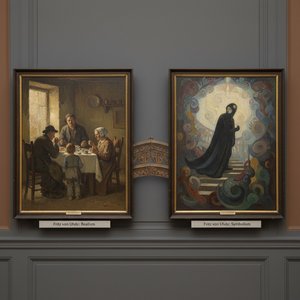
Fritz von Uhde: Bridging Realism & Symbolism in Late 19th-Century German Painting
Explore the captivating world of Fritz von Uhde, a pivotal German painter bridging Realism & Symbolism. Discover his plein-air techniques, religious themes, and influence on modern art. Learn about this fascinating artist at OriginalUniqueArt.

Romantic Realism's Finest: 10 Masterpieces for Your Home | OriginalUniqueArt
Explore 10 defining masterpieces of Romantic Realism! Discover Courbet, Millet & Daumier's powerful paintings—capturing emotion and social realities. Find museum-quality reproductions for your home at OriginalUniqueArt.com.

Adolph von Menzel: Realism, Prussian Society & the Painterly Chronicle of a Changing Era
Explore the life & work of Adolph von Menzel, a leading German Realist painter. Discover his detailed depictions of Prussian society, innovative techniques, and lasting influence on art history. Hand-painted reproductions available at OriginalUniqueArt.

Anton von Werner: Imperial Painter, Historical Witness & Shifting German Identity
Explore the life & work of Anton von Werner, Imperial Germany's leading painter. Discover his dramatic depictions of war, unification, and court life – a fascinating insight into 19th-century German history & art.

Ekspresyjny realizm XIX wieku: Emocje, obserwacja i subwersja w malarstwie
Poznaj ekspresyjny realizm XIX wieku – od Courbeta po polskich mistrzów. Analiza dzieł, krytyka społeczna i wpływ na współczesną sztukę. Ekspercka wiedza o malarstwie realistycznym.


