
 Podgląd w skali 1:1
 Wyślij jako kartkę
 Udostępnij
 Szczegóły dzieła
 Przewodnik

 Pobierz obraz
 Podobne obiekty
 RTG
RTG Pokaz slajdów
 Q&A
Q&A Statystyki
Man Who Stays Silent


 Rozwiń treść
Giclée / Wydruk artystyczny
Wydruki giclée lub płótna o jakości muzealnej, szybka realizacja i szeroki wybór opcji wykończenia. ( Zamów ręcznie malowaną reprodukcję Przejdź do wersji cyfrowej)




P118B zł10

P118H zł10

P118W zł10

P438Z zł10

P508JH zł12

P508YH zł12

P805H zł10

P805Z zł10

P919BZ zł10

P919G zł10

P919XJ zł10

P959ZH zł10

P968JZ zł12

W106C zł8

W218G zł10

W218JH zł8

W218Y zł10

W307PJ zł10

W316G zł10

W316PJ zł8

W316Y zł10

W398PJ zł8

W4111J zł10

W500HY zł15

W500JH zł15

W692G zł12

W849H zł8

W940BG zł15

W953PJ zł8




Wybierz spośród naszych standardowych rozmiarów, które zachowują oryginalne proporcje dzieła sztuki.

Wpisz wymaganą szerokość i wysokość, aby dopasować grafikę do ramy lub ściany. Wydruk można jedynie przyciąć, nigdy nie powiększając go poza oryginalny obraz, dlatego format o innych proporcjach spowoduje utratę części kompozycji. Przed rozpoczęciem druku prześlemy Ci cyfrowy podgląd do zatwierdzenia. Obraz wyświetlany na tej stronie nie pokazuje rzeczywistego przycięcia — jedynie podgląd oddaje ten efekt.
Dostawa na cały świat () w ciągu 2 tygodni zamiast standardowych 4/5 tygodni. (1 Listopad)

Bezpłatna ekspresowa wysyłka na cały świat

Wysokiej jakości płótno lniane

Pełne ubezpieczenie przesyłki

Gwarancja zwrotu należności celnych i podatków importowych

Gwarancja wiernego odwzorowania kolorów

100-dniowa polityka zwrotów (tylko w przypadku wad)

Gwarancja 100% zwrotu pieniędzy

Zniżka przy zakupie wielu sztuk
 Opcja ze szkłem jest dostępna wyłącznie w rozmiarach poniżej 110 cm

Man Who Stays Silent
Giclée / Wydruk artystyczny
Wymiary reprodukcji
-


Cena całkowita
zł 311
The Sculptor’s Introspection: Adolfo Wildt's "Man Who Stays Silent"
Adolfo Wildt’s “Man Who Stays Silent,” a captivating marble sculpture from 1899, isn’t merely a depiction of a figure; it’s an embodiment of contemplative stillness. Born in Milan amidst the burgeoning artistic currents of Italy, Wildt’s early life – apprenticed as a hairdresser and goldsmith before finding his true calling in sculpting – instilled within him a meticulous attention to form and a profound understanding of material. This experience subtly informs the work; the smooth, almost tactile quality of the marble speaks to a craftsman deeply attuned to its inherent properties. The sculpture’s power lies not in dramatic gesture or overt emotion, but rather in the palpable sense of inward focus radiating from the seated man – a figure seemingly lost within his own thoughts.
- Subject and Pose: The central subject is a man, rendered with remarkable anatomical precision yet imbued with an almost ethereal quality. He sits rigidly upright on a simple chair, his hands clasped before him in a gesture of profound introspection. This posture immediately draws the viewer in, inviting them to share in his silent contemplation.
- Material and Technique: Wildt masterfully employs the technique of *subdolato*, a method he developed himself, which allows for an exceptionally smooth and polished surface on marble. The result is a luminous quality that seems to capture and reflect light, creating an almost otherworldly effect. The subtle variations in tone within the marble – from the deepest shadows to the brightest highlights – contribute significantly to the sculpture’s depth and realism.
A Bridge Between Movements: Romanticism and Modernism
“Man Who Stays Silent” occupies a fascinating space within the transition between late 19th-century Romanticism and the nascent movements of early 20th-century modernism. Wildt’s work echoes the emotional intensity and psychological depth characteristic of Romantic sculpture, particularly in its exploration of inner experience. However, he departs from traditional Romantic conventions by prioritizing restraint and a sense of quietude over dramatic narrative. The man's face is deliberately averted, offering no clues to his thoughts or motivations – forcing the viewer to project their own interpretations onto the scene. This deliberate ambiguity aligns with the modernist emphasis on subjective experience and the rejection of didactic representation.
Historical Context: Wildt’s work emerged during a period of significant artistic upheaval in Italy, marked by the rise of new aesthetic theories and a growing interest in psychological realism. The sculpture reflects this intellectual climate, anticipating the introspective themes that would become central to modern art.Symbolism and Interpretation: A Portrait of Inner Life
The symbolism within “Man Who Stays Silent” is deliberately understated, inviting multiple layers of interpretation. The seated position itself suggests a state of contemplation or perhaps even isolation. The clasped hands could represent prayer, meditation, or simply the act of holding onto one’s thoughts. Some scholars have linked the sculpture to the concept of *silenzio* – silence – as a pathway to spiritual understanding, aligning with philosophical currents prevalent at the time. The man's averted gaze suggests a deliberate withdrawal from the external world, a focus on the internal landscape of his mind.
- The Chair: The simple chair serves as a grounding element, anchoring the figure in a tangible space while simultaneously emphasizing his detachment from it.
- The Absence of Expression: The lack of overt emotion is arguably the sculpture’s most powerful symbolic gesture – inviting viewers to contemplate the complexities of human consciousness and the often-unspoken nature of inner experience.
A Timeless Reflection: Emotional Impact and Artistic Legacy
“Man Who Stays Silent” continues to resonate with audiences today due to its profound sense of quietude and introspection. It’s a work that demands contemplation, inviting viewers to slow down and engage in a dialogue with the figure's unspoken thoughts. Wildt’s ability to capture such a nuanced state of being within the confines of marble is a testament to his artistic skill and sensitivity. Reproductions of this sculpture offer a powerful opportunity to bring this moment of profound stillness into any space, serving as a reminder of the importance of introspection and self-reflection in our increasingly hectic world. Its enduring appeal lies in its ability to evoke a sense of shared humanity – a recognition that we all, at times, seek solace within the silence of our own minds.
Pytania i odpowiedzi
W którym muzeum znajduje się oryginał "Man Who Stays Silent"?
Oryginał dzieła „Man Who Stays Silent” – Adolf Wildt znajduje się w Ca' Pesaro - Międzynarodowa Galeria Sztuki Współczesnej, Wenecja, Włochy. Reprodukcja pozwala na eksponowanie pracy w domu.
Jaki jest zalecany format i orientacja druku dla "Man Who Stays Silent"?
Rozmiar Medium, orientacja Landscape: to sugerowane parametry druku dla dzieła „Man Who Stays Silent” – Adolf Wildt.
Jaki jest zalecany rozmiar wydruku dla „Man Who Stays Silent” – Adolf Wildt?
Zalecanym rozmiarem wydruku dla dzieła "Man Who Stays Silent" jest Medium. Dostępne są również inne rozmiary o tych samych proporcjach.
Biografia artysty
A Milanese Bridging Worlds: The Life and Art of Adolfo Wildt
Adolfo Wildt, born in Milan on March 1st, 1868, to a Swiss family who had embraced Lombardy as their new home, emerged as a pivotal figure in Italian sculpture during a period of profound artistic transition. His journey was one marked by early hardship and relentless dedication, beginning not within the hallowed halls of an academy but amidst the practical demands of labor. Leaving school at the tender age of nine, Wildt’s initial forays into the working world saw him apprenticed first as a hairdresser, then as a goldsmith – experiences that instilled in him a meticulous attention to detail and a nascent understanding of form. However, it was his apprenticeship at eleven with Giuseppe Grandi, a prominent sculptor associated with the Scapigliatura movement, that truly ignited his artistic calling. Under Grandi’s tutelage, Wildt began to master the demanding art of sculpting marble, laying the foundation for a career defined by technical brilliance and emotional depth. By eighteen, his talent was already garnering recognition within Milanese artistic circles, foreshadowing the significant contributions he would make to the world of sculpture. He continued his education at the Brera Academy of Fine Arts, solidifying his theoretical knowledge alongside his burgeoning practical skills.Early Life and Apprenticeships: Shaping Artistic Foundations
Wildt’s formative years instilled in him a discipline and an appreciation for craftsmanship that would permeate his entire artistic practice. Despite facing considerable adversity—his family struggled financially after immigrating to Italy—he persevered, driven by an innate desire to create. The decision to forgo formal schooling at such a young age was deliberate; Wildt recognized the value of hands-on experience in developing artistic skill and understanding. His early occupations as a hairdresser and goldsmith weren’t merely jobs but invaluable lessons in precision, observation, and manipulating materials—skills that would prove crucial to his sculptural endeavors. The influence of Giuseppe Grandi proved transformative. Grandi's Scapigliatura affiliation exposed Wildt to the rebellious spirit of the era, encouraging him to challenge conventional artistic norms and explore unconventional expressive techniques. More importantly, Grandi’s guidance honed Wildt’s sculpting prowess, introducing him to the intricacies of marble carving and fostering a lifelong fascination with this medium.The Brera Academy and Artistic Development
Recognizing the importance of academic grounding, Wildt enrolled at the Brera Academy of Fine Arts in Milan, where he pursued both theoretical studies and practical training. This dual approach allowed him to cultivate a comprehensive understanding of artistic principles while simultaneously refining his technical abilities. The Brera’s curriculum emphasized classical sculpture alongside emerging modernist trends—a synthesis that profoundly shaped Wildt's artistic vision. He diligently studied the works of Michelangelo Buonarroti and Auguste Rodin, absorbing their stylistic innovations and mastering techniques for conveying emotion through form. Simultaneously, he embraced the influences of Secessionism and Art Nouveau, experimenting with new materials and sculptural approaches that reflected the dynamism and aesthetic sensibilities of his time.Recognition and Patronage: The Galleria Nazionale d'Arte Moderna and Franz Rose
Wildt’s artistic talent swiftly gained acclaim within Milanese society, attracting the attention of influential collectors and patrons. A pivotal moment arrived in 1893 with the exhibition of his portrait of his wife at the Society for Fine Arts in Milan—a piece that immediately captivated the discerning eye of Franz Rose, a Prussian collector known for his unwavering support of avant-garde artists. Rose’s generosity extended beyond financial backing; he championed Wildt's work and secured him first refusal rights on all future sculptures – a partnership that afforded Wildt unparalleled freedom to pursue his artistic ambitions without commercial constraints. This patronage enabled Wildt to engage in extensive exhibitions across Europe—Milan, Munich, Zurich, Berlin, and Dresden—introducing his distinctive style to an international audience and establishing him as one of the foremost sculptors of his generation.Style and Themes: Gothic Forms and Emotional Intensity
Wildt’s sculptural oeuvre is characterized by a remarkable blend of technical virtuosity and expressive depth. He achieved an unparalleled level of smoothness on marble surfaces, creating busts that possessed an almost ethereal quality—a technique he termed “translucent.” This meticulous attention to detail reflected his profound understanding of material properties and his desire to capture the essence of human emotion. Wildt’s artistic style drew heavily from Romanticism but decisively moved toward Modernism, incorporating elements of Secessionism and Art Nouveau. His sculptures frequently depict religious figures—Saint Lucia, St. Francis of Assisi—often imbued with a solemn grandeur and conveying profound spiritual contemplation. Recurring motifs included veiled faces or obscured features, inviting viewers to engage in introspection and contemplate the mysteries of existence. Wildt’s self-portrait of 1908 exemplifies his expressive style, capturing a moment of intense emotion and revealing the artist's own psychological landscape—a testament to his willingness to confront personal struggles and translate them into artistic form. His work is notable for its exploration of themes such as faith, sorrow, and human vulnerability, cementing his legacy as one of Italy’s most influential sculptors.Notable Works and Legacy
Wildt's enduring influence can be seen in the works of subsequent generations of artists—Lucio Fontana, Fausto Melotti, Luigi Broggini—who recognized Wildt’s pioneering approach to sculpture and embraced his stylistic innovations. His sculptures reside prominently in museums across Italy, including the Civic Museums of Forlì: Fulcieri Paulucci de ‘Calboli (1919), Saint Lucia (1926), St. Francis of Assisi (1926), Mask of Sorrow or Portrait (1908–1909), Lux (1920), The fountain santa (1921), Protection of children or little ones (1918). Wildt’s contribution to art education—the founding of his Marble School—ensured that his artistic principles would continue to inspire aspiring sculptors for decades to come. Adolfo Wildt passed away in Milan on March 12th, 1931, leaving behind a body of work that remains profoundly evocative and continues to captivate audiences worldwide. He stands as an exemplar of Italian Modernism—a sculptor who seamlessly blended tradition with innovation, transforming marble into vehicles for profound emotional expression and securing his place among the titans of artistic history.
Adolf Wildt
1868 - 1931 , Włochy
Krótka nota
- Artistic Movement Or Style: Romanticism, Modernism
- Artists Or Movements Influenced By This Artist: ['Lucio Fontana']
- Artists Who Influenced This Artist:
- Giuseppe Grandi
- Federico Villa
- Date Of Birth: 1868
- Full Name: Adolfo Wildt
- Nationality: Italian
- Notable Artworks:
- Fulcieri Paulucci de’ Calboli
- Saint Lucia
- St. Francis of Assisi
- Mask of Sorrow
- Place Of Birth: Milan, Italy
Powiązane artykuły

Trwała Forma: Rzeźba w Historii – Technika i Rezonans Emocjonalny
Poznaj historię rzeźby od antyku do współczesności! Ekspercka analiza technik, stylów i emocjonalnego wpływu arcydzieł. Inspiracje dla kolekcjonerów i miłośników sztuki.

10 Legendarnych Brązów Rzeźbiarskich, Które Zmieniły Sztukę | OriginalUniqueArt
Odkryj 10 legendarnych rzeźb brązowych od Rodina, Degasa i innych mistrzów! Poznaj historię powstania arcydzieł sztuki i inspiruj się do dekoracji wnętrz. Reprodukcje najwyższej jakości na OriginalUniqueArt.com – zobacz kolekcję!

Urok marmuru w historii sztuki: od klasycznej rzeźby do nowoczesnej abstrakcji
Odkryj fascynującą historię rzeźby marmurowej – od klasycznych arcydzieł po nowoczesną abstrakcję. Poznaj techniki, artystów i wartość kolekcjonerską tego wyjątkowego medium. Ekspercka analiza dla miłośników sztuki.

Trwałe Formy: Ewolucja Technik i Tematów w Rzeźbie Przez Wieki – Od Antyku do Renesansu
Poznaj fascynującą historię rzeźby od antyku do renesansu! Odkryj techniki, wybitnych artystów i wpływ na współczesną sztukę. Ekspercka analiza dla kolekcjonerów i miłośników.
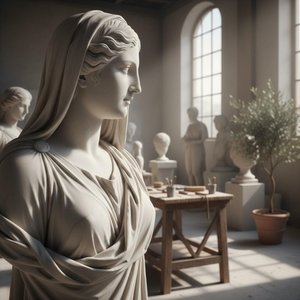
Timeless Elegance: A Complete Guide to the Sublime Beauty and Artistry of Marble Sculpture
Discover the sublime beauty of marble art through an expert exploration of Renaissance and Neoclassical masterpieces. From the delicate textures of Carpeaux to the grandeur of Sansovino, immerse yourself in a guide to timeless elegance and sculptural perfection.