

 Zobacz w skali 1:1
 Wyślij
 Udostępnij
 Szczegóły
 Przewodnik

 Pobierz plik obrazu
 Podobne obiekty
 RTG
RTG Pokaz slajdów
 Statystyki
Study for a Painting
 Oil On Paper
- WallArt
- Abstract Expressionism
 1938
1938- Modern
 10.0 x 13.0 cm
 Muzeum Sztuki Nowoczesnej (MoMA)
 Czytaj więcej
Giclée / Wydruk artystyczny
Wydruki giclée lub płótna o jakości muzealnej, szybka realizacja i szeroki wybór opcji wykończenia. ( Kup ręcznie malowany obraz Przełącz na wersję cyfrową)




P118B zł10

P118H zł10

P118W zł10

P438Z zł10

P508JH zł12

P508YH zł12

P805H zł10

P805Z zł10

P919BZ zł10

P919G zł10

P919XJ zł10

P959ZH zł10

P968JZ zł12

W106C zł8

W218G zł10

W218JH zł8

W218Y zł10

W307PJ zł10

W316G zł10

W316PJ zł8

W316Y zł10

W398PJ zł8

W4111J zł10

W500HY zł15

W500JH zł15

W692G zł12

W849H zł8

W940BG zł15

W953PJ zł8




Wybierz spośród naszych standardowych rozmiarów, które zachowują oryginalne proporcje dzieła sztuki.

Możesz wprowadzić własne wymiary, aby dopasować dzieło do konkretnej ramy lub przestrzeni. Jeśli wybrany rozmiar nie będzie odpowiadał proporcjom oryginalnego obrazu, przytniecie dzieło lub rozszerzymy obraz za pomocą odbicia lustrzanego lub jednolitego wypełnienia krawędzi. Przed rozpoczęciem produkcji prześlemy cyfrową wizualizację do Twojej akceptacji.
Prosimy pamiętać, że podgląd na ekranie nie odzwierciedla faktycznego przycinania ani rozszerzania. Tylko wizualizacja dokładnie pokaże końcową kompozycję.
Mimo dostępności niestandardowych rozmiarów, zalecamy wybór wymiaru z listy zdefiniowanej, aby zachować oryginalne proporcje.
Dostawa na cały świat () w ciągu 2 tygodni zamiast standardowych 4/5 tygodni. (28 Wrzesień)

Bezpłatna ekspresowa wysyłka na cały świat

Wysokiej jakości płótno lniane

Pełne ubezpieczenie transportowe

Gwarancja zwrotu należności celnych i podatków importowych

Gwarancja idealnego odwzorowania barw

100-dniowy okres na zwrot dzieła w przypadku wykrycia wad produkcyjnych

Gwarancja 100% zwrotu pieniędzy

Oferta przy zakupie wielu sztuk
 Opcja ze szkłem jest dostępna wyłącznie w rozmiarach poniżej 110 cm

Study for a Painting
Giclée / Wydruk artystyczny
Rozmiar reprodukcji
-


Suma do zapłaty
zł 299
The Essence of Reduction: Ad Reinhardt’s Geometric Vision
In the vast landscape of twentieth-century abstraction, few works possess the quiet, magnetic intensity found in Ad Reinhardt’s “Study for a Painting.” Created in 1938, this miniature masterpiece—measuring a mere 10 x 13 cm—serves as a profound window into the artist's relentless pursuit of purity. At a time when the art world was grappling with the heavy emotional weight of Abstract Expressionism, Reinhardt offered a different path: one of radical simplification and intellectual rigor. This study is not merely a preparatory sketch but a distilled essence of his philosophy, where every line and shape is stripped of all unnecessary ornament to reveal the very soul of the medium.
The composition invites the viewer into a meditative state, presenting a carefully orchestrated arrangement of geometric forms that seem to float within a shallow, enigmatic space. Overlapping rectangles and subtle, curved elements create a delicate sense of layering, suggesting a depth that is felt rather than seen through traditional perspective. A prominent ‘X’ shape punctuates the right side of the canvas, acting as a rhythmic disruption that prevents the eye from settling too easily, instead guiding it through a continuous dance of form and void. It is a work that demands slow looking, rewarding the patient observer with a complex interplay of structure and spontaneity.
A Symphony of Monochrome and Form
The color palette of this study is strikingly disciplined, adhering to a restrained vocabulary of black, white, and muted, atmospheric tones of gray and green. This monochromatic approach was a precursor to Reinhardt’s legendary “Black Paintings,” a series that would eventually push the boundaries of minimalism to their absolute limit. By eschewing vibrant hues, Reinhardt directs our attention away from the sensory distraction of color and toward the structural integrity of the shapes themselves. The edges of the forms are not always sharply defined; instead, they possess a soft, almost ethereal quality where colors bleed into one another, creating a sense of atmospheric tension.
<Technically, the work demonstrates a masterful control over the medium, likely oil or acrylic on paper. There is a notable absence of heavy impasto, replaced instead by a smooth, even surface that emphasizes the flatness of the picture plane. This deliberate rejection of texture and illusionism is central to Reinhardt’s “Art-as-Art” manifesto—the belief that a painting should not be a window into another world, but an object that asserts its own existence. For the collector or interior designer, this piece offers a sophisticated anchor for modern spaces, providing a focal point of intellectual depth and understated elegance that complements minimalist or contemporary decor.
The Emotional Resonance of Minimalism
Beyond its formal qualities, “Study for a Painting” evokes a profound emotional response characterized by stillness and introspection. In an era of constant visual noise, Reinhardt’s work provides a sanctuary of quietude. The austerity of the composition does not feel cold or empty; rather, it feels intentional and complete. There is a sacredness in its reduction, a sense that by removing the superfluous, the artist has uncovered a fundamental truth about the nature of sight and perception.
To possess a reproduction of this work is to bring a piece of art history’s most rigorous intellectual movement into one's personal environment. It serves as an inspiration for those who find beauty in precision, clarity, and the power of the understated. Whether viewed as a historical milestone of the American avant-garde or as a contemporary study in balance and harmony, Reinhardt’s vision remains as potent and provocative today as it was in 1938.
Biografia artysty
A Life Dedicated to the Essence of Art
Ad Reinhardt, born Adolph Friedrich Reinhardt in Buffalo, New York, on December 24, 1913, was a figure who dedicated his life not merely to creating art, but to defining what art *could* be. His early years were marked by a familial mobility—his father’s work led the family to New York City—and a close bond with his cousin Otto. Even as a child, Reinhardt displayed an exceptional talent for drawing and painting, winning accolades in school that hinted at the rigorous artistic journey ahead. He wasn't simply interested in *making* images; he was driven by a need to understand the very foundations of visual expression. This intellectual curiosity led him to Columbia University where he studied art history under the influential Meyer Schapiro, an experience that profoundly shaped his thinking about aesthetics and the role of the artist. Further training at Columbia’s Teachers College, the American Artists School with Carl Holty and Francis Criss, and portraiture studies at the National Academy of Design under Karl Anderson solidified his technical skills—skills he would later deliberately attempt to transcend. Reinhardt believed he had mastered traditional techniques early on, freeing him to pursue a more conceptual path.From Geometric Beginnings to the “Ultimate” Black
Reinhardt’s artistic evolution was far from linear. He began with works rooted in geometric abstraction, exploring form and color with a precision that demonstrated his technical mastery. However, this early work served as a stepping stone toward something more radical. His involvement with the WPA Federal Art Project during the 1930s provided him with crucial support and exposure, allowing him to hone his craft while contributing to public art initiatives. The 1940s saw Reinhardt become an active member of American Abstract Artists (AAA), a group he considered pivotal to his development. He found kinship with fellow artists who shared a commitment to non-representational art, exhibiting regularly alongside them and engaging in lively debates about the future of painting. His association with Betty Parsons Gallery further cemented his place within the burgeoning New York art scene. Throughout the 1950s, Reinhardt embarked on a series of paintings exploring subtle variations within single hues—all red, all blue, all white—a deliberate reduction that foreshadowed his most iconic works. It was in the 1960s, however, that he achieved what many consider his defining achievement: the “black” paintings. These weren’t simply black canvases; they were meticulously crafted explorations of near-black shades, subtle gradations and textures designed to challenge perception and push the boundaries of painting itself. He referred to them as his "ultimate" paintings, suggesting a culmination of artistic endeavor—a point beyond which further progress was impossible.Art-as-Art: A Philosophy of Pure Aestheticism
Central to understanding Reinhardt’s work is his philosophy of *Art-as-Art*. He vehemently believed in the autonomy of art, rejecting any notion that it should serve political, social, or narrative purposes. For Reinhardt, the value of a painting lay solely in its aesthetic qualities—its form, color, composition, and the way it engaged with the viewer on a purely visual level. This conviction led him to critique what he saw as problematic tendencies within the art world, particularly artists who prioritized messaging over aesthetics. He expressed these critiques through satirical cartoons and writings, often challenging prevailing artistic norms with wit and intellectual rigor. His friendships with Robert Lax and Thomas Merton, both of whom explored themes of simplicity in their respective fields, further informed his aesthetic principles. Reinhardt’s work resonated with a growing interest in minimalism and conceptual art, influencing artists who sought to strip away extraneous elements and focus on the essential qualities of their medium. He wasn't merely creating paintings; he was articulating a theoretical position about the nature of art itself.A Lasting Legacy: Minimalism, Conceptualism, and Beyond
Ad Reinhardt’s influence extends far beyond his own body of work. His “black” paintings are now recognized as seminal contributions to minimalist and monochrome painting, challenging conventional notions of representation and pushing the boundaries of visual perception. His writings on *Art-as-Art* continue to be studied by artists and critics alike, sparking debate about the role of art in society and the relationship between form and content. Though he was a key figure within Abstract Expressionism through his association with AAA and Betty Parsons Gallery, Reinhardt ultimately transcended categorization, paving the way for subsequent generations of conceptual and minimalist artists. He taught at numerous institutions—Brooklyn College, California School of Fine Arts, University of Wyoming, Yale University, and Hunter College—imparting his rigorous intellectual approach to aspiring artists. Even his involvement in protests – against MoMA in the 1940s, with “The Irascibles” against the Metropolitan Museum of Art in the 1950s, and through a lithograph for Artists and Writers Protest Against the Vietnam War in 1967—demonstrated a commitment to artistic freedom and social responsibility. Ad Reinhardt died on August 30, 1967, in New York City, leaving behind a legacy that continues to inspire and provoke. His work remains a powerful testament to the enduring power of abstract art and the importance of questioning fundamental assumptions about the nature of creativity itself. The Ad Reinhardt Estate is currently represented by David Zwirner Gallery, ensuring his continued presence within the contemporary art world.Useful Links
- Django Reinhardt: https://pl.wikipedia.org/wiki/Django_Reinhardt (Polish Wikipedia page about Django Reinhardt, a Romani jazz guitarist)
- Reinhardt: https://pl.wikipedia.org/wiki/Reinhardt (Polish Wikipedia page about the general family name Reinhardt)
- Einsatz Reinhardt: https://pl.wikipedia.org/wiki/Einsatz_Reinhardt (Polish Wikipedia page about the Nazi Aktion Reinhardt, a mass murder operation)
- Ad Reinhardt: https://pl.wikipedia.org/wiki/Ad_Reinhardt (Polish Wikipedia page about Ad Reinhardt)
- Ad Reinhardt | Smithsonian American Art Museum: https://americanart.si.edu/artist/ad-reinhardt-3993 (Smithsonian American Art Museum page)

Ad Reinhardt
1913 - 1967 , Stany Zjednoczone
Najważniejsze informacje
- Artistic Movement Or Style: Ekspresjonizm Abstrakcyjny
- Artists Or Movements Influenced By This Artist:
- Conceptual Art
- Minimalizm
- Monochromatyzm
- Artists Who Influenced This Artist:
- Meyer Schapiro
- Robert Lax
- Thomas Merton
- Date Of Birth: 24 grudnia 1913
- Date Of Death: 30 sierpnia 1967
- Full Name: Adolph Friedrich Reinhardt
- Nationality: Amerykański
- Notable Artworks:
- Untitled
- Red and Gray
- Number - (107)
- Place Of Birth: Buffalo, USA
Zobacz także powiązane artykuły

Top 10 arcydzieł ekspresjonizmu abstrakcyjnego – inspiracje dla Twojego wnętrza | OriginalUniqueArt.com
Odkryj 10 arcydzieł ekspresjonizmu abstrakcyjnego – Pollock, Rothko, de Kooning i inni. Poznaj historie artystów, techniki i inspiracje dla Twojego wnętrza. Reprodukcje najwyższej jakości na OriginalUniqueArt.com!

25 Arcydzieł Kandinskiego: Kolor, Duchowość i Abstrakcja w Twoim Domu | OriginalUniqueArt.com
Odkryj 25 arcydzieł Wassily Kandinskiego – pioniera abstrakcji i ekspresjonizmu! Poznaj historie, techniki i emocje kryjące się za jego kolorowymi kompozycjami. Reprodukcje obrazów najwyższej jakości na OriginalUniqueArt.com. Eksploruj pełną kolekcję online!
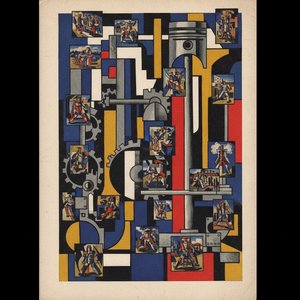
Fernand Léger: 25 Arcydzieł Kubizmu i Maszynerii - Kolekcja OriginalUniqueArt
Odkryj 25 arcydzieł Fernanda Légera – pioniera kubizmu i malarstwa maszyn. Poznaj historię, technikę i inspiracje tych ikonicznych obrazów. Reprodukcje najwyższej jakości na OriginalUniqueArt.com! Eksploruj pełną kolekcję online.
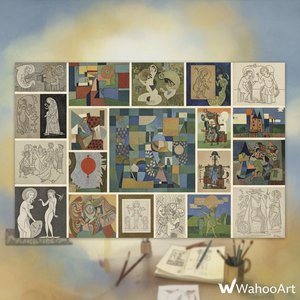
Paul Klee: 25 Arcydzieł Koloru i Formy | Reprodukcje Obrazów Online - OriginalUniqueArt
Odkryj 25 arcydzieł Paula Klee – od abstrakcji po ekspresjonizm. Poznaj historie, techniki i inspiracje malarza. Reprodukcje obrazów najwyższej jakości na OriginalUniqueArt.com. Eksploruj pełną kolekcję online!

Geometria Sztuki: 10 Arcydzieł Abstrakcji Geometrycznej | OriginalUniqueArt.com
Odkryj 10 arcydzieł abstrakcji geometrycznej! Poznaj historię Mondriana, Kandinskiego i Maleвича. Inspiracje wnętrzarskie z malarstwem abstrakcyjnym – reprodukcje najwyższej jakości na OriginalUniqueArt.com. Eksploruj kolekcję online!