Przełącz na wydania drukowane
 Rozwiń treść







































 W przypadku dzieł sztuki lub reprodukcji, których którykolwiek z boków przekracza 105 cm (około 41 cali), rama zostanie wysłana w formie zestawu do samodzielnego montażu. Metoda ta zapewnia bezpieczną dostawę i zapobiega uszkodzeniom podczas transportu.


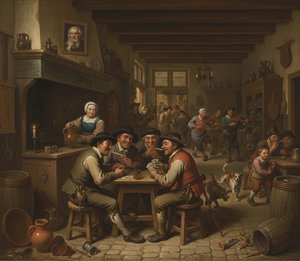
A Moment of Village Life
In this 1661 scene, we find ourselves amidst a gathering in a village street, where the air seems to hum with the low melodies of musicians. A group of men has assembled, some cradling violins and cellos, their presence anchoring the movement of the crowd. There is a quiet energy here, found in the way individuals are scattered throughout the composition, engaged in their own small interactions. You might notice a horse standing nearby, adding a touch of rustic reality to the atmosphere. The scene captures a sense of community engagement, where the simple act of gathering for an outdoor celebration becomes the central focus of the work.
Technique and Atmosphere
The brushwork reflects the traditions of the Flemish Baroque, focusing on the textures of everyday existence. There is a careful attention paid to the way light settles upon the figures and the objects they carry, such as handbags and backpacks. The artist employs a style that captures the boisterous energy of life without relying on grand gestures. Instead, the mood is shaped by the rhythmic movement of the people and the subtle details of the village setting. Through these observations, the painting offers a window into the customs of the seventeenth-century countryside, presenting a world where communal joy is found in the shared experience of music and fellowship.
Pytania i odpowiedzi
Co wyjaśnia sytuację prawną dotyczącą praw autorskich do „Rural Feast” – Abraham Teniers?
Status praw autorskich do dzieła „Rural Feast” – należy do domeny publicznej – autorskie prawa majątkowe wygasły – wynika z faktu, że artysta zmarł w 1670.
Z jakiej epoki pochodzi „Rural Feast” – Abraham Teniers?
"Rural Feast" pochodzi z epoki Early Modern.
Z jakich materiałów wykonano "Rural Feast" i w jakim stylu?
W "Rural Feast" technika Oil łączy się z nurtem Baroque.
 Podgląd w skali 1:1
 Wyślij jako kartkę
 Udostępnij
 Szczegóły dzieła
 Przewodnik

 Pobierz obraz
 Podobne obiekty
 RTG
RTG Pokaz slajdów
 Pytania i odpowiedzi
 Statystyki