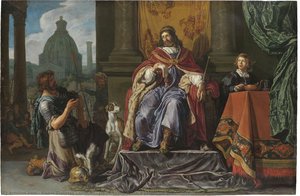
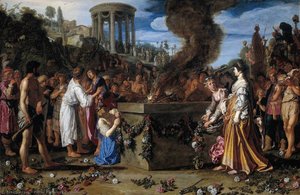
Portret Pieter Lastman

59 najsłynniejszych obrazów artysty Pieter Lastman – wybór z galerii

Aktualizacja: Październik 2026 · ranking według naszego wskaźnika popularności (liczba wyszukiwań, wizyt i zamówień dla każdego dzieła) · 60 dzieł Pieter Lastman w naszym katalogu

W skrócie

Spośród wszystkich dzieł oryginalnych, które pozostawił Pieter Lastman, najsłynniejszym jest The adoration of the kings (1608), znajdujący się w kolekcji Ermitaż w Sankt Petersburg. Tuż za nimi znajdują się Abraham and the Three Angels (1623) oraz The Resurrection (1612). Nasz katalog zawiera 60 dzieł autorstwa Pieter Lastman; galeria zachowała 59 najbardziej podziwianych na świecie prac, z których każda została przedstawiona wraz z datą powstania, informacją o muzeum oraz jej historią.

1583 – 1633, Amsterdam Baroque Najwięcej dzieł: Ermitaż

10 najlepszych obrazów artysty Pieter Lastman: wybór galerii

1
The adoration of the kings (1608) autorstwa Pieter Lastman

The adoration of the kings

1608 · Oil On Canvas · Ermitaż, Sankt Petersburg

In 1608, Pieter Lastman painted The adoration of the kings, an oil work that captures a profound moment of religious significance. The scene depicts the biblical episode of the Adoration of the Magi, focusing on the intimate encounter between the divine and the earthly. Within this composition, the Virgin Mary and the Christ Child are the central figures, receiving the homage of the three kings: Melchior, Caspar, and Balthazar. It…

2
Abraham and the Three Angels (1623) autorstwa Pieter Lastman

Abraham and the Three Angels

1623 · Oil On Panel · Ermitaż, Sankt Petersburg

In this 1623 oil on panel, the biblical patriarch Abraham meets a divine presence through three celestial visitors. Pieter Lastman captures the moment of profound hospitality and revelation that defines this sacred encounter. The scene unfolds with a sense of immediate spiritual weight, as the elderly Abraham kneels in reverence before the visitors. This religious art focuses on the quiet intensity of the meeting, where the mortal realm brushes against…

3
The Resurrection (1612) autorstwa Pieter Lastman

The Resurrection

1612 · Oil On Canvas · Muzeum J. Paula Getty'ego, Los Angeles

The Resurrection is a significant oil painting by Pieter Pietersz Lastman, created in 1612. This work captures a pivotal biblical scene, depicting the moment of Christ's Resurrection. The composition focuses on the triumph of the divine over the earthly realm, a theme central to Lastman's narrative approach to religious subjects.

4
The beheading of S. Paul (1601) autorstwa Pieter Lastman

The beheading of S. Paul

1601 · Oil On Panel · Museum Catharijneconvent, Utrecht

The tension in The beheading of S. Paul by Pieter Lastman hangs heavy in the air. Created about 1601, this work captures a moment of profound religious and visceral intensity. We find ourselves witnessing the martyrdom of Saint Paul, a scene where the spiritual weight of faith meets the brutal reality of physical sacrifice. The air seems to thicken with the gravity of the event as the executioner prepares to…

5
The Rest on the Flight to Egypt (1608) autorstwa Pieter Lastman

The Rest on the Flight to Egypt

1608 · Oil On Canvas · Gemäldegalerie, Berlin

The shadows of a dense, dark thicket press against the left side of the canvas. Within this cool, shaded sanctuary, three figures find a brief respite. The Virgin Mary, draped in deep blue and red, cradles the Christ Child, whose skin catches a soft, luminous light. Beside them, Saint Joseph sits in the stillness. The composition forms a steady triangle, anchoring the family against the ruggedness of the landscape. To…

6
The baptism of the eunuch (1608) autorstwa Pieter Lastman

The baptism of the eunuch

1608 · Oil On Panel · Gemäldegalerie, Berlin

The baptism of the eunuch is an oil on panel by Pieter Lastman. The artist, born in Amsterdam in 1583, captured this moment on a surface measuring 85 by 115 cm. A quiet weight resides in the wood, holding the figures within its grain. Lastman lived until 1633, leaving behind this specific window into a biblical encounter.

7
The Baptism of the Moorish Chamberlain (1620) autorstwa Pieter Lastman

The Baptism of the Moorish Chamberlain

1620 · Oil · Bawarskie Państwowe Zbiory Malarstwa, Monachium

The painting titled The Baptism of the Moorish Chamberlain is an oil work by the Dutch artist Pieter Lastman. This specific piece was executed about 1620. The artist, who was born in Amsterdam in 1583, utilized a painterly technique to render this biblical scene. The composition focuses on a group of figures gathered at a water's edge, involving both individuals on foot and those on horseback.

8
Joseph Selling Corn in Egypt (1612) autorstwa Pieter Lastman

Joseph Selling Corn in Egypt

1612 · Oil On Canvas · National Gallery of Ireland, Dublin

In this work, titled Joseph Selling Corn in Egypt, the artist Pieter Lastman presents a crowded, dramatic scene of commerce and abundance. The narrative draws from the Book of Genesis, focusing on the period when Joseph, having risen to power in Egypt, manages the distribution of grain during a time of famine. It is a moment of intense human activity, where the necessity of survival meets the organized structure of…

9
Balaam and his Ass (1622) autorstwa Pieter Lastman

Balaam and his Ass

1622 · Oil · Muzeum Izraela, Jerozolima

In this work, titled Balaam and his Ass, Pieter Lastman captures a moment of divine interruption. Created about 1622, the painting presents a man on a donkey facing a winged angel. The scene is frozen in a state of sudden tension. A sword is held aloft, cutting through the stillness of the landscape. The figure of Balaam, draped in a deep crimson cloak, reacts to the celestial presence that blocks…

10
Entombment of Christ (1612) autorstwa Pieter Lastman

Entombment of Christ

1612 · Oil · Palais des Beaux-Arts de Lille, Lille

Pieter Lastman, born in Amsterdam in 1583, executed this oil painting titled Entombment of Christ. The work emerged during the Dutch Golden Age, a period in which Lastman established himself as a significant figure in historical and biblical narrative painting. His approach to religious subject matter focused on the psychological weight of the scene, utilizing the dramatic tension inherent in the moment of Christ's burial.

The Pieter Lastman selection continues, 11 to 59

11Hippocrates and Democritus (1622) autorstwa Pieter LastmanHippocrates and Democritus1622 · Palais des Beaux-Arts de Lille 12King David Handing the Letter to Uriah (1611) autorstwa Pieter LastmanKing David Handing the Letter to Uriah1611 · Detroit Institute of Arts 13Saint Matthew (1613) autorstwa Pieter LastmanSaint Matthew1613 · Rhode Island School of Design Museum of Art 14Paris and Oenone (1619) autorstwa Pieter LastmanParis and Oenone1619 · Worcester Art Museum 15The Raising of Lazarus (1622) autorstwa Pieter LastmanThe Raising of Lazarus1622 · Mauritshuis 16Tobias catches the fish (1613) autorstwa Pieter LastmanTobias catches the fish1613 · Fries Museum 17Haman begging Esther for mercy (1618) autorstwa Pieter LastmanHaman begging Esther for mercy1618 · Muzeum Narodowe w Warszawie 18Wedding Night of Tobias and Sarah (1611) autorstwa Pieter LastmanWedding Night of Tobias and Sarah1611 · Museum of Fine Arts 19Paul and Barnabas at Lystra (1617) autorstwa Pieter LastmanPaul and Barnabas at Lystra1617 · Amsterdam Museum 20Ecce Homo (1610) autorstwa Pieter LastmanEcce Homo1610 · Amsterdam Museum 21David in the temple (1618) autorstwa Pieter LastmanDavid in the temple1618 · Herzog Anton Ulrich Museum 22The meeting of Nausicaa and Ulysses: Ulysses, almost naked, comes out of the bushes; Nausicaa and her companions are startled at the sight (1609) autorstwa Pieter LastmanThe meeting of Nausicaa and Ulysses: Ulysses, almost naked, comes out of the bushes; Nausicaa and her companions are startled at the sight1609 · Herzog Anton Ulrich Museum 23The Annunciation of the birth of Samson to Manoah and his wife (Judges 13:2-3) (1617) autorstwa Pieter LastmanThe Annunciation of the birth of Samson to Manoah and his wife (Judges 13:2-3)1617 · Agnes Etherington Art Center 24The Good Samaritan tending the wounds of the traveller (1614) autorstwa Pieter LastmanThe Good Samaritan tending the wounds of the traveller1614 25Laban Searching for the Idols (1622) autorstwa Pieter LastmanLaban Searching for the Idols1622 · château-musée de Boulogne-sur-Mer 26The baptism of the Eunuch (1620) autorstwa Pieter LastmanThe baptism of the Eunuch1620 · Fondation Custodia 27St John the Baptist Preaching (1627) autorstwa Pieter LastmanSt John the Baptist Preaching1627 · Mauritshuis 28Hagar and the Angel in the Wilderness (1625) autorstwa Pieter LastmanHagar and the Angel in the Wilderness1625 · Muzeum Izraela 29Athena and Odysseus (1625) autorstwa Pieter LastmanAthena and Odysseus1625 · Rembrandthuis 30Dido's Sacrifice to Juno (1630) autorstwa Pieter LastmanDido's Sacrifice to Juno1630 · Nationalmuseum 31The Baptism of the Eunuch (1623) autorstwa Pieter LastmanThe Baptism of the Eunuch1623 · Staatliche Kunsthalle Karlsruhe 32De gortenteller (1730) autorstwa Pieter LastmanDe gortenteller1730 · Amsterdam Museum 33Saint John on the Isle of Patmos (1613) autorstwa Pieter LastmanSaint John on the Isle of Patmos1613 · Museum Boijmans Van Beuningen 34The flight into Egypt (1608) autorstwa Pieter LastmanThe flight into Egypt1608 · Museum Boijmans Van Beuningen 35Jonah and the Whale (1621) autorstwa Pieter LastmanJonah and the Whale1621 · Kunstpalast 36The Angel and the Young Tobit with the Fish (1610) autorstwa Pieter LastmanThe Angel and the Young Tobit with the Fish1610 · Szépművészeti Múzeum 37The Baptism of Christ (1629) autorstwa Pieter LastmanThe Baptism of Christ1629 · Scottish National Gallery 38David Gives Uriah a Letter for Joab (1619) autorstwa Pieter LastmanDavid Gives Uriah a Letter for Joab1619 · The Leiden Collection 39LE SACRIFICE D'ABRAHAM autorstwa Pieter LastmanLE SACRIFICE D'ABRAHAMLuwr 40Haman begging the mercy of Esther (Esther 7:6-7) autorstwa Pieter LastmanHaman begging the mercy of Esther (Esther 7:6-7)Muzeum Narodowe w Warszawie 41The lamentation of abel autorstwa Pieter LastmanThe lamentation of abel 42Susanna And The Elders autorstwa Pieter LastmanSusanna And The EldersGemäldegalerie 43Christ And The Canaanite Woman autorstwa Pieter LastmanChrist And The Canaanite WomanRijksmuseum 44The Angel Raphael Takes Leave of Old Tobit and his Son Tobias (1618) autorstwa Pieter LastmanThe Angel Raphael Takes Leave of Old Tobit and his Son Tobias1618 · National Gallery of Denmark 45The Battle of Constantine and Maxentius (1613) autorstwa Pieter LastmanThe Battle of Constantine and Maxentius1613 · Kunsthalle Bremen 46The Angel And Tobias With The Fish autorstwa Pieter LastmanThe Angel And Tobias With The Fish 47Juno Discovering Jupiter With Io autorstwa Pieter LastmanJuno Discovering Jupiter With Io 48The Triumph Of Mordecai autorstwa Pieter LastmanThe Triumph Of MordecaiRembrandthuis 49The Angel And Tobias With The Fish (detail) autorstwa Pieter LastmanThe Angel And Tobias With The Fish (detail) 50Hagar and the Angel autorstwa Pieter LastmanHagar and the AngelLos Angeles County Museum of Art 51Orestes And Pylades Disputing At The Altar autorstwa Pieter LastmanOrestes And Pylades Disputing At The AltarRijksmuseum 52The Angel Of The Lord Preventing Abraham From Sacrificing His Son Isaac autorstwa Pieter LastmanThe Angel Of The Lord Preventing Abraham From Sacrificing His Son IsaacMuzeum Plantin-Moretus 53The Sacrifice Of Abraham autorstwa Pieter LastmanThe Sacrifice Of AbrahamRijksmuseum 54The Rest on the Flight into Egypt autorstwa Pieter LastmanThe Rest on the Flight into EgyptNational Gallery 55Juno discovering Jupiter with Io (1618) autorstwa Pieter LastmanJuno discovering Jupiter with Io1618 · National Gallery 56Bathsheba at her Toilette (1619) autorstwa Pieter LastmanBathsheba at her Toilette1619 · Ermitaż 57Annunciation autorstwa Pieter LastmanAnnunciationErmitaż 58Odysseus And Nausicaa autorstwa Pieter LastmanOdysseus And NausicaaBawarskie Państwowe Zbiory Malarstwa 59Abraham's Journey To Canaan autorstwa Pieter LastmanAbraham's Journey To CanaanErmitaż

Słynne obrazy Pieter Lastman epoka po epoce

Tematy, które przyciągnęły wzrok Pieter Lastman

Cztery motywy najczęściej powracające w tych oryginałach, z których każdy doczekał się swojego najdoskonalszego przykładu.

Muzea przechowujące oryginały Pieter Lastman

8 muzeów, w których znajduje się najwięcej obrazów z tej strony.

Muzea Miasto Dzieła artysty Pieter Lastman Obrazy z tej listy
Ermitaż, Sankt PetersburgErmitaż Sankt Petersburg 5 The adoration of the kings, Abraham and the Three Angels, Bathsheba at her Toilette
Gemäldegalerie, BerlinGemäldegalerie Berlin 3 The Rest on the Flight to Egypt, The baptism of the eunuch, Susanna And The Elders
Amsterdam Museum, AmsterdamAmsterdam Museum Amsterdam 3 Paul and Barnabas at Lystra, Ecce Homo, De gortenteller
Rijksmuseum, AmsterdamRijksmuseum Amsterdam 3 Christ And The Canaanite Woman, Orestes And Pylades Disputing At The Altar, The Sacrifice Of Abraham
Bawarskie Państwowe Zbiory Malarstwa, MonachiumBawarskie Państwowe Zbiory Malarstwa Monachium 2 The Baptism of the Moorish Chamberlain, Odysseus And Nausicaa
Muzeum Izraela, JerozolimaMuzeum Izraela Jerozolima 2 Balaam and his Ass, Hagar and the Angel in the Wilderness
Palais des Beaux-Arts de Lille, LillePalais des Beaux-Arts de Lille Lille 2 Entombment of Christ, Hippocrates and Democritus
Mauritshuis, HagaMauritshuis Haga 2 The Raising of Lazarus, St John the Baptist Preaching

Pieter Lastman dekada po dekadzie: oryginały definiujące każdy okres

Dzieła według dekad

Wybierz dekadę, aby zobaczyć dzieło, które ją definiuje.

Pytania kolekcjonerów o obrazy Pieter Lastman

Z jakiego dzieła najbardziej znany jest Pieter Lastman?Odkryj odpowiedź

The adoration of the kings (1608), Ermitaż, Sankt Petersburg. Następne są Abraham and the Three Angels (1623) oraz The Resurrection (1612).

W jakim wieku był Pieter Lastman, gdy powstało The adoration of the kings?Odkryj odpowiedź

25 lat: The adoration of the kings pochodzi z 1608, a Pieter Lastman urodził(a) się w 1583.

Jakie są dziesięć najsłynniejszych obrazów, których autorem jest Pieter Lastman?Odkryj odpowiedź

The adoration of the kings, Abraham and the Three Angels, The Resurrection, The beheading of S. Paul, The Rest on the Flight to Egypt, The baptism of the eunuch, The Baptism of the Moorish Chamberlain, Joseph Selling Corn in Egypt, Balaam and his Ass i Entombment of Christ. Powyższy ranking zawiera rok powstania oraz muzeum dla każdego z nich.

Ile obrazów pozostawił po sobie Pieter Lastman?Odkryj odpowiedź

Nasz katalog zawiera 60 dzieł artysty Pieter Lastman, datowanych od 1601 do 1630.

W których muzeach znajdują się arcydzieła Pieter Lastman?Odkryj odpowiedź

W większości znajdują się w Ermitaż (Sankt Petersburg), Gemäldegalerie (Berlin) i Amsterdam Museum (Amsterdam). Powyższa tabela muzeów zawiera ich pełną listę.

W których latach Pieter Lastman namalował swoje najsłynniejsze dzieła?Odkryj odpowiedź

W 1610s: 21 z 59 dzieł na tej stronie powstało w tym czasie, w tym The Resurrection.

Jakie są pierwsze i ostatnie słynne oryginały Pieter Lastman?Odkryj odpowiedź

Na tej stronie najwcześniejszy to The beheading of S. Paul (1601), a najpóźniejszy Dido's Sacrifice to Juno (1630).

Jakie tematy Pieter Lastman wybierał najczęściej?Odkryj odpowiedź

Man (19), Woman (15) i People (14), w ramach 59 dzieł na tej stronie.

Której techniki Pieter Lastman używał najczęściej?Odkryj odpowiedź

Oil, dla 18 z 59 dzieł na tej stronie.

Do jakiego nurtu artystycznego należy Pieter Lastman?Odkryj odpowiedź

Baroque, sądząc po oryginałach na tej stronie.

Które dzieła Pieter Lastman znajdują się w Ermitaż?Odkryj odpowiedź

The adoration of the kings, Abraham and the Three Angels i Bathsheba at her Toilette: Ermitaż, Sankt Petersburg posiada 5 dzieł widocznych na tej stronie.

Pieter Lastman: życie i twórczość

Pionier holenderskiej narracji: Nieprzemijające dziedzictwo Pietersa Lastmana

Pieter Pietersz Lastman, urodzony w Amsterdamie w 1583 roku, zajmuje fascynującą i kluczową pozycję w historii malarstwa Złotego Wieku w Holandii. Przez zbyt długi czas pozostawał w cieniu swojego najsławniejszego ucznia, Rembrandta van Rijn, jednak Lastman nie był jedynie nauczycielem, lecz przełomowym artystkiem we własnym prawie – pionierem, który odświeżył malarstwo historyczne w Niderlandach i położył fundamenty pod dramatyczne narracje, które zdefiniowały tę epokę. Jego życie, choć stosunkowo krótkie, naznaczone było artystyczną ambicją, znaczącą podróżą do Włoch oraz niezłomnym oddaniem opowiadaniu historii za pomocą żywych obrazów. Wczesne lata Lastmana stanowiły żyzny grunt dla jego rozwijającego się talentu; jego ojciec, Pieter Segersz, choć został usunięty ze stanowiska miejskiego urzędnika z powodu przekonań religijnych, zaszczepił w nim poczucie obywatelskiego obowiązku, a matka, Barber Jacobsdr, dzięki pracy wycenianki obrazów i dóbr, posiadała niezwykle czułe oko do sztuki. To rodzinne środowisko sprzyjało docenianiu zarówno sztuk wizualnych, jak i świata wykraczającego poza ramy płótna. Swoją artystyczną edukację rozpoczął pod okiem Gerrita Pietersza Sweelincka, brata słynnego kompozytron Jana Pieterszoona Sweelincka, zdobywając solidne podstawy techniczne, zanim około 1604 roku wyruszył w transformującą podróż do Italii.

Włoskie wpływy i powrót do Amsterdamu

Czas spędzony we Włoszech okazał się kluczowy dla ukształtowania jego artystycznej wizji. Zanurzony w tętniącej życiem scenie artystycznej Rzymu, zetknął się z dziełami Caravaggia i Adama Elsheimera – artystów, którzy głęboko wpłynęli na jego podejście do malarstwa. W przeciwieństwie do dominującego wówczas stylu manierystycznego, naturalizm Caravaggia oraz dramatyczne operowanie światłem mocno zarezonowały z Lastmanem, podczas gdy dbałość o detal i skupienie na tematach historycznych u Elsheimera wyznaczyły nowy kierunek jego własnym ambicjom narracyjnym. Przyjął on włoską praktykę podpisywania swoich dzieł jako „Pietro”, co świadczyło o pełnym przyjęciu tamtejszego kręgu kulturowego. Po powrocie do Amsterdamu w 1607 roku, Lastman stał się czołową postacią lokalnej społeczności artystycznej. Ugruntował swoją pozycję jako malarz historyczny – gatunek, który był nieco zaniedbany w sztuce holenderskiej – i szybko zyskał uznanie dzięki innowacyjnym kompozycjom oraz porywającemu sposobowi opowiadania historii. Jego pracownia wkrótce przyciągnęła utalentowanych uczniów, wśród których najznamienitszym był Rembrandt van Rijn, spędzający pod okiem Lastmana sześć formacyjnych miesięcy w 1625 roku.

Mistrz biblijnej narracji

Obrazy Lastmana charakteryzują się dramatycznym natężeniem, skrupulatną dbałością o szczegół oraz głęboką psychologiczną przenikliwością w przedstawianiu postaci. Preferował sceny biblijne, często wybierając mniej znane opowieści, które pozwalały mu zgłębiać złożone tematy wiary, zdrady i odkupienia. Dzieła takie jak „Bitwa Konstantyna” stanowią przykład jego zdolności do tworzenia dynamicznych kompozycji pełnych ruchu i emocji. Scena ta nie jest jedynie przedstawieniem wydarzeń historycznych, lecz potężną eksploracją ludzkiego konfliktu i boskiej interwencji. Podobnie, malowidła takie jak „Dawid przekazuje Uriaszowi list dla Joaba” ukazują gotowość Lastmana do podejmowania trudnych tematów – ukazywania momentów moralnej niejednoznaczności i psychologicznego napięcia. Artysta poświęcał szczególną uwagę twarzom, dłoniom i stopom swoich postaci, nadając im ekspresyjny detal, który oddawał ich wewnętrzne rozdygotanie. Jego użycie koloru było odważne i żywe, co dodatkowo potęgowało emocjonalny wydźwięk jego scen.

Dziedzictwo Lastmana: Kształtowanie pokolenia

Wpływ Pietersa Lastmana wykraczał daleko poza jego własną twórczość. Jako nauczyciel odegrał kluczową rolę w kształtowaniu kolejnego pokolenia holenderskich malarzy. Rembrandt van Rijn, bez wątpienia jego najsłynniejszy uczeń, przyswoił wiele technik i podejść narracyjnych Lastmana – w szczególności dramatyczne operowanie światłocieniem, skupienie na realizmie psychologicznym oraz skłonność do tematów biblijny. Jan Lievens również skorzystał z przewodnictwa Lastmana, rozwijając podobny styl charakteryzujący się intensywnymi emocjami i dynamicznymi kompozycjami. Poza tymi wybitnymi postaciami, Lastman mentorował wielu innych artystów, którzy przyczynili się do rozkwitu malarstwa Złotego Wieku w Holandii. Odegrał istotną rolę w ustanowieniu Amsterdamu jako centrum malarstwa historycznego, torując drogę innowacjom artystycznym, które zdefiniowały XVII wiek. Choć zmarł stosunkowo młodo w 1633 roku, jego wpływ na sztukę holenderską pozostaje głęboki – jest to świadectwo jego wizji, umiejętności i niezachwianego oddania opowiadaniu historii za pomocą farby.

Ponowne odkrywanie Lastmana: Rosnące uznanie

Przez wieki wkład Pietersa Lastmana był często przyćmiewany przez blask Rembrandta. Jednak współczesna nauka zaczęła naprawiać tę nierównowagę, uznając go za kluczową postać w historii sztuki holenderskiej. W miarę jak coraz więcej uwagi poświęca się jego indywidualnym dziełom oraz wpływowi na innych artystów, wyłania się pełniejsze docenienie jego unikalnych talentów. Muzea na całym świecie dokonują ponownej ewaluacji swoich kolekcji, prezentując obrazy Lastmana obok prac jego uczniów, co pozwala widzom dostrzec bezpośredni związek między jego twórczością a późniejszymi arcydziełami. Ponowne odkrycie Lastmana nie jest jedynie ćwiczeniem akademickim, lecz niezbędnym krokiem w zrozumieniu złożonej ewolucji malarstwa Złotego Wieku – uznaniem zasług prawdziwego pioniera, który położył fundamenty pod jeden z najsławniejszych okresów w historii sztuki.