Portret Iacopo Nigreti

100 najsłynniejszych obrazów artysty Iacopo Nigreti – wybór z galerii

Aktualizacja: Październik 2026 · ranking według naszego wskaźnika popularności (liczba wyszukiwań, wizyt i zamówień dla każdego dzieła) · 161 dzieł Iacopo Nigreti w naszym katalogu

W skrócie

Spośród wszystkich dzieł oryginalnych, które pozostawił Iacopo Nigreti, najsłynniejszym jest The Crucifixion of St Peter (1614), znajdujący się w kolekcji Gallerie dell'Accademia di Venezia w Wenecja. Tuż za nimi znajdują się Pietà with Angels (1620) oraz Paolo Veronese (1600). Nasz katalog zawiera 161 dzieł autorstwa Iacopo Nigreti; galeria zachowała 100 najbardziej podziwianych na świecie prac, z których każda została przedstawiona wraz z datą powstania, informacją o muzeum oraz jej historią.
1550 – 1628, Wenecja Baroque Najwięcej dzieł: Bawarskie Państwowe Zbiory Malarstwa

10 najlepszych obrazów artysty Iacopo Nigreti: wybór galerii

1
The Crucifixion of St Peter (1614) autorstwa Iacopo Nigreti

The Crucifixion of St Peter

1614 · Oil On Canvas · Gallerie dell'Accademia di Venezia, Wenecja

Michelangelo Palma il Giovane’s “The Crucifixion of St Peter,” painted in 1614, is not merely a depiction of a pivotal moment in Christian history; it's a profound exploration of suffering, faith, and the raw emotion of martyrdom. This monumental canvas, measuring 170 x 135 cm, transports the viewer directly into the heart of the scene – a chaotic yet deeply moving tableau unfolding outdoors beneath a dramatic, stormy sky. Palma,…

2
Pietà with Angels (1620) autorstwa Iacopo Nigreti

Pietà with Angels

1620 · Oil · Kunsthistorisches Museum, Wiedeń

A heavy, limp body rests across the lap of the Virgin Mary. The pale skin of Christ contrasts against the deep red of her tunic and the dark blue of her mantle. Shadows swallow the background, pushing the figures forward into a sharp, theatrical light. Two large angels flank the upper scene, their faces etched with grief. Below, small cherubs support the weight of the limbs, one near the arm…

3
Paolo Veronese (1600) autorstwa Iacopo Nigreti

Paolo Veronese

1600 · Oil · Galleria degli Uffizi, Florencja

A dark, shadow-filled void recedes behind the subject, stripping away the distractions of the physical world. This absence of background detail pushes the figure forward, creating a sudden sense of depth. The man emerges from this gloom, his presence anchored by a crisp white collar that catches the light. His gaze is direct, meeting the viewer with an unwavering eye contact that bridges the gap between the painted space and…

4
The Conversion of Saint Paul (1590) autorstwa Iacopo Nigreti

The Conversion of Saint Paul

1590 · Oil · Museo del Prado, Madryt

The air thickens with sudden, celestial violence as the scene erupts in a chaotic swirl of motion. Saul, once a persecutor of the faithful, is caught in a moment of profound physical and spiritual disorientation. He is thrown from his horse, a heavy, muscular form tumbling toward the earth, while the animal recoils in a tangle of limbs and frantic energy. Above this earthly commotion, a brilliant, piercing light breaks…

5
The Crucifixion (1596) autorstwa Iacopo Nigreti

The Crucifixion

1596 · Oil On Canvas · Metropolitan Museum of Art, Nowy Jork

The composition reflects the transition from the High Renaissance to the burgeoning drama of the Baroque. The style is characterized by intense emotional weight and dynamic movement typical of the late Renaissance or Mannerist period. The texture appears smooth yet painterly, capturing the anatomical detail of Christ's torso and the heavy fabric of the mourning figures. Through the use of light as a narrative tool, the composition guides the eye…

6
Venus and Mars (1605) autorstwa Iacopo Nigreti

Venus and Mars

1605 · Oil On Canvas · Muzeum J. Paula Getty'ego, Los Angeles

The oil on canvas work titled Venus and Mars presents a mythological encounter between the personification of love and the god of war. Painted by Palma il Giovane, the scene captures these lovers in a moment of intimate proximity. The figures of Venus and Mars respond to one another through anticipatory gestures, their bodies arranged in a way that suggests a shared, private space. A small Cupid occupies the lower…

7
The prophet Nathan admonishes King David (1600) autorstwa Iacopo Nigreti

The prophet Nathan admonishes King David

1600 · Oil On Canvas · Kunsthistorisches Museum, Wiedeń

The oil painting The prophet Nathan admonishes King David presents an emotionally charged biblical scene set within a shallow, stage-like space. The composition centers on two primary figures engaged in an intense interaction. On the left, King David is depicted sitting in a large, ornate golden throne. He wears a red velvet robe trimmed with thick white ermine fur and a prominent gold crown, his posture heavy and dejected with…

8
Portrait of a Sculptor (1605) autorstwa Iacopo Nigreti

Portrait of a Sculptor

1605 · Oil On Canvas · Kunsthistorisches Museum, Wiedeń

The room falls into a heavy, quiet stillness as we gaze upon an elderly man, his face etched with the deep lines of a life spent in focused labor. He sits in a three-quarter view, caught in a moment of profound introspection. A sharp, directional light enters from the upper left, carving his features out of the surrounding darkness. This intense chiaroscuro pulls his weathered forehead and greyish-white beard into…

9
Lamentation with angels (1612) autorstwa Iacopo Nigreti

Lamentation with angels

1612 · Oil · Kunsthistorisches Museum, Wiedeń

In this 1612 oil painting, we find ourselves drawn into the immediate, heavy atmosphere of the Lamentation. The composition centers on the pale, lifeless body of Christ, which lies horizontally across the lower half of the frame. There is a stillness here that feels almost physical, a quietude that contrasts with the intense emotional weight of the scene. To the left, a figure draped in deep red robes holds a…

10
Judith Placing the Head of Holofernes onto a Cloth Held by Another Female Figure, the Foreshortened Body of Holofernes Gushes with Blood from the Neck (1628) autorstwa Iacopo Nigreti

Judith Placing the Head of Holofernes onto a Cloth Held by Another Female Figure, the Foreshortened Body of Holofernes Gushes with Blood from the Neck

1628 · Etching

In this etching print, we find ourselves witnessing a scene of profound, sudden movement. The composition centers on the aftermath of a decisive act: Judith is captured in the precise, heavy moment of placing the severed head of Holofernes onto a cloth. Another female figure assists, her hands steadying the fabric to catch the weight of the deed. There is a certain anatomical tension here, particularly in the foreshortened body…

Kontynuacja zestawienia Iacopo Nigreti, od 11 do 100

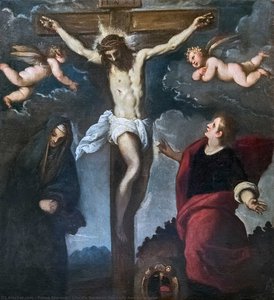
11Portrait of Niccolo da Ponte (1491-1585), Doge of Venice (1580) autorstwa Iacopo NigretiPortrait of Niccolo da Ponte (1491-1585), Doge of Venice1580 · Kunsthistorisches Museum 12The Pope allows Otto to go to his father to negotiate peace (1582) autorstwa Iacopo NigretiThe Pope allows Otto to go to his father to negotiate peace1582 · Pałac Dożów 13Pietá (1611) autorstwa Iacopo NigretiPietá1611 · Museo del Prado 14David with Goliath's Head (1590) autorstwa Iacopo NigretiDavid with Goliath's Head1590 · Museo del Prado 15Salomé with the Head of John the Baptist (1599) autorstwa Iacopo NigretiSalomé with the Head of John the Baptist1599 · Kunsthistorisches Museum 16Moses Brings the Tablets of the Law (1586) autorstwa Iacopo NigretiMoses Brings the Tablets of the Law1586 · Bawarskie Państwowe Zbiory Malarstwa 17St Sebastian (1590) autorstwa Iacopo NigretiSt Sebastian1590 · Ermitaż 18Dead Christ Supported by an Angel (1612) autorstwa Iacopo NigretiDead Christ Supported by an Angel1612 · Kunsthistorisches Museum 19Adoration of the Shepherds (1575) autorstwa Iacopo NigretiAdoration of the Shepherds1575 · Bawarskie Państwowe Zbiory Malarstwa 20Flagellation of Christ (1586) autorstwa Iacopo NigretiFlagellation of Christ1586 · Bawarskie Państwowe Zbiory Malarstwa 21Christ calling Zacchaeus (1575) autorstwa Iacopo NigretiChrist calling Zacchaeus1575 · Fitzwilliam Museum 22Elijah and the Angel (1575) autorstwa Iacopo NigretiElijah and the Angel1575 · Fitzwilliam Museum 23Portrait of a Gentleman (1590) autorstwa Iacopo NigretiPortrait of a Gentleman1590 · Art Institute of Chicago 24Fighting soldiers (1569) autorstwa Iacopo NigretiFighting soldiers1569 25soldiers on horseback (1569) autorstwa Iacopo Nigretisoldiers on horseback1569 26Soldiers on horseback (1569) autorstwa Iacopo NigretiSoldiers on horseback1569 27supraporte: fighting soldiers (1569) autorstwa Iacopo Nigretisupraporte: fighting soldiers1569 28fighting soldiers (1569) autorstwa Iacopo Nigretifighting soldiers1569 29Battle - scene in landscape with town (1569) autorstwa Iacopo NigretiBattle - scene in landscape with town1569 30soldiers on horseback (1569) autorstwa Iacopo Nigretisoldiers on horseback1569 31soldiers on horseback (1569) autorstwa Iacopo Nigretisoldiers on horseback1569 32six citizens after war scene (1569) autorstwa Iacopo Nigretisix citizens after war scene1569 33Gentlemen on horse - back (1569) autorstwa Iacopo NigretiGentlemen on horse - back1569 34Victory of Francesco Bembo over Filippo Maria Visconti (1578) autorstwa Iacopo NigretiVictory of Francesco Bembo over Filippo Maria Visconti1578 · Pałac Dożów 35The Descent of Manna (1575) autorstwa Iacopo NigretiThe Descent of Manna1575 36Christ Deposed In The Sepulchre (1575) autorstwa Iacopo NigretiChrist Deposed In The Sepulchre1575 37Crucifix Between Our Lady And Saint John (1575) autorstwa Iacopo NigretiCrucifix Between Our Lady And Saint John1575 38The Paschal Lamb (1575) autorstwa Iacopo NigretiThe Paschal Lamb1575 39St Lawrence Giving the Wealth to the Poor (1575) autorstwa Iacopo NigretiSt Lawrence Giving the Wealth to the Poor1575 40Lamentation of Christ (1586) autorstwa Iacopo NigretiLamentation of Christ1586 · Bawarskie Państwowe Zbiory Malarstwa 41Lamentation of Christ (1586) autorstwa Iacopo NigretiLamentation of Christ1586 · Bawarskie Państwowe Zbiory Malarstwa 42Thetis on the Sea (1586) autorstwa Iacopo NigretiThetis on the Sea1586 · Bawarskie Państwowe Zbiory Malarstwa 43Lamentation of Christ (1586) autorstwa Iacopo NigretiLamentation of Christ1586 · Bawarskie Państwowe Zbiory Malarstwa 44Annunciation of Mary (1585) autorstwa Iacopo NigretiAnnunciation of Mary1585 · Bawarskie Państwowe Zbiory Malarstwa 45Christ and the Samaritan Woman (1586) autorstwa Iacopo NigretiChrist and the Samaritan Woman1586 · Bawarskie Państwowe Zbiory Malarstwa 46Saint Sebastian (1586) autorstwa Iacopo NigretiSaint Sebastian1586 · Bawarskie Państwowe Zbiory Malarstwa 47Ecce homo (1586) autorstwa Iacopo NigretiEcce homo1586 · Bawarskie Państwowe Zbiory Malarstwa 48The Expulsion of the Vices of the Church (1582) autorstwa Iacopo NigretiThe Expulsion of the Vices of the Church1582 · Royal Collection 49Venus and Cupid (1590) autorstwa Iacopo NigretiVenus and Cupid1590 · Royal Collection 50Prometheus Chained to the Caucasus (1589) autorstwa Iacopo NigretiPrometheus Chained to the Caucasus1589 · Royal Collection 51Massacre of the Inhabitants of Hippo (1593) autorstwa Iacopo NigretiMassacre of the Inhabitants of Hippo1593 · Musée Fabre 52Scene from the History of Joseph (1587) autorstwa Iacopo NigretiScene from the History of Joseph1587 · Isabella Stewart Gardner Museum 53Scene from the History of Joseph (1587) autorstwa Iacopo NigretiScene from the History of Joseph1587 · Isabella Stewart Gardner Museum 54Judas Cyriacus (1593) autorstwa Iacopo NigretiJudas Cyriacus1593 55Sant'elena Ritrova La Vera Croce (1593) autorstwa Iacopo NigretiSant'elena Ritrova La Vera Croce1593 56L'imperatore Eraclio Riporta La Croce Al Calvario (1593) autorstwa Iacopo NigretiL'imperatore Eraclio Riporta La Croce Al Calvario1593 57Pius II (1593) autorstwa Iacopo NigretiPius II1593 58Judith and Holofernes (1600) autorstwa Iacopo NigretiJudith and Holofernes1600 59The Virgin and Child, Saint Luke and a Donor (1602) autorstwa Iacopo NigretiThe Virgin and Child, Saint Luke and a Donor1602 · Royal Collection 60The Penitent Magdalene (1600) autorstwa Iacopo NigretiThe Penitent Magdalene1600 · Royal Collection 61Return of the Prodigal Son (1595) autorstwa Iacopo NigretiReturn of the Prodigal Son1595 · Gallerie dell'Accademia di Venezia 62The Virgin and Child with Saints and Angels (1620) autorstwa Iacopo NigretiThe Virgin and Child with Saints and Angels1620 · National Gallery of Ireland 63Lamentation of Christ (1620) autorstwa Iacopo NigretiLamentation of Christ1620 · Bawarskie Państwowe Zbiory Malarstwa 64Self Portrait (1614) autorstwa Iacopo NigretiSelf Portrait1614 65Studies of an Arm, and of the Heads of an Old Man and Young Woman (1628) autorstwa Iacopo NigretiStudies of an Arm, and of the Heads of an Old Man and Young Woman1628 66Seated Female Holding a Book, Two Heads of Bearded Men, Seated Male Nude, and Four Sketches for Christ Judging (recto); Studies for Cain Slaying Abel (verso) (1628) autorstwa Iacopo NigretiSeated Female Holding a Book, Two Heads of Bearded Men, Seated Male Nude, and Four Sketches for Christ Judging (recto); Studies for Cain Slaying Abel (verso)1628 67Apostles at the Virgin's Tomb (1582) autorstwa Iacopo NigretiApostles at the Virgin's Tomb1582 · Ermitaż 68Cain and Abel (1603) autorstwa Iacopo NigretiCain and Abel1603 · Kunsthistorisches Museum 69Annunciation (1600) autorstwa Iacopo NigretiAnnunciation1600 · Madonna dell'Orto 70Martirio Di San Giovanni Battista Tra San Lanfranco Beccari E San Liberio (1593) autorstwa Iacopo NigretiMartirio Di San Giovanni Battista Tra San Lanfranco Beccari E San Liberio1593 71Washing of the Feet (1591) autorstwa Iacopo NigretiWashing of the Feet1591 · San Giovanni in Bragora 72Lamentation (1620) autorstwa Iacopo NigretiLamentation1620 · National Gallery of Art 73Joseph and Potiphar's Wife autorstwa Iacopo NigretiJoseph and Potiphar's WifeStatens Museum for Kunst 74Allegory of the Victory over the League of Cambrai (detail) (1590) autorstwa Iacopo NigretiAllegory of the Victory over the League of Cambrai (detail)1590 · Pałac Dożów 75The Dead Christ Supported by An Angel with Two Putti Each Supporting a Cero (1575) autorstwa Iacopo NigretiThe Dead Christ Supported by An Angel with Two Putti Each Supporting a Cero1575 76The Paschal Lamb (1575) autorstwa Iacopo NigretiThe Paschal Lamb1575 77Eucharist Worshipped By The Four Evangelists (1575) autorstwa Iacopo NigretiEucharist Worshipped By The Four Evangelists1575 78Elia Cibato From angel (1575) autorstwa Iacopo NigretiElia Cibato From angel1575 79The Parish Priest Da Ponte in front of the Virgin, Saint Mark, Saint Sylvester and Saint James (1575) autorstwa Iacopo NigretiThe Parish Priest Da Ponte in front of the Virgin, Saint Mark, Saint Sylvester and Saint James1575 80Red Sea Passage (1575) autorstwa Iacopo NigretiRed Sea Passage1575 81The Flagellation autorstwa Iacopo NigretiThe FlagellationMuseo del Prado 82Papa Cleto (1593) autorstwa Iacopo NigretiPapa Cleto1593 83Elia nutrito dall'angelo (1593) autorstwa Iacopo NigretiElia nutrito dall'angelo1593 84Lanfranco Beccari (1593) autorstwa Iacopo NigretiLanfranco Beccari1593 85David riceve dal sacerdote Achimelec i pani offerti nel santuario (1593) autorstwa Iacopo NigretiDavid riceve dal sacerdote Achimelec i pani offerti nel santuario1593 86Saint Helena (1593) autorstwa Iacopo NigretiSaint Helena1593 87Il Serpente Di Bronzo (1593) autorstwa Iacopo NigretiIl Serpente Di Bronzo1593 88Alexander III confirms the Crucifixes and gives them the rule (1593) autorstwa Iacopo NigretiAlexander III confirms the Crucifixes and gives them the rule1593 89Pope San Cleto Founds the Order of the Crucifer - St. Cyril's Bishop of Jerusalem Reaffirms the Order (1593) autorstwa Iacopo NigretiPope San Cleto Founds the Order of the Crucifer - St. Cyril's Bishop of Jerusalem Reaffirms the Order1593 90David and Achimelech (1590) autorstwa Iacopo NigretiDavid and Achimelech1590 · Santissimo Redentore 91The Pool (1592) autorstwa Iacopo NigretiThe Pool1592 · Collezione Molinari Pradelli 92The Martyrdom of St Lawrence (1581) autorstwa Iacopo NigretiThe Martyrdom of St Lawrence1581 · San Giacomo dall'Orio 93Sketch for An Entablature (1628) autorstwa Iacopo NigretiSketch for An Entablature1628 94The Arrest of Christ, Christ and the Canaanite Woman, Seated Male Figures, and Head of a Child (1628) autorstwa Iacopo NigretiThe Arrest of Christ, Christ and the Canaanite Woman, Seated Male Figures, and Head of a Child1628 95Studies of Horsemen and Study of a Figure for a Deposition (1628) autorstwa Iacopo NigretiStudies of Horsemen and Study of a Figure for a Deposition1628 96Seated Female Holding a Book, Two Heads of Bearded Men, Seated Male Nude, and Four Sketches for Christ Judging (recto); Studies for Cain Slaying Abel (verso) (1628) autorstwa Iacopo NigretiSeated Female Holding a Book, Two Heads of Bearded Men, Seated Male Nude, and Four Sketches for Christ Judging (recto); Studies for Cain Slaying Abel (verso)1628 97Sheet of Studies with St. Jerome, Seated at Right and Resting His Right Forearm on a Book, at Left An Ecclesiastical Figure Wearing a Cope and Miter, and at Bottom Two Putti (1628) autorstwa Iacopo NigretiSheet of Studies with St. Jerome, Seated at Right and Resting His Right Forearm on a Book, at Left An Ecclesiastical Figure Wearing a Cope and Miter, and at Bottom Two Putti1628 98A Venetian Senator autorstwa Iacopo NigretiA Venetian SenatorMuseo del Prado 99Amusements of the Prodigal Son (1595) autorstwa Iacopo NigretiAmusements of the Prodigal Son1595 · Gallerie dell'Accademia di Venezia 100Christ as Teacher autorstwa Iacopo NigretiChrist as TeacherBawarskie Państwowe Zbiory Malarstwa

Słynne obrazy Iacopo Nigreti epoka po epoce

Tematy, które przyciągnęły wzrok Iacopo Nigreti

Cztery motywy najczęściej powracające w tych oryginałach, z których każdy doczekał się swojego najdoskonalszego przykładu.

Muzea przechowujące oryginały Iacopo Nigreti

8 muzeów, w których znajduje się najwięcej obrazów z tej strony.

Muzea Miasto Dzieła artysty Iacopo Nigreti Obrazy z tej listy
Bawarskie Państwowe Zbiory Malarstwa, MonachiumBawarskie Państwowe Zbiory Malarstwa Monachium 14 Moses Brings the Tablets of the Law, Adoration of the Shepherds, Flagellation of Christ
Kunsthistorisches Museum, WiedeńKunsthistorisches Museum Wiedeń 8 Pietà with Angels, The prophet Nathan admonishes King David, Portrait of a Sculptor
Museo del Prado, MadrytMuseo del Prado Madryt 5 The Conversion of Saint Paul, Pietá, David with Goliath's Head
Royal Collection, LondynRoyal Collection Londyn 5 The Expulsion of the Vices of the Church, Venus and Cupid, Prometheus Chained to the Caucasus
Pałac Dożów, WenecjaPałac Dożów Wenecja 4 The Pope allows Otto to go to his father to negotiate peace, Victory of Francesco Bembo over Filippo Maria Visconti, Allegory of the Victory over the League of Cambrai (detail)
Gallerie dell'Accademia di Venezia, WenecjaGallerie dell'Accademia di Venezia Wenecja 3 The Crucifixion of St Peter, Return of the Prodigal Son, Amusements of the Prodigal Son
Ermitaż, Sankt PetersburgErmitaż Sankt Petersburg 2 St Sebastian, Apostles at the Virgin's Tomb
Fitzwilliam MuseumFitzwilliam Museum 2 Christ calling Zacchaeus, Elijah and the Angel

Iacopo Nigreti dekada po dekadzie: oryginały definiujące każdy okres

Dzieła według dekad

Wybierz dekadę, aby zobaczyć dzieło, które ją definiuje.

Pytania kolekcjonerów o obrazy Iacopo Nigreti

Z jakiego dzieła najbardziej znany jest Iacopo Nigreti?Odkryj odpowiedź

The Crucifixion of St Peter (1614), Gallerie dell'Accademia di Venezia, Wenecja. Następne są Pietà with Angels (1620) oraz Paolo Veronese (1600).

W jakim wieku był Iacopo Nigreti, gdy powstało The Crucifixion of St Peter?Odkryj odpowiedź

64 lat: The Crucifixion of St Peter pochodzi z 1614, a Iacopo Nigreti urodził(a) się w 1550.

Jakie są dziesięć najsłynniejszych obrazów, których autorem jest Iacopo Nigreti?Odkryj odpowiedź

The Crucifixion of St Peter, Pietà with Angels, Paolo Veronese, The Conversion of Saint Paul, The Crucifixion, Venus and Mars, The prophet Nathan admonishes King David, Portrait of a Sculptor, Lamentation with angels i Judith Placing the Head of Holofernes onto a Cloth Held by Another Female Figure, the Foreshortened Body of Holofernes Gushes with Blood from the Neck. Powyższy ranking zawiera rok powstania oraz muzeum dla każdego z nich.

Ile obrazów pozostawił po sobie Iacopo Nigreti?Odkryj odpowiedź

Nasz katalog zawiera 161 dzieł artysty Iacopo Nigreti, datowanych od 1569 do 1628.

W których muzeach znajdują się arcydzieła Iacopo Nigreti?Odkryj odpowiedź

W większości znajdują się w Bawarskie Państwowe Zbiory Malarstwa (Monachium), Kunsthistorisches Museum (Wiedeń) i Museo del Prado (Madryt). Powyższa tabela muzeów zawiera ich pełną listę.

W których latach Iacopo Nigreti namalował swoje najsłynniejsze dzieła?Odkryj odpowiedź

W 1590s: 27 z 100 dzieł na tej stronie powstało w tym czasie, w tym The Conversion of Saint Paul.

Jakie są pierwsze i ostatnie słynne oryginały Iacopo Nigreti?Odkryj odpowiedź

Na tej stronie najwcześniejszy to Fighting soldiers (1569), a najpóźniejszy Judith Placing the Head of Holofernes onto a Cloth Held by Another Female Figure, the Foreshortened Body of Holofernes Gushes with Blood from the Neck (1628).

Jakie tematy Iacopo Nigreti wybierał najczęściej?Odkryj odpowiedź

Man (26), Woman (19) i People (15), w ramach 100 dzieł na tej stronie.

Której techniki Iacopo Nigreti używał najczęściej?Odkryj odpowiedź

Oil On Canvas, dla 36 z 100 dzieł na tej stronie.

Do jakiego nurtu artystycznego należy Iacopo Nigreti?Odkryj odpowiedź

Baroque i Renaissance, sądząc po oryginałach na tej stronie.

Które dzieła Iacopo Nigreti znajdują się w Bawarskie Państwowe Zbiory Malarstwa?Odkryj odpowiedź

Moses Brings the Tablets of the Law, Adoration of the Shepherds i Flagellation of Christ: Bawarskie Państwowe Zbiory Malarstwa, Monachium posiada 13 dzieł widocznych na tej stronie.

Iacopo Nigreti: życie i twórczość

Promienne dziedzictwo Jacopo Palma il Giovane

W złotym zmierzchu renesansu weneckiego, w epoce zdefiniowanej przez bezprecedensowe mistrzostwo koloru i światła, pojawił się malarz, którego pędzel połączył epokę dojrzałego renesansu z rodzącym się dramatyzmem baroku. Jacopo Palma il Giovane, urodzony jako Iacopo Negretti około 1548 roku, nie był jedynie następcą wielkich mistrzów, lecz kluczowym ogniwem w ciągłości szkoły weneckiej. Jako wielki siostrzeniec słynnego Palma Vecchio, przyszedł na świat w linii artystycznej doskonałości, dziedzicząc głębokie zrozumienie chromatycznej bogatości, która definiuje tradycję wenecką. Jego życie i twórczość stanowią płynne przejście, niosąc świetlistą elegancję swoich poprzedników w nową erę emocjonalnej intensywności i teatralnego przepychu.

Fundamenty artyzmu Palmy zostały położone w warsztatach Wenecji, gdzie powietrze przesycone było dziedzictwem Tycjana i Tintoretta. Choć relacje historyczne sugerują, że mógł on szlifować swoją technikę poprzez studiowanie zapierających dech w piersiach palet kolorystycznych Tycjana, to właśnie dynamiczna energia Tintoretta ukształtowała jego dojrzałą wizję. Po śmierci Tintoretta w 1594 roku, Palma il Giovane wzniósł się na szczyty znaczenia, stając się dominującą siłą artystyczną w Wenecji. Posiadał rzadką zdolność syntezy tych dwóch odmiennych wpływów: od Tycjana czerpał wyrafinowaną władzę nad światłem i tonacją skóry; od Tintoretta zaś przejął poczucie ruchu, dramatyczne chiaroscuro oraz narracyjną pilność, która głęboko rezonowała z religijnym żarem kontrreformacji.

Mistrz narracji i emocji

Twórczość Palma il Giovane jest świadectwem jego zdolności do przekształcania tematów biblijnych i mitologicznych w przejmujące ludzkie doświadczenia. Jego obrazy rzadko są statyczne; pulsują żywotną siłą, która wciąga widza w samo serce dramatu. Bez względu na to, czy przedstawia powagę religijnego męczeństwa, czy żywiołowy chaos sceny karczemnej, jego dzieło wykorzystuje światło jako narzędzie narracyjne, prowadząc oko przez złożone kompozycje, by odnaleźć emocjonalne jądro opowieści. Jego mistrzostwo jest szczególnie widoczne w takich dziełach jak Męczeństwo św. Katarzyny Aleksandryjskiej, gdzie gra cienia i blasku potęguje poczucie boskiej walki, czy Apostołowie przy grobie Matki Bożej, które chwyta głęboki moment zbiorowego żalu poprzez szerokie, energiczne pociągnięcia pędzla.

Poza zleceniami religijnymi, wszechstronność Palmy pozwalała mu na eksplorację szerokiego spektrum tematów. Jego talent do chwytania ludzkiego ducha jest być może najbardziej intymnie widoczny w Autoportrecie, dziele ujawniającym duszną introspekcję i techniczną biegłość zdolną oddać subtelne niuanse ekspresji. Nawet w scenach bardziej świeckich lub anegdotycznych, takich jak Rozrywki syna marnotrawnego, utrzymuje on wibrującą, rytmiczną jakość, która celebruje tekstury i kolory życia weneckiego. Ta zdolność do oscylowania między tym, co głębokie, a tym, co radosne, zapewniła mu znaczenie w różnych kręgach mecenatu — od władz kościelnych Wenecji po cesarskie dwory Europy Środkowej.

Znaczenie historyczne i trwały wpływ

Historyczna waga Jacopo Palma il Giovane wykracza daleko poza granice Republiki Weneckiej. Jego wpływ promieniował na zewnątrz, docierając aż do Bergamo i dworu cesarza Rudolfa II w Pradze, co czyni go artystą o międzynarodowej randze. Nie tylko powielał przeszłość; on ją ewoluował, przygotowując grunt pod bardziej emocjonalne i dramatyczne style, które zdefiniowały XVII wieł. Mentorując kolejnym pokoleniom, w tym postaciom, które jeszcze bardziej dopracowały estetykę wenecką, zapewnił, że tradycje jego rodu pozostały żywe i transformujące.

Dziś rozpoznajemy Palma il Giovane jako postać kluczową, której twórczość służy jako most między epokami. Jego dziedzictwo odnajdujemy w:

  • Syntezie stylów: płynnej integracji kolorystycznego blasku Tycjana z dramatycznym dynamizmem Tintoretta.
  • Sztuce kontrreformacji: wykorzystaniu potężnych obrazów do komunikowania duchowej intensywności wymaganej przez Kościół katolicki w okresie głębokich przemian religijnych.
  • Kontynuacji szkoły weneckiej: utrzymywaniu statusu Wenecji jako światowego centrum sztuki dzięki jego licznym zleceniom i wpływowi pedagogicznemu.

Poprzez swój ekspresyjny pędzel i mistrzowskie operowanie światłem, Palma il Giovane uchwycił samą esencję zmieniającego się świata, pozostawiając po sobie dorobek, który nieustannie zachwyca i porusza współczesnego obserwatora.