


1


Aktualizacja: Październik 2026 · ranking według naszego wskaźnika popularności (liczba wyszukiwań, wizyt i zamówień dla każdego dzieła) · 60 dzieł Lev Lagorio w naszym katalogu
W skrócie
Z wszystkich oryginałów pozostawionych przez Lev Lagorio, najsłynniejszym jest On the island of Capri. Fisher's house. (1859). Tuż za nimi znajdują się Sevastopol aqueduct in the gully Ushakovskaya (1850) oraz The Russian Painter And The Aquarellist. Nasz katalog zawiera 60 dzieł autorstwa Lev Lagorio; galeria zachowała 56 najbardziej podziwianych na świecie prac, z których każda została przedstawiona wraz z datą powstania, informacją o muzeum oraz jej historią.


 Old Tbilisi1868
12
 View of Kronstadt raid1876
13
 Neva at night1878
14
 Sukhum-Kale1873
15
 Northern landscape1872
16
 Mist in the mountains. Caucasus.1878
17
 The Shipka Pass1884 · Yekaterinburg Museum of Fine Arts
18
 Seascape with sailboats1891
19
 View of the town from the riverside1887
20
 River in the foothills1889
21
 Moonlit night by the sea1886
22
 Landscape with seagulls1889
23
 Seascape1897 · Yekaterinburg Museum of Fine Arts
24
 Lofoten Island1895
25
 Moonlit night at Neva1898
26
 Sea1898
27
 Salute September 26, 19021902
28
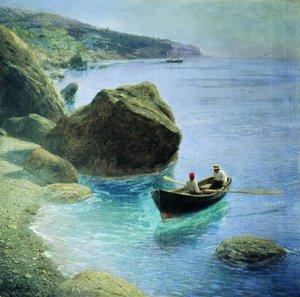 Simeiz1899
29
 On The Coast
30
 Barques En Mer
31
 Voilier Rentrant Au Port Dans La Tempête
32
 Caucasian canyon
33
 View From A Jetty
34
 Mountain Landscape
35
 Entering The Port
36
 Summer Landscape
37
 In The Gulf Of Finland.
38
 Ships On A Calm Sea
39
 Landscape
40
 Seascape With Saleboats Paper
41
 Crossing The River
42
 Harbor Scene With Dock
43
 Ship In A Storm
44
 Outpost At The Bay
45
 View of Tiflis
46
 View of Ayu-Dag from Alushta
47
 A Caucasian Gorge
48
 The bay in Feodosia
49
 Port Scene
50
 Bringing Ashore The Boat
51
 A Crimean Landscape
52
 The Bay of Feodosia
53
 Near Ay-petri In The Crimea
54
 Coastal Scene With A Brig In Calm Weather.
55
 Steamship on High Seas
56
 Mountain Pastures
Cztery motywy najczęściej powracające w tych oryginałach, z których każdy doczekał się swojego najdoskonalszego przykładu.
Muzeum, w którym znajduje się najwięcej obrazów prezentowanych na tej stronie.
| Muzea | Miasto | Dzieła artysty Lev Lagorio | Obrazy z tej listy |
|---|---|---|---|
 Yekaterinburg Museum of Fine Arts |
Yekaterinburg | 2 | The Shipka Pass, Seascape |
Wybierz dekadę, aby zobaczyć dzieło, które ją definiuje.


On the island of Capri. Fisher's house. (1859). Następne są Sevastopol aqueduct in the gully Ushakovskaya (1850) oraz The Russian Painter And The Aquarellist.
32 lat: On the island of Capri. Fisher's house. pochodzi z 1859, a Lev Lagorio urodził(a) się w 1827.
On the island of Capri. Fisher's house., Sevastopol aqueduct in the gully Ushakovskaya, The Russian Painter And The Aquarellist, Transportation of Ice, View of Lakhta near St. Petersburg, Mountain lake, Normandy Beach, View of the Neva and Peter and Paul Fortress, On the island of Capri. Coastal cliffs. i Southern landscape. Powyższy ranking zawiera rok powstania oraz muzeum dla każdego z nich.
Nasz katalog zawiera 60 dzieł artysty Lev Lagorio, datowanych od 1849 do 1902.
W większości znajdują się w Yekaterinburg Museum of Fine Arts (Yekaterinburg). Powyższa tabela muzeów zawiera ich pełną listę.
W 1850s: 7 z 56 dzieł na tej stronie powstało w tym czasie, w tym On the island of Capri. Fisher's house..
Na tej stronie najwcześniejszy to Transportation of Ice (1849), a najpóźniejszy Salute September 26, 1902 (1902).
Boats (12), Beach (12) i Scenes (11), w ramach 56 dzieł na tej stronie.
Romanticism, sądząc po oryginałach na tej stronie.
The Shipka Pass i Seascape: Yekaterinburg Museum of Fine Arts, Yekaterinburg posiada 2 dzieł widocznych na tej stronie.
Lev Felixovich Lagorio (1827-1905) stands as a pivotal figure in 19th-century Russian landscape painting, particularly renowned for his evocative depictions of the Black Sea and its surrounding regions. Born in Feodosia, Crimea, a city steeped in maritime history and natural beauty, Lagorio’s artistic journey was inextricably linked to the sea – both as subject and as formative influence. His work transcends mere representation; it captures the soul of the coastline, imbued with a palpable sense of atmosphere, light, and movement.
Lagorio's early life in Feodosia provided him with an unparalleled opportunity to immerse himself in the maritime world. The city’s strategic location as a naval base and trading port exposed him to a constant flow of ships, sailors, and stories from distant lands. This intimate connection to the sea profoundly shaped his artistic vision. He initially studied under Ivan Aivazovsky, arguably Russia's most celebrated marine painter, absorbing the master’s techniques of capturing light on water and conveying the drama of the open ocean. However, Lagorio quickly developed a distinct style, characterized by a softer, more atmospheric approach than Aivazovsky’s often highly detailed realism.
Following his studies in St. Petersburg, where he honed his skills at the Imperial Academy of Arts, Lagorio embarked on an extended sojourn through Europe, culminating in a significant period spent in Italy between 1845 and 1853. This experience proved transformative, exposing him to different artistic traditions and broadening his palette. He studied with various masters, absorbing influences from the Barbizon School’s emphasis on plein air painting and the Romantic movement's fascination with nature. It was during this time that he developed a distinctive style – characterized by loose brushwork, subtle color harmonies, and an ability to capture the fleeting effects of light and weather.
Italy provided him with new subjects as well: scenes from the Mediterranean coast, capturing the rugged beauty of the coastline and the vibrant colors of the local flora and fauna. These Italian works demonstrated a shift in his artistic focus towards landscapes rather than strictly maritime scenes, though the influence of the sea remained ever-present.
Lagorio’s oeuvre is predominantly defined by his depictions of coastal landscapes – the Crimean coastline, the Black Sea, the Caucasus Mountains, and even glimpses of Finland and Norway. He rarely depicted ships directly, preferring to focus on the interaction between land and sea, capturing the mood and atmosphere of these environments rather than precise nautical details. His paintings are characterized by a masterful use of color—often employing muted tones and subtle gradations to create a sense of depth and atmospheric perspective. He skillfully rendered the effects of light on water, mist, and foliage, imbuing his scenes with a remarkable sense of realism and emotional resonance.
His technique involved layering thin washes of paint to build up color gradually, creating luminous surfaces that shimmered in the light. He was particularly adept at capturing the subtle shifts in mood—the calm serenity of a misty morning, the dramatic intensity of a storm-tossed sea, or the golden glow of sunset reflecting on the water.
Among Lagorio’s most celebrated works are “In The Gulf Of Finland,” a serene depiction of maritime life; "Mountain Landscape," showcasing his ability to capture vast vistas; and several evocative scenes from Sevastopol, including “Sevastopol aqueduct in the gully Ushakovskaya.” These paintings exemplify his mastery of capturing atmospheric effects and conveying a sense of place. His work is held in prestigious collections, notably the State Tretyakov Gallery in Moscow, ensuring that his artistic legacy continues to be appreciated by generations of art enthusiasts.
Lev Felixovich Lagorio’s contribution to Russian landscape painting lies not only in his technical skill but also in his ability to evoke a profound emotional response through his depictions of the natural world. He remains an important figure, demonstrating how observation and artistic sensitivity can combine to create works that are both visually stunning and deeply moving.


